

Products that protect human skin from ultraviolet (UV) rays can have a negative impact on animals in the water. Since 2020, a team of scientists led by marine biologist Prof. Dr Peter Schupp from the Institute for Chemistry and Biology of the Marine Environment (ICBM) at the University of Oldenburg has been investigating the effects of chemicals contained in sunscreens on coral reefs.
The project – a scientific collaboration which is receiving around one million euros in funding from German chemical manufacturer BASF – is now entering its second phase.
In order to better assess the risk that UV filters used in sunscreens pose to corals, standardized test procedures are needed. Schupp's team is now developing such tests for the marine environment, analogous to those that have been available for freshwater organisms for some time now. In the first phase of the project, the researchers used testing systems on larvae and coral fragments. The initial results were presented at the International Coral Reef Symposium (ICRS), the world's leading conference on corals, as well as at the global meeting of the Society of Environmental Toxicology and Chemistry (SETAC). Now the team aims to standardize these and other test procedures and assess in ring trials conducted with other research groups and laboratories all over the world whether the procedures produce comparable results when conducted under similar conditions. "Our aim is to develop an internationally valid standard test so that the results are also recognized internationally," Schupp explained.
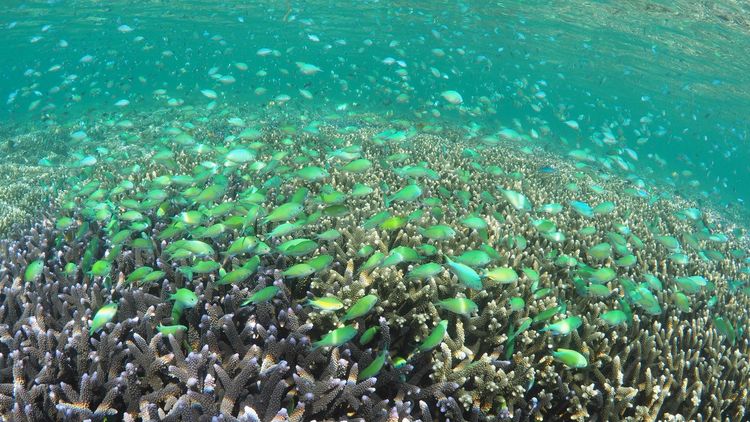
The tests are intended to help scientists identify UV filters that have a negative impact on coral larvae and adult corals and can therefore no longer be safely used in sunscreens. For the time being, the team is focusing on widely used UV filters such as oxybenzone and octinoxate which are already in the public eye due to their potentially harmful effects, but other substance groups are also under evaluation. The experiments were carried out on various coral species to establish differences in culture and sensitivity to target substances. Among the studied species were Acropora corals, which belong to the most important genus of stony (scleratinian) corals and are one of the most common species in reefs worldwide, as well as other widespread species such as Leptastrea, Tubastraea and Montipora. In addition to direct effects such as the death of these animals, indirect effects such as the transformation of larvae into polyps and coral bleaching were also investigated in short-term tests with exposure times of 48 and 96 hours, respectively.
The experiments indicated varying levels of sensitivity depending on species and life stage, Schupp explained, noting that in general corals in the larval stages were more sensitive than adult corals. "Our results make it clear that both the larval stage test and the method used with adult corals and the selected endpoints are suitable for further standardization," he said, adding that the team is working to develop further long-term testing methods for investigating the potential effects of continued exposure to certain substances on corals.
In addition to developing standardized tests, the project aims to contribute to the introduction of a standardized label for environmentally friendly sunscreens. "Some manufacturers already advertise their sunscreens as 'reef-safe' or 'coral-friendly', but these labels don't say much about how the ingredients actually affect coral reefs," Schupp stressed. "On the other hand, we see that certain UV filters have been assessed and already banned in some countries as a result of flawed studies." Standardized test procedures could serve to provide more clarity here and also be used to evaluate other substances such as those found in cosmetic products or pesticides with regard to their potential harmful effects on coral reefs, thus contributing to their protection, Schupp explained.