
Making socially challenging educational topics such as climate change or the sustainable use of resources accessible to young people in innovative ways: this objective unites no fewer than four new projects on subject-specific teaching methods at the University of Oldenburg, which the German Federal Environmental Foundation (DBU) will be funding over the next three years.
“Through these projects, the university will further expand its proven area of expertise – which is also firmly embedded in teacher training – in education for sustainable development,” said University President Prof. Dr Dr Hans Michael Piper. The total funding from the DBU amounts to approximately 800,000 euros.
The RETIBNE project, in collaboration with nine other university partners, focuses on the repair skills of pupils and trainee teachers within the fields of technology and computer science education. From the perspective of technology education specialist Prof. Dr Peter Röben and project leader Dr Katharina Dutz, repair knowledge and skills represent a key element of technical and Computing Science education for sustainability.
Together with computer science education specialist Prof. Dr Ira Diethelm, they are developing repair tasks that give pupils an insight into technical processes and material cycles, whilst enabling them to acquire practical repair skills. Schools in the region will trial the tasks designed at the University of Oldenburg before the participating universities refine them further in collaboration with their school partners.
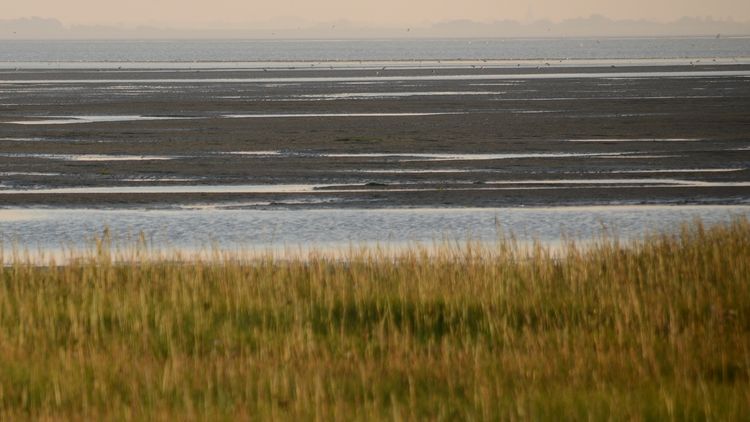
Prof. Dr Michael Komorek, a physics education specialist, regards addressing physical mechanisms in the mudflats and coastal seas in schools and at out-of-school learning venues as an important task. “The combination of on-site lessons, for example on the island of Spiekeroog, and learning in the physiXS student laboratory will fill a gap that has existed until now in environmental education,” says Komorek. The project makes a significant innovative contribution to the further development of out-of-school environmental education in large protected areas.
Specifically, aspects of marine and coastal dynamics against the backdrop of climate change are to be analysed from a scientific perspective, adapted for teaching purposes and, in particular, incorporated into the educational activities of the Lower Saxony Wadden Sea National Park. The teaching materials and professional development programmes for teachers to be developed will incorporate perspectives from other natural sciences and school pedagogy – in collaboration with the former Oldenburg educational scientist Prof. Dr Klaus Zierer. Cooperation partners include the Hermann Lietz School and the National Park Centre on Spiekeroog.
Chemistry education specialist Prof. Dr Verena Pietzner is focusing on lessons with a stronger career orientation. To date, careers related to chemistry in the field of preventive environmental protection have been an unfamiliar area for many pupils and teachers alike. Specific learning tasks in the CHEMOL pupil laboratory are designed to introduce pupils to careers in business, landscape conservation, administration and environmental analysis.
“Young people are often unaware that many environmental protection measures require a knowledge of chemistry,” emphasises Pietzner. Chemical career paths could offer an interesting prospect, particularly for young people who do not intend to go on to university.
Biology educator Prof. Dr Corinna Hößle, together with her colleague Anja Wübben and Dr Holger Winkler from the Institute of Chemistry and Biology of the Sea (ICBM), is working to bring the latest marine research into schools, teacher training and national park visitor centres. The plan is to establish a network between the university and the national park visitor centres. In the “Wadden Sea Learning Lab”, innovative and up-to-date educational programmes are to be developed in collaboration with students.
“The aim of the project is,” says Hößle, “to design, test and implement educational programmes for schools and national park visitor centres, based on the ICBM’s current research into the threats to and protection of the Wadden Sea UNESCO World Natural Heritage Site, with a focus on precautionary environmental protection.”
The four projects are closely interlinked. A total of five new posts for early-career researchers will be created. The materials and concepts developed within the project consortium will be made available to schools and non-school educational institutions.