
Master phase
Master phase
Advanced lab course during the Master’s phase (FPR-M)
- Test instructions and other information material (password required)
- Organisation and scope of the FPR-M
The following list contains a brief description of the experiments in the FPR-M. The name of the author(s) and person(s) responsible is given at the end.
White light generation in photonic fibres
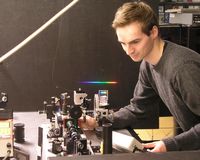
Light with a broad spectrum is required to measure the reflection and transmission of samples and excitation spectra. In contrast to white light lamps, such as those used in the ultra-fast photoluminescence experiment, the white light here emerges from a fibre with a very small diameter. This white light can therefore be focussed very well and used to examine very small samples. However, the light can also be coupled into a glass fibre and then used for spectroscopy in a near-field microscope.
The following are treated: Generation of short pulses using a titanium-sapphire laser, pre-compression of the laser pulses using two different prism compressors, determination of the pulse lengths as a function of the material and the prism spacing, coupling of the light into a photonic crystal fibre to generate white light, determination of the spectral width of the white light as a function of intensity and pulse length.
Addition: If time permits, a grating compressor can be built and possibly the white light used for a spectroscopic investigation.
Keywords: ultrashort laser pulses (titanium-sapphire, pulse length 50 fs), modelocking, self-focusing, time-bandwidth limitation, determination of the pulse length: autocorrelator, dispersion, prism compressor, photonic crystal fibre, self-phase modulation.
Germann Hergert, AG UNO (04/21) (" experiment instructions)
Construction, adjustment and characterisation of a titanium:sapphire oscillator
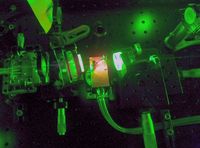
Ultra-short laser pulses with pulse durations of a few femtoseconds are now widely used in science and technology. These laser pulses are usually generated in an optical resonator with Ti:sapphire as the laser-active medium. This requires highly accurate positioning of the optical components and precise control of the dispersion of the spectrally broad laser pulses. The numerous longitudinal modes of the resonator are synchronised with each other using passive Kerr lens mode coupling technology, thus forming the ultrashort laser pulses. The pulse duration of these pulses is measured using an autocorrelation technique and the other characteristics such as pulse energy and beam divergence are determined.
Keywords: ultrashort laser pulses, mode coupling, dispersion control, stability criteria of an optical resonator, autocorrelation of light pulses.
Sven Stephan, AG UNO (03/20) (" experiment instructions)
Photoluminescence measurements on semiconductors for photovoltaics: from the micro to the macro scale
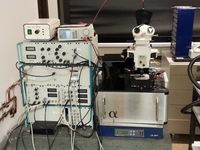
The aim of the experiment is the optoelectronic characterisation of a direct (CIGS) and an indirect semiconductor (Si), as used in solar cells. The investigations are carried out using conventional photoluminescence (PL) and a confocal laser microscope. The relevant measurand is the spectrally resolved photon flux from the sample, in the first case averaged over the entire sample surface, in the second measured with sub-µm spatial resolution. Using Planck's generalised radiation law, key semiconductor parameters are determined, such as the optical band gap and the splitting of the quasi-Fermi level under illumination. Temperature-dependent measurements provide information on the nature of the band gap (direct/indirect) and the influence of defects on the optical properties of the sample. Detection of the photon yield as a function of the irradiation intensity provides additional information on the recombination behaviour of the electron-hole pairs.
By comparing global and spatially resolved PL measurements, spatial inhomogeneities in the sample material become accessible to the experiment. Such variations reflect the polycrystalline nature of many complex semiconductors, which often consist of (1-100) µm grains of different chemical composition and orientation. The variance in the optoelectronic parameters is determined using two-dimensional photon maps. A statistical analysis of such maps allows a direct comparison with the results of the macroscopic PL measurements. The results obtained in the experiment form the basis for a discussion on the suitability of various semiconductors as starting materials for efficient solar cells.
Jürgen Gorobez, AG RASPE (03/20) (" experiment instructions)
Fourier optics using a spatial light modulator
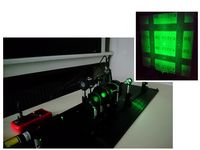
With this experiment, which is currently being set up, students can familiarise themselves with a sub-area of Fourier optics. This is done using a spatial light modulator whose liquid crystals, in combination with various diode lasers, allow a wide range of applications. Some of these applications consist of generating and analysing linear and separable binary beam gratings as well as computer-generated holograms. The students learn how the Fourier transformation takes place with the help of a lens. Furthermore, the software used can be used to generate various diffractive optical elements, which in turn can then be reconstructed and analysed in the Fourier plane of a lens. The generation of optical vortices is also demonstrated, whereby the orbital angular momentum and the topological charge are relevant in addition to the polarisation state.
This practical course offers students the opportunity to apply the fundamentals of geometrical optics and wave optics and to deepen their knowledge through various experiments. In addition, Fourier optics, a modern and very interesting field of optics, is familiarised with with the help of numerous experiments.
Keywords: Fourier optics, light as a wave, diffraction, 4f structure, optical Fourier transform, polarisation state, liquid crystal modulators, phase and amplitude modulation, diffractive optical elements, computer-generated holograms, optical vortices
Dr Lars Englert, AG ULTRA (04/18) (" experiment instructions)
Virtual femto lab
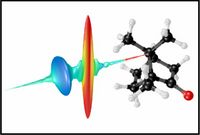
Virtual femto lab part 1: Shaped ultrashort laser pulses
Ultrashort laser pulses are a fascinating tool for observing and manipulating atomic and molecular processes on their intrinsic time scales (femto- to attosecond time scale). In addition to the generation of femto- and attosecond laser pulses, the shaping of these pulses plays an important role today. The ability to tailor ultrashort laser pulses practically at will in amplitude, phase and polarisation forms the basis of coherent control, i.e. the control of ultrafast quantum dynamics (see Virtual Femto Laboratory Part 2), such as electronic excitations of atoms, the spatial alignment of molecules or the targeted breaking of molecular bonds.
This first part of the "Virtual Femto Laboratory" series of experiments provides the basics of a modern femtosecond laser laboratory in three simulation modules and introduces the theoretical description of ultrashort laser pulses. The first module is dedicated to the generation of such pulses in a typical Ti:Sa femtosecond oscillator. In the second module, the oscillator pulses are spectrally phase-modulated and the operation of a 4f Fourier transform pulse shaper is worked out. Finally, the third module is used to measure the shaped laser pulses using various characterisation methods, such as autocorrelation, spectral interference or spectrogram-based methods (FROG).
Keywords:
Physical: laser, frequency comb, mode coupling, 4f setup, liquid crystal modulator, dispersion, Mach-Zehnder interferometer, autocorrelation, spectrometer, FROG
Mathematical: Fourier transform.
Virtual Femto Lab Part 2: Ultrafast Quantum Dynamics
(Prerequisite: previous participation in the FPR experiment "Virtual Femto Lab Part 1: Shaped ultrashort laser pulses")
The second part of the "Virtual Femto Lab" series of experiments is dedicated to the interaction of ultrashort laser pulses (see Virtual Femto Lab Part 1) with simple building blocks of matter. In two simulation modules, the interaction of shaped femtosecond laser pulses with atomic and molecular quantum systems is dealt with and the basics of the quantum mechanical description of light-matter interaction are developed. The theoretical methods are applied to various excitation scenarios with the help of existing simulation programmes. In addition to examples from spectroscopy, the focus of the experiment is on the coherent control of ultrafast dynamics in customised femtosecond laser fields. The first module concentrates on the physical mechanisms for controlling electronic wave packets in atoms. Building on this, the second module investigates the vibronic excitation and selective control of vibrational wave packets in molecules.
Keywords:
Atoms: Schrödinger equation, Einstein coefficients, spectral lines (broadening mechanisms), Fermi's Golden Rule, Rabi oscillations, Rapid Adiabatic Passage, Stimulated Raman Adiabatic Passage, Photon Locking.
Molecules: Harmonic oscillator (quantum mechanical), wave packet dynamics, Born-Oppenheimer approximation, Franck-Condon principle, pump-probe method, Tannor-Kosloff-Rice scheme.
Dr Tim Bayer, AG ULTRA (04/21) (" experiment instructions)
Simulation of phase transitions in optimisation problems (online experiment)
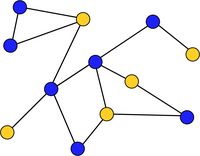
In this experiment, the phase transition of a combinatorial optimisation problem is investigated with the help of simulations. Similar to the phase transition of a magnet, which changes from a paramagnetic to a ferromagnetic state, such a transition can also be found in optimisation problems. Here, the vertex cover problem will be considered, in which a transition from easy to hard to solve takes place. In contrast to the usual algorithms that solve this problem, linear programming is used here. This type of optimisation is often used in industry, e.g. for production planning.
The experiment provides a basic understanding of the phase transition of the vertex cover problem and demonstrates ways of analysing it using methods from statistical physics. In addition to determining the critical point at which the phase transition occurs and analysing the runtime of the algorithms, the phase diagram is also examined. Examples are used to explain how the individual algorithms work and the simulations are then carried out in various modules. Initially, the "pure" simplex algorithm is used to solve the linear programming problem. In the course of the experiment, this is then extended to include a heuristic and cutting planes in order to find more meaningful solutions.
Keywords: phase transitions, combinatorial optimisation problems, vertex cover problem, Erdős-Rényi random graphs, linear programming, simplex algorithm, cutting planes.
Peter Werner, AG CompPhys (03/20) (" experiment instructions)
Meteorological influences on the power output of photovoltaic systems (block lab course)
(Influence of meteorological conditions on photovoltaic system performance)
Thanks to technical advances and cost reductions, photovoltaic technology has become one of the most widely used renewable energy technologies. Solar radiation must be utilised as effectively as possible to generate electrical energy. However, this energy source is subject to strong fluctuations due to the day-night cycle and cloud cover, which means that the photovoltaic yield is highly dependent on the weather.
In the experiment, the influence of various meteorological parameters on the electrical output of a photovoltaic module is investigated. The aim is to gain an understanding of how meteorological conditions affect the performance of photovoltaics.
First, a low-budget meteorological measuring station is set up and configured to log minute values of irradiation, temperature, relative humidity and air pressure. At the same time, the current, voltage, power and module temperature of a PV module also installed on the roof are recorded.
The data recorded over the course of a week is analysed for errors and compared with values from a reference station located at the site in order to check the accuracy of the data. In a further step, the output of the PV module is analysed during the period under consideration. For this purpose, the meteorological measurements are used as input variables for PV performance modelling (PV Modelling Toolbox of the PV Performance Modelling Cooperative).
An intermediate step in the modelling is the conversion of the irradiation, which is usually measured horizontally, to the inclined module surface. For this purpose, models from the literature are used and their accuracy is analysed with the help of the measured values, e.g. in the case of ideal, cloud-free conditions.
Finally, a comparison of the modelled and measured PV output is carried out. The influence of meteorological parameters on PV performance will be analysed.
Time periods: to be announced
Keywords: Modelling of solar radiation, PV performance, meteorological measuring station, evaluation of data quality
Jonas Stührenberg, DLR (03/22) (" experiment instructions)
Spectroscopic Ellipsometry for Thin Film Analysis (Online Experiment)
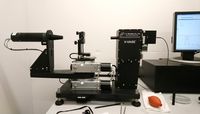
Ellipsometry measures the change in polarisation state of light typically reflected from a sample to investigate its dielectric response function. It derives its sensitivity from detecting the ratio of Fresnel reflection coefficients, which as a complex number also contains information on the relative phase change of the light beam. Standard ellipsometry is commonly used to determine the layer thickness of thin films and the optical constants of both thin and bulk materials. It never directly measures thickness or optical constants but requires modelling and fitting of the acquired data. During this virtual exercise you will receive measured ellipsometric data from samples such as wafers with thermal oxide coating and thick gold layers. You will perform fitting of these data to obtain layer thicknesses and complex refractive indices for the sample data with a vendor provided software via remote access. For deeper understanding you will build your own optical models to calculate reflection spectra and ellipsometric data based on your fit results.
Teaching Language: English or German
Keyword: Ellipsometry
 Apl.-Prof. Dr Manuela Schiek, (03/21)
Generation and characterisation of electron beam vortices (block lab course)
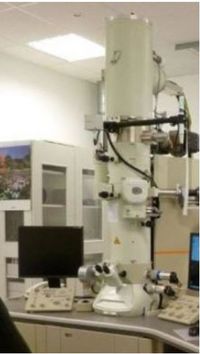
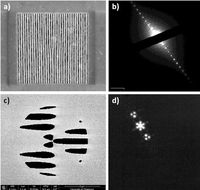
Modern methods of transmission electron microscopy allow a comprehensive insight into the structure and properties of nanoscale systems. Particularly sensitive techniques, such as phase-contrast imaging or electron holography, utilise the spatial phase structure of the electron beam, which reacts sensitively to magnetic and electric fields. A new development in this field is the use of electron wave functions whose phase surfaces have a helical structure - so-called electron vortices (Verbeeck et al., Nature 467, 301-304 (2010)).
The aim of this experiment is to generate electron vortices in the microscope and to investigate their properties.
The experiment includes:
- Production of nanostructured masks using focussed ion beams
- Development of a Matlab programme to simulate electron diffraction on these masks
- Generation and imaging of electron vortices in the electron microscope
- Matlab image analysis for quantitative characterisation of the generated electron vortices
Keywords: Structure of a transmission electron microscope (electron sources, magnetic lens system of an electron microscope, electron detectors), interaction of electron beams with matter, Fresnel diffraction, spatial and temporal coherence of waves, electron holography, beam modes, basics of nanostructuring with focussed ion beams.
Recommended prior knowledge:
- Knowledge of Matlab
- Courses in photonics or electron microscopy
The practical course takes place on 15 dates (5 groups with 3 dates each).
- Date: Theoretical introduction
- Date: FIB (Focussed Ion Beam)
- Date: TEM (Transmission Electron Microscopy)
The following dates are fixed for the summer semester 2022:
Group 1: 29.08 / 30.08 / 31.08; Group 2: 05.09 /06.09 / 07.09; Group 3: 12.09 / 13.09 / 14.09
Group 4: 19.09 / 20.09 / 21.09; Group 5: 26.09 / 27.09 / 28.09;
Dr V. Solovyeva, AG UND (04/22) (" experiment instructions)
Wake characterisation of a wind turbine using actuator discs
(Wake characterisation od a wind turbine using actuator discs)
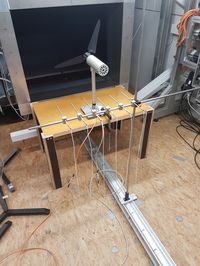
The flow characteristics of the wake of wind turbines depend, among other things, on the thrust generated by the turbine. For experimental investigations in the far wake of wind turbines, non-rotating actuator discs that generate a comparable thrust are therefore often used. In this experiment, the wakes of actuator discs of different sizes and different blockages are to be measured and characterised using hot-wire anemometry. In addition, a comparative measurement will be made with the "MoWiTO 0.6" model wind turbine developed in Oldenburg.
English version:
The flow characteristics in the wake of wind energy converters depend, among other things, on the thrust generated by the turbine. Therefore, for experimental investigations in the far wake of a turbine often actuator discs that generate comparable thrust are used. In this experiment the wakes of actuator discs of different size and blockage will be measured and characterised using hot-wire anemometry. Furthermore, a comparison measurement with the Model Wind Turbine 'MoWiTO 0.6' that was developed in Oldenburg will be done.
Luuk Sengers, ForWind, AG EnMet (03/19) (" Test instructions)
Micrometeorological measurement methods for the determination of atmospheric turbulence (online experiment)
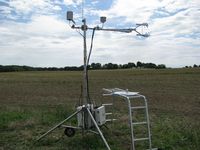
Turbulent flows play a key role in the transport of momentum, heat and trace gases within the atmospheric boundary layer. For example, divergences in the sensible heat flux contribute to the warming or cooling of air layers within the atmospheric boundary layer. The vertical profile of the turbulent flow of a trace gas determines whether the concentration of that trace gas increases or decreases within a layer of air. The precise measurement of exchange fluxes at the interface between the Earth’s surface and the atmosphere is crucial for understanding the processes in the atmospheric boundary layer. As turbulent flows also significantly influence the flow characteristics within the boundary layer, knowledge of these flows is also important for wind energy.
Turbulent energy fluxes near the ground – that is, energy exchanges in the lowest few metres of the atmosphere – are a major source of uncertainty in numerical weather prediction and climate models. However, due to their overly coarse spatial and temporal resolution, weather and climate models cannot explicitly resolve microturbulence near the ground. In the models, the near-surface flows are therefore parameterised, i.e. derived from other variables resolved by the model. However, the parameterisations must be checked for their validity and accuracy and, if necessary, adjusted. The data used to validate the parameterisations are provided by high-resolution measurements of near-surface turbulent fluxes.
In micrometeorology, the eddy covariance measurement method is frequently used to determine near-surface turbulent fluxes. Here, the turbulent fluxes are measured directly. To this end, information on wind speed, air temperature and the concentrations of water vapour and other trace gases is recorded at the same location at a high measurement frequency.
Ultrasonic anemometers and infrared gas analysers are used for eddy covariance measurements. The eddy covariance method imposes certain requirements on the measurements. If these are not met, the collected data must undergo extensive correction procedures before they can be used for further analysis. For example, a rotation of the coordinate system must be carried out in order to identify and correct erroneous assignments to the velocity components resulting from misalignment of the ultrasonic anemometer. Further corrections are necessary, for example, due to the limited frequency spectrum within which fluctuations can be detected by the sensors.
The aim of the practical experiment is to carry out and evaluate eddy covariance measurements in the field using an IRGASON sensor. In the process, participants will be familiarised with the standards for quality assurance and quality control of eddy covariance measurements. For instance, to ensure the quality of the measurements, the suitability of the measurement site must first be assessed. This involves, for example, determining which features in the vicinity of the measurement site actually influence the turbulent flows (known as a ‘footprint analysis’). Practical course participants will also gain an insight into working with typical data loggers used in meteorology to control measurements and record measurement data. The raw data recorded must be subjected to correction procedures. The code for applying the correction procedures is to be developed in part by the course participants. The results obtained are to be compared with those that can be obtained using the freely available eddy covariance post-processing software TK3. This software is also to be used to systematically investigate the effects of various errors on the turbulent exchange fluxes.
Note:
In the 2022 summer semester, the experiment will be offered exclusively as an online-only experiment as part of a block lab course during the lecture-free period.
Dates:
Group 1: 28 July 2022 / 29 July 2022 / 1 August 2022
Group 2: 4 August 2022 / 5 August 2022 / 8 August 2022
Group 3: 22 September 2022 / 23 September 2022 / 26 September 2022
Group 4: 29 September 2022 / 30 September 2022 / 4 October 2022
Keywords: eddy covariance measurement, ultrasonic anemometer, infrared gas analyser, atmospheric boundary layer, atmospheric turbulence, data logger
Luuk Sengers, ForWind, EnMet working group (03/19) (» Experiment instructions)
Interactions of Wind Turbines and Three-Phase AC Grids
(Interactions of Wind Turbines and Three-Phase AC Grids)
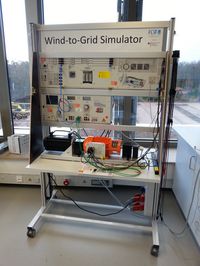
Most wind turbines feed their electrical energy into the grid, which has three phases and a largely constant frequency of 50 Hz. The large and efficient wind turbines of the newer generations require certain generator concepts for this, in which frequency converters are used. In this practical course, the function of these concepts will first be understood and physically measured. Another part of the practical is aimed at highly topical issues relating to the grid connection of renewable energies: As the proportion of wind energy is now very high in many regions of the world, the plants must not jeopardise grid stability. Furthermore, the quality of the electricity must be maintained in terms of frequency and voltage fluctuations, even with a high proportion of wind power, and the load on the grid caused by reactive power must be controlled. In the event of a short circuit or voltage dip, the wind turbines must not jeopardise the stability of the grid by disconnecting from the grid. At the same time, the turbines themselves must not be jeopardised by such incidents. As part of this practical course, various situations are realistically simulated on a test rig with a generator with frequency converter and grid connection, and frequency, voltage and current curves as well as power flows are measured. The effects and possible control-related compensation measures will be analysed to gain a better understanding.
Keywords: Renewable energies, grid stability, reactive power supply, frequency stability, generator concepts for wind turbines
English version:
Most of the existing wind turbines feed their electrical energy into the interconnected grid, which has three phases and a largely constant frequency of 50 Hz. For the large and efficient wind turbines of the newer generations, certain generator concepts are required for this, in which frequency converters are used. Within the framework of this practical course, these concepts will first be understood in their function and physically measured. A further part of the practical course is aimed at highly topical questions of the grid connection of renewable energies: Since the share of wind energy is now very high in many regions of the world, the turbines must not endanger grid stability. Furthermore, the quality of the electricity with regard to frequency and voltage fluctuations must be maintained even with a high proportion of wind power, and the load on the grid caused by reactive power must be controlled. In the event of a short circuit or voltage dip, the wind turbines must not endanger the stability of the grid by decoupling themselves from the grid. At the same time, they must not themselves be endangered by such incidents. Within the framework of this practical course, various situations are realistically performed on a test stand with a generator with frequency converter and grid connection. Frequency, voltage and current curves as well as power flows are measured. The effects and possible control compensation measures are to be understood more precisely by means of evaluations.
Keywords: renewable energies, grid stability, reactive power supply, frequency stability, generator concepts of wind turbines.
Andreas Schmidt, AG We-Sys (03/19) (" Experimental guide)
Experimental structural analysis of the rotor blade of a wind turbine
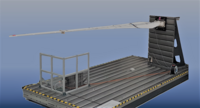
Optimising the design of machinery and buildings increasingly requires a more precise alignment between system function and system structure. To achieve this, it is first necessary to characterise the dynamic behaviour of the system.
The aim of this experiment is to investigate the structural dynamic properties of a wind turbine rotor blade. The system is regarded as a vibrating unit with parameters such as dimensions, mass, damping and stiffness. The measurement and analysis methods used in this practical session are generally employed in many fields of physics, civil engineering and industry.
First, a one-dimensional experiment is set up using a simple bending beam. The modal parameters of the system are determined using methods of experimental modal analysis as a correlation between dynamic excitation and the system response. A modal hammer and one-dimensional accelerometers are used. The analysis of the experiments leads to a system model which is intended to represent the real system with sufficient accuracy.
In the next step, the hammer impulse is replaced by periodic and stochastic excitation using a modal shaker.
In a third step, a 6-metre-long wind turbine rotor blade is fitted with 20 multidimensional accelerometers. The system response must be transferred to a model in a multidimensional manner and compared with the measured system response.
Students will develop skills in experimental design, calibration, application, data acquisition, error analysis and evaluation in the context of modal experiments.
The practical course will take place over 18 sessions during the summer semester of 2021. Depending on individual arrangements with the students, the experiments will be offered on Fridays during the lecture term or as a block lab course lasting several days during the lecture-free period
A maximum of 12 students will take part in total, working in pairs. Each pair must complete three days of experiments.
Practical session times: 8 am to 12 noon on each day.
Keywords:
experimental modal analysis, IEPE/MEMS accelerometers, modal hammer, shaker, transfer function, SDOF/MDOF model, stabilisation diagram, periodogram
Suryans Chamoli, WE-Sys Research Group (04/18) (» Experiment instructions)
Hot-wire anemometry and turbulence
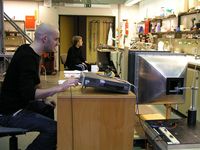
High temporal and spatial resolution sensors are required for measurements in turbulent flows. A standard method for this is hot-wire anemometry. The basis for this technique is the dependence of the electrical resistance of a wire on the temperature or the velocity-dependent cooling by the moving medium. The following topics are covered: The construction of hot-wire anemometers based on an 8 cm long heating wire and a bicycle light bulb. These anemometers are characterised in different operating modes and compared with commercial hot-wire anemometers. For this purpose, measurements are carried out in the wake of a cylinder and analysed with regard to their turbulent properties. Keywords: Hot-wire anemometry with constant current and constant temperature method, Wheatstone bridge, Prandtl tube, Karman vortex street, cylinder wake, Strouhal number Michael Hölling, AG TWIST (03/12) (" Experimental Guide)
Advanced observation techniques in astrophysics (excursion or remote experiment)
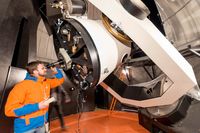
Excursion to the Observatoire de la Côte d'Azur, C2PU
Together with the course: Advanced Observational Techniques in Astrophysics (5.04.4644)
The six-day excursion to the C2PU observatory centre (c2pu.oca.eu) takes place during the lecture-free period in late summer. The exact period depends on the phases of the new moon. The C2PU is located north of Nice in the French Alps. Two telescopes, each with a mirror diameter of one metre, are available on site for various astronomical measurements. The techniques of astrometry, photometry, spectroscopy and astrophotography are to be learnt or deepened. As part of this practical course, asteroids will be tracked down, brightness curves of variable stars will be measured, exoplanets will be detected and the (rotational) speeds of celestial bodies will be determined with the help of spectroscopic analyses. The excursion is preceded by a preparatory seminar, which is attended by all participants. During this seminar, the observation campaigns are planned and the necessary observation and evaluation techniques are introduced. The seminar takes place within the last four weeks before the excursion and lasts four days.
Important notes: The number of participants is limited to 8 persons. Participation in this event will incur costs. A maximum flat rate of 110 euros is to be expected for accommodation and meals. Travel expenses must also be covered. The assumption of costs by university funds is applied for annually and can therefore not be guaranteed. Participation in this internship can be credited with an additional 3 CP in the specialisation module.
Period: to be announced
Alternative: Remote observations
Instead of the excursion, it is also possible to take part in a remote observation session. This takes place at night on the Wechloy campus. A C2PU telescope can be controlled via a remote connection. The telescope of the university observatory is also used. The experiment also lasts five nights and the same astrophysics techniques are learnt as during the excursion. The preparatory seminar is also necessary for observation planning, for which 3 CP can be credited in the specialisation module.
Philipp Huke, Athleen Rietze, Matti Gehlen, WG Medical Radiation Physics (03/22) (" experiment instructions)
Electronic properties of surfaces and point defects using ab initio calculations (online experiment)

The electronic structure, i.e. the distribution of electrons within the available energy levels, determines most material properties,
including their colour and their ability to conduct heat and electric current. This information can be obtained theoretically within the framework of density functional theory (DFT),
one of the most successful quantum mechanical ab initio methods.
The only information required for this is the chemical composition and the atomic arrangement of the materials.
In this practical experiment, complex systems such as crystal surfaces or point defects in crystals are studied.
Students learn how defects and surfaces can be modelled theoretically and how their electronic properties can be analysed.
For this purpose, well-known DFT software packages and the corresponding visualisation tools are used.
In addition, students will have the opportunity to gain experience in programming.
Short scripts in Bash or Python will be written to automate calculations and to extract and analyse output data.
A good knowledge of the basics of quantum mechanics is the only prerequisite for this practical course.
H.-D. Saßnick AG EST (03/21) (" experiment instructions)
Psychophysics, Neurosensorics and Auditory Signal Processing (block lab course)
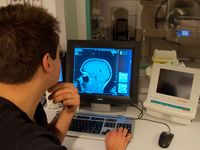
The block lab course in Psychophysics, Neurosensorics and Auditory Signal Processing provides an insight into current issues and research in the field of applying physical methods to investigate the processing of sensory stimuli. The lab course takes place over a period of six experimental days. It corresponds to one experiment in the FPR-M and is worth 3 credit points as part of Specialisation Modules I or II. The project work involves independently studying the theory, planning and carrying out the experiments, and presenting one’s own topic in the accompanying seminar.
The main focus of the practical course is human hearing. It provides an insight into the physical and physiological principles, as well as the necessary fundamentals and methods of signal processing. Each group carries out its own small, research-oriented project, in which a current research question is addressed using a variety of methods. Possible topics include the pathology and diagnosis of hearing, absolute and differential perception of sound, masking, signal detection theory, binaural hearing and speech intelligibility. The methods used include psychoacoustic experiments, auditory evoked potentials, otoacoustic emissions and functional magnetic resonance imaging.
Period: February/March (please register separately directly with Mr Uppenkamp)
Keywords: Acoustics, neurosensorics, signal processing, electroencephalography, magnetic resonance imaging, signal detection theory
Stefan Uppenkamp, AG MEDI (03/12) (» Experiment instructions)
Rydberg excitons in atomically thin semiconductors (block lab course)
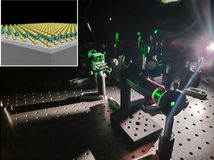
The aim of the experiment is to produce atomically thin semiconductors ourselves by removing individual crystal layers (‘exfoliation’) and to measure their exciton spectrum at low temperatures using high-resolution spectroscopy.
Atomically thin semiconductor layers made of transition metal dichalcogenides (TMDCs) possess exceptional optical properties, which make them of interest, for example, as an active medium in nanolasers. A key feature is the transition from an indirect to a direct semiconductor as the number of atomic layers in the material is gradually reduced down to a single layer. Furthermore, the exciton binding energy increases many-fold:
The resulting behaviour of electrons and holes in two-dimensional systems can be studied exceptionally well using photoluminescence and absorption measurements at low temperatures (77 Kelvin liquid nitrogen cryostat). The strength of the exciton confinement potential can be determined from the absorption of the ground-state exciton (1s) and the first excited exciton state (2s). Higher Rydberg states of the exciton can also be observed in the same way.
This experiment offers students the opportunity to familiarise themselves with the fundamental optical properties of atomically thin semiconductors based on their experimental signatures. They will learn how to prepare these novel materials through exfoliation and gain initial experience in working with vacuum and cryogenic technology.
Planned dates for the block lab course: 25 July 2022 – 12 August 2022
Keywords: semiconductors, TMDC, exfoliation, Rydberg excitons, photoluminescence, low temperatures
Martin Esman, Hangyong Shan, QMAT Research Group (04/22) (» Experiment instructions)