
Bachelor phase
Bachelor phase
Advanced lab course during the Bachelor’s phase (FPR-B)
- Test instructions and other information material (password required)
- Organisation and scope of the FPR-B
The following list contains a brief description of the experiments in the FPR-B. The name of the person responsible is given at the end.
Virtual femtolab
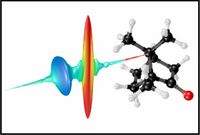
Ultrashort laser pulses are a fascinating tool for observing and manipulating atomic and molecular processes on their intrinsic time scales (femto- to attosecond time scale). In addition to the generation of femto- and attosecond laser pulses, the shaping of these pulses plays an important role today. The ability to tailor ultrashort laser pulses practically at will in amplitude, phase and polarisation forms the basis of coherent control, i.e. the control of ultrafast quantum dynamics (see Virtual Femto Laboratory Part 2), such as electronic excitations of atoms, the spatial alignment of molecules or the targeted breaking of molecular bonds.
This first part of the "Virtual Femto Laboratory" series of experiments provides the basics of a modern femtosecond laser laboratory in three simulation modules and introduces the theoretical description of ultrashort laser pulses. The first module is dedicated to the generation of such pulses in a typical Ti:Sa femtosecond oscillator. In the second module, the oscillator pulses are spectrally phase-modulated and the operation of a 4f Fourier transform pulse shaper is worked out. Finally, the third module is used to measure the shaped laser pulses using various characterisation methods, such as autocorrelation, spectral interference or spectrogram-based methods (FROG).
Keywords: Physical: laser, frequency comb, mode coupling, 4f setup, liquid crystal modulator, dispersion, Mach-Zehnder interferometer, autocorrelation, spectrometer, FROG (recommended for physics students)
Mathematical: Fourier transform.
Dr Tim Bayer, AG ULTRA
Optical properties of optical filters and semiconductors
This experiment introduces the concept of wavelength-selective manipulation of electromagnetic radiation using optical filters such as neutral density filters, short-pass filters or long-pass filters. The precise adjustment of the refractive index and layer thickness of anti-reflective coatings is analysed using a reflection measurement on a solar cell coated with an anti-reflective layer. Interference effects in the optical transmission of thin semiconductor layers on glass are utilised to determine layer thicknesses of a few hundred nanometres with low error. A comprehensive characterisation of the optical properties of semiconductors is achieved by deriving the spectral refractive index and the absorption coefficient, together with the determination of the optical bandgap of the semiconductor thin film.
The aim of the experiment is to gain an in-depth understanding of the interaction between electromagnetic radiation and matter. Through an examination of recent scientific literature, students will learn the so-called Swanepoel method and apply it to their own optical transmission measurements to determine the film thickness, refractive index, absorption coefficient and bandgap of semiconductors.
The experiment is supervised in English.
 Erkout Ouzoun; Raspe Research Group
Optoelectronic properties of semiconductors
The interaction of radiation with matter is studied on the basis of the absorption of light in semiconductors. The photogeneration of electrons and holes that accompanies this absorption, and the associated photocurrent, form the basis for the operation of many semiconductor devices, such as sensors and solar cells. In this experiment, several key parameters of semiconductors that are important for optoelectronic applications are discussed and experimentally determined using hydrogenated, amorphous silicon thin films. The spectral transmittance of the silicon samples is measured using a spectrophotometer. This enables the determination of the film thickness, the spectral absorption coefficient, the spectral refractive index and the band gap of the absorber. With regard to the electronic properties, the position of the Fermi energy is determined from the measurement of the dark current. Data analysed from the optical transmission measurements described above are subsequently used to determine the photoconductivity and the product of mobility and lifetime for the majority carriers from the measurement of the photocurrent. The steady-state photocarrier grating method utilises the electronic transport properties resulting from inhomogeneous carrier generation to derive the mobility-lifetime product of the minority carriers. These mobility-lifetime products correlate with the defect density of the sample and can therefore be considered as a quality criterion for the semiconductor sample under investigation.
Experiment dates: 9 Feb 27 / 10 Feb 27 and 11 Feb 27 / 12 Feb 27
Dr Rudi Brüggemann
Spectroscopy of the iodine molecule
Absorption spectra of molecules generally exhibit a characteristic band structure, which consists of the electronic transitions familiar from atoms, as well as a superimposed vibrational and rotational structure. A corresponding description of the band spectra can be derived from the theory of molecular physics (Born–Oppenheimer approximation, Franck–Condon principle, etc.).
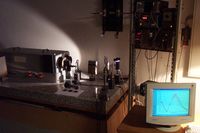
In this practical experiment, characteristic parameters of the iodine molecule are to be determined on the basis of absorption spectra. To this end, students will first familiarise themselves with the fundamentals of optical spectroscopy. Following a description of the experimental setup, temperature-dependent absorption spectra of an iodine gas will be recorded. Subsequently, selected lines are to be assigned to the corresponding transitions and specific parameters, such as the dissociation energy, determined.
The experiment will be supervised in English.
Boris Gribakin, UNO Research Group
Ultra-fast photoluminescence
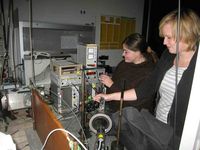
Through interaction with light, matter can be excited to an electronically excited state by the absorption of a photon. Upon relaxation back to the ground state, a photon may in turn be emitted; this phenomenon is known as photoluminescence. The lifetime of the excited state can range from a few hundred picoseconds to nanoseconds (fluorescence) or even milliseconds to hours (phosphorescence). In this practical experiment, the dye oxazine is investigated in various solvents using absorption and fluorescence spectroscopy. Furthermore, time-correlated single-photon counting (TCSPC) will be used to measure the fluorescence lifetime and to determine depolarisation times through polarisation-dependent measurements.
Dr Antonietta de Sio, UNO Research Group
Optical flow measurement with Particle Image Velocimetry (PIV)
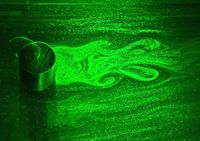
Particle Image Velocimetry (PIV) is an optical measurement method for the non-contact detection of fluid flows. It enables the quantitative investigation of fluid mechanical processes without disturbing them. This experiment is intended to provide an introduction to the methodology of PIV and demonstrate its possible applications, which have become increasingly important in recent years.
In the experiment, an optical setup is created to illustrate the basic properties of particle image velocimetry. The experiment begins with the characterisation of the Nd:YAG laser used. The laser beam is then shaped so that it can be used for PIV measurements. For a simple, first application, scattering particles are introduced into the previously formed light section and a laminar flow is simulated, which is analysed using discrete cross-correlation and the accuracy of the PIV method is determined. Finally, a water channel is used to characterise the wake of cylinders using PIV.
Simon Meckelnborg AG TWIST
Aerodynamic resistance using the example of the cup anemometer
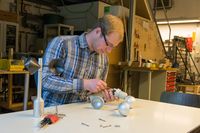
The vane anemometer is the most commonly used sensor for measuring atmospheric wind speeds. Since its invention in 1846, many modifications and improvements have been made to the anemometer to improve its response to turbulent flows. However, due to its design, the anemometer will always overestimate the wind speed when the wind drops rapidly – this effect is known as ‘over-speeding’.
In this experiment, students are to construct a cup-and-star anemometer themselves using simple materials. In addition to the shape of the cup, the symmetry of the structure is fundamental to the behaviour of the anemometer. These elements of the anemometer are to be systematically varied and characterised in the wind tunnel. A calibration is to be carried out for all configurations set up, so that the differences can subsequently be discussed. In addition, the behaviour during rapid changes in wind speed is to be recorded and linked to the design. Based on the fundamental equations of motion, theoretically expected results are to be compared with the measurement results. This requires an understanding of the forces and moments at work.
Dr Michael Hölling, TWIST Research Group
Astrometry and photometry of dwarf planets and asteroids
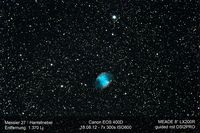
In this experiment, you will learn basic techniques of modern optical astronomy. The main task is to determine the position, orbital parameters and brightness of minor planets. The selection of objects is planned using planetarium software, and the selected object will be observed throughout the semester. To observe these celestial objects, you will learn how to use robotically controlled telescopes in Chile and on Tenerife. The observations are not spread over two eight-hour laboratory sessions, but will take place throughout the entire semester with a minimal weekly time commitment.
Prerequisite for the practical course: attendance at the astrophysics lecture
Compulsory introductory course: to be announced
Athleen Rietze, Matti Gehlen, Med. Str. Phys.
Exciton polaritons in optical microcavities

Polaritons are quasiparticles that arise from strong interactions between light and excitations in matter (such as crystal vibrations, electron gas oscillations, magnetic spin waves, etc.). The fields of photonics, optics and quantum computing have all identified polaritons as a common fundamental quantum system of particular significance. Given the current growing interest in quantum computing and optical information processing, polariton devices are increasingly being considered in terms of their potential as optical processing units.
In this experimental work, the students undertake the optical characterisation of a semiconductor polaritonic device. The sample under study is a monolithic microcavity, which can be thought of as a two-mirror assembly (a resonator) that confines the light within. An optically active two-dimensional quantum system is embedded at the centre of the cavity. This active material is a quantum well, which consists of alternating semiconductor layers (with different bandgaps). At very low temperatures (~10 Kelvin above absolute zero), a fundamental matter excitation – specifically, an exciton – can arise in this quantum well. Excitons are Coulomb-bound electron-hole pairs that exhibit an optical transition dipole moment and can therefore be detected optically. When a strong electromagnetic field interacts with the exciton, a new hybrid particle is formed – an exciton-polariton. The experimental task is to detect the presence of exciton-polaritons using low-temperature optical spectroscopy, which includes photoluminescence and reflectivity measurements of the sample.
The aim of the work is to give students the opportunity to delve into the world of modern photonics and experimental optics, to gain initial experience in handling low-temperature equipment, and to gain some insight into current research interests within the polariton community. Just like the nature of its subject matter, polariton science is interdisciplinary and encompasses a wide range of topics such as: materials science, photonics, classical and quantum optics, and solid-state and condensed matter physics. As such, the subject holds great appeal for anyone interested in the topics listed.
Supervision of the experiment will be in English.
Ivan Solovev, Quantum Materials Research Group
Solid-state laser
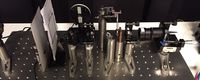
Solid-state lasers are the ‘workhorses’ of laser sources in industry, medicine and science. Areas of application include, amongst others, precision measurements, material ablation, welding, surgery, light-matter interactions and quantum control. As part of this experiment, a diode-pumped continuous-wave laser resonator with an Nd:YAG crystal as the active medium will be built from scratch, tuned and characterised. As a preparatory step, various laser resonators will be simulated using Gaussian optics and subsequently realised experimentally. The characterisation includes, amongst other things, the analysis of transverse electromagnetic modes (TEM) and the measurement of efficiency. Finally, non-linear frequency doubling is achieved both inside and outside the resonator. The aim of the experiment is to familiarise students with the fundamentals of laser technology and to apply this knowledge directly to the construction and characterisation of a laser resonator.
Dr Lars Englert, ULTRA Research Group
Diode laser
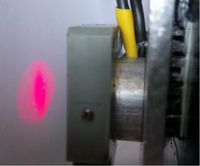
LASER stands for Light Amplification by Stimulated Emission of Radiation. The basic principle of any laser is the stimulated emission of light, which results in the amplification of light whilst maintaining its frequency, polarisation and phase. Modern semiconductor lasers, often referred to as laser diodes or diode lasers, are among the most efficient laser systems.
In this experiment, the aim is first to familiarise oneself with the fundamentals of laser diodes. Next, the characteristic current-voltage curve and the spectrum of a laser diode are to be determined. Furthermore, the temperature-dependent behaviour of the laser diode is to be investigated. Subsequently, the changes in the characteristic curves and spectra of the laser diode as a function of temperature will be discussed.
The experiment will be supervised in English.
Naby Hadilou, AG UNO
The quantum eraser in the double-slit experiment

The double-slit experiment is one of the fundamental experiments used to investigate the wave nature of light. Within the framework of quantum mechanics, interference behaviour can also be observed in the single-photon regime. The so-called ‘which-way’ information plays a particular role here: if the path taken by a photon through the double slit can be distinguished, the interference pattern disappears.
In this experiment, the ‘which-way’ information is marked by the polarisation of the photons. The experiment then investigates how the interference pattern can be restored by means of a suitable polarisation measurement. The various configurations of the double-slit setup are examined experimentally and the visibility of the interference is quantified. The light intensity in the setup is attenuated to such an extent that the measurements are carried out in the single-photon regime.
The aim of the experiment is to investigate fundamental concepts of quantum mechanics and quantum optics using a simple yet fundamental interferometry experiment. In doing so, the relationships between interference, polarisation, coherence and path information are experimentally elucidated. In addition to setting up the double-slit and adjusting the optical setup, students will learn methods for measuring and analysing single-photon signals.
Keywords: quantum mechanics, quantum optics, quantum eraser, double-slit, single photons, interference, path information
Prerequisite: Fundamentals of Physics II and Physics III lectures
Dr M. Esmann’s Quantum Materials Research Group
Excitons in two-dimensional semiconductors
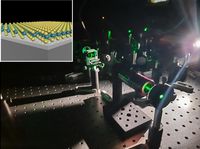
Atomically thin semiconductor layers made of transition metal dichalcogenides (TMDCs) possess exceptional optical properties, which make them of interest, for example, as an active medium in nanolasers. A key feature is the transition from an indirect to a direct semiconductor as the number of atomic layers in the material is gradually reduced down to a single layer. Furthermore, the exciton binding energy increases many-fold. The resulting behaviour of electrons and holes in two-dimensional systems can be studied exceptionally well using absorption measurements. The transition to a direct semiconductor in the monolayer results in a sharp increase in the photoluminescence quantum yield, which can be directly detected experimentally.
The aim of the experiment is to produce atomically thin semiconductors experimentally by removing individual crystal layers (‘mechanical exfoliation’). Their exciton spectrum is then measured using high-resolution white-light spectroscopy and photoluminescence.
This experiment offers students the opportunity to familiarise themselves with the fundamental optical properties of atomically thin semiconductors on the basis of their experimental signatures. They will learn how to produce these novel materials through exfoliation and gain in-depth experience in handling optical experimental set-ups.
The experiment will be supervised in English.
Keywords: semiconductors, TMDC, exfoliation, excitons, optical spectroscopy
Dr Hangyon Shan, Quantum Materials Research Group
Room acoustics in a "shoebox"
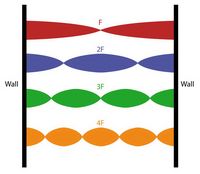
In this experiment, a shoebox-shaped scale model of a room will be used to explore and understand the main properties of room acoustics. In the first part, the modal structure of the empty room, in the form of standing waves, will be calculated and determined experimentally for low frequencies. Secondly, the effect of modifying the room’s acoustic properties will be explored. What is the effect of altering the boundary conditions of wave propagation by placing damping material on the rigid walls, introducing an extra wall into the room, and inserting damping material between the loudspeaker (as the source) and the microphone (as the receiver)? In the third part, the statistically describable room acoustic behaviour at high frequencies will be investigated, and certain statistical parameters governing room acoustics at high frequencies will be measured.
Dr Stephan Töpken; Acoustics Research Group (Faculty VI)
Non-linear optics: design of a parametric amplifier

Non-linear optics deals with interactions between light and matter that occur only at particularly high field strengths. In this context, the principle of superposition is violated, as intersecting rays influence one another, which completely contradicts our everyday experience.
Light wave packets can exchange energy, resulting in new frequency components through frequency doubling, sum frequency generation or difference frequency generation.
Pulsed lasers can concentrate sufficient energy in both time and space to achieve the intensities required for these effects, ranging from GW/cm² to TW/cm².
In this experiment, various phenomena of non-linear optics are utilised to generate a colour-tunable beam in the visible spectral range from an infrared laser beam. In this way, (almost) all the colours of the rainbow are produced from light that is invisible to the human eye. Owing to their colour tunability, the laser pulses generated in this way have become indispensable in modern laser research laboratories and complement other broadband light sources such as titanium-sapphire lasers.
You can learn how to set up beam paths using mirrors and lenses, vary intensities in a targeted manner, and precisely superimpose beams to efficiently excite non-linear processes. In doing so, you will familiarise yourselves with the key mechanisms used in modern laser laboratories – from frequency mixing and self-phase modulation to dispersion and phase matching via birefringence.
Prerequisites: This experiment is only suitable for BA Physics students
Arvid Klösgen, Attosecond Microscopy Research Group
Dosimetry at the accelerator
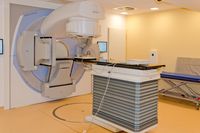
In the field of radiotherapy, linear accelerators are used to irradiate tumours. Each course of radiotherapy is planned individually for each patient. The metrological verification of treatment plans is of great importance in this context.
As part of the virtual practical session, participants will learn about radiation measurements at the accelerator using ionisation chambers, semiconductor detectors and ionisation chamber arrays. On the one hand, participants learn the theoretical fundamentals; on the other, experiments are provided which can be followed online and which put these theoretical principles into practice. This involves measuring depth dose curves and dose profiles of photon fields of various sizes, as well as determining the water energy dose in accordance with DIN 6800-2. Furthermore, example patient plans are verified metrologically.
As part of the practical course, students will gain an insight into the research focus of the Medical Radiation Physics research group and become familiar with typical issues encountered in everyday clinical practice.
The practical course comprises two independent experiments, which are carried out and assessed separately. The experiments are expected to take place within the first two weeks of March 2026. A preparatory meeting will be held in advance during the current winter semester.
Dr Vanessa Delfs, Andreas Pflaum, Medical Radiation Physics Research Group (Faculty VI)
Digital signal processing (block PR)

The block lab course takes place immediately after the end of the winter semester’s lecture period (late February / early March) and comprises a total of 6 days of experiments (corresponding to 3 experiments). It covers the theory and practice of digital signal processing in acoustics and audio signal processing through experiments using computers and acoustic signals.
During the first week (5 experimental days), fundamental topics such as analogue and digital signals, AD/DA conversion, spectral analysis and the discrete Fourier transform, convolution and digital filters are covered through practical work. In addition, a seminar is held in the mornings to convey the theory through discussion with the participants. In the afternoons, the material is explored in greater depth through computer-based experiments.
This is followed by projects carried out in small groups, which are presented in the morning seminar (one experimental day per group). Possible project topics include adaptive filters, analysis of non-stationary signals, data compression in digital systems, speech recognition, signal classification, blind source separation, perceptual audio coding and others.
The block lab course will take place from 28 September 2026 to 5 October 2026.
Gerald Enzner, Stephan Ewert, Jörn Anemüller, (Simon Doclo, SIGPROC Research Group (Faculty VI))
Psychophysics, neurosensorics and auditory signal processing (Block-PR)
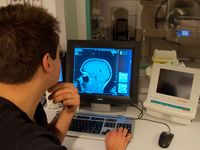
The block lab course takes place in mid- to late September and comprises a total of 6 experimental days (corresponding to 3 experiments). The content covers: the fundamentals and applications of physics, psychophysics and neurosensory science, particularly in relation to hearing; the fundamentals and methods of signal processing; anatomy, physiology, pathology and diagnostics of hearing; absolute and differential perception of sound; masking; signal detection theory; binaural hearing; speech intelligibility; auditory evoked potentials; functional magnetic resonance imaging; otoacoustic emissions.
The block lab course will take place from 5 October 26 to 8 October 26.
Stefan Uppenkamp, AG MEDI (Faculty VI)