Prof Dr Uwe Schneidewind
Prof Dr Uwe Schneidewind
President of the University from 2004-2008
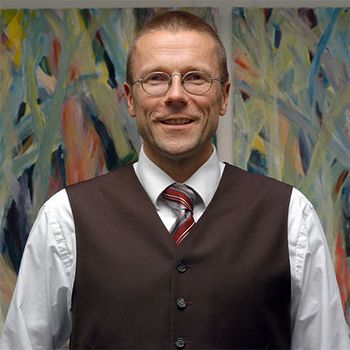
Prof. Dr Uwe Schneidewind, born in Cologne in 1966, studied business administration in Cologne after completing his Abitur and military service, and obtained his Diplom-Kaufmann degree after eight semesters. He initially worked as a junior consultant in environmental management consultancy at Roland Berger & Partner, before moving to the University of St Gallen in 1992, where he conducted research as a project leader at the Institute for Economics and Ecology. After completing his PhD and habilitation, he successfully applied for the professorship in ‘Business Administration – specialising in Production Management and the Environment’ at the University of Oldenburg, where he devoted himself to the topic of ‘sustainable business practices’. In 2003, he took up the post of Dean of his School; a year later, he was elected President of the University. His surprise resignation from this post in 2008 was followed two years later by his appointment as President of the Wuppertal Institute for Climate, Environment and Energy. In 2020, Schneidewind was elected Lord Mayor of the city of Wuppertal.
A special dialectic
Much has been written about universities as a special type of organisation. They are loosely coupled systems of numerous organisational islands with smaller and larger powers. The constitutionally guaranteed freedom of research and teaching, the protection of university lecturers through lifetime tenure, but also the fact that the international subject community is often a much more important reference system than the university itself, distinguish universities considerably from other organisations and especially from companies.
The result is a considerable degree of freedom: in universities, individuals and individual groups can get away with a lot and the great thing is that universities still work - or precisely because of this, because for individuals, the degree of freedom is the lifeblood of the university. It is only through this freedom that creative thought, outstanding research and teaching can emerge, far removed from functionalist constraints. For critics of higher education, the degree of freedom is one of the central reasons for inefficiencies and a neglect of responsibility that repeatedly occur in the higher education sector. The intense debate about the Bologna reform, which has considerably curtailed the degree of freedom in teaching, but also about the increasing indicator- and third-party funding-orientated management of universities, give an impression of how sensitively the topic of "freedom" is discussed in universities.
The pros and cons of more or less freedom are not the subject of this article. At the centre, however, is a phenomenon that is closely related to freedom: the ability to produce comprehensive externally perceived services that are intuitively difficult to understand in relation to internal processes within the university. These possibilities have been well studied in organisational theory. Nevertheless, it is always impressive to experience them vividly in practice.
Between 2004 and 2008, the university unintentionally became an impressive case study for such a discrepancy. Its president inevitably acted as an interface for this process. This is because he plays a central role in both arenas - both in the external visibility of the organisation and the coordination of externally perceivable successes and as a key player in the internal micropolitical arenas - as "primus inter pares".
Everyone who takes up the office of president of a university is usually aware that they have to prove themselves in both arenas: to enable a successful university that is visible to the outside world and at the same time to control the internal dynamics. The Oldenburg presidency from 2004 to 2008 makes it clear that the former can succeed excellently, while the internal processes can run in a completely different direction. The reverse pattern is almost more common: The mastery of internal dynamics succeeds more or less confidently, but the institution remains pale to the outside world.
In the following, the author describes his term of office from 2004 to 2008 from two perspectives: an external and an internal view - a history of the surface structure and a history of the micro-political deep structure.
The outside view - a success story
In February 2004, at the age of 37, the author was elected President of the University of Oldenburg by the University Senate with a two-thirds majority in the first round of voting. This same young university, which is undergoing a comprehensive generational shift, has, with this election, demonstrated for the fourth time – following 1974, 1980 and 1986 – its willingness to appoint a young president. For the first time, it has chosen a candidate with a background in management studies.
The new head of the university is able to build on the outstanding groundwork laid in previous years: clear academic priorities have been established, particularly in the natural sciences and Computing Science. The faculty reform initiated by his predecessor (reducing the number of departments from eleven to five Schools) has significantly enhanced the university’s capacity for action and management. The new president experienced this first-hand as the founding dean of the new School of Computing Science, Economics and Law. The complete transition of Oldenburg’s degree programmes to the Bachelor’s/Master’s structure for the 2004/05 winter semester was courageously prepared and decided upon by the previous presidency
. The original divide between Oldenburg’s conservative local community and the reform-oriented university, which was perceived as left-wing, has been bridged: There are diverse forms of co-operation, several endowed professorships funded by the region, and a formal cooperation agreement between the university and the city. The Oldenburg University Society (UGO) is one of the largest of its kind in Germany. With the KinderUniversität, initiated and organised by Gerhard Harms and Corinna Dahm-Brey, the university has created another programme that enjoys the highest level of acceptance within the regional community. Nationally renowned continuing education programmes have forged close links with the regional community.
Furthermore, the broader conditions for the university could scarcely be better: following the change of government in Lower Saxony in 2003, Lutz Stratmann from Oldenburg became the new Minister for Science for Lower Saxony. This ensures close cooperation between the Ministry and the university in implementing higher education policy initiatives in Oldenburg. Following a ‘higher education optimisation plan’ in 2003, which involved painful cutbacks, the state government has proved to be an extremely reliable partner for the universities. In the years that followed, a ‘Future Agreement’ secured the financial stability of Lower Saxony’s universities. The introduction of tuition fees in 2005 provided further financial leeway.
In 2006, Gerd Schwandner – a Lord Mayor with a strong affinity for academia – was elected to lead the city of Oldenburg, thereby laying the foundation for a successful bid to become a ‘City of Science’.
The new president therefore got off to an extremely strong start following his official inauguration on 1 October 2004 – not least through an inauguration ceremony that signalled a new beginning, during which he outlined in his speech his vision of the University of Oldenburg as an institution that does not merely meet the expectations placed upon it (“excellence”), but also reflects on its roots in reform (“authenticity”) and announces an internal university-wide strategic process, which indeed leads to the adoption of a “Mission Statement 2010” by the University Senate in the summer of 2005. The mission statement not only sets out the university’s overarching vision but also defines very specific core objectives in the areas of research and teaching. In fact, all the ambitious goals set out in the mission statement were achieved by mid-2010.
The university leadership’s capacity to shape the institution is strengthened by the fact that the new President succeeds in recruiting, for teaching, Karen Ellwanger (Material Culture) (followed in 2006 by Sabine Doering, Literary Studies) for teaching, and Reto Weiler (Neurobiology) for research – to serve as new part-time vice-presidents. The filling of these posts is accompanied by a significant strengthening of their roles: the vice-presidents are allocated their own staff units, and their remit and autonomy are considerably increased. The first signs of success resulting from this expanded management capacity of the Presidential Board soon become apparent:
Successes in teaching
The complete conversion of degree programmes to Bachelor's/Master's structures, initiated by the previous Executive Board, is successfully completed. All degree programmes are finally accredited without any problems. The University of Oldenburg thus takes on a pioneering role nationwide. At the same time, the University is increasingly using the opportunities offered by the new Bachelor's/Master's structures for innovative international degree programme projects - both at undergraduate level and for further education courses.
Successes in research
The Vice President for Research coordinates the research-oriented further development of the School via structural plans. Over fifty new appointments in the Schools are successfully realised. A significant increase in the proportion of DFG third-party funding, the acquisition of a further Collaborative Research Centre, a Research Training Group and a Research Unit as well as the pleasing performance in the first round of the Excellence Initiative (the Hearing Research Cluster of Excellence "Hearing and its Sisorders" reaches the second round in 2006, but then unfortunately narrowly fails) are external signs of success.
In 2006, the university raises around € 40 million to set up an EWE research centre for energy research. This fundraising attracted national attention and enabled Oldenburg to develop its long-standing expertise in the field of regenerative energy research into an internationally visible centre. The commitment of EWE, the fifth-largest German energy supplier based in Oldenburg, is also an expression of the university's excellent co-operation with its regional environment.
Wind energy research is being systematically expanded and strengthened in terms of personnel. In addition to the existing ForWind research centre, a Fraunhofer working group and another prominent endowed professorship are being established.
With its ecological profile, Oldenburg's economic sciences achieve outstanding results in numerous rankings.
In addition to Computing Science and the Natural Sciences, the development of profiles in the Social and Economic Sciences is also gaining momentum: in 2005, the necessary reorganisation of Oldenburg's Social Sciences takes place due to a generational change. It is being driven forward by the President in close co-operation with an external appointment committee and the Scientific Commission of Lower Saxony. The coordinated calls for applications and the successful academic appointments cause quite a stir in the specialist communities. The newly appointed researchers were soon integrated into the DFG Collaborative Research Centre based at the University of Bremen, enabling a joint cluster application to be submitted to the Excellence Initiative in 2010.
The Jaspers Year, organised in 2008 under the leadership of philosopher Reinhard Schulz to mark the 125th anniversary of the birth of the Oldenburg-born philosopher, is a nationally and internationally recognised success. With the Jaspers lecture by the last personal Jaspers assistant Hans Saner on aspects of "art" in Jasper's work, among other things, the Oldenburg events set an example in terms of content - and also artistically with the installation "Rainbow Democracy" realised by the world-renowned action artist Olafur Eliasson for the Jaspers Year in Oldenburg. Hans Saner's decision to transfer the original Karl Jaspers library to the University of Oldenburg rounds off the year and, as with the many events organised by the Oldenburg Hannah Arendt Research Centre
to mark the 100th anniversary of Hannah Arendt's birth, the university is successfully cultivating its authentic social science roots.
Interdisciplinary research
In environmental and sustainability research, the university has succeeded in bringing together its strong environmental roots in the fields of regenerative energy research, coastal and marine research and environmentally oriented economics in the interdisciplinary Center for Environmental and Sustainability Research (COAST). The takeover of environmental sciences from Vechta University of Applied Sciences will further strengthen this area. The university's sustainability-orientated profile is increasingly being recognised both nationally and internationally.
Pioneering regional networking strategy
A key element in the strategy for the period 2004 to 2008 is the strengthening of academic north-west co-operation. Although there has been a formal co-operation agreement between the universities of Bremen and Oldenburg for some time, as well as the possibility of co-operative studies in selected subjects at both universities coordinated by a co-operation office, the strategic potential of co-operation has hardly been developed to date.
Thanks to the good personal relationship between the Oldenburg President and Bremen Rector Wilfried Müller and the strong support of the two state governments, the strategic co-operation between the two universities, including other universities and scientific institutions in the region as well as the University of Groningen in the Netherlands, has been highly dynamic since 2004. Among other things, this is reflected in close strategic cooperation in the fields of marine research, wind energy research, Computing Science and the social sciences, as well as in the planning of a joint medical degree programme with the University of Groningen. The President of Oldenburg University also promotes co-operation in the region through his role as Chairman of the Advisory Board of the Bremen-Oldenburg Metropolitan Region in the Northwest ("Metropolis Northwest"). The development of the foundation concept for the NOWETAS Foundation (Nord West Universitas) becomes a catalyst for the strategic further development of university cooperation in the north-west, with a view to a joint bid in the second round of the Excellence Initiative in 2010/11.
Growing national recognition
The dynamic and rapid development of the University of Oldenburg also reaps visible national recognition: in 2007, the German Council of Science and Humanities meets in Oldenburg and takes away vivid impressions of the current development. Success in the Stifterverband's "Profile and co-operation" competition (a competition for the best profile-building strategies of small and medium-sized universities) in 2007 honours the University's North-West co-operation strategy and lays the foundation for the NOWETAS (Nord West Universitas) Foundation.
In February 2008, the university achieved another national breakthrough by winning the Stifterverband's "City of Science 2009" competition. The University of Oldenburg is now recognised as one of the particularly dynamic and agile medium-sized universities. In the summer of 2008, it is in a fantastic position: the "City of Science" year lies ahead of it, the North-West co-operation is making excellent progress and most of the goals of the 2010 mission statement have been achieved.
But then the public hears some surprising news: on 19 August, the President announces his premature resignation and announces that he intends to "devote more time to sustainability research and policy", which he does by soon taking over the Chair of the Lower Saxony Government Commission on Climate Protection and later the Presidency of the Wuppertal Institute for Climate, Environment and Energy.
It is therefore worth taking a look at the history of the University of Oldenburg from 2004 to 2008 from an internal perspective.
The inside view - a conflict-laden micro-politics story
Many of the reform universities founded in the 1970s suffered – and continue to suffer – from a fundamental conflict that stems from their founding history, was exacerbated by developments in academia from the 1980s onwards, and is structurally very difficult to resolve. This conflict was, and remains, evident at the University of Oldenburg: the university was established in 1974 from a college of education and was built up across all subjects with a founding ethos strongly influenced by politics. Teacher training and the social sciences formed a quantitative focus in this process. From the 1980s onwards, the climate of academic policy changed. The teaching-oriented approach that had dominated the expansion of higher education, as well as the emphasis on the social sciences, gave way to a more traditional understanding of research, one heavily influenced by the natural sciences. Against this backdrop, two camps emerged in Oldenburg, as in many reform-oriented universities, which were at times irreconcilably opposed to one another: One camp, which sought to preserve the reformist impetus of the founding phase and saw the university’s raison d’être primarily in its broad educational remit and its role in social reflection, stood in opposition to the camp that sought to bring the young reform universities into line with the standards of ‘classical’ science – a drive that was particularly evident in the acquisition of DFG membership, the increased securing of DFG third-party funding, and even coordinated initiatives such as DFG Collaborative Research Centres.
The struggles and conflicts between the two camps were played out in particular through the allocation of resources within subjects (who receives how much funding and, above all, how many posts?) and through the appointment policy for new professors (which school of thought does the new colleague belong to?). Whilst the reform camp had been dominant in the early years, the balance of power shifted in favour of the research camp in the 1990s – a shift supported by research policy that favoured the traditional approach. However, this shift was often not reflected in the composition of bodies relevant to presidential elections, such as the councils and University Senates. Representatives of the reformist camp were usually disproportionately well-represented in these bodies. Representatives of the research camp generally shied away from committee work and tended to opt for decoupling their research activities by establishing departments and affiliated Institutes funded by third-party funding. For example, those involved in Collaborative Research Centres or institutes such as the OFFIS Institute of Computing Science were initially less affected by the battles over funding allocation within the university.
Towards the end of the 1990s, as competition for third-party funding intensified, the situation changed, as the acquisition of large, coordinated research networks (such as Research Training Groups, Centres of Excellence and, from 2005, clusters of excellence and Graduate Schools) depended on the university focusing and concentrating its resources on specific areas in order to achieve the critical mass required for this form of funding. The establishment of clear priorities (‘lighthouse’ areas) thus conflicted with broad, equitable distribution and with a funding allocation system based on teaching workload. Subjects with high student numbers but a less prominent traditional research profile (such as teacher training, economics and social sciences) were at odds with research-intensive natural science subjects, some of which had only small student numbers.
‘Broad-based teaching university’ or ‘focused research university with a limited student intake’ were the pithy phrases used to describe the debate over institutional orientation that underpinned the internal university discussions. This debate took place at universities which, due to their position within state politics, could not simply opt for one of the two poles: As they were mostly situated in structurally disadvantaged areas with hardly any other major research institutions, they derived their raison d’être in particular from the educational services they provided to regions which, prior to the 1970s, had no university facilities whatsoever. Before the universities of Bremen and Oldenburg were founded, all school-leavers in the north-western ‘
’ had to study in Münster, Hamburg or Göttingen. However, from the mid-1990s onwards, focusing solely on teaching carried the risk of losing their status as university centres in the medium term, thereby becoming unattractive to top-calibre academic staff and students.
The result was, and inevitably remains, strategies aimed at striking the most elegant balance possible between these two poles; yet, structurally speaking, these cannot, of course, overcome the latent dissatisfaction that persists in both camps. That is why understanding this fundamental conflict is important for gaining a better understanding of the start, the course and the end of my term of office.
The 2004 election
Against the background of the basic constellation described above, the run-up to the Oldenburg presidency from 2004 was an Oldenburg classic: an incumbent president, who would have liked to continue, no longer had sufficient support in the university and specifically in the University Senate. This time, however, the changes to the Higher Education Act and the university charter marked a change in the micropolitical order of disputes:
Up to and including 1998, the presidents had been elected by a council of well over 100 members. Until then, the decisions regarding the presidency had been an exclusively internal process with dynamics of its own that were sometimes difficult to calculate, as the Council was a body that only met infrequently and was difficult to coordinate due to its size alone.
The 2004 presidential election took place under different circumstances. For the first time, it was the responsibility of the 13-member University Senate, and the University Council, which had been newly appointed in 2003, was also closely involved in the process: A joint search committee from the University Senate and University Council coordinated the search and selection process as well as the submission of an election proposal to the Senate. Following the election by the University Senate, confirmation of the election by the University Council was required to enable the appointment of the future President by the Minister.
For Siegfried Grubitzsch, during whose term of office the successful research profile of the University of Oldenburg was continued and, in particular, a pioneering faculty structure reform took place, the election was held under difficult circumstances. The new black-yellow state government had adopted a "university optimisation concept" as part of a comprehensive budget consolidation, which was associated with relevant savings for all universities in Lower Saxony.
The debates surrounding these cuts were vehement - especially with regard to the social sciences - and naturally also had a special symbolism at Carl von Ossietzky University, as the university was in danger of losing its social science heart. Formulas such as "it is important to strengthen the (scientific-technical) strengths" and, in particular, to further develop "beacons" in the profiling competition between universities, became fighting words that triggered massive resistance.
The situation was extremely difficult for all university presidents in Lower Saxony in 2003. In the end - due to the new Higher Education Act - hardly any of the incumbent presidents prevailed in the new elections that took place almost everywhere in 2004. In Oldenburg, the situation for the incumbent president was made more difficult by the fact that he was originally regarded as a representative of the left-wing reform wing of the founding years and now, during his term of office, threatened to become the guardian of the natural sciences establishment and the retreater not only of his own subject (psychology), but also of the university's identity-forming core subjects. This gave the disputes a highly emotional flavour.
The incumbent president was supported in his re-election bid by the research-strong areas of Natural Sciences and Computing Science. Representatives of the region inside and outside the University Council were also keen for Siegried Grubitzsch's presidency to continue. A change to the Higher Education Act passed during this period made it possible for the then 63-year-old to be re-elected for at least another four years in office. However, the largest higher education policy group in the Academic Senate at the time, the "University Autonomy" group, which had six of the 13 University Senate seats up for election, wanted an alternative. This fuelled my candidacy. At the time, I was Dean of the School of Computing Science, Economics and Law and had joined "Hochschulautonomie" early on after my academic appointment in 1998, for which I had also been involved in various university policy processes as a member of the Senate.
Initially regarded as a surprise candidate with little chance of success, I received a great deal of support in the decisive weeks before the election at the beginning of 2004. The public hearing, to which Siegfried Grubitzsch and I were joined by an external candidate with a background in management consultancy, brought about the final change in opinion. A clear majority in the University Senate emerged in my favour. The selection committee made up of representatives of the University Senate and the University Council proposed both internal candidates for election. However, Siegfried Grubitzsch declared before the decisive Senate meeting that he would not stand as a candidate and, with this honourable gesture, spared the University the difficult-to-calculate conflicts that could have arisen, particularly due to the divided balance of power between the Senate and the University Council.
I was then elected as the only remaining candidate on 25 February 2004 with a two-thirds majority in the first ballot and was promptly confirmed by the University Council. However, the basic conflict outlined above and the micro-political genesis of the 2004 election had a greater impact on the course and end of my term of office as President of the University of Oldenburg than I realised at the time and later during my term of office. The consequences of the election process were on two levels:
- There were very high expectations among the protest camp that there would be a strong reversal of policy, style and communication in terms of content by the Presidential Board. The potential for disappointment associated with such expectations was correspondingly high.
- High initial scepticism on my part as the young president of the reform camp from the research-intensive areas and the regional environment, which meant that I ran the risk of responding to this scepticism to an extent that was probably too great
The start
However, the start was made with an internal tailwind. The vision of combining "excellence and authenticity", as I had developed it in my inaugural speech, appealed to all camps at the university. They got involved in the 2010 mission statement process and brought it to a successful conclusion under my leadership. The election of Karen Ellwanger and Reto Weiler as Vice Presidents also went smoothly, with both candidates embodying the mix of excellence and authenticity.
My aim was to create a strong Executive Board team with extensive roots in the professorate. Autonomous departmentalisation and the creation of separate staff units for research and teaching were also intended to ensure that the Vice Presidents were able to shape things comprehensively themselves. Both were successful: Reto Weiler, head of the first Collaborative Research Centre (CRC Neurobiology), took over the Vice-Presidency for Research, encouraged in particular by Karen Ellwanger, who became Vice-President for Studies and Teaching. Karen Ellwanger was Dean of Studies at School III - School of Linguistics and Cultural Studies and a key member of the "University Autonomy" group, which had supported my candidature.
The prominent appointment quickly had an effect. Both faculties were vigorously and sometimes controversially involved. The early implementation of the new Bachelor's and Master's structures in all School departments compared to the rest of Germany presented Karen Ellwanger in particular with special challenges that required a high level of conflict management skills.
Reto Weiler discovered his outstanding talent for science management as his term of office progressed,
developed structural plans with all School departments and coordinated research-oriented new appointments with the subjects. He was also the central driving force behind the acquisition of the EWE research centre
NEXT ENERGY and worked in close co-operation with the Oldenburg clinics on the planning of a university hospital in Oldenburg (later "European Medical School") - an initiative that had already started under Siegfried Grubitzsch's leadership, but then gained great momentum under the leadership of Reto Weiler.
The strength of the Vice Presidents was both a blessing and a curse. Many of the university's outstanding achievements would not have been possible without them. On the other hand, however, the Presidential Board became a collection of only loosely coupled power centres with sometimes divergent directions, whose incompatibility would only become apparent in the long term. Gerlinde Walter's move to Bremen as Vice President for Administration and Karen Ellwanger's departure from the Presidential Board after just one term of office were due to this dynamic - despite all the unbroken personal esteem in which she was held.
The reorganisation of the Presidential Board - Sabine Doering, Professor of Literature, succeeded Karen Ellwanger, Heide Ahrens succeeded Gerlinde Walter - improved the situation only to a limited extent. In particular, the new Presidential Board created an imbalance in the representation of the various group interests. Sabine Doering was a member of the conservative university group and thus also represented the more research-oriented camp. Although I was approached by "Hochschulautonomie", I decided not to consider a candidate from this group, as I felt that personality and professional quality were more important for the new team.
Even though the elections of Sabine Döring and Heide Ahrens and the re-election of Reto Weiler formally went smoothly, there was much greater scepticism in the reform camp and in the university autonomy than at the first election.
Reorganisation of the social sciences
The reorganisation of the social sciences in 2005/06 was an important first breaking point in terms of content. In 2003, during my time as a member of the Senate, I had campaigned against the extensive reduction of political and social sciences as part of the state cuts. At that time, it was possible to maintain them at a minimum level - against the initial resistance of my predecessor and the black-yellow state government, which also rejected the future concept developed by the subjects themselves.
When I took office, there was an almost complete generational change in the professorships in the social sciences. In background discussions with the state government, I succeeded in obtaining approval for the comprehensive replacement of the existing professorships - provided this was accompanied by the state's Scientific Commission and external experts. A group of renowned social scientists was recruited for the commission, and following a very widely publicised advertisement for the key professorships and a tightly managed process, candidates with outstanding international credentials were appointed and accepted after intensive negotiations.
What was perceived with respect from the outside, however, led to an extensive break, not only with large parts of the existing social sciences, but also with the entire university reform camp. The latter felt duped by the nature of my top-down procedure and perceived the results of the academic appointments as a genuflection to formal excellence and in no way committed to Oldenburg's critical profile. In addition, the funding granted to the new professors fuelled dissatisfaction.
Too management-orientated?
My professional background also had an effect that was underestimated at the beginning. As a business economist, I moved in the cosmos of modern management approaches. Development of mission statements, new management tools, an efficient IT organisation, the active external use of reporting tools such as the annual financial statements. All of this seemed to me to be self-evident tools for the management of a university - especially as the university policy debate on "New Public Management" only suggested this. And the University of Oldenburg also offered considerable development potential here.
This orientation soon created a minefield for me - in two respects:
- It automatically provoked problems in the demarcation of competences between myself and the Vice President for Administration, because I became powerfully and happily involved in classic areas of administrative organisation.
- Even more importantly, what naturally belongs together in a company - the strategy and management dimension, which was therefore also demanded by the environment, especially the company representatives on the University Council - was perceived by many academics at the university as rather alien to science and in some cases even "anti-science". In addition, the complexity of many of these areas of responsibility harboured numerous potential conflicts in which there was little to gain from an academic perspective, but a lot of sympathy to lose. The new staffing and reorganisation of the IT department under my leadership was proof of this.
Particularly in professorial circles, the impression arose that I was ultimately too much of a "university manager" and too little of a "rector" conveying the academic dignity of the institution.
These two aspects were inevitably joined by others over the course of my four years in office.
The particular importance I attached to the university's environmental and sustainability profile was strategically relevant. I saw this as a particularly unique selling point, which is why I had come to Oldenburg myself. When I took office, I was therefore committed to addressing the lack of overarching coordination of environmental research in Oldenburg, which had been criticised by the state's Scientific Commission, and drove forward the establishment of the overarching university sustainability centre COAST, strengthened this centre with its own management positions and promoted the integration of environmental sciences at the University of Vechta into the University of Oldenburg as well as the establishment of energy and environmental coordination in teacher training.
However, this topic, which was particularly important to me, was not really echoed in any of the presidential board compositions and was more tolerated than actively supported. There were also frequent concerns in some of the areas assigned to the Sustainability Centre, such as energy and marine research, because it was feared that assigning them to an overarching sustainability profile of the University of Oldenburg would weaken the profile of their own research area and over-form it too much in normative terms.
The active North-West strategy triggered similar latent differences. Despite formal co-operation, the University of Oldenburg had cultivated a great deal of personal restraint in its strong research areas, although there were many synergies in terms of content.
Despite all the convincing arguments and the strong support of the governments of Lower Saxony and Bremen in favour of a joint North-West university strategy, there was a great deal of reticence - too much - among a relevant number of important university stakeholders. Personnel and material decisions based on such a strategy were therefore not accepted by all parts of the university.
Senate rituals
The decisive arena for the premature termination of my term of office was the 13-member University Senate with its own rituals developed over the years. The special dynamic of the Senate debates is ultimately due to a dialectic: Since the 1990s, the University Senate and its committees' ability to exert influence has been systematically curtailed by higher education legislation. In 2004, the Senate was effectively left with only the election of the Presidential Board in matters of higher education policy.
However, the loss of power had hardly left a mark on the behaviour and actions of many long-standing Senate members. The University Senate continued to be seen as the only legitimate place for negotiating issues and decisions relevant to the university. The reduced importance due to the legal situation was often attempted to be compensated for by an even more pointed presentation of one's own arguments and an even more systematic utilisation of the last remaining formal rights.
Over the course of time, this constellation led to the formation of two central camps: (a) those who were extremely committed to and comprehensively involved in the Senate debates because they saw this body as the only remaining arena for a discourse worthy of an academic institution, and (b) the group of annoyed "watchdogs" who would have preferred to tick off the Senate meetings in thirty minutes because they negotiated their concerns with the Presidential Board in many other ways. The deans, who were present as non-voting members, were also rarely of any real help in this process as the main contact and voting partners for the Presidential Board. At Senate meetings, they all too often allowed themselves to be carried away by the ritualised dynamics - especially when it served the interests of their own School.
As the chair of the University Senate meeting, I was therefore faced with a variety of roles: I had to find a balance between conducting the meeting in a way that was appropriate to the actual opportunities for co-determination and providing sufficient space for contributions to the discussion, especially from groups such as students, who otherwise found it difficult to contribute to the university's decision-making processes on an equal footing. In addition, as chair of the meeting, I was usually both the first moderator and - at the same time - the main target when criticism was levelled at decisions made by the Executive Board. The panellists in the University Senate usually played this dual role very elegantly.
During my time in office, there were many attempts to break up this ritualised dynamic, to define new forms of preliminary votes, rules for Senate procedures and additional information tools. Ultimately without success. The rituals engraved in the organisational DNA could not be broken.
To summarise the internal political situation at the university in 2008 after almost four years of my term of office, one could say that everything was within the normal micropolitical range. A series of natural upheavals and signs of internal political wear and tear in a long-established conflict setting contrasted with the many successes and the high level of acceptance of my person - especially in the external perception. None of this actually triggered any real destabilisation. But things turned out differently.
The meeting of 7 May 2008
The decisive catalyst for the premature termination of my term of office was the Senate meeting on 7 May 2008. The ritualised course of attacks against decisions made by the Executive Board and against myself developed very early on. I had slept only briefly and not well the night before and was therefore less relaxed than usual when I arrived at the meeting. After about an hour of the meeting, I let my gaze wander over the group of Senate members. What sobered me up were not so much the attackers from the left and the student body (I had become accustomed to these attacks). Rather, it was those who sat there without commitment and sympathy, even though it was about their specific concerns and advantages. They themselves remained silent because their concerns had long since been decided and often only watched me in the Senate arena, often accusing me of giving the notorious doubters too much space instead of quickly wrestling them down.
As this was happening before my eyes, one of the key players in the Senate debates launched an intellectually elegant attack this time. I looked round, packed my things and left the meeting with the words: "I don't need this." The really bad thing about this episode was that I felt visibly liberated and at ease when I arrived in my office shortly afterwards, and this feeling hardly subsided over the next few days, although it was actually unacceptable for a president and chair of a senate meeting. The episode then triggered a dynamic at the university which, although not the cause, was the reason for the events of the following three months.
The most serious breach occurred in the relationship of trust with the members of the Executive Board who had been left out of the Senate meeting. They brought the Senate meeting to a regular conclusion. But there was no longer any trusting cooperation. My leaving the meeting was not accepted as a situational slip-up for which one could apologise. I saw that for myself. There was a rift that was now also becoming clear to the outside world, which had its causes in the fact that I was less and less satisfied with just being the best possible mediator of sometimes completely diametrically opposed partial interests, and I was also less and less able to recognise a common line in the future direction of the university - such as in the fundamental issues that only became possible with such clarity thanks to the successes of the past few years: For example, a strategy of the President focussing on aspects of "sustainable development" and entirely on the North-West strategy stood alongside a greatly expanded University of Oldenburg with its own university hospital. It became increasingly apparent that these perspectives could hardly be integrated both strategically and politically.
And so, in the weeks following the Senate meeting in the summer of 2008, a lively dialogue ensued with the key players in the university and political environment. It was a mixture of different strategic and, in particular, personal goals and ambitions, which led to the formation of a large coalition in the University Senate. I myself was effectively without any support in the university and especially in the University Senate.
The faction in the University Senate critical of the Presidential Board, the "University in Transition" (formerly the "Left List") was still disillusioned by the events in the early days of my presidency ("governing through" in the development of the social sciences, too little "critical" signature in the appointment and filling of the Presidential Board). She had no active interest in my resignation or dismissal and was even rather repelled by the "secret diplomacy" in the university, which she criticised and in which she was not involved. But there was no reason for her to actively support me.
The factions forming the majority in the University Senate, the professors' group "Democratic University", to which the two Vice Presidents belonged, and the "University Autonomy", from which I myself originally came but which had become increasingly alienated from me, came together in this situation to form a coalition. They were less united by a common vision of content than by the agreement that I had to step down. All of this was - ironically but not surprisingly - a very familiar constellation to me, as I myself had been elected in a similar mood four years previously. And since the May Senate meeting at the latest, my colleagues on the Executive Committee also felt more committed to other interests and clearly signalled this to me. An expert on Oldenburg's internal political processes summarised my situation at the time: "Wounded by the reform camp, only to be hunted down by the more conservative camp."
After some personal signalling talks with a number of key players inside and outside the university, the group spokesperson of the two leading Senate factions appeared on my 42nd birthday and outlined the situation by mutual agreement: if there was no voluntary resignation in time for the next Senate meeting, a motion to vote me out of office would be tabled at the next Senate meeting.
It was clear to those involved in the talks that although the two-thirds majority required to vote me out of office would not be achieved, a motion to vote me out of office supported by the two majority groups would hardly make it possible to continue my presidency without damaging the university and myself. In view of the University's impressive public image and successes, the severity of the constellation was unexpected. Even my imagination, trained in organisational theory, had not thought this sharp divergence between the internal and external view of an organisation possible.
One relaxing summer holiday and a few good conversations with friends later, and one important
organisational experience richer, I announced my resignation on 19 August 2008 with effect from 30 September 2008
Epilogue
My contribution has attempted to trace the idiosyncratic divergence between the internal and external perspectives of my presidency. There are probably many other points of view. Who would question that? But regardless of this, it is precisely what seems obscure at first glance that makes up the special charm of the "university" type of organisation. The freedom that allows for irrationalism is a necessary prerequisite for gaining and communicating new and unconventional knowledge. Without it, the University of Oldenburg would hardly have been given four such dynamic years, both in terms of its external impact and its internal dynamics - with formative experiences for many of the players involved.