Prof Dr Katharina Al-Shamery
Prof Dr Katharina Al-Shamery
Acting President of the University from 2014-2015
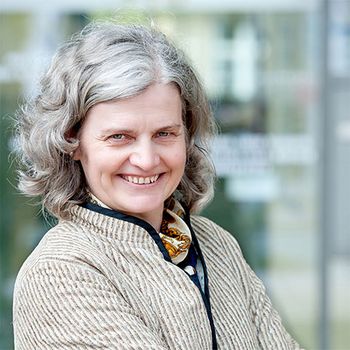
Prof Dr Katharina Al-Shamery, born in Eutin in 1958, studied chemistry at the University of Göttingen and at the Université de Paris Sud. Her doctorate at ETH Zurich in 1989 was followed by a two-year research stay at the University of Oxford and her habilitation at the University of Bochum. From there, she moved to the Fritz Haber Institute of the Max Planck Society in Berlin. She received her first appointment at the University of Ulm in 1998, but followed this to the University of Oldenburg in 1999. As Director of the Institute of Pure and Applied Chemistry, she initiated the university studies for secondary school students in 2006. In 2008, she accepted an invitation to become a Fellow of the Radcliffe Institute for Advanced Study at Havard University. Since 2009, she has been an honorary professor at Syddansk Universitet, Odense (Denmark). She has also held positions in various scientific and professional organisations. Among other things, she was the first Oldenburg member of the University Senate of the German Research Foundation (2013-2015). In 2010, she was elected Vice President for Research and four years later was appointed Acting President of the University of Oldenburg. Al-Shamery is a member of numerous committees and organisations as well as a reviewer and selection committee member of various national and international excellence programmes. Her honours include the Ernst Haber-Bodenstein Prize of the German Bunsen Society (1997), the Order of Merit of the Federal Republic of Germany (2011) and her academic appointment to the German National Academy of Sciences Leopoldina (2013).
Suddenly President
The phone rang one evening on 9 January 2014: Prof. Dr Babette Simon’s number appeared on the display. This was nothing out of the ordinary; the President would ring me from time to time to have a quiet chat with me late in the evening after her working day or at the weekend. This time, the call was brief but significant. She informed me that she was taking over as Chair of the board of the University Medical Centre in Mainz, which was to be announced the following day at a press conference there. She asked if she might nominate me to take over the interim leadership of the University of Oldenburg. Under Lower Saxony’s Higher Education Act, vice-presidents are obliged to take on this role. Taken by surprise, I agreed, without realising what lay in store for me over the next two years. On 23 January, it became official. At the university’s New Year’s reception in the theatre, Ms Simon announced her departure and my takeover of the reins – a move that had already been confirmed in advance by the Minister. You could have heard a pin drop even in the highest tiers of the auditorium, such was everyone’s bewilderment. My appointment, effective 1 April, was then confirmed on 6 February. By March, I had already stood in for Ms Simon on numerous occasions.
The start was a Herculean task, not only because I was taking on such a leadership role completely unprepared. As a researcher, I not only had to lead an experimental research group that required constant interaction, but this also went hand in hand with the normal duties of a researcher, such as writing proposal documents and expert reports, publishing results, undertaking lecture tours and organising conferences. In addition, I held a variety of roles within the German research landscape, which I naturally wished to continue after my term of office. Among other things, at that time I was the first female researcher from Oldenburg to be a member of the University Senate of the German Research Foundation (DFG), where I also sat on the Ombudsman’s Committee, and I was a member of various advisory boards and a project selection committee for DESY in Hamburg. Later, I moved from the DFG to the Strategy Commission of the Leibniz Association. Until 1 June 2014, I also had to continue my duties as Vice-President for Research and Transfer in parallel, until Prof. Dr Dr h. c. Hans-Jürgen Appelrath was able to relieve me of these responsibilities by taking over the post. What’s more, my daughter was in the midst of preparing for her Abitur, and my twelve-year-old son also wanted to have a chat with me from time to time. My husband took it all in his stride.
I would not have been able to take on this new leadership role unscathed had I not had, alongside an excellent coach, a very good team of staff whom I could consult at any time.
My starting position
What was my starting position? Well, I had already accompanied the development of the university for more than three and a half years as Vice President for Research and Transfer on the Presidential Board and had put my heart and soul into it. My university had developed excellently in the preceding years. Mrs Simon had not only made it even more visible in the region, but was also present at every important event in Hanover or Berlin, so that the University of Oldenburg had also made a name for itself nationally. The establishment of the European Medical School (EMS) together with the partner university Groningen, the successful acquisition of a cluster of excellence in hearing research with a spokesperson role on the part of our university and the increasing research success at state and national level had caused a sensation. This also included the constant networking cultivated by Mrs Simon. This had to be continued and entailed many appointments outside Oldenburg, which led to a massive increase in her diary. Ms Simon took up nationally discussed topics such as internationalisation and the structured promotion of young academics and brought them to the university. In terms of university policy, the university had largely moved into calmer waters in recent years. The major rifts that had opened up before the EMS was established, because part of the university feared that the other Schools would be sold out, had closed. But you can't please everyone, and the start-up phase of a new School never runs completely smoothly. There were always rumblings in this area.
I had the ambition not only to be an administrator, but also to drive forward the positive development of the university. I was very aware that I first had to gain authority among my colleagues inside and outside the university, because an "m.d.W.d.G.b." (entrusted with the conduct of business) in the title of office is associated by many with the fact that you are not the real president, but rather a one-day wonder who, given the relatively short period in office, does not need to be given the attention that the office actually requires.
Royal visit to the Reform University
Well, regardless of whether I was only involved in administrative or creative work, the events came one after the other. We had barely got through the farewell matinee for Ms Simon in the presence of Lower Saxony's Science Minister Dr Gabriele Heinen-Kljajić on 21 March 2014 when we received an exciting phone call from the Netherlands: His Majesty King Willem-Alexander, King of the Netherlands, Prince of Orange-Nassau, and Her Majesty Queen Máxima, Princess of the Netherlands, Princess of Orange-Nassau, were planning a trip to the German cities on their country's border. Oldenburg was to be one of them. Imagine: the former left-wing reform university goes royal! According to the royal family, however, this had to remain absolutely secret until shortly before the visit. The telephone call was followed by several preparatory talks with ever larger groups of people, who were officially referred to as the "Dutch delegation" for reasons of secrecy. It began with two diplomatic representatives. The last group arrived in a large bus with additional representatives of the protocol from the Netherlands and Lower Saxony, press representatives and local police and security personnel. The EMS and the topic of "renewable energies" were of interest to the King. Unfortunately, there were no Dutch medical students here at the time, and there were also only a few Dutch students enrolled in Dutch Studies, the only full degree programme in this subject in Germany.
As Minister President Stephan Weil would also be attending, I had decided to place the university's NEXT ENERGY Institute for political reasons, as discussions were currently being held at a political level regarding the long-term financing of the temporary Institute, which is financed by EWE AG. The Dutch preparatory committee expressed the wish to enrich the visit with an international conference to be opened by the King. We agreed on a German-Dutch workshop. Together with Professor Dr Carsten Agert, the head of NEXT ENERGY, we invited 20 well-known researchers from Germany and the Dutch invited an equal number from their country. We only had a few weeks to prepare in order to get as many big shots as possible, which is not really possible at short notice. To make matters worse, Easter fell during this time and NEXT ENERGY had just organised a large conference with many of these scientists. I therefore rattled off each one personally by phone so that no one could say "no".
On 26 May, the day of the visit, everything went like clockwork. The weather was fantastic. However, the large crowds we had feared had not turned up, so our worries about the freshly laid tartan track on the neighbouring sports field were unfounded. The papparazzi had a fixed corner from which they were allowed to take photos. I had been instructed on how to shake hands with the king. We had opted for a panel discussion chaired by science journalist and TV presenter Ranga Yogeshwar, followed by working group sessions to draw up a joint German-Dutch position paper. The royal couple listened attentively to the panel discussion and also showed great interest in the research work during the subsequent tour of the Institute.
In the evening, I was invited to a joint dinner - like other hosts of the day - at Wilkinghege Castle near Münster. The coffee after the meal was taken at bar tables so that the royal couple had the opportunity to chat to the guests. I'm not usually one to mince my words and I don't care much about a person's status or background, but I initially felt like a fried fish when the king came to my table and had a very knowledgeable discussion with me about renewable energies. He also told me fascinating stories about his time as a pilot in Africa for "Doctors without Borders" and about hunting poachers. As a small thank you, I later received a framed autograph from the royal couple, which I left behind with a heavy heart at the end of my term in the Presidential Board.
40 years of university and other dates
My busy schedule also included ceremonies at other universities, such as the 400th anniversary of the Rijksuniversiteit Groningen, which celebrated this event briefly but intensively over 14 days in mid-June. The people of Groningen impressively awarded an honorary doctorate in each School, which was celebrated in an impressive ceremony to which representatives of the presidiums of the numerous international network universities were invited. These guests marched into the large church, the venue of the ceremony, heavily draped with golden chains of office and wearing their various gowns and the strangest of hats. However, Prof Dr Bernd Scholz-Reiter, Rector of the University of Bremen, and I sat in the side aisle because we were not allowed to enter without a gown, which is unthinkable at our reform universities.
Our university celebrated its 40th anniversary in a completely different way: with many smaller, wonderful events throughout 2014. My personal highlights were the library ball, the students' 70s revue (partly with original clothes borrowed from my parents), the opening of the permanent exhibition on the life and work of Carl von Ossietzky in the library (for which the Nobel Prize certificate was temporarily taken out of the vault), the international summer festival "Open for Diversity" (based on the university motto "Open for New Paths"), the 70th anniversary celebration with all university staff, the exhibition by students with the theme "Cloud Cuckoo Castle - what would the city be without the university" and the university sermons by colleagues, among numerous other events. All of this was planned and organised under the direction of our Press and Communication department.
There was another highlight on 11 July 2014: the research vessel "Sonne" was christened in Rostock-Warnemünde by Federal Chancellor Dr Angela Merkel. The "Sonne" is Germany's most modern research vessel, 116 metres long and 20.6 metres wide, and was built at the Meyer shipyard in Papenburg. As Lower Saxony provided the majority of the state funding (10% of the operating costs, 90% from the federal government), the ship's home port was chosen as Wilhelmshaven, even though the ship will almost only sail in the Pacific and Indian Ocean. The giant smokestack is emblazoned with the logo of the Oldenburg Institute of Chemistry and Biology of the Marine Environment (ICBM), which is responsible for research data management. The Bremen-based Centre for Marine Environmental Sciences (MARUM) immediately raised its hand to the Federal Ministry of Education and Research (BMBF) for the organisation of the ship's christening. On the day of the event I learnt why. MARUM presented itself in a large exhibition on the Federal Chancellor's ship, while the ICBM was given a coy corner for a poster. The tour of the ship for Chancellor Angela Merkel was given by the then head of MARUM. Our Science Minister was allowed to follow the crowd around the Chancellor, I watched from behind the barrier. Instead, I was in charge of the handover of the ship to the scientific community and was able to emphasise that the University of Oldenburg has an outstanding position in marine research. It took place on 17 November 2014 in Wilhelmshaven in the presence of Federal Science Minister Prof. Dr Johanna Wanka, Lower Saxony's Minister President Stephan Weil and Lower Saxony's Science Minister Dr Gabriele Heinen-Kljajić.
Everyday life and networking
Of course, the normal time-consuming official business ran parallel to these mega events. My diary was packed with meetings of the Executive Board, jours fixes, closed meetings, telephone appointments, academic appointment negotiations, Senate meetings and appointments in connection with my academic work, so that I even had to take biological breaks from my scheduled time. Later, I also had meetings with the Staff Council and the student bodies. Important time was taken up by external meetings, such as those of the Nordverbund (a strategic alliance of seven northern German universities) and the medium-sized universities, meetings of the State University Conference and the German Rectors' Conference (HRK). I also travelled to other strategy events in Berlin, in particular to learn about the latest developments regarding the upcoming Excellence Initiative call and, above all, to expand networks, which are particularly important if you want to be successful. "That's why I came here," my colleague from the University of Excellence Aachen explained to me during a coffee break. I also travelled to the annual conference of the Fraunhofer-Gesellschaft in Freiburg. I was there because we were in talks with the society about expanding research and further co-operation. As we also wanted to apply for a Helmholtz Institute at the Alfred Wegener Institute in Oldenburg, I also continued to maintain communication with this important research institution. This proposal was approved in October 2016 - another big step on the young university's very successful path.
There were also some remarkable processes within the university. I decided to hold the annual talks with the Schools, which Mrs Simon had introduced, in 2014 as well, as they revealed a lot about problems at grassroots level. Research Officer Thorsten Schulz had suggested that I suspend them for a year, but I stuck to it, although I later regretted it in view of the heavy workload on my staff. There was another process that kept us very busy the whole time. The state wanted to conclude target agreements with us for the period 2014-2018. In contrast to previous practice, the ministry specified a very detailed catalogue that had to be worked through in the agreements. One got the impression that politicians wanted to intervene very deeply in the universities. There were passages in the first part that were tailored to the respective university and were intended to enable the state to impose sanctions in the event of non-compliance. The second part contained declarations of intent regarding the development of the university, which it was feared could possibly slip into the sanctions section in a later agreement. In several transparent rounds of discussion involving the committees, we drew up a paper that was haggled over with the Ministry until the very end with regard to the sanctions. The discussions dragged on throughout the year. Many arguments were exchanged until the agreement was signed shortly before the deadline on 11 December 2014. In the process, we had to swallow a toad that was particularly difficult for us: the foreseeable underutilisation of our "orchid subjects" would lead to permanent cuts in financial allocations. We decided to minimise the damage by ensuring that the reductions would not be imposed solely on the affected Schools, but that other areas would also share the burden.
Profile
The ink was not yet completely dry under the target agreements when we had to start the process required by the state to draw up a university development plan within a little over a year. If we failed to do so, the state would penalise us by not allowing us to fill vacant positions. We started a process that involved all School departments, administrative staff and the University Senate in several loops. The meetings had to be well prepared, for which I am still grateful to my staff at the time for their excellent and efficient work. In this context, the work of Hans-Jürgen Appelrath, Vice President for Research, who has since passed away and can hardly be replaced, deserves special mention. Thanks to his contacts, he not only ensured the continued existence of the Start-up and Innovation Centre after third-party funding expired. In a stringently managed process, he held several rounds of intensive discussions in the Schools and was able to work with the entire University to develop the University's eleven key focus areas according to clearly defined criteria, which took into account not only research but also teaching priorities, from which three profile topics were then drawn up in consensus with the University Senate:
Environment and Sustainability,
People and technology,
Society and Education.
I was then able to hand this process over to the new President almost complete, with the paper designed in such a way that he still has enough freedom to give the university his own character.
Another milestone: In a meeting with the Schools, the Vice President for Administration, Jörg Stahlmann, was able to convey that the University - despite a fundamental shortage of resources - had accumulated reserves in the Schools, which must also be available for overarching projects that serve the profile of the University as a whole. I admired how, with his competent, calm manner, he managed to get the deans to agree to transfer some of these funds to a central pot in order to make the Presidential Board more capable of acting.
Internationalisation
Another work package in July 2014 included an audit on the topic of internationalisation, which had been prepared internally with extensive reports and several discussion rounds. I also took up the suggestions for myself and wanted to play my part. I was part of the delegation from the state of Lower Saxony under Minister President Stephan Weil that visited China in mid-November 2014. My main aim was to explore the possibilities of further exchange with Chinese universities and to intensify my contacts in Lower Saxony's government circles. We visited Shanghai, Hefei and Beijing. I learnt from my counterparts that signing a memorandum of understanding with a friendly university is an effective way of advertising, as the Prime Minister then appears in the picture. At the time, I particularly admired the ingenious co-operation between Braunschweig University of Technology and Tongji University. Both also have very intensive research co-operations with VW on site. The relatively small Clausthal University of Technology is also remarkable, as it has strategically built up the highest proportion of international students in Lower Saxony. Chinese students play a special role here. More than 25 rectors of Chinese universities once studied at Clausthal, and the current Chinese Minister of Science, Wang Gang, is also one of the alumni. He invited the rector of his former alma mater and the Prime Minister to a private audience.
The following year, he travelled to Qatar with the Prime Minister. I had actually planned another trip to Saudi Arabia, for which I had painstakingly applied for an entry visa that was only issued for business trips - also laborious because I wanted to travel as a woman without being accompanied by my husband or another male relative. Due to the death of the Saudi king, this part of the trip had to be cancelled on the eve of departure. The trip to Qatar was therefore short. I learnt from both trips that apart from the signing of goodwill declarations (Memorandum of Understanding, MOU), not much can be expected in terms of scientific exchange. But at least since then the Prime Minister has greeted me personally at events, beaming with joy, although he does sometimes overlook others. And that can be very valuable for the work.
A somewhat different delegation trip was the one to Spain with the German Academic Exchange Service (DAAD) in March 2015, which involved visits to various universities. I found the concept of a research institute in Barcelona, where different institutions work together under one roof, particularly exciting. The laboratory rooms are allocated according to changing needs and equipment is shared. You could feel a lively atmosphere in the building. Worth imitating!
In a somewhat smaller group with the participation of university presidents from Spain and Denmark, an internationalisation representative from the University of Groningen and an EU networker from Milan, I discussed the various European internationalisation strategies with interested colleagues and employees of our university in a workshop on the topic of "European Universities of the 21st Century" on 26 June 2015. While the Universitad Autónoma de Madrid is building on attracting European Research Council (ERC) grant holders who have received elite funding in the European competition in priority areas from all over Europe (e.g. eight in mathematics), Syddansk Universitet has introduced a compulsory semester abroad for all students. Those who do not wish to leave Odense must attend courses in English instead. The head of an EU network set up for this purpose at the Università degli Studi di Milano-Bicocca, in which I myself am involved as a researcher, explained how to obtain a European doctorate. The Rijksuniversiteit Groningen has radically advanced internationalisation. With stringent five-year plans, it set out a little over ten years ago to develop from a provincial university into a global player. In international rankings, the university is already among the top 100 worldwide. It is currently opening a branch of one third of its size in China.
Change in the region and at the university
During my term of office, there was a change of leadership in the region. Jürgen Krogmann was elected to replace Lord Mayor Prof Dr Gerd Schwandner, who was not standing for re-election. On the eve of his first election round, he strolled through the Kramermarkt with me and we rode the ghost train together. This later became a running joke between us. After his election, he cultivated contacts with the university from the very beginning, which he - like his predecessors - sees as one of the cornerstones of Oldenburg's excellent development in recent years.
One of the departing business leaders has rendered outstanding services to the University: Dr Werner Brinker (EWE AG) was the first Chair of our University Council for many years. In honour and appreciation of his special services, but also to bring his outstanding expertise to the university, the university appointed him an honorary professor at the end of my presidency. With personalities like him, who have made a significant contribution to shaping the city of Oldenburg, an era is certainly coming to an end. It is to be hoped that his successors will also realise that you can only attract and retain very good workers and their families if the city has an excellent infrastructure and a wide range of educational and cultural opportunities.
In the meantime, the search for a new president has progressed slowly. I myself had signalled early on that I would not be available for this position. At that time, I was still too much of a full-blooded scientist and could not imagine no longer working in my areas of research. The process went as it usually does at a university: the University Senate formed a search committee, advertised the position, reviewed the applications and held confidential discussions within the committee. Then came 17 September 2014, when the Nordwest-Zeitung, which had no understanding of the fact that university processes are more complex and therefore slower than in the private sector, found out details about the procedure through unclear channels that should not have been made public. She published an article naming some of the people involved in the proceedings. This damaged the proceedings. The University Senate decided to restart the proceedings. A quick end was not in sight.
The new President, Prof. Dr Dr Hans Michael Piper, was elected at the Senate meeting on 11 March 2015 and confirmed by the University Council after he was the only candidate selected by the commission to face the university public on 27 February and won over the university. However, the transfer as a state civil servant from North Rhine-Westphalia to Lower Saxony proved to be very difficult, so that he was only able to take up his post on 1 August. During this agonisingly long period, I noticed that a number of people had already mentally adjusted to the new boss.
Balance sheet
Even though I was very strongly influenced by research, teaching was just as important to me. As a mother of two children, I have noticed that young people are growing up with media in a completely different way to my generation. Are we as a university actually prepared for this? At the end of my term of office, as a member of the German National Academy of Sciences Leopoldina, I therefore joined forces with the Volkswagen Foundation to host a symposium at Herrenhausen Palace on 19 May 2015, at which high-profile panel discussions were held on the topic of education. In addition to well-known colleagues from the world of science, I was able to attract leading personalities - including the rectors of the Universities of Siegen and Duisburg, Prof Dr Holger Burckhart and Prof Dr Ulrich Radtke, the Secretary General of the Volkswagen Foundation, Dr Wilhelm Krull and the Chairman of the German Council of Science and Humanities, Prof Dr Manfred Prenzel, as well as the science landscape designer Prof Dr Jürgen Zöllner and the President of the Leibniz Association, Prof Dr Matthias Kleiner. In three rounds, a modern concept of education was first discussed against the background of the "digital native" generations coming into universities, then education in the institution of the university and finally education in the changing scientific landscape in the context of the Excellence Initiative, which was later edited in a book with the collaboration of Marita Hillmer. It was stated that the basic funding of universities must be adapted to the growing number of students in order to guarantee a standard of education and to be able to compete internationally with the major universities of excellence. At the same time, demographic change and the increasing heterogeneity of students must be taken into account. The university of tomorrow must increasingly harmonise the historical segmentation of vocational education, higher education and further education and make the transitions fluid and appropriate to the different stages of life. It must also take into account the fact that technological development is accelerating and that society is now changing faster than a generation of university lecturers. This applies in particular to the new media. In the context of the Excellence Initiative, the major science organisations and universities need to interlink more closely in order to create an even more efficient science system.
My term of office on the Presidential Board ended on 31 December 2015. I had spent more time there - first as Vice President for Research and Transfer and then as Interim President - than the previous three presidents. The university had developed enormously during this time. At the beginning of my term as Vice President, there were three Trans-Regio Collaborative Research Centres and a DFG-funded Research Training Group and a state doctoral programme that had been established a few months earlier. Five years later, these CRCs had been successfully extended, a cluster of excellence had been established and we had acquired three more independent DFG Research Training Groups. In addition, there were seven state graduate programmes (another three were approved shortly after I left), a graduate programme funded by a foundation, three internally funded research training groups, several clusters of excellence (funded by the state), two research groups, a first long-term project funded by an academy and several successful acquisitions of junior research groups (European Research Council, Lichtenberg, Emmy-Noether, BMBF). Major third-party funding was also successfully acquired for teacher training and teaching. The university has also gained ground at EU level. Colleagues are leading several major projects and have established a Jean Monnet Centre of Excellence. The establishment of a School of Medicine has also been initiated. Furthermore, the university has become one of the first three German start-up universities. As interim president, I was able to inaugurate two new buildings (the NeSSy research building, the research building for the Cluster of Excellence and the Research Centres Neurosensory Science and Safety-Critical Systems and the Student Service Centre) as well as celebrate the topping-out ceremony for another research building for wind energy research. Nevertheless, our university is bursting at the seams.
My predecessor intensified the Presidential Board's discussions with non-university research organisations, which began in 2005, with the aim of establishing Fraunhofer, Helmholtz, Leibniz and DLR institutes in Oldenburg in the long term, which should extend beyond the working groups and bridge professorships that we already have in these areas. I also felt that continuing communication was a particularly important task. Whether it will bear fruit remains to be seen. We have opportunities. In the worst-case scenario, the status quo will remain. In any case, our university is confidently on its way to becoming "the University of Constance of the North". In terms of student numbers, we have already clearly overtaken Constance ...
My move back into academia was unadorned. First, I worked as Vice President for Research and Transfer for a few months and was able to help the new President with his induction before moving back to my working group on 1 January 2016. A particularly nice gesture: as part of his official inauguration, Mr Piper presented each honorary member of the Executive Board during the transition period with the badge of honour that he had created for this purpose.
Back in academia, I initially sat in my room like the seven of spades. My diary was yawningly empty compared to before. My previous, regular third-party funding had dropped to practically zero. I had to deal with scientific questions in depth again and wasn't constantly being prepared with documents that were handed to me. I first had to learn to deal with so much freedom again. The advantage was that I suddenly recognised the connections in the scientific questions much more clearly because I was able to perceive and use time in a completely different way.
What remains at the end? I experienced many interesting moments and not only learnt to take on management tasks. I gained insights into areas that you don't normally get to see. I certainly got to know some unusual personalities, but they also exist among my academic staff.
I have also learnt one thing: those who sit at the top of the Presidential Board are hardly noticed at grassroots level by those who are not interested in university politics. This was made very clear to me at the end of my term of office. At the checkout in the canteen on Uhlhornsweg, I was looked at by a cashier and kindly asked whether I was a guest or an employee of the university ... Memento moriendum esse!