Prof Dr Siegfried Grubitzsch
Prof Dr Siegfried Grubitzsch
President of the University from 1998-2004
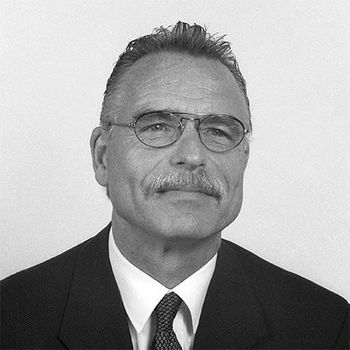
Prof Dr Siegfried Grubitzsch, born and raised in Mühlhausen/Thuringia in 1940, studied psychology in Mainz and Braunschweig, as well as business administration, philosophy and political science. After gaining his Diplom in the subject of psychology, he became a research assistant at Oldenburg University of Education in 1967. His doctorate at the TU Braunschweig in 1972 was followed by an appointment at the Weingarten University of Education. Two years later, he was appointed Professor of Psychology specialising in psychological diagnostics at the newly founded University of Oldenburg. In addition to his research and teaching activities, which brought him visiting professorships in Moscow and Vienna, he was also involved in academic self-administration and was Dean of Department V Philosophy/Psychology/Sports Science from 1992 to 1995 and Vice President from 1995 to 1997, before being elected President of the University in 1998. Even after his retirement in 2005, he remained President of the Department of the International Academy of Sciences for Higher Education in Germany, wrote articles on university and science management and is involved in foundations.
Open to new paths
When the winds of change blow,
some build walls
and others build windmills
Chinese proverb
Whether Rector in the status of primus inter pares or President in the role of Chair of a collegiate university management - both do not act detached from the history of the university they have been elected and appointed to lead. Wherever they come from, from inside or outside, they must, in accordance with their task, build on what already exists before shaping something new. And they do not do this alone. Rather, their actions are integrated into organisational and human working contexts in which the contribution of each individual can usually only be appreciated in the overall result achieved. Seen in this light, the following article describes nothing more and nothing less than a time window in the "never-ending process" of university management.
Here we go
11 February 1998: "Yes, I accept the election. I would like to thank you for the great trust you have placed in me and assure you that I will do my best for the good of the university." What I did not put into words, despite my joy at my election, was my ambivalent mood at the time. I was well aware of the last months and years of my predecessor's long presidency, with all its hurts, hidden and open discussions. During his long time in office, expectations of change had to build up that I didn't know whether I would be able to fulfil. Will I be able to convince people and appear authentic if I want to initiate new things, question tradition and change existing practices at the university, in the city, in the region and in concert with the other university leaders in Lower Saxony? There was no lack of encouragement:
"Rest assured, I am thinking of you and I am convinced that you will master things," a colleague who has since passed away wrote to me shortly before I took office. Others also linked my assumption of office to the hope that I could finally change the style and form of university (im)manners in dress, behaviour and human interaction. May I open the door to a different zeitgeist, wrote a member of staff from the university.
I was no stranger to the University of Oldenburg. I had known for many years who was sitting behind which bush. I also knew who was hiding from whom. In addition, as a long-time participant (dean, dean's spokesperson, vice president), I had been able to observe the university's internal and external politics well enough, to follow how past and present decision-makers made decisions or were forced to make decisions under which internal and external political and legal conditions, and what room for manoeuvre they used or were able to create for themselves. After all, from my time as Vice President at the latest, I had been able to gain a lot of experience of what is feasible in the university and with whom, and what difficulties and problems could arise (personnel disputes, demands, envy and resentment, threats and slander).
"So be prepared for the fact that you can suddenly find yourself very alone and that friends ... cannot replace one thing: the thin air of success that you and the university will need," wrote a colleague and friend who knew what thoughts were driving me and that I had made a clear analysis of the current situation. I could base my future strategic agenda on this analysis with a clear conscience and objective conviction, as it was the quasi-empirical result of numerous internal and external research projects and discussions that I had conducted in addition to my own experiences after my election and before taking office at the university. Strengthening the university's research, making its structures more efficient and anchoring it even better in the city and region should be at the centre of my work. With these clear ideas for my forthcoming term of office, I drew up a comprehensive programme for my future work, which I was determined to implement. Of course, I was aware that my ambitious plans would open up a major construction site whose sub-projects - whether with or without the express wish of the people working there - would be in a complicated interrelationship with each other and with the overall process of university renewal, both internally and externally.
This is why, not least, an intensive communication and planning process had to be organised with those affected - with a high attendance frequency and a lot of persuasion by the Presidential Board. I could still clearly hear the criticism of the frequent absences of my predecessor in office in his final years. Would I be able to achieve my goals, if necessary, even in the face of scepticism and resistance from staff and colleagues on site, so that at the end of my term of office I could say that my actions had benefited the university, its academic reputation and the reputation of the people working there, the students and the regional public? And in a style that has been described as "to Achieve his Goals through Cooperation and, where ever necessary, Conciliation" (Towson-Letter of the Consortium of Oldenburg Partners, August 1998).
Diagnosis and prognosis - from today to tomorrow
Since its foundation, the University of Oldenburg has always been regarded as an innovative university that was happy to take on new topics in university development, such as single-phase teacher training, project studies in the sense of research-based learning and stronger practical links, and interdisciplinarity in studies and teaching. In addition, there was the model experiment of the global budget accompanied by the Centre for Higher Education Development Gütersloh (CHE) or, finally, the early state-independent evaluation measures in the Northern Association of Universities to shed light on the quality standards of their facilities, study programmes, research and further education.
In my inaugural speech, I therefore described the current state of the university as "open to new paths", and the Presidential Board formulated in its mission statement in 1999 that openness to new ideas and developments in society and science guided our young university. I wanted to utilise this willingness to reform - despite any remaining doubts - by drawing on the public debates and also suggest it to the new Presidential Board. The collegial university management - also a novelty in Oldenburg - had already been decided by the university council on 7 May 1997 as part of a new university charter (and with reference to the Lower Saxony Higher Education Act of 1995, Section 91) and approved by the Ministry of Science and Culture (MWK).
Over the past ten years or so, public debate in Germany has centred on a new higher education reform. Publications on the subject sprang up like mushrooms. Their number had risen sharply in recent years, they had become louder and, in some cases, more reproachful towards the universities.
When Thomas Oppermann took over as Minister for Science and Culture in Lower Saxony (1998), whose new Higher Education Act (NHG) was "ennobled" in 2002 as a "best practice law" in Germany, the universities' own initiatives for renewal were legally legitimised, albeit not always to widespread applause within the universities themselves: Strengthening of university autonomy, collegial management bodies with departmental responsibility, strengthening of the University Senate and Presidential Board, reduction of ministerial regulatory density, reform of decision-making and management structures, target agreements between the state and universities, task- and performance-related funding assessment of global grants, quality assurance in teaching and research through evaluation and accreditation as well as the establishment of corresponding state supervisory bodies for teaching and research (ZEvA for teaching, the Scientific Commission for research), reform of the personnel structure, reform of study programmes with a particular focus on improving international competitiveness, amendment of the Graduate Training Act, profile development and co-operation with more efficient teacher training through subject concentration, appointment policy to ensure excellence.
The universities were increasingly given organisational options that they had never had before. And we wanted to make the most of this, well aware that the changed framework conditions were essentially born out of empty coffers - the "proverbial underfunding" (Prof. Landfried, President of the German Rectors' Conference), but at the same time offered us the opportunity to "capitalise" on them ("do more with less"). It had long been foreseeable and publicised that the renewal and development processes in Lower Saxony would lead to a new target-based budgeting model, which is why the time factor in the competition between universities had become an additional challenge. In addition to the reforms already initiated at the universities, "further efforts were needed to improve the quality of their research and teaching performance and to increase their efficiency". (HRK, printed matter 1302, 24 June 1997). However, the specific conditions of the universities stood in opposition to this claim or demand, which is why in the process of reorganisation it was not only necessary to think about money and cost-benefit ratios, but this fact also had to become an enforced maxim for action within the universities, which in many places was wrongly and defensively branded as flat economisation and neoliberal university policy. What was actually meant, however, were all measures for the cost-effective use of resources in the complex network of studies, teaching, research, further education, promotion of young talent, appointment policy, etc. with the intention of optimising their performance both qualitatively and financially.
In addition, the organisational structures of a university, its decision-making structures for controlling the efficient use of resources, the quality of the services to be provided by individual institutions, the duration of studies and the deployment of staff were among the issues that had to be considered. This is why the Oldenburg Presidential Board has repeatedly felt compelled to emphasise that nothing and no one at our university could assume that its existence was guaranteed. Every degree programme and every subject, including the central facilities and the existing organisational units, not to mention the administration, should ask themselves questions about their organisational form, their range of tasks and their usefulness for carrying out the university's core tasks - in the extreme case also about their fundamental continued existence - especially against the background of the upcoming extensive and generational change in personnel. Creating something new from something old - a metamorphosis of the university that we had to accomplish together under conditions that were not always easy.
It was my declared aim to reduce the - by international standards - glaring backlog of reforms in Oldenburg and this had particularly inspired me in my application for the office of President. Nevertheless, and this is not untypical for Oldenburg University and an element of its identity, discussions within the university about the desired and/or prescribed reform steps were always conducted with extreme vigour and intensity. This prompted the attentive and sensitive observer and NWZ editor Rainer Rheude to write a commentary on 4 February 1998 with the headline: "Signatories of an 'Oldenburg Appeal' fear 'authoritarian management structures' at the university: The signatories of an 'Oldenburg Appeal' also see a series of university policy demands that they raised yesterday as a yardstick for the presidential election next Wednesday. 50 members of various status groups at the University of Oldenburg and of different political orientations oppose efforts to supplant university self-administration with authoritarian management structures." The original wording of the appeal: "According to the ideas of the state government of Lower Saxony, the University Rectors' Conference (HRK), the Centre for Higher Education Development (CHE) and the President of Oldenburg University (Michael Daxner), the current organisation of university self-administration is to be replaced in the near future by authoritarian management structures similar to those of private commercial enterprises. To this end, a whole bundle of structural change measures are to be implemented first at the universities participating in the global budget model project, i.e. in particular at the University of Oldenburg, which are to be given a legal basis with the planned amendments to the Higher Education Framework Act (HRG) and the Lower Saxony Higher Education Act (NHG)."
Such open and hidden reservations about the restructuring of the university were a constant concern for the Presidential Board under my Chair since 1 October 1998, which is why we never tired of countering the political reservations about a structural and profile-emphasising renewal process at the university with factual persuasion, but also with urgent appeals to the university as a "community of responsibility" over the following six years.
National policy
In the spring of 1998, Minister Helga Schuchardt, who was very fond of the University of Oldenburg, was replaced by Thomas Oppermann from Göttingen as soon as she had congratulated me on my election. Gerhard Schröder had brought him into his cabinet as a bow to Göttingen, so to speak, and de facto forced his predecessor to resign. Satisfied faces in Göttingen and Hanover.
Before her departure, Ms Schuchardt approved the two bridge professorships (measurement and control engineering) that remained from the original development package for the establishment of engineering sciences (18 professorships) in Oldenburg due to budget cuts, causing great resentment and anger among the ministerial staff in Hanover. This was not the only reason why Oldenburg - even more than before - had to listen to Osnabrück University's lament that it was underfunded in comparison to Oldenburg, which had long since become the supposed truth. Even though this "underfunding" could be denied after a thorough analysis by our planning department, these miscalculations by the Osnabrück University management remained an ongoing issue during my time in office. What's more, their annoying side effect was the political "self-weakening" of the north-west region of Lower Saxony, because a joint intervention policy in Hanover would undoubtedly have carried more weight. It was only after the change of minister in 2003 (Lutz Stratmann for Thomas Oppermann) and the age-related change of personnel in the ministry that these discussions of envy no longer played the dominant role, even though general budget cuts, unilateral interventions in the university budget and a lack of stability in the state's financial management were the order of the day throughout my time in office:
- Calling on the universities to consolidate the state budget after Expo 2001 with 54 million Deutschmarks
- Lack of flexibility in the budget requirements for financial autonomy
- Despite global budget: three-year deadline for spending reserves
- Despite global budget: Due to state-wide centralisation plans, the university has to terminate its more cost-effective cooperation with EWE in the telephone sector and with Raiffeisenbank and also join a central property management system (UNI-INFO 3/2000)
- Interventions in the university budget during the year following the unilateral cancellation of the pilot project on the global budget, which was originally set to run for ten years
- Temporary funding and staffing freezes for vacant positions
- Deduction of overload positions for more than 300 additional student teachers
In addition to the issues of funding allocation by the state, a significant shortcoming of state policy was a fundamental omission: despite all the talk of autonomy and freedom of decision, it never really put its "cognitive map" of the academic landscape in Lower Saxony on the table, i.e. an explicit university development plan, which the Academic Commission did not have either. This is not a reference to the embarrassing tug-of-war over Vechta University. Another example can serve: In the 2003 University Optimisation Concept (HOK), the subject of Sports Science in Oldenburg was initially on the list for deletion. A telephone conversation between myself and the President of the University of Osnabrück produced a more cost-effective and specialised result: In Oldenburg, the subject of sports science should be concentrated in the north-west, not least because of the existing spacious building structure. Minister Stratmann agreed with this "savings concept", but the state ruler Christian Wulff, himself from Osnabrück, took the decision and decided to keep the sports department in Osnabrück. And there was another shortcoming that kept causing us problems, even though Minister Thomas Oppermann had recognised the implications of this interface problem for teacher training universities: there was no real conceptual cooperation between the Ministry of Education and Cultural Affairs and the Ministry of Science in the state cabinet - with the fatal consequence that one set the curricula and study structures for teacher training and the other set the research for the same. However, neither the extensive lack of conceptualisation on the part of politicians nor their repeated spontaneous interventions and orgies of cuts in funding prevented us from investing a great deal of time and personnel in our own ...
Household ...
and to align it more stringently with the new and, above all, self-planned requirements that are constantly coming our way. The aim was to continue and consolidate the global budget pilot scheme, even in the face of continued resistance and occasional protests within the organisation. After all, it was far from over when the state cancelled the trial and declared that commercial accounting had proved its worth for the state's universities. My assumption of office was accompanied by a thorough stocktaking of the necessary improvements and the elimination of deficiencies in the budget. We had already made a start with the University Senate's resolutions on the so-called "Qualitative Target", with which we had defined the minimum staffing levels for the subjects across the university in accordance with the guidelines of the German Council of Science and Humanities. The Council had developed criteria "according to which the subjects offered should be staffed in such a way that the required breadth with the established specialisations is guaranteed" (UNI-INFO 8/1998). In the meantime, the global budget gave us more freedom to make further decisions than we had ever had before.
Those who demand performance must honour performance and make it transparent. For this reason, and in anticipation of a state-wide performance-oriented allocation of funds to the universities, the basic structure of which was already emerging, the University Senate approved a proposal by the Presidential Board to allocate material resources not only according to the number of academics and students in a department, but also according to performance in research and teaching. The promotion of women was also taken into account. However, this "ground-breaking budget decision" (UNI-INFO 5/99) did not really touch on the underlying problems in the distribution of university funds. In view of the wave of appointments coming our way (over half of all professorships by 2010) and in view of the gradual financial withdrawal of the state in its participation in appointment commitments, these were elementary and made the Presidential Board a toothless tiger, as it were, for planning decisions on academic priorities.
During my predecessor's term of office, the University Senate made a fatal decision to distribute almost all material resources to the departments. This deprived the President of almost any financial room for manoeuvre to promise newly appointed university lecturers with new specialisations, for example, special equipment or project start-up funding on a larger scale for their profile-building decisions. On the other hand, due to professorships that had not yet been reappointed and/or the frugal use of funds, the departments ultimately had considerable financial pools at their disposal, which were more or less unused for months, sometimes years, and easily gave the impression to the outside world or the MWK that the money was not necessarily needed. This prompted the Presidential Board to submit a "Solidarity Pact" strategy paper to the University Senate in December 2002 with the intention of redistributing the accumulated financial reserves in the interests of all and transferring them to the active budget. The aim was to fundamentally promote the university's strong and developable areas to even greater efficiency or their expansion into new profile-giving clusters in research and teaching on the one hand, but also to strengthen the indispensable programmes on a broad basis on the other. The University Senate approved this paper in principle, thus paving the way for a future-oriented expansion and restructuring process at the University - albeit accompanied by scepticism from those who, for various reasons, did not currently consider themselves to be part of the "strongest areas" or "lighthouses" and called for the "diversity of disciplines" (UNI-INFO 2/2003) to be safeguarded.
But we had praised the day before its evening. The thunderstorm was already looming in the evening sky: a new round of severe cuts by the state of Lower Saxony against its universities was cynically called the "University Optimisation Concept" (HOK) and provided for a reduction in so-called state subsidies by €40.65 million from 1 January 2004. Oldenburg was originally earmarked for a sum of € 2.4 to 3.6 million and finally achieved a reduction of "only" € 2.025 million after hard and tough negotiations in the ministry. The fact that I was nevertheless met with the "full force of the angry objection of furious colleagues ..." (UNI-INFO 6/04) did not really come as a surprise, as my colleagues in the LHK felt the same way.
None of this would be worth mentioning if it were not typical of the unreliability of the state, which officially endeavoured to make its universities internationally competitive, but at the same time hindered them on their arduous path to reorganisation. One of the results of this higher education policy was that almost half of the presidents in office were not re-elected and a state higher education conference, which had been functioning well for many years, was thwarted in its supporting role for science policy. So it was not only us Oldenburgers who once again sought the ...
Looking inwards, ...
in order to at least consolidate, drive forward or finalise those innovation projects that I thought I could largely complete on my own at the university - also in the hope of convincing my opponents, whose protest demonstrations have by no means had any lasting success in Hanover, of what we have achieved so far and thus justify my re-election to the presidency.
We had already pushed ahead with many things with great success - for the first time we had developed a corporate design with a new logo and a multi-award-winning website, and we had successfully intensified marketing for the university, which also made it easier for us to attract students in a targeted manner, especially as it was flanked by a welcome grant negotiated with the city of Oldenburg. We had created an information point with limited resources as a contact point to help students find their way around the university. We had significantly improved the university's infrastructure, the networking of administrative services and their organisational structure for the various "customer groups". Thanks to a thorough university-wide survey, we knew the weaknesses and strengths of the administration and the areas for qualitative improvements. The central service facilities, including the library, had sustainably improved their service offerings, and some had already been evaluated by independent expert groups in preparation for later new functional assignments: first the Data Centre, which was later followed by the Centre for Advanced Scientific Training (ZWW) and the Distance Learning Centre (ZEF). A pilot project on integrated information management, funded by the German Research Foundation (DFG), was intended to show us new ways of supporting science and research. In the introduction of a differentiated reporting system (budget, statistics, etc.) and suitable quality control systems to create greater transparency and sustainable strategic control capability for the entire university organisation, we were a role model in Lower Saxony and became a "best practice example" nationwide. We were also regarded as a role model by other universities, not least because of the global budget, and later because of the target agreements between the university management and departments/faculties introduced by the Nordverbund, as well as the performance-based budgeting of the academic organisational areas, which was to be followed by the same for the administration. Our newly regulated equal opportunities policy was recognised and exemplary.
In the area of studies and teaching, the direction of change was determined by the European Bologna resolutions, the introduction of Bachelor's/Master's degree programmes, modularisation of courses and the introduction of the ECT system (European Credit Transfer and Accumulation System). We also set up attractive new degree programmes, including the Hanse Law School, Values and Standards, Marine Biodiversity, Economics, Actuarial Science and cooperative degree programmes with Bremen. We also improved our services for students, for example by expanding our counselling services, which was reflected not least in a sharp increase in the number of applicants for study places. The university opened up to new student groups by offering part-time, internet-based continuing education programmes leading to academic degrees.
We also strengthened teacher training as an important pillar of the university. In February 2003, the Presidential Board decided to establish the Didactic Centre (DiZ) as a new structural element, having already created what Minister Oppermann called a "real beacon" with great radiance in research with the founding of the Graduate College thanks to the dedicated colleagues there.
This lighthouse was part of our overall research programme, in which we achieved an intensification of interdisciplinary links and increasing transdisciplinarity, taking into account their strengths and potentials, resulting in outstanding profile-defining priorities: in neurosensory science, hearing research, marine research, energy and semiconductor research, environmental research and policy, Computing Science (including in complex integrated systems), energy and semiconductor research, environmental research and environmental policy, and the development of new research areas. (including complex integrated systems), economics, e-learning and advanced scientific training, teaching and learning research in schools and increased technology transfer, as well as measures to increase third-party funding (an increase of 15 per cent by 2001). These were also possible because numerous new co-operations with other universities - not least with Bremen and including the Hanse-Wissenschaftskolleg - could be initiated, for example through a new research mission statement of the Presidential Board conceived by Vice President Wolfgang Nebel in 2001, which also provided for increased support for young researchers.
The restructuring of the eleven departments as part of an overall organisational reform, which Michael Daxner had already considered and which was soon legitimised by the new Higher Education Act, had long been on my agenda. This will certainly have the greatest impact on the university and its entire future development, with its effects on the streamlining of the committee structure, the organisation of administration and technical services (the introduction of so-called faculty directors for the first time in Lower Saxony), on the distribution of funds and, above all, on the consolidation and effectiveness of decision-making structures. And once again we encountered sceptical reservations and criticism. Some deans called this plan to merge eleven departments and the ICBM into four faculties "premature obedience". In fact, it became five Schools - by a decision of the University Senate, which was supported by my successor in office, Uwe Schneidewind, and could not be corrected by him, despite all subsequent efforts.
In general, the University Senate ...
It was always exciting and instructive to sit in front of him. No matter what agenda was on the table, he was always good for many daily surprises and unexpected decisions. Speech battles were often long and sharp, but seldom effective. It was more along the lines of: everything has been said, but not yet by everyone. And as a rule, the procedure was the same: The fewer items on the agenda, the longer the meetings. This has probably remained the case to this day.
It was not uncommon for such speeches to be below the belt, defamatory and offensive. One particularly bad habit - and not only in the University Senate - was the alibi manoeuvres of decision-makers who sought to use the debates and votes there for their own purposes in order to avoid being seen in a bad light or even discredited by their colleagues. "It may be that I owe you an explanation. My statements in the University Senate [...] were not and in no way directed at you. It was about the fact that, as dean, I had to ensure that the computer scientists, physicists and chemists would retain and agree to the large-scale equipment applications for 2002, which were discussed the following day [...] I apologise for trying to use you and the University Senate for psychological rankings," one dean wrote to me in an email.
Even before I was in office, stacks of paper would fly in the direction of my opponents or people would threaten each other in one way or another, symbolically or concretely. To avoid this kind of thing, I and the senators repeatedly tried to structure the meetings better. Sometimes we moved the confidential part to the beginning of the meeting, then we made it our duty to speak more briefly and in a more results-orientated way.
The university public (who actually does the work that needs to be done at the deserted workplace?) should be allowed to contribute fewer speeches and the status group that is defeated in the voting process should not be legitimised by the rules of procedure to have the right to request that the completed or agreed agenda item be taken up again. An intended amendment to the Rules of Procedure with the aim of curbing the many immoralities in the University Senate has not yet been brought about - with the result that my successor in office, like my predecessor before him, has repeatedly left University Senate meetings in a rage in order to hand over the Chair to a Vice President. I was able to avoid this, even though I was on the verge of not wanting to listen to any more of this talk at the meeting to appoint the University Council, as it was embarrassing, demeaning and downright insulting at times to hear the Presidential Board's personnel proposals being discussed. My adrenalin level had reached its peak and I was more than glad that this debate took place behind closed doors and did not go down in the annals of the university with verbatim reports. In the end, we were able to install a well-functioning University Council, which by its very existence opened many doors and made new developments possible.
The role of the University Senate in the universities was repeatedly the subject of discussion throughout the country, because people were also looking for legal solutions to ensure that the powers over the fate of the university were in responsible hands, as free as possible from contingencies. This was finally reflected in the NHG of 2002. Since its adoption in 2002, Senate resolutions have only had the character of recommendations. However, the Presidential Board in Oldenburg still does not utilise its extended rights consistently enough - a sign of how difficult and complex the internal structures of the universities are.
In contrast, it has been possible to act and make decisions much more directly in the regional public sphere - in business, politics, university society, in and with the city and its citizens, authorities, organisations and institutions in and around Oldenburg - without there being any complaints or pressure to justify the President within the university according to the motto ...
"What's a university president doing at a washtub regatta?"
The good result that I achieved with my personal advisor Thorsten Schulz in the end, ahead of the OFFIS team with CEO Hans-Jürgen Appelrath and against many other teams in the wash tub paddling, without having gone for a swim in the Haaren (urban river course), was of course not the decisive factor. Rather, we had achieved it in front of many onlookers from Oldenburg and not in the lofty halls of science and its diction, but outside the "ivory tower" and in a direct battle against the "laws of nature". My participation here - as on other occasions (the ball of the Association of Small and Medium-Sized Enterprises and Businesses, the kale dinner in Berlin, the opening of the Kramermarkt, the Society Union, the Countrywomen's Assembly, the Oldenburg Film Festival, the Oldenburg Autumn Run, the Sandkruger Schleife and many others) - was primarily about bringing the university closer to the public and making it present in the minds of the citizens and their representatives.
The university was still unfamiliar to many Oldenburgers, although there were many good reasons to be proud of it. However, it was not enough to put up signs recognising Oldenburg as a university town. We had to raise awareness of science and research at our university at all levels and in all its facets, and people and institutions had to be found to carry this awareness forward in the long term. With external funding (including LzO, Nordmetall, Der Kleine Kreis) and the unrivalled commitment of our senior colleagues in the Press and Communication department, a KinderUniversität was launched, which has remained extremely popular ever since, attracting many thousands of children and their parents to the "hallowed halls" of science and convincing them with enthusiasm "of what science does and what it knows".
Again and again I tried to answer the question for myself as to when a local university can actually be considered accepted and accepted by its citizens. When people identify with it and regard it as "their university", from which they want to prevent harm or to which they want to do good. Is it the aforementioned additional location signs? Is it the announcement at the railway station that now welcomes arriving passengers to the "University City of Oldenburg"? Is it the fact that students spend their money in Oldenburg and the surrounding area, thereby supporting trade and commerce? Is it the blood donation organised at the university, to which former Lord Mayor Holzapfel and the President allow themselves to be tapped under the eyes of the press? I finally received the answer from the public itself, when in difficult times of budget cuts by the state - as in 2003 - recognised public figures, business associations, municipal committees, political parties, trade unions, craftsmen and business people, and no less many lesser-known citizens expressed their protest against the state policy and publicly declared their support for the university and its track record. After the Oldenburg City Council passed a unanimous vote against the university's austerity plans, Michael Exner wrote in the NWZ newspaper on 24 September 2003: "The decisive factor in the council resolution against the cuts to the universities is not the unanimity of the decision, but the spirit of the debate. There was nothing, absolutely nothing, to be felt of the relationship crises between the city and "its" university that had been cultivated for years ... The resolution sentence 'Without the impetus of the university [...] today's Oldenburg would be almost unimaginable' is something to savour."
A completely new experience, which I have only experienced in this intensity when I withdrew from the presidential election in 2003 and at the same time meant that the barometer for the university in Oldenburg and for its relationship with the region had completely changed. But this kind of active approval and acceptance did not come about by itself. It required intensive persuasion in public and formal circles of supporters as well as in private networks. Formal relationships became acquaintances, closeness developed, sympathy arose and friendships developed in the joint endeavour to anchor the university more firmly in the public eye. Extensive lecturing activities, media presence, willingness to take part in public events for schools or cultural institutions, speaking greetings even where the material benefit for the university was not immediately recognisable and, last but not least, taking part in a wash tub regatta were all part of this.
The University Society ...
as an official circle of friends and supporters of the university, holds an advisory board seat for the President in order to provide first-hand information for its work. Its members are people from all areas of society, from business and politics, from administration and science, from authorities and banks, committed citizens of the city and the region. One of the key figures in this context was and is the entrepreneur Peter Waskönig, who was Chair of the University Society at the beginning of my term of office. Some of his fellow campaigners joked that anyone who shook his hand would become a member of the UGO for good. But the opportunities for this were much greater. For example, once a month we organised a "President's Lunch", to which Peter Waskönig invited recognised and committed multipliers from the city and region to a small group lunch and a short lecture by a professor. However, everyone had to pay for their own meal - and still has to do so today.
Deeper into the region, another model ensured that the university and its wide range of services were more widely recognised. Throughout the north-west region, well-known public figures were recruited as "UGO ambassadors", who helped and still help to communicate the importance of the university for the region and promote relations with the business community. The already traditional New Year receptions at the Oldenburg State Theatre as a meeting of University members and those of the University Society were just as much a part of our many activities as the fireside chats I initially organised in the University Guest House and well-attended events to "open the academic year" with Björn Engholm, Konrad Schily, Klaus Landfried, Henning Scherf and Lutz Stratmann.
For some, Peter Waskönig, who was rightly awarded an honorary doctorate by School II for his great commitment and his profound insights into the great importance of the university for the region, was a "door opener" in ministries, in other cases a conflict mediator and moderator. When we had jointly arranged a press event for the installation of new motorway signs with the location information for the university - Peter Waskönig was able to persuade the new Minister of Economic Affairs, Susanne Knorre, to approve the project against the traffic bureaucracy - and both of our pictures had appeared in the Nordwest-Zeitung, we received a handwritten letter from the more than 100-year-old Mrs Elfriede Hartung: "Dear Mr Grubitzsch! Your radiant picture in today's NWZ (07.12.01) made me very happy, but of course I was even happier to see what you were so pleased about. It's marvellous how you finally achieve your goal despite all the resistance. My husband would have been delighted, too bad he won't get to experience this and much more. Because at Htgs. [abbreviation for Hartung's] at Weidendamm No. 4 was the actual birth of the university: after a castle lecture at the so-called University Week, which the OLV organised once a year, the following people gathered there (in alphabetical order): Dipl. Ing. Dr Bronner, Ob. Stadtdir. Eilers, Prof. Dr Hartung, Dr Möller, Priv. Doz. Dr med. Simon, Ob.Kirchrat Dr theol. Tilemann and decided to press ahead with the foundation of a university ..."
When Peter Waskönig retired from the Chair, the Oldenburg University Society was one of the largest in the Republic with 1011 members. He was and is a truly great friend of the university and has contributed a great deal to its acceptance in the region and its undisputed importance for the economy and culture. The latter was also because Peter Waskönig and I were able to revive an old project between the city and the university with the then Lord Mayor Poeschel, which seemed to have sunk into the interpersonal quagmire before my term of office: the later successful model "Technology and Start-up Centre Oldenburg" (TGO). It was also a new start for a closer, qualitatively new cooperation between the university and ...
City of Oldenburg ...
with its political representatives and its administration. In my inaugural speech, I characterised the relationship between the city and the university as being in need of improvement and invited Lord Mayor Poeschel to consider this together. Whether students come to Oldenburg, for example, is not a matter for the university alone.
A reception for representatives of the university in April 1999 in the city hall to mark the 25th anniversary of the university followed and characterised the qualitative new beginning of our cooperation. In February 2000, following an invitation from the Presidential Board, the city council came to the university for its regular council meeting to expressly document its solidarity with the university across all parties. And it turned out as planned: The good collaboration resulted in a cooperation agreement. "The city of Oldenburg is hardly conceivable without the university" was the headline of the UNI-INFO 9/2002 report and Lord Mayor Schütz publicly admitted that the university had become the decisive economic development factor for the city. When I left, he said: "Without a university president who has figuratively torn down many walls that previously hindered cooperation, this process would be inconceivable."
Collaboration was intensified not only through the construction of the TGO, which is now underway and in which the University and Oldenburg University of Applied Sciences became co-partners thanks to Peter Waskönig's influence, but also in other regional contexts and committees. The City of Oldenburg invited the President of the University to attend meetings of its Economic Development Committee as a co-opted member.
Outside and inside the university, more and more heads and opinion leaders wove an ever-tighter network of activities in order to involve the university for mutual benefit in the pursuit of their particular or common interests in art and culture, business and law, education and training, science and technology. The diaries were bursting at the seams and sometimes I had the impression that the ...
Region ...
is reinventing itself and is totally on the move. I had helped to create this mood myself and was happy to be swept along by it - for example at the Advent reception of the town of Wildeshausen in a speech on "Science and business - the future of the region", where I called for a bundling of all innovative forces in the north-west beyond all political intrigues, proportionality and favours. Less than a year later, the Presidential Board was able to announce the award of an endowed professorship in "Entrepreneurship" - financed by the Employers' Association, the North-West Metal Association and the Oldenburg Economic Association (Der Kleine Kreis), after the university had already won an award in the state competition for the most start-up-friendly university in 2000 (Power-Nordwest).
The above-mentioned initiative group "Spitzen aus Nordwest" ("Tips from the Northwest") (represented by OLB Board Spokesman Dr Bleckmann, OFFIS, the Chamber of Industry and Commerce, the University of Applied Sciences, former State Parliament President Horst Milde and the University) with its White Paper (February 2001) on the strengths, weaknesses and opportunities of future economic and scientific developments in the Northwest also emerged from the aforementioned regional network. By pointing the finger at the strengths on the one hand and the imbalance in the state's distribution of funds towards the north-west on the other, the publishers wanted to show the state government with figures "where, in our view, the regional conditions promise a high dynamic in terms of value-adding development opportunities", as it says in the preliminary remarks of the White Paper.
This publication caused more of a political furore in Hanover than we had originally expected (even if it did not immediately bring a windfall to the region), and it was an argumentation aid for members of the state parliament from the region - regardless of party. What's more, the results were taken up by a topic-specific, extended initiative group called "Oldenburg - the 3-I region - ideas, initiatives, innovation" as a basis for formulating core strategies and opportunities for action for sustainable development in the northern Weser-Ems region and made recommendations for the implementation of innovative strengths in the north-west in relation to six different fields of action: Information and Communication Technologies, Intelligent Automotive Technology, Individualised Tourism, Healthy Nutrition, Efficient Energy Management and Efficient Healthcare. In March 2001, the city council adopted these fields of action by a large majority, thereby committing itself in its role as a regional centre to "more actively include the northern Weser-Ems region in its strategies than in the past [...]" (UNI-INFO 4/01). From the university's point of view in particular, four fields of innovation and action for economic and scientific policy in the north-west were outlined for the short and medium term, following on from the White Paper and bearing in mind the existing "lighthouses" of neurocognitive research and the Centre of Excellence for Hearing Aid Systems Technology under the acronym "Formula 2010": the energy sector, eLearning, marine and coastal research and safety-critical systems in the field of Computing Science. Under these auspices, we brought together competent representatives to create a marketing programme "that encourages local companies to cooperate with the university and attracts new companies to the region" (UNI-INFO 7/02). The Centre for Wind Energy Research, which was officially opened in March 2004, is a particularly good example of this.
The fact that the President of the University, together with the Oldenburg Chamber of Industry and Commerce (IHK), once presented the same mutual ideas on research and economic development to the Minister President of Lower Saxony - combined with the request that the state should take political note of its own development potential in the north-west - was undoubtedly a first in the overall context of all these activities. My term of office also saw the first concrete initiatives in the field of medicine. With the involvement of the HWK and the University of Applied Sciences, we were already working on a concept for a research network, which also included the establishment of a Centre of Excellence Northwest: "Ageing - Health - Technology. Technical and social re-habilitation of sensory and mobility impairments in old age" and in which the Ministry of Social Affairs was interested. In September 2003, I then had a new private and lasting encounter with Prof. Dr Rudolf Raab from the Municipal Hospitals, to which I was joined by Prof. Dr Weiler from the University, thus initiating an intensive planning process for the establishment of a medical School at the end of my term of office.
Farewell
It is not easy to let go of work when self-imposed goals have not yet been achieved and tasks have not yet been completed. Especially as I was urged by many people inside and outside the university to stand for re-election. But things turned out differently than I wanted and others wanted. What I hadn't expected was the public reaction. Hundreds of letters, emails, phone calls and even pleas not to withdraw too early from the election, which was still far from finalised, reached me and conveyed an unprecedented public mood, which applauded the "conductor", but in my eyes primarily meant the university and its development over the past six years, including its growth into the North West.
Suddenly and again, when I celebrated my "be-winged farewell" a few months later in front of and with many hundreds of people, I realised that I had obviously "brought about the final reconciliation between the university and the region", as Hans-Jürgen Appelrath and Rainer Rheude put it in UNI-INFO (6/2004). What annoyed me was not being able to complete my plans and finally realise a University of Oldenburg that is a role model in science and administration in the higher education landscape and in the region and that always shows itself to be "open to new paths".