Dr Heide Ahrens
Dr Heide Ahrens
Acting President of the University from 2008-2010
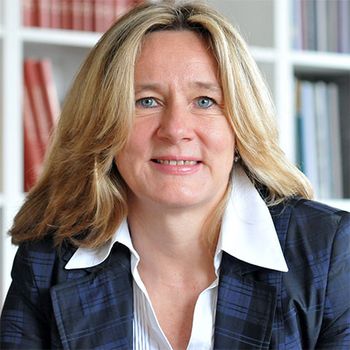
Dr Heide Ahrens, born and raised in Lüneburg Heath in 1962, studied political science, communications and German language and literature in Bonn. After graduating, she initially worked for the Federal Press Office and in the Bundestag as a research assistant. After completing her doctorate in 1994, she moved to the Alexander von Humboldt Foundation as Head of Division, where she worked from 1995 to 1999. She then worked at the Stifterverband für die Deutsche Wissenschaft for five years as a programme manager in the "Programme and Funding" department before taking over the Division for Academic Affairs at the University of Bremen in 2004. She took up the post of Vice President for Administration at the University of Oldenburg in 2007. When Prof Dr Uwe Schneidewind stepped down as President in 2008, the Ministry of Science entrusted Ahrens with the temporary management of the university, which she held until President Prof Dr Babette Simon took office in February 2010. At the beginning of 2011, Ahrens moved to the Schleswig-Holstein Ministry of Science, Economics and Transport as Head of the Science Department. Six years later, she took on this role in the state of Bremen. In 2020, she was appointed Secretary General of the German Research Foundation (DFG).
The second commissioner's office
Following the resignation of Prof Dr Uwe Schneidewind, the university wanted the Ministry of Science and Culture (MWK) to entrust me with the president's duties, as I have a neutral position as Vice President for Administration and Finance. In addition, the Vice President for Research, Prof Dr Reto Weiler, had been elected Rector of the Hanse-Wissenschaftskolleg and was therefore unable to take on this task. The Vice President for Studies and Teaching, Prof. Dr Sabine Doering, had declared from the outset that she would not be available after 31 December 2008. In the hope that this would be an "interregnum" of around six months, I agreed to take on this responsibility. On the same assumption, Professors Hans-Jürgen Appelrath and Mathias Wickleder were recruited - also on an interim basis - to act as Vice-Presidents for Research, Junior Academics and Transfer and for Studies and Teaching respectively. Who would have thought at the time that it would be 16 months and almost two years for the two colleagues? We discussed, decided and represented all the important issues of this transitional period together - and we did so in a way that was highly binding and did not allow any lack of collegiality. I am still grateful for that today.
Dichotomy of perceptions
In the summer of 2008, the perceptions from the outside, i.e. in the city, the region or even on the government side on the one hand, and from the inside, i.e. within the groups interested in higher education policy at the university on the other, could not have been more different. In 2008 in particular, there was a special honour: the very good anchoring in the region had led to victory in the prestigious "City of Science" competition for 2009. The joint application and the programme had helped to weld the region together with the university and the university of applied sciences, which was also involved, and to promote very close cohesion.
Since autumn 2007, there have been new success stories almost every month. With an extremely large donation from EWE AG, the EWE research centre "NEXT ENERGY" was built up at a remarkable pace and marine research was strengthened by the integration of Terramare in Wilhelmshaven and the establishment of two Max Planck junior research groups. In the course of 2008, we also learnt that the successor research vessel to the "Sonne" would also be assigned to the University of Oldenburg at the Wilhelmshaven site.
In spring 2008, it also became known that the Fraunhofer Institute for Digital Media Technology would set up a project group for hearing, speech and audio technology in collaboration with Oldenburg Hearing Research. Further talks were underway to establish Fraunhofer research groups, one in the field of wind energy research and the other in the field of component and system development for energy storage systems for electric cars. Several new endowed professorships had been acquired. In short, the university was doing extremely well. The people of Oldenburg were largely proud of "their" university, as I learnt in numerous conversations. They were all the less able to understand what was going on inside the university that had led to the resignation of Prof Dr Uwe Schneidewind.
The situation within the university was very different. Three issues in particular caused a stir:
1. when I took up the post of Vice President for Administration in March 2007, the first thing I had to announce was a structural deficit of €2.45 million, which had to be apportioned to all School and organisational units. In February 2007, Prof Dr Uwe Schneidewind had allocated the positions to the School on the basis of previous years. Understandably, the university wanted to know how this deficit had arisen and what the money had been used for. Apart from the considerable increases in energy prices and the rise in personnel costs, the previous presidencies had used free funds within the framework of medium-term financial planning to finance academic appointments and commitments to retain staff, to provide the necessary counter-financing for special research areas or to create additional positions for new tasks at the university. Nevertheless, the School and all organisational units were unwaveringly allocated posts on the basis of previous years. Even though the Presidential Boards had exercised their legal rights, this procedure was perceived as non-transparent and illegitimate. In particular, Prof. Dr Uwe Schneidewind and the Vice President for Research, Prof. Dr Reto Weiler, who is responsible for academic appointments, were criticised for implying a preference for Faculties II Computing Science and Economics and V Natural Sciences and Mathematics. The other Schools were perceived as having to "foot the bill" for the others. In other words, it was a hard-fought dispute over resources.
2) Another point of contention was the issue of faculty restructuring in particular, which repeatedly triggered fears among the smallest faculty, School IV - School of Humanities and Cultural Studies, that it would be merged with School III - School of Linguistics and Cultural Studies after all - as planned by Prof Dr Uwe Schneidewind in 2007. Another issue was the reorganisation of the social sciences in this context.
3 Above all, however, there were discussions about the establishment of a European Medical School in co-operation with the three Oldenburg hospitals and the Rijksuniversiteit Groningen, which would result in the first Bachelor's/Master's degree programme in medicine in Germany and a new School of Medicine at the University of Oldenburg. This debate was particularly heated - especially as the committees were only informed of this when the state had already submitted the proposal to the German Council of Science and Humanities for review. The plans for the Medical School in particular increased concerns that the balance would be shifted further in favour of the natural sciences at the expense of the humanities and social sciences subjects.
At the end of Prof Dr Uwe Schneidewind's term of office, there was a dispute over direction, which was often reduced to the formula "research versus teaching" - a disastrous formula, as universities should be places of research and teaching. They can only derive their university status from both.
The long, rocky road to the presidential election
The dispute over direction overshadowed the entire presidential election process and was the reason why this procedure dragged on for over a year. The closer the presidential election came, the more tense and heated the debates in the University Senate became. The disagreement in the University Senate was naturally reflected by its representatives in the search committee. This made the role of the members of the University Council in the search committee under the leadership of the Chairman of the University Council, Dr Werner Brinker, all the more important.
In general, we have recently observed increasingly lengthy and difficult presidential election procedures at German universities. With the increase in competences granted by law, the demands placed on this office have also increased. Due to the greater autonomy of the university, many conflicts that used to be settled between the university management and the ministry now have to be resolved within the university. The selection procedure (especially the public university hearing) has a deterrent effect, especially for the high-ranking academics being sought, because confidentiality cannot be maintained with so many players. And of course, the special history at the University of Oldenburg did not make the position any more attractive - on the contrary!
The thankless role of the provisional Presidential Board
The provisional exercise of the offices in the Presidential Board led to a thankless role: in the view of many university members, it was not democratically legitimised. Against this backdrop, the three of us emphasised from the outset that we wanted to limit ourselves to the necessary tasks and not make any strategic decisions, for example with regard to questions of faculty restructuring or the establishment of Medicine. Our main concern was to leave room for manoeuvre for the future President.
Of course, the longer the vacancy at the top lasted, the more difficult it became to maintain this position and to defend it vis-à-vis the Ministry and the University Council. Decisions had to be made on how to deal with tuition fees and the future, more strategic use of the Presidential Board's programme budget. The development of an internationalisation strategy proved to be urgent in many contexts. Questions about how the Presidential Board's staff units should be organised in future also needed to be addressed. We therefore decided to draw up proposals that were to be discussed with the new Presidential Board and then further developed within the university.
The shop is running
Nevertheless, it can be said that the core business in the Schools and in the service sector continued unaffected, as a review of 2009 shows:
- The number of students rose above 10,000 again in the 2009/10 winter semester, while the number of graduates rose once again to 2,245 (compared to 2,181 in 2008).
- The newly established Career Service was opened.
- The "reform of the reform", i.e. the readjustment of Bachelor's/Master's degree programmes, was one of the main topics in the area of teaching and learning. Although our university tackled the issue earlier than other universities, there was also a strike in Oldenburg. The quite justified demands of students were taken up at a Senate meeting and addressed by the Presidential Board.
- By the end of the year, under the leadership of the Vice President for Research, Prof. Dr Dr h.c. Hans-Jürgen Appelrath, the structural plans with almost all Schools had been finalised or were close to being finalised.
- 23 academic appointment and retention negotiations were concluded (for a total of 169 professorships!) - a record in the appointment business.
- The Collaborative Research Centre "Active Hearing" with spokespersons Prof. Dr Dr Birger Kollmeier and Prof. Dr Georg Klump was extended for a further four years.
- A further SFB (the third for the university) "Ecology, Physiology and Molecular Biology of the Roseobacter Group" - in collaboration with the TU Braunschweig - was successfully acquired under the leadership of Prof. Dr Meinhard Simon. Meinhard Simon - was successfully acquired.
- In total, third-party funding was increased from € 18 million in 2008 to over € 21 million.
- Since the spring, preliminary talks have also been taking place for the second round of the Excellence Initiative, firstly in the field of hearing research and secondly in the social sciences with the University of Bremen.
- The Jaspers anniversary year 2008 brought a breakthrough in the acquisition of the library of Karl Jaspers, who was born in Oldenburg. Karl Jaspers. With the support of the Lower Saxony Foundation and the EWE Foundation, Jaspers' working library, which had been preserved in its entirety, was brought to Oldenburg.
- The new reserves management system was introduced and was very well received by all School departments and organisational units.
- At the same time, the pilot phase for the introduction of personnel budgeting ran with School I - School of Educational and Social Sciences and School V - School of Mathematics and Science and, of course, with the administration. This "currency conversion" from positions to budgets is the logical consequence of the global budget introduced in Oldenburg in 1995.
- The new "studiO" fitness and health centre for university sports on Uhlhornsweg was opened and quickly reached its target user numbers.
So much for the core business.
Two types of co-operation
During Prof Dr Uwe Schneidewind's term of office, co-operation with the University of Bremen had become significantly more important. After his departure, it was important to continue his successful initiative for co-operation in the north-west, which had received an award from the Stifterverband für die Deutsche Wissenschaft in its "Profile and Co-operation" programme. As the state of Lower Saxony doubled the funding from the Stifterverband, €800,000 was available to support co-operation projects between Oldenburg scientists and colleagues from the University of Bremen and the private Jacobs University Bremen. Additional funding from the LzO and Bremer Landesbank led to the establishment of the NOWETAS Foundation in June 2009, whose board - consisting of the three university management boards - not only decides on the allocation of this funding, but also coordinates university development planning. Parallel to these activities, the two universities initiated the preparation of a state agreement between Lower Saxony and Bremen, which was signed in Bremen in May 2009.
In autumn 2008, we observed with interest that the Ministry of Science and Culture (MWK) had set up a structural commission to make recommendations for the further development of the Oldenburg/Ostfriesland/Wilhelmshaven University of Applied Sciences (FH OOW). We were surprised to learn from State Secretary Dr Josef Lange at the beginning of February 2009 that not only the FH OOW was to be split up, but that the newly created FH Wilhelmshaven/Oldenburg/Elsfleth was to be linked to the university by a "Steering Board" that included the administration in order to coordinate development planning. The commission, which consisted solely of representatives from universities of applied sciences, had adopted very far-reaching "Recommendations for the development of universities in the north
west", which had a massive impact on the University of Oldenburg. After all, the ministry held out the prospect of considerable funding for co-operation (up to €5 million p.a. for five years - as was the case with the Technical University of Lower Saxony), especially for the academic sector, of course; administration should - as almost always - cost as little as possible. This was therefore a strategic issue of eminent importance that the provisional Presidential Board had to deal with. Despite our reservations, we entered into talks with the Presidential Board of the FH OOW under the leadership of the acting President Christiane Claus. Two interim presidencies, the best conditions for negotiations with the MWK ...
The draft law came in May 2009 and, to our horror, gave the planned "steering committee" far-reaching powers: University development planning in interface areas, the release of professorships and the decision on appointment lists! Both the Presidential Board and the University Senate saw this as an erosion of the powers of the Presidential Board and demanded the cancellation of the far-reaching allocation of powers at the hearing of the Science Committee, which was held at extremely short notice. This was successful in the decision on the appointment lists. In addition, after massive intervention, it was achieved that the Chair of the Steering Committee, who has the casting vote in the event of a disagreement between the University Councils, can not only be appointed by the Ministry in agreement with the University Councils, but also requires the approval of the University Senates of both universities. The University Councils are to meet once a year - together with the University Council of Emden/Leer University of Applied Sciences - and agree on university development planning in the north-west. Seven working groups have been set up in the academic field, where successful co-operations have been in place for some time - even without government guidelines (Hearing Technology, Computing Science, Engineering Physics); for the service topics, numerous discussions have taken place in the individual areas - Human Resources, Finance, Building Management, Library, University Computer Centre - and for the most part these have been tough, tough, tough. The framework cooperation agreement, which had to be concluded by law, is an octroi in every respect, the implementation of which is also supposed to be cost-neutral - which ultimately means that the co-operation is at the expense of the university: not a promising prospect for successful co-operation, the cost of which no one in the ministry obviously has in mind. After dealing with this topic for the past nine months, I have come to the conclusion, to paraphrase Karl Valentin: "Co-operation is nice, but it's a lot of work."
The "Smart House"
In order to take up the idea of the "City of Science 2009" and carry it forward into the "City of Tomorrow Oldenburg", Mayor Schwandner took the initiative to build a house of science, the "Smart House Oldenburg", in a prime location in the city. The historic residential building at Schlossplatz 16, which is being renovated and given a very modern extension, is intended to span an arc from the architecture of the 16th to the 21st century. Events and conferences will be held in the low-energy building, which will also showcase the core competences of Oldenburg's universities and scientific institutions in the areas of "Energy & Climate Protection" and "Housing & Living in the Future". However, when the city council rejected the project, the university and the new Jade University of Applied Sciences Wilhelmshaven/Oldenburg/Elsfleth came together within a few weeks to save the project by jointly founding a non-profit limited company. It had long been a desideratum for the university to be represented in a central city centre location. With private funding from the regional economy and funds from the second economic stimulus package, it was possible to raise the necessary (equity) capital for this - especially as a tenant was found for part of the building in Oldenburg Tourismus und Marketing GmbH, which is a very good fit. This is also a very good example of voluntary co-operation between the two universities.
European Medical School
In the meantime, the circle around university members Prof. Dr Reto Weiler and Prof. Dr Dr Birger Kollmeier as well as Prof. Dr Hans-Rudolf Raab from the Oldenburg City Hospital continued to work hard on the European Medical School. In summer 2009, the Ministry of Science and Humanities resubmitted the improved concept to the German Council of Science and Humanities, and the "Friends and Sponsors of University Medicine Northwest" association was founded to support the project. The debate continued within the university - but was now much more objective. At the end of October 2009, the Medical Committee of the German Council of Science and Humanities spent two days on site to gain an impression of the project, holding discussions with those involved from the university and the three hospitals, visiting the hospitals and also visiting the Rijksuniversiteit Groningen to find out more about the project, which received the express support of the then Lower Saxony Minister of Science, Lutz Stratmann, during the visit. We were delighted to hear (in complete confidence, of course) that the assessment had been successful and that the innovative teaching concept in collaboration with Groningen was highly praised. Nevertheless, further questions were subsequently received, which was not only a testament to the thoroughness of the German Council of Science and Humanities, but also testified in particular to the political explosiveness of this endeavour, which was causing a great deal of controversy in the field of university medicine throughout Germany.
Conclusion
Despite the exorbitant amount of time required due to the double burden - I still had to fulfil my duties as a full-time Vice President - I found it enriching to have responsibility not only for the administration, but also for the academic field. The large number of representative duties and my participation as a university representative on the committees of affiliated institutes and cooperative institutions have given me new and deeper insights into the diverse academic life of the university, which also provide a good background for my genuine tasks as Vice President for Administration and Finance. On the other hand, I found the internal disputes surrounding the presidential election particularly stressful, as they were at times very heated.
For me personally, I have learnt that there is always room for a little more - in Peter Sloterdijk's words, "the successful expansion of the training zone". Added to this is the conviction that has grown during this long transition period that it is worth working for our Carl von Ossietzky University, for excellent research and teaching - even if the contradictions sometimes become particularly apparent. For example, when grassroots academics, students or even staff believe that the Presidential Board can force the School, as the body responsible for teaching, to implement a number of reforms to the degree programme by decree, as was demanded during the student strikes in December 2009. At the time, I said to my colleagues on the Presidential Board: "Finally, someone who believes in the omnipotence of the Presidential Board."