Prof Dr Horst Zillessen
Prof Dr Horst Zillessen
President of the University from 1980-1986
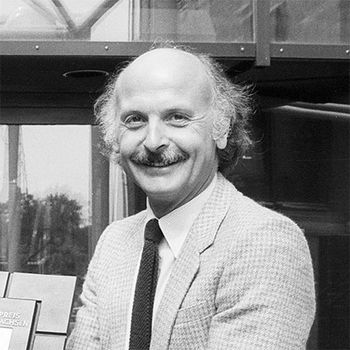
Prof Dr Horst Zillessen, born and raised in the Rhineland in 1938, became head of the Social Science Institute of the EKD in Bochum in 1970 after studying economics and political science and completing his doctorate at the University of Cologne, where he worked on environmental policy issues. He also made a name for himself in this field as the founding chairman of the Federal Association of Citizens' Initiatives for Environmental Protection (BBU) and as a board member of German Environmental Action in the 1970s. After his term as President of the University of Oldenburg, he became a professor in the field of social sciences specialising in environmental policy. His experience with environmental decision-making processes led to his interest in mediation, which he explored during research stays at the University of Virginia (USA) and brought to Germany. In 1992, he founded the MEDIATOR Centre for Environmental Conflict Research and Management as the first affiliated institute of the University of Oldenburg, which - today as MEDIATOR GmbH based in Berlin (www.mediatorgmbh.de) - is active in major environmental projects. Zillessen also ensured that the University of Oldenburg was one of the first to include mediation in its further education programme.
On dealing with "institutional puberty"
Developmental years of the university
Looking back on my time in office begins with a curiosity: when I applied for the position of President in 1978 - inspired by an advert in "Die Zeit" - I had no idea where exactly Oldenburg was located, let alone what to expect and what would be required of me. This, together with the fact that I had no previous university work experience, requires a brief examination of my professional "history" in order to understand the background against which my application for this office was made and why it was successful in the first place.
From 1970 onwards, I headed the Social Science Institute of the Protestant Churches in Germany (SWI) (later the Evangelical Church, EKD) in Bochum and at the same time, as a sideline, the Political Club of the Protestant Academy in Tutzing, a highly respected institution of political adult education at the time, where Willy Brandt and Egon Bahr, for example, first presented their then fundamentally new ideas on Ostpolitik for discussion. Although business trips often took me to Hanover, as the EKD church chancellery based there was administratively responsible for the SWI, Oldenburg was "unknown territory" for me. My political and social activities centred on North Rhine-Westphalia and the federal capital Bonn. In 1970, I suggested to the SWI's Board of Trustees that its scientific activities should focus on the topic of "The threat to our environment posed by industrial civilisation". In this context, as a political scientist, I was interested in the new political phenomenon of the citizens' initiative. My scientific work on this topic very soon led to intensive personal contacts with representatives of various initiatives and, finally, to advice to them to join forces organisationally to make their ideas more politically viable. As a result, in 1971 I was elected Chair of the newly founded State Association of Environmental Initiatives in North Rhine-Westphalia and a year later was elected founding Chair of the Federal Association of Citizens' Initiatives for Environmental Protection (BBU).
These environmental policy tasks led to intensive involvement in advisory bodies of the Federal Government, in particular the Federal Ministry of the Interior, which was responsible for environmental protection at the time, and the Federal Ministry of Research and Technology. From 1978, I was also a member of the "Ecology" working group of the SPD party executive as an independent expert.
So when I applied for the position of President of the University, I had some experience in dealing with politicians as well as in leading and moderating complex and controversial political discussions (involving high-ranking politicians from Willy Brandt to Richard von Weizsäcker), but no knowledge of the inner workings of a university, its organisational and administrative structure and the role of university political groups. I was a part-time lecturer in political science at the Bergische Universität in Wuppertal, but in this role you usually have no involvement in university life and certainly not in university policy-making processes. The political experience I was able to demonstrate, as well as my ten years as head of a research institution, certainly contributed to the surprising result of the presidential election in June 1980, not only for me.
A difficult start ...
At the beginning of my term of office, the internal and external conditions of existence and working conditions at the university were anything but satisfactory, which severely impaired the working atmosphere. As far as the internal situation of the university was concerned, it had already become clear very quickly in the preliminary discussions I had with the university political groups before the election that the university was deeply divided in two respects: in the teaching staff, many of those who had been appointed at the time of the former University of Teacher Education argued with the newly appointed university professors about the importance of teaching on the one hand and research on the other, which led to correspondingly fierce disputes about the allocation of funds. Many of the newly appointed professors found it unreasonable how they had to fight for the financial and spatial conditions for their research activities when the University Senate allocated the budget. As the newly founded university was actually rather poorly equipped in both respects compared to the established universities in Lower Saxony, these disputes put a considerable strain on both teaching and research activities, but also on the working atmosphere at the university as a whole
Of course, many academics attributed the difficulties not only to the inadequate funding provided by the state government, but also to the university administration. It was suspected by many academics of not acting as a service provider for teaching and especially research to the extent deemed necessary, but rather of being more interested in the smooth running of internal administrative processes. In some cases, it was probably overlooked that the working conditions of the administration were characterised by the same restrictions that the teaching staff rightly complained about. However, it may also have played a role in this context that many administrative staff had been recruited at the time of the University of Teacher Education and had not yet fully mastered the adaptation of their working style to the requirements of a university research organisation. Another reason for the complaints about the inadequate working conditions was certainly the structure of the university, which at that time had no smaller work and research units in the form of seminars or institutes below four departments. In my view, this meant that there was a lack of manageable structures that could have given the necessary space to the personality and willingness to take responsibility of the individual. Above all, however, it was the completely inadequate number of staff in the so-called Mittelbau, i.e. the academic and technical staff, which must be cited as a plausible reason for the complaints of the teaching staff and researchers.
The external working and living conditions also proved to be quite problematic at the beginning of my term of office. This applies firstly to the spatial conditions, which were cramped for both teaching staff and students and not very conducive to research, teaching or studying. With more than 5,000 students at the time, the university had three rather small building complexes: the old building stock of the former teacher training college and two buildings in the purely functional style of the new German university buildings of the 1970s, the so-called Verfügungsgebäude (VG) and the Allgemeine Verfügungszentrum (AVZ) as well as some rented rooms. The canteen was constantly overcrowded and could hardly fulfil its essential function of providing food for the students and staff of the university, let alone serve as a communication centre for the members of the university, as was otherwise customary at universities. I could only ever agree with the students who occasionally protested against these conditions in my office and tried to counter their complaints by pointing to the complex under construction for the library, canteen and sports area.
... and a special environment
The external working and living conditions of the university also included its social and political environment - and this revealed some unexpected and unpleasant surprises for me at the beginning of my term of office. My learning process began a few days after my inauguration with a note on the windscreen of my car saying: "Go back to where you came from, you red sow". The clumsy handwriting betrayed the youthful age of the author, who had obviously put the tenor of a discussion at home on paper. Not long afterwards, I received another letter in the post, which far surpassed the first in its foul language. It showed me in a very drastic way how the university was perceived by its environment and how politically charged the discussion about the university was at that time. To my surprise, I had already learnt in the preliminary talks that there was a small DKP parliamentary group in the city council, a party that no longer played any role at all in the Ruhr region and had a reputation for political sectarianism. Now I learnt that there was not only a DKP university group at the university, which published a press organ called DER KOMMUNIST, but that the DKP also had supporters in the university administration.
The encounter with the DKP representatives on the University Staff Council, who politically instrumentalised all university problems, was one of the most unpleasant experiences of my more than 40 years of professional life. Nevertheless, out of political conviction, I opposed the Radical Decree, which was primarily directed against DKP supporters and thus also affected university members who were saved from dismissal not least by the efforts of the university management.
When I applied, I was very attracted by the progressive approach to science in the sense of Carl von Ossietzky's sentence "We must make science human again", and I therefore gave my inaugural speech under the heading: "On the social responsibility of science and the university". I didn't realise at the time that the leading strata of Oldenburg society had little interest in this orientation of "their" university. Rather, there were ideas of "Altheidelberg" - or rather the hope of a politically rather inconspicuous institution that would at least fit into the social environment that could be characterised as "bourgeois" to some extent.
The inaugural visits to the political and social representatives of the city and the region made it very clear to me at the time that it would be a long road before it would be possible to obtain the necessary support for the university's upcoming establishment and development process. At the same time, however, it became increasingly clear to me that, in view of the university's poor resources and the competition with the established universities in Lower Saxony for a larger share of the state's higher education budget, this support was the only chance for the university to secure its long-term existence through targeted expansion, including the expansion of the range of subjects on offer.
Many people in the city and region of Oldenburg were certainly unaware at the time that the German Council of Science and Humanities, which was responsible for the development of German universities, had expressly referred the reform mandate, which had arisen from the question of the social responsibility of science after 1945, to the newly founded universities. As late as 1980, it had assigned the newly founded universities the task of "putting reform ideas of science and higher education policy into practice". As a result, this led to an unnecessary challenge for the old universities and an excessive demand on the new ones. The idea of being the standard-bearers of reform did not exactly favour the development of a sense of proportion and prudence among the new foundations, and the more they overshot the mark, often on the assumption that this was the only way they could make a difference, the more they unintentionally discredited the reform approach themselves and also ran the risk of becoming a foreign body in their social environment.
Last but not least, the exaggerated claim to burden the newly founded institutions with the burden of being a role model for the entire higher education sector contributed to the reform approaches being "stalled" again. The tried and tested means for this was the principle of equivalence of study and examination achievements, which was probably often used in the sense of equivalence. However, this deprived the newly founded universities of an important field in which they could have successfully competed with the old universities. If the economic principle of competition is applied to universities, the concept of competition must be taken into account and not just the term. It then becomes clear that there are different conditions and
forms of competition. Competition between equally large providers with similar products is the unlikely exception to "full competition". The rule is competition based on different products and different qualities. The application of the principle of equivalence based on the yardstick of similarity has prevented this form of competition for start-ups. It has certainly harmed the development of the University of Oldenburg as well as its reputation that no politically accepted quality or product competition with the "established" universities could take place in the form of single-phase teacher training, project studies or reformed degree programmes. What needed to be corrected in these three areas could have been changed. However, the levers of bureaucratic egalitarianism - supported by the arrogance of the professional organisations - did not admit this, but prevented the long-term development of a competitive offering. In the "university market", there was a monopoly of what was traditionally customary.
The fact that the University of Oldenburg was not at all inconspicuous politically was not only due to the political and, in particular, higher education policy circumstances of the 1970s, but not least due to a not particularly stringent higher education policy in Lower Saxony and its treatment of the University of Oldenburg. The state had repeatedly made promises which were then not honoured or which often had to be fought for very intensively - for example in 1976 with a large bicycle demonstration by more than 1,000 members of the university to the responsible ministry in Hanover. The university's committed and imaginative fight for its existence and further development, as well as the dispute over its name, had obviously had such a lasting impact on its public image that I initially had to listen to their reservations about the institution I represented in many conversations with representatives of the city and the region.
How deeply rooted these reservations were became particularly clear to me once when I invited the board of the science committee of the state parliament, which was visiting the universities and colleges in Lower Saxony, to my home. I knew the Chair of the committee from working together for several years in the Ruhr area in the mid-1960s on joint social work between the denominations in the mining industry. My wife and I could see the surprise on the faces of the visitors at the "orderly" budget and the "normality" of the facility - one of the guests even openly expressed his astonishment. What concerns and reservations might these visitors have had when travelling to my house - and then visiting the university?
For me, the summary of the sometimes overtly, sometimes covertly recognisable reservations about the university and its equipment problems described above led to the logical conclusion that one of my primary tasks as university president had to be to solicit support for the university's interests in the city and region and to dispel the reservations, to convey a different image of the university than the one that had become entrenched in people's minds until then - partly due to misconceptions about everyday university life in general, partly due to long-established prejudices, partly due to exaggerated student reactions to political measures, partly certainly also due to irritating statements and actions from the university itself. I therefore hardly missed an opportunity to represent the interests of the University of Oldenburg in the political and social life of the city and the region (including regular participation in the annual press, craftsmen's and sportsmen's balls), to campaign for support for its concerns and generally for a realistic perception of the university (which earned me the nickname "4711 - always there" among university staff).
It remained a protracted and difficult endeavour, although the now frequent contacts between the university management and representatives of politics and society gradually led to a different image of the university, at least among them. They were also increasingly willing to support the university when it was once again necessary to ward off the threat of disaster from Lower Saxony's higher education policy. However, even after several years of intensive efforts, the reservations (or at least uncertainty) of the majority - at least of the representatives of the business community - were still very much in evidence when, at the New Year's reception of the Chamber of Industry and Commerce on 12 January 1984 in front of around 300 invited guests, IHK President Thümmler announced after the keynote speech: "The greeting of the guests will now be given by the President of the University of Oldenburg, Dr Horst Zillessen". I will never forget the breathless, tense silence that followed this announcement. It was as if a kind of paralysis of fear had gripped the auditorium. It was the first time that a representative of the university had been able to speak officially at one of these annual events. This was obviously as unfamiliar as it was unexpected for most of those present and certainly caused many to fear what they would now have to listen to.
My welcoming address did not fulfil these fears, even though I did not fail to point out the socially and time-critical function of science - not least by pointing out that the university trains teachers, among other things, who will educate children in the future, who in turn will take on key social functions in 2020. For this reason, he said, a society has to trust that academic education is a step ahead of its time and not just committed to the zeitgeist. The lively and sustained applause at the end of the welcome speech seemed to indicate that another small step had been taken towards changing the perception of the university.
Securing a livelihood and the fight for justice
At the start of the aforementioned welcome address, I took the opportunity to thank the region’s representatives – in particular the President of the Chamber of Industry and Commerce and of the Oldenburgische Landschaft, as well as the Lord Mayor of the City of Oldenburg – for their support at a time when the university’s very existence was under threat. Looking back, it is hard to believe just how erratic and, at times, how out of touch with reality Lower Saxony’s higher education policy was in the early 1980s. Until the mid-1980s, it forced us into a constant struggle: initially and above all to maintain the existing range of courses, and subsequently also to expand it in the interests of securing the university’s future and improving educational opportunities for the next generation within the catchment area of the University of Oldenburg.
In the autumn of 1983, a report by Prof. Dr Gerd Peisert and Dr Gerhild Framheim (both of the University of Konstanz), entitled ‘Old and New Universities, Catchment Areas and Students’ Choice of Location, Motives and Behaviour’ had shown that, at established universities offering a wide range of subjects, 79 per cent of local students eligible for higher education remained in the area, whereas at newly founded universities, due to their limited range of subjects, the figure was only 39 per cent. For the University of Oldenburg, this finding served as confirmation of its efforts to expand its range of courses – not least to counter the exodus of well-educated young people from the region (‘brain drain’).
Initially, however, it had to fight to ensure that its already limited range of courses would not be reduced even further. In July 1982, the Minister for Science had published plans to reduce the number of training places for primary and secondary school teachers. These plans allocated only 100 places to the University of Oldenburg – almost halving the existing capacity, an incomprehensible reduction compared with the 310 places that were to remain at the University of Osnabrück. These plans had yet to be implemented when, in November 1982, the next blow to teacher training provision in the region was dealt: The state government announced that it would be scrapping the degree programmes in German, History, Social Studies and Russian for grammar school teacher training at the University of Oldenburg, as well as the programmes in German, History, Geography and Social Studies for secondary school teacher training. In early January 1983, it then emerged that the state government was considering relocating the teacher training programme for business studies from Oldenburg to Osnabrück, which would have jeopardised the development prospects of the economics department, if not actually threatened the very existence of this important field.
Faced with this situation, the university once again found itself compelled to resort to a means of resistance against the state government’s plans that was certainly unusual for a higher education institution. Together with Oldenburg City Council and the Oldenburgische Landschaft, it called for a public rally in the town’s market square to demonstrate the region’s determination to preserve and expand the range of degree programmes on offer. Around 1,500 people responded to this call on 26 January 1983. Thanks to this high-profile campaign – and not least as a result of the united support from the region’s social and political representatives and their intervention with the state government – the university ultimately managed to avert the worst. Admittedly, not all degree programmes could be retained, and the number of places on teacher training courses was also significantly reduced – as was the case throughout Lower Saxony – but the range of subjects was largely preserved. Only the partial degree programmes in Social Studies and Geography for secondary schools were discontinued, although the subject ‘
Geography’ was preserved through the Magister degree programmes approved at a later date.
The back-and-forth over the law degree programme represents a particularly instructive case study (or perhaps it would be better described as a ‘learning experience’) of Lower Saxony’s higher education policy. It began with a proposal by the CDU parliamentary group to establish such a degree programme in 1971, whilst the institution was still a teacher training college. It was rejected by the then SPD majority. Towards the end of the 1970s, the CDU state government had held out the prospect of the university establishing a degree programme in Law. On 27 June 1979, the state government had even declared before the Lower Saxony State Parliament that the substantive decision in principle regarding a law degree programme at the University of Oldenburg had already been taken. The Minister for Science responsible had subsequently made several corresponding commitments, “which could not have been made with a greater degree of binding force” (in the words of my predecessor, Prof. Dr Raapke). Representatives of regional organisations, including the political parties, also unanimously called for the establishment of this degree programme. Given that the city of Oldenburg possessed the necessary ‘judicial infrastructure’ (Local Court, Regional Court, Higher Regional Court, Labour Court, Social Court, Administrative Court), the external conditions also supported the validity of this plan. In early July 1980, the ‘Law Commission’ commissioned by the state government to examine whether such a degree programme should be established met for the first time. In addition to five law professors and a representative of the Bar Association, the commission included one representative each from the Ministries of Justice, Finance and Economic Affairs. Even at this early stage, journalists close to the government were already describing the commission as little more than a token gesture.
Nevertheless, in December 1980, following the Commission’s third meeting – to which I belonged at the time by virtue of my office – a sense of cautious optimism began to spread at the university, as the reactions of the Commission members had been consistently positive. In March 1981, the commission then reached the conclusion that the excellent local conditions – in the form of the presence of all the courts – the need to broaden the range of subjects at the university, and the demand for university places in the region as a whole all argued in favour of establishing the degree programme. The representatives of the aforementioned ministries, as well as the representative of the Bar Association, voted against this decision. Nevertheless, in the summer of that year, even the Minister for Science described the establishment of the degree programme to the *Nordwest-Zeitung* as “indispensable in the long term”. Later in the year, even Minister-President Albrecht expressed a generally positive view.
Shortly afterwards, however, the university’s hopes and expectations were dashed once again. As late as November 1981, the Minister for Science announced that, due to the financial situation, no decision would be made in the foreseeable future regarding the establishment of a law degree programme in Oldenburg. However, with state elections due to take place in 1982, the tone shifted as the election campaign drew nearer. At an election rally in Oldenburg in February 1982, the Minister for Science spoke of a “major package”; stating that “a comprehensive package might be put together” for the degree programmes in law, Computing Science and food chemistry requested by the university. When he returned to the subject of the comprehensive package in April, law was missing from the list; instead, there was now talk of agricultural sciences. In November, the Minister then announced that a law degree programme could only be established if the university itself raised the 45 posts required for it – although he was well aware that this was entirely impossible.
In February 1983, ‘sources close to the government’ in Hanover reported that agricultural science was once again out of the running due to excessive costs and competition from Göttingen, after the Minister for Science responsible had declared just a few days earlier that Oldenburg could expect to be offered Computing Science, food chemistry and agricultural science; whilst there was still controversy surrounding law. In June of that year, the state government then decided to set up another commission – this time to examine whether a degree programme leading to a Diplom-Kaufmann qualification with a legal specialisation could be an alternative – and this was finally approved in the summer of 1986. At least the state government passed a resolution at its June meeting to establish a Department of Computing Science, a decision which – as we know today – has had an extraordinarily positive impact on the university, the regional economy and employment opportunities for the younger generation.
As for law, however, the decision was to be taken in October. Once again, this did not happen. Opposition within the CDU parliamentary group was evidently so strong that the state government, although it was actually within its remit, wanted to let the state parliament decide on the matter. A motion for a resolution on this had already been tabled by the SPD parliamentary group. In January 1984, the Ostfriesische Landschaft, the Oldenburgische Landschaft and the Oldenburg Chamber of Industry and Commerce once again appealed to the state parliament in a detailed petition, “to finally take a decisive, forward-looking step for the further development of the University of Oldenburg by establishing a law degree programme”.
It was all to no avail. On 16 January 1984, the state parliament rejected the SPD’s proposal to establish the degree programme by 85 votes to 83. The university’s limited range of subjects could therefore – with the exception of Computing Science – not be significantly expanded during my term of office. Although a supplementary degree programme in Dutch Studies was established in October 1982 and Master’s degree programmes were introduced on the basis of existing subjects, and a degree programme in Intercultural Education was launched in October 1984, but a substantial expansion of the range of courses on offer could not be achieved, despite all the university’s efforts and the support of regional representatives. Attempts made in 1979–80 to establish a dentistry programme and, a few years later – with the support of local hospitals – to bring part of the clinical training for medical students to Oldenburg also failed.
Nevertheless, the university remained as attractive as ever to prospective students in the region and beyond: whilst just over 5,000 students were enrolled in the summer semester of 1980, the figure had risen to 9,200 by the summer semester of 1986. One key reason for this growth in student numbers was undoubtedly the university’s impressive physical expansion. When I took up my post at the university, as mentioned above, the buildings for the library, the sports facilities and the canteen were already under construction; the new buildings were handed over to the university on 15 October 1982. The fact that the buildings for the natural sciences in Wechloy – which had won several architectural awards – could also be constructed was due in no small part to the university’s Chancellor, Dr Jürgen Lüthje. In May 1980, he learnt from a staff member at the Federal Ministry of Education and Science that the Federal Government intended to announce, at the next meeting of the Planning Committee for University Construction, that it would withdraw from co-financing – specifically for all construction projects commenced after 1980. The state had notified the authorities that construction of the new natural sciences buildings in Oldenburg was due to begin in 1981, so it was to be expected that, without the federal government’s 50 per cent share of the financing, the state government would cancel the building project.
There were only 14 days left until the decisive meeting of the Planning Committee for University Construction. Lüthje then managed, following immediate information from Lower Saxony’s Minister for Science, to have the state set the start of construction as 1980. This was successful: On 18 December 1980, the first work on the Energy Laboratory marked the start of the expansion of the natural sciences at the Wechloy site. This literally laid the foundation stone for a development of the university which, viewed from today’s perspective, can only be described as both astonishing and gratifying.
The struggle for the inner structure
As far as the internal development of the university was concerned, however, the representatives of the left-wing university groups in the University Senate and Council in particular contributed to the university's inability to adapt to the growing academic demands and quantitative changes by its own decision. The internal structure had only four departments: Department I: Education/Socialisation; II: Communication/Aesthetics; III: Social Sciences; IV: Mathematics/Natural Sciences. The reservations in the social environment towards the university seemed to be confirmed once again, so that the responsible minister was ultimately forced to make the necessary decisions by way of so-called substitute execution. In circles of friends and in the West German Rectors' Conference (WRK) at the time, I often tried to explain the difficulties in finding an appropriate structure by saying that the young university was in a phase of "institutional puberty" - with all the problems of finding an identity. It was completely unacceptable to me at the time - and in retrospect it still is today - that the left-wing majority in the Senate at the time permanently refused to provide the university with a substructure that was appropriate for academia. Even before my term of office began, the "Democratic University" group of professors had submitted a proposal to the University Senate that would have divided the university into nine instead of four departments and provided for a number of institutes or seminars. The University Senate rejected this proposal out of hand, with the opponents of this reorganisation arguing above all that, according to the Ministry's specifications, the final decision in the Institutes and Seminars should lie with the professors. In the run-up to the Senate consultation, Departments I, II and III had decided not to split up, while Department IV had decided to form one department each for the subjects of biology, chemistry, mathematics and physics.
As far as the decision-making procedures in the institutes and seminars are concerned, it would have been quite possible to regulate the opportunities for scientific, student and administrative staff to have a say by means of appropriate internal university institute or seminar regulations, without cancelling the ultimate responsibility of the professors in scientific and financial matters. The idea of releasing professors from this ultimate responsibility, which may have played a role for some opponents of the institute, seemed to me to be as unrealistic as it was incompatible with the official duties of a university lecturer.
It was obvious that the co-determination regulations in the academic institutions below departmental level were the decisive reason for rejecting the reorganisation, but I never got rid of the suspicion that some of the professors who rejected the entire structural reform felt quite comfortable in the confusion of the existing large structures. As the number of academic staff in the non-scientific departments was extremely low, it was not so noticeable in the existing structure if the professors were usually not available at the university or at home during the semester holidays. When - as mentioned above - the existence of the subject Russian was endangered, the lecturer responsible for this subject remained unreachable for the university management because - as it then turned out - he usually lived in Sweden at the beginning of the semester break.
At the beginning of December 1980, the University Senate again dealt with the organisational structure after a "general university assembly" had passed a resolution a week earlier, in which not only the division of Departments I and III was rejected, but also the withdrawal of the decision to divide Department IV was demanded. The invitation to a plenary assembly was addressed to all members of the university, around 6,000 people at the time, only a very small number of whom could of course be seated in the university auditorium - a rather questionable form of the desired "democratic" decision-making process. Of course, the plenary assembly had no decision-making powers, but it nevertheless had the effect that Faculty III cancelled a previous decision to divide the university. Department IV, however, stood by its decision to divide.
In view of the differing positions in the university discussion and the threat of an octroi by the Minister of Science, the university management submitted an alternative proposal to the University Senate. It envisaged three possible solutions to the structural problem:
a) Retention of four departments with scientific facilities in all departments;
b) Division into six departments with scientific facilities in all departments;
c) division into twelve departments without scientific facilities.
The University Senate rejected these proposals and decided that the issue of the substructure within the existing departments should be revisited.
The Ministry of Science's reaction to the Senate's decision was not long in coming. Just a few weeks later, the university was definitively ordered by decree to divide Departments I and III. The Ministry set a deadline of 31 January for the University Senate to reach a corresponding decision. The decree also announced that the Ministry considered the formation of institutes to be necessary in addition to the division of departments and would tackle this if the university did not decide this itself.
In view of the importance of the now urgent decision, the university management invited the University Senate to a council meeting on 21 January in conjunction with a university plenary session. Having only been in office for three months, I could not and did not want to ignore the university tradition of the plenary assembly, although as a political scientist I had always regarded such plebiscitary forms of decision-making processes as highly problematic. The event got completely out of hand right from the start when, after I opened the session, a women's group demanded that the Council's agenda be taken off the table in favour of a plenary session, to great applause from the plenary. The Council meeting was thus cancelled, but the plenary session was also the last to take place during my term of office.
It became clear that the left-wing Senate majority, if it was politically against the grain, was not so serious about the personal responsibility of the university members when, at the Senate meeting on 10 March 1981, it refused to accept the decision made a week earlier by a clear majority of the Faculty I Council to divide the university into two departments, namely Education/Special Education on the one hand and Philosophy/Psychology/Sports Science on the other. Although the Department Council had justified its decision by stating that maintaining the existing department was not compatible with the university charter, which stipulated that no more than 30 university lecturers should belong to one department, its decision was not adopted by the University Senate. If it was not politically convenient, even the university charter, which was otherwise invoked as "high and holy", was just a piece of paper and just as little as the previously emphasised "principle" of accepting the decisions of the higher bodies. A few weeks later, the Minister of Science then decreed the division into nine departments by octroi.
The same game was repeated by the same actors in 1982 when it came to the substructure of the departments in the form of Institutes and Seminars. By the end of January of that year, the University Senate had already received nine proposals from the departments to establish institutes. Although the spokesperson for the largest group of professors in the University Senate, Prof Schulenberg, pointed out that his group would stick to the establishment of Institutes and that academic and administrative staff and students should be given the opportunity to have a say, which the Higher Education Act did not provide for but did not exclude either, the proposal was rejected by a clear majority. Just how ideologically narrow the view of this decision was at the time was evident in the discussion about my report on this period in 1984. My later successor in office, Siegfried Grubitzsch, had seen the main reason for the rejection of institutes at the time as being "that the institutes would encourage uncontrolled heteronomy, the instrumentalisation of science ... would encourage the instrumentalisation of science within the university". Even today, I still cannot understand the logic of this argument, because in a department without any substructure, which comprises more than 30 university lecturers, who wants to control which research interests the individual researcher pursues?
The further course of this discussion, which was certainly very important for the development of the university, took on some bizarre characteristics. At the Senate meeting on 24 March 1982, the opponents of the institute had demanded - and succeeded with their majority vote - that the topic of "institute applications" should be discussed as a regular item on the agenda. However, by the time this agenda item was called at around 8.00 p.m., the majority of the Institute's opponents had already left the meeting - whether their "evening off" had been more important to them or they had teaching commitments remained unclear in retrospect. In any case, the University Senate decided to approve nine institute proposals from Departments IV and V by 4 votes to 3. At the proposal of the "Left List" of professors and academic staff, the ÖTV and the student representatives in the Senate, a ten-minute special meeting of the University Senate was then held two weeks later, at which the Senate's previous decision was reversed by 7 votes to 5. Christian Graf von Krockow, who knew some of those involved from his time as Chair of the University's founding commission, wrote about the institute issue at the University of Oldenburg in DIE ZEIT on 23 April 1982: "Since no agreement can be reached, the Ministry will decide ... Then there will be a great clamour: Rape! But as it goes when men are involved: Some will secretly enjoy what is being done to them."
In fact, the ministry's reaction to the university's decision was not long in coming. In an "institute decree", the minister called on the university to submit a concept for the formation of academic institutions by 30 June 1982, otherwise he would form institutes at the university by octroi. In his decree, he explicitly stated that he largely shared the existing plans for the formation of institutes, some of which had already been approved by the relevant departmental councils. Under the pressure of the announced octroi, the Senate majority was finally prepared to give up its negative stance, especially as it had to be aware that an octroi would have left the university with no influence on the organisation of the institutes and, in particular, the allocation of academic staff. The representatives of the Left List, who abstained from the subsequent vote and thus enabled the Senate to give its approval, doubted the value of more liberal institute regulations, which the University Senate had previously adopted in the form of principles to be incorporated into the university charter. However, they were faced with the dilemma that representatives of their group had already agreed to the establishment of several Institutes in Faculty III. At a special meeting on 23 June 1982, the University Senate then closed this difficult and protracted chapter in the University's development with a majority of six votes in favour, four against and three abstentions.
The role of Wolfgang Schulenberg
With the takeover of the new buildings for the library, the Institute of Sport Science and the canteen in October 1982 and for the natural sciences in June 1984, the external prerequisites for the successful development of the University of Oldenburg were created, as were the internal prerequisites with the division of departments and the establishment of Institutes. It is hard to imagine today how much effort, how much physical and psychological strain this development process entailed. I would therefore like to take this opportunity to remember a man without whose work as an academic and, in particular, as a university politician, this development would hardly have been possible: Prof Dr Wolfgang Schulenberg (1920-1985).
Schulenberg came to Oldenburg for the first time in October 1945 and
attended the Oldenburg State Pedagogical Academy until September 1946 - the first teacher training institution to resume its work after the war. After five years as a teacher in Schwei am Jadebusen, he initially became an assistant in Oldenburg, but then went to the University of Göttingen as a Grimme scholarship holder to study education, sociology and psychology. He obtained his doctorate there in November 1956 and returned to Oldenburg as a lecturer at the University of Education in June 1957, where he was appointed Professor of Sociology in May 1961. From April 1969 to March 1971, he was the founding rector of the Lower Saxony University of Education, which was formed from eight teacher training colleges. He turned down several offers of chairs, including at the Free University of Berlin and the Universities of Hanover and Münster. He remained in Oldenburg and devoted an exceptionally large part of his academic and higher education policy commitment to the university.
For me as a newcomer to this very special cosmos of university politics, Schulenberg, as the spokesman for the largest group of professors in the University Senate, was a reliable dialogue partner, especially in the early years, who was always open to argumentative clarification of a situation - even when we disagreed. He was therefore often my dialogue partner when it came to important university decisions. He took it for granted that the President should always be approachable. I remember a meeting at the beginning of my term of office as President that was still going on at 8 pm, even though it was my birthday, numerous guests were already waiting for me at home and my wife rang me anxiously to find out when I would be arriving. As was so often the case at that time, the conversation centred on the internal development of the university.
Whoever enters a political field, no matter what kind, is always exposed to personal reproaches, misunderstandings and even hostility - since politics always has to do with setting values - and all the more so the more persistently they pursue a goal that is recognised as being right. This also applies to the context of higher education policy. In the intra-university structuring process described above, Schulenberg was unbending, but he also possessed the ability, even in the face of tough confrontation on an issue in which he himself was highly involved, to make the comedy of the situation visible - not infrequently with a strong dash of self-irony. This ability often saved arguments from the danger of acrimony, which only leads to wounds, and earned him much recognition and approval - certainly also the respect of his opponents. Schulenberg was always an important and reliable dialogue partner, not only at the university, but also for representatives of the city and the region. The city of Oldenburg therefore awarded him the large city seal on his 65th birthday on 11 June 1985, which he unfortunately only survived by a few days. In doing so, it honoured a lifetime achievement without which the University of Oldenburg would probably not have achieved the academic status and reputation it enjoys today.
Grateful for a defeat in the end
Around midday on 11 June 1986, I received a call from the presidential assistant who was watching the presidential election that morning in the university auditorium: "Unfortunately, it wasn't enough. Daxner has been elected." I had expected it to be close, as Michael Daxner was a competitor with a great deal of experience in university management and was certainly closer to the more left-wing majority of the Council in his university policy positions than I was. Nevertheless, the negative outcome of the election hit me hard, on the one hand as a personal defeat, but also with regard to my family, for whom this signalled the start of a period of uncertainty with regard to the continuation of existing life relationships. Although the state of Lower Saxony was legally obliged to offer me a position comparable to my previous position as head of the institute, this by no means ruled out another change of location. Unfortunately, I had failed to strengthen my negotiating position with the state by responding positively to the Open University Hagen's enquiry (shortly after my term as President began) as to whether I would maintain my application for a chair in political science. If I had been offered the position, I would have been able to negotiate an arrangement with the state government in the event that I was not re-elected. Initially, however, I was fully occupied with calming the waves in the city and the region caused by Michael Daxner's election. He had been elected President by a large majority of the Kassel University Convention in autumn 1980, but was then not appointed by the Hessian Science Minister Krollmann (SPD) for political reasons. All local and regional press reports on the election recalled this unusual event. With reference to this process, attempts were then also made in Oldenburg to persuade the state government not to appoint Michael Daxner, although Science Minister Cassens had already stated in the run-up to the election that he had no objections to Daxner's election. In the public hearing at the university and also in personal discussions, I had found Michael Daxner to be both competent and willing to talk about the further development of the university and did not share the reservations publicly expressed about him.
Knowing the particular political discussion and the - still not easy - relationship between the university and some decision-makers in the city and the region, I therefore tried to dispel the publicly circulating concerns in many discussions with social and political officials and endeavoured to achieve unconditional acceptance of the Council's decision. Very soon after the election, I offered to accompany Michael Daxner on his inaugural visits to the decision-makers in order to facilitate his start in Oldenburg. He accepted this offer without hesitation and this approach quickly eased the situation.
As far as my personal situation and state of mind were concerned, my acceptance of the defeat was made easier by the fact that my work for the University was evaluated very positively in the comments of the local and regional press as well as in many letters from members of the University and numerous colleagues from the West German Rectors' Conference. As far as my future career was concerned, I very soon began to look for another field of activity, including outside the university, and had already held initial talks. I was then asked to stay at the university, particularly by representatives of the business community, the DGB and the IHK, but also by members of the university. In view of my family and my inclination towards academic work, this seemed to me to be the best solution. I was therefore happy to accept the offer of a professorship specialising in environmental policy and planning.
As further staffing of the professorship - as is usual at the university in non-scientific areas - was not possible, I immediately applied for non-university research funding in order to be able to hire a research assistant. Just one year after returning to academia, I submitted a proposal for research funding to the German Research Foundation (DFG), which was then approved. These initial contacts with the DFG later developed into a closer collaboration with five colleagues from other universities. Together, we then developed the DFG research focus "Humans and Global Environmental Change", which ultimately involved more than thirty scientists from Germany in an interdisciplinary network.
My first research semester, which I spent from August 1990 to February 1991 at the invitation of Prof Rich Collins (Institute for Environmental Negotiation, at the University of Virginia in Charlottesville, USA), set a decisive course for my further work - beyond my later retirement. Here, as well as with Prof Lawrence E. Susskind (Massachusetts Institute of Technology MIT, Boston), I learnt about a new form of conflict management in the context of studies on environmental decision-making procedures: mediation. At that time, this was still a completely unknown field, so it was obvious to me to go to the "market" as soon as possible with the expertise I had acquired in the USA. In 1992, with the approval of the Minister of Science, I founded the affiliated Institute "MEDIATOR - Centre for Environmental Conflict Research and Management" at the university as a civil law partnership (GbR). In 1993, it became a limited liability company (GmbH), which moved to Berlin in 2008 as MEDIATOR GmbH.
My work as a mediator continues to this day, in concrete practice currently mainly on behalf of the state government of Vorarlberg in Austria, in training on behalf of the Universities of Linz, Oldenburg, St Gallen and the University of Applied Sciences Northwestern Switzerland, as well as a number of other organisations in Germany and Austria. Looking back on my defeat in the presidential election in June 1986, I can only confirm once again what the Nordwest-Zeitung chose as the headline for its article on my departure from the university in April 2002: "Grateful for defeat in the end."