Prof Dr Babette Simon
Prof Dr Babette Simon
President of the University from 2010-2014
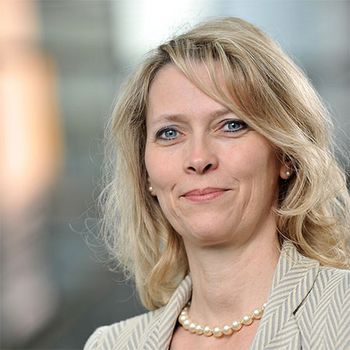
Prof Dr Babette Simon, born in Düsseldorf in 1960, studied human medicine at the Universities of Freiburg and Basel. Her doctorate in 1986 in Freiburg was followed by a three-year research stay at Harvard Medical School/Massachusetts General Hospital in Boston, USA. In 1990, she took over the establishment and management of the molecular biology research laboratory for gastrointestinal oncology/endocrinology at the Philipps University Hospital in Marburg. She qualified as a professor at the University of Marburg in 1998 and was appointed associate professor in 2003. In 2005, she qualified as a Master of Science in Health Care Management. One year later, she was elected Vice President of the University of Marburg and confirmed in office in 2009. She took up the post of President of the University Medicine Oldenburg in February 2010 and was appointed Chair of the Executive Board of the University Medical Centre Mainz in 2014, followed by a brief period in business in 2017. In 2018, Simon returned to academia at the Paris Descartes School of Medicine. Among other things, she was a member of the Scientific Commission from 2009 to 2012 and the Medical Committee of the German Council of Science and Humanities until 2015. In 2010, she was appointed to the Health Research Council of the Federal Ministry of Education and Research (BMBF) and in 2013 to the University Senate of the Helmholtz Association. Today, she is a member of the University Council of TU Dresden and Fulda University of Applied Sciences as well as the Board of Trustees of the Helmholtz Centre Geomar.
A dynamic development
The time when I took office in 2010 was even more challenging for German universities than before. Universities the size of Carl von Ossietzky University were particularly challenged to keep pace with the competition under the pressure of increased hierarchisation and classification and with increasingly tight basic funding. Nationwide programmes such as the Excellence Initiative helped to increase the pace of development. Added to this was the trend of rising student numbers and, with increased third-party funding, a growing number of academics who needed space and resources to realise their ideas. As a reform university, the University of Oldenburg pursued its goals in an unconventional and imaginative manner from the outset, was open to new and often unorthodox approaches, and lively discussion and critical reflection were emphasised in the committee-based reform university.
The long discovery process in the initial phase was difficult against the backdrop of widely divergent ideas about future development and intense disputes between the university policy stakeholders. Only the clear line taken by the Chairman of the University Council, Dr Werner Brinker, and the University Senate's vote in favour of an expanded composition of the new Presidential Board, which took all university policy groups into account, helped to overcome the initial obstacles. It was thus possible to look to the future.
The provisional Presidential Board appointed after the resignation of Prof Dr Uwe Schneidewind, with Prof Dr Hans-Jürgen Appelrath, Prof Dr Mathias Wickleder and Dr Heide Ahrens, gave me a warm welcome. I quickly got to know the people on the Presidential Board and in the administration, as well as in the Schools, as extremely competent and helpful.
My time in office was accompanied by frequent changes in the Ministry of Science in Hanover. Three ministers and two state secretaries were responsible during the four years.
At this time, the university received a strong tailwind from the region. More than almost any other university of its size, the University of Oldenburg was closely supported by a particularly strong and extremely committed university society and could count on a great deal of trust and support from the urban and regional environment. I was impressed by the personal commitment of the UGO Board under the Chairmanship of Michael Wefers.
I was well aware that I had taken on a difficult task. Nevertheless, I had the strong perception that the University of Oldenburg had a high potential for innovation and could undergo a very dynamic further development, provided that the resolution of internal disputes and the focussing on essential development lines and goals would be successful. All in all, these were strenuous and very successful years for everyone involved, during which many new things were initiated.
Courage to break new ground
The priority seemed to be to pacify the internal university disputes in order to focus on the tasks ahead together. There were plenty of challenges. As mentioned, the various university policy groups were closely involved in the search for the future Vice President (VP) in order to ensure that the various ideas for the future development of the university were heard and to enable their integration. This required an expansion of the Presidential Board to reflect the broad spectrum of different ideas. To make this possible, the university charter had to be amended. The University Senate agreed to my proposal. And after many rounds of talks, discussions and meetings, the now five-member Presidential Board was reorganised in October 2010 and expanded to include an executive.
In addition to myself and Dr Heide Ahrens as Vice President for Administration, the new Presidential Board consisted of the chemist Prof Dr Katharina Al-Shamery as VP for Research, the historian Prof Dr Gunilla Budde as VP for Studies and Teaching and the economist Prof Dr Bernd Siebenhüner as VP for the new department of Early Career Academics and Quality Management. I was grateful that I was able to recruit these three proven and highly competent personalities for the important tasks that lay ahead of us. Unfortunately, Heide Ahrens soon left and moved to the Ministry in Kiel. After an interim period, Jörg Stahlmann very successfully took over this task.
The new Presidential Board wanted to take responsibility as a team and act reliably. Trust grew quickly and proved to be resilient even in difficult situations. Ultimately, we felt that the shared values and visions, mutual respect and the different experiences in our subjects were a particular strength.
From the outset, we were united in our desire to establish themes and partnerships that would have a major impact on the future of the university. In line with its motto "Open to new paths", the university should show even more courage, cross boundaries and fulfil its social educational mission even more. And it was important to us that all those working at the university saw themselves as a community of responsibility in this process.
Over the next few years, the University of Oldenburg would have to face up to the increased challenges resulting primarily from three progressive changes: demographic developments and regional asymmetry (and the associated development in student numbers), differentiation processes in the academic system and competition for funding and bright minds, as well as advancing globalisation in education and research. We therefore continue to focus on a consistent, distinctive profile and specialisation as well as on intensifying co-operations and partnerships.
Alongside the neighbouring University of Bremen, the University should act as the most important scientific partner in the north-west and provide impetus for strengthening regional development. It also helped that the statutory co-operation between the university and the Jade University of Applied Sciences would be brought to life.
The most important tasks for academic operations were defined as strengthening research-oriented teaching, "reforming the reform" of degree programmes and intensifying the promotion of Erasmus partnerships in order to attract new target groups.
In research, all Schools were to be involved in at least one DFG group funding instrument and the establishment of non-university research institutions was to be promoted. Of course, this included further promoting existing research focuses and strengthening very good individual research, which meant that smaller subjects also had to be better integrated into research operations. It was also necessary to identify and promote promising areas of potential.
The establishment of an interdisciplinary Graduate Academy and - similar to the natural sciences - a Graduate School for Humanities and Cultural Studies with attractive offers for young researchers as well as structured doctoral programmes and international doctoral degree programmes were at the top of the agenda. We wanted the University of Oldenburg to present itself as a multilingual and open international campus in the north-west.
The essence of the term of office
In the more than four years that I have been in office, the University of Oldenburg has undoubtedly made great strides with immense effort to position itself very successfully and visibly through cutting-edge research and to further develop its teaching profile. The two decisive challenges for the future, the launch of the European Medical School Oldenburg-Groningen (EMS) and the success in the federal Excellence Initiative with the "Hearing4all" cluster, were achieved. The profile has been sharpened, focussing on research fields in which it has unique selling points and is a national and international leader. The mostly transdisciplinary approach was one of its strengths.
The very big steps were taken in cooperation with the School and university institutions. A great deal of expertise, creativity and commitment was evident. All faculties and subject cultures had their own particular strengths and personalities, and it was a pleasure to realise at the end of the term of office that all faculties had become visible with DFG group funding instruments. The clear research profile paved the way for successful competition in the international university landscape. In 2014, the University of Oldenburg had a cluster of excellence for the first time, three DFG Collaborative Research Centres, which had been extended due to their successful work, two Research Units, four Research Training Groups and six new doctoral programmes. In addition, there were major EU projects, the award as a start-up university, the new Socio-Technical Systems research centre, the approval of the construction of a new research laboratory for turbulence and wind energy systems, the double success in the Telekom Foundation's university competition for teaching research in MINT subjects (Mathematics, Computing Science, Natural Sciences, Technology) and much more. The individual research projects acquired in the competition were also of excellent quality, as was the intensive knowledge transfer to the region and beyond.
Socially relevant research topics such as migration, integration and participation were strengthened and not only led to the Institute for Integration through Sport and Education. The interdisciplinary Academic Centre for Transnational Studies (ZenTra) was founded. The focus was on environmental and sustainability research, and a sustainability report for the university was presented for the first time in 2013 - realised by committed students.
The launch of the European Medical School and the establishment of a sixth School of Medicine and Health Sciences were successful despite the tight time frame and many hurdles, and made the University of Oldenburg a full-scale university - perhaps the most important leap since its foundation.
Formats and content in teaching were intensively developed further. The success in the "Advancement through Education" competition or in the "Quality Pact for Teaching" with the topic "Research-based Learning in Focus (FLiF)" or "Research-oriented Teaching (FoL)" were both recognition and an incentive.
The new Student Service Centre, which is currently under construction, will bring together all student services in one place. In 2011, the Graduate School (3GO) was founded to support doctoral students in the humanities, cultural and social sciences and the Graduate Academy was established as an interdisciplinary central research institution to support academic career development in all qualification phases. In 2014, the University of Oldenburg stood for an innovative teaching and learning culture, for lifelong learning as a continuous principle, for openness towards new social groups, for education and advanced scientific training as the key to advancement, and for exemplary, targeted and structured support for young academics.
In more than four years, the University of Oldenburg's total income rose from € 146.1 million (2009) to € 206.6 million (2014), third-party and special funding from € 31.7 million to € 64.8 million, and the global grant from the state from € 96.5 million to € 114.4 million. The number of students increased from 10,330 to 13,746 and the number of staff from 2,661 to 3,219. An extremely dynamic development.
An important prerequisite for this positive development was undoubtedly the "Pact for the Future II" initiated by the Ministry of Science under Lutz Stratmann in 2010, which was finalised and signed by his successor Prof. Dr Johanna Wanka. It provided financial planning security and thus created a good framework for the major successes. I cannot list all the other events that were important for the future viability of the university. However, I would like to highlight the success of the Excellence Initiative with the "Hearing4all" cluster of excellence and the launch of the European Medical School and University Medicine Oldenburg, as well as other areas that seem particularly important to me. These include the first-time approval of a humanities research training group "Practices of Subjectivation" of the social sciences research group and the opening of the Karl Jaspers House.
Success in the Excellence Initiative
After many discussions, intensive preparations and hard work, in October 2010 the University of Oldenburg submitted two draft applications for the second round of the Excellence Initiative of the federal and state governments: for a Cluster of Excellence "Hearing4all" and another Cluster of Excellence "Coping with Instabilities". Spokesperson Prof Dr Dr Birger Kollmeier had consistently and successfully expanded and networked hearing research in previous years. This enabled findings from basic research to be applied to the development of better hearing aids.
In April 2011, the hearing researchers cleared the first hurdle with their proposal (27 of 107 proposals were evaluated positively), and now it was time to submit a full proposal by 1 September 2011 and present the cluster convincingly to an international panel. The Oldenburg centre cooperated with Hannover Medical School (MHH) and Leibniz University Hannover. The preparations required maximum and meticulous commitment right up to the last second. An important prerequisite was the approval of "Individualised Hearing Research" as a DFG research group in 2011, which further strengthened hearing research in Oldenburg. MHH President Prof Dr Dieter Bitter-Suermann and I also met more frequently than ever before due to the many preparatory discussions and rehearsals. We worked late into the night with great discipline and perfected our skills. This created a growing sense of trust between the two locations.
And this was rewarded. The "Hearing4all" cluster of excellence, the only one in Lower Saxony in the 2012 round, also made it clear to a wider public that the University of Oldenburg is a force to be reckoned with in the competition of the best. The funding for five years amounts to €34 million. It was undoubtedly one of the greatest news stories of the year and the result of outstanding scientific work in an interdisciplinary network - a tremendous success that had a knock-on effect on the entire University of Oldenburg and contributed significantly to strengthening the location.
It was a tribute to Oldenburg's cutting-edge research for better hearing through concentrated scientific expertise and top-class partners, and in particular an appreciation of the work of Prof. Dr Dr Birger Kollmeier and Prof. Dr Thomas Lenarz (MHH). On 1 November 2012, "Hearing4all" was launched with a ceremony in the presence of Johanna Wanka, then Science Minister of Lower Saxony. A short time later, Birger Kollmeier, together with Prof Dr Volker Hohmann and Dr Thorsten Niederdränk, received another very prestigious award: the Federal President's Future Prize. In 2013, the DFG also approved the third funding period of the Transregio-SFB "Active Hearing", which had been applied for jointly with the University of Magdeburg and the Leibniz Institute Magdeburg with Prof Dr Georg Klump (Oldenburg) as spokesperson.
The area of neurosensory research was strengthened in 2013 by both a Lichtenberg Professorship for the Neurobiology of Vision and a new DFG Research Training Group "Molecular Basis of Sensory Biology" headed by Prof. Dr Karl-Wilhelm Koch. The research training group was to address the interesting question of whether common molecular principles can be derived from sensory processes such as vision, smell, hearing or magnetoreception. This approval was a successful interdisciplinary approach to the promotion of young researchers.
Foundation of the European Medical School
The launch of the European Medical School (EMS) in October 2012 was of great strategic importance for
the further development of the University of Oldenburg. The topic of a School of Medicine in Oldenburg was by no means new. As early as 1971, the founding committee had set up a "Medicine" commission during its planning phase. However, the project failed again and again - as in the following years - for cost reasons.
The establishment of a new School of Medicine was an extremely challenging endeavour that gave rise to great hopes, but also great fears. The fear that established areas of the university could be neglected due to costly medicine was very widespread when I took office in 2010 - both inside and outside the university. One of the most important tasks for me was to make it clear that a Faculty of Medicine would under no circumstances be founded at the expense of other subjects and Schools.
The German-Dutch joint project European Medical School Oldenburg-Groningen also attracted a great deal of attention and excitement throughout Germany due to the planned Bachelor's and Master's degrees, which do not yet exist in medicine in Germany. This hurdle was overcome by adding the traditional State Examination to the Dutch Master's degree.
The opinion of the German Council of Science and Humanities (WR) on the planned European Medical School Oldenburg-Groningen had been eagerly awaited after the spring meeting on 10 May 2010. However, the Council scheduled a second reading - a procedure that showed how important this decision was. Improvements and clarifications followed in order to meet the quality requirements in teaching, research and patient care in the long term. But on 12 November 2010, at its autumn meeting in Lübeck, the most important science policy advisory body of the federal and state governments cleared the way for the establishment of the new medical location at the University of Oldenburg. From the winter semester 2012/13, 40 students per year should be able to complete a joint six-year medical degree programme.
The fact that the German Council of Science and Humanities gave the green light for the European Medical School was due not least to the close co-operation with the excellent University of Groningen. The EMS now offered us the opportunity to further strengthen the co-operation with Groningen, which has lasted for around 30 years, and to drive forward the internationalisation of the University of Oldenburg. The two highly recognised research focuses of neurosensory science and healthcare research were given great opportunities for further development. In addition to scientific standards, medical education itself was to be more practical and offer more room for humanistic principles and personal development.
The establishment of the School began with the involvement of the Oldenburg Clinical Centre, the Evangelical Hospital and the Pius Hospital. For this purpose, rooms for the degree programme and the Dean's Office had to be created on campus - still without any additional funding. It was undoubtedly the most challenging project for the Presidential Board, but they were able to rely on the support of the state government. This was particularly true of Science Minister Lutz Stratmann, his successor Johanna Wanka and her State Secretary Dr Josef Lange, as well as the then Minister President David McAllister. With the support of Groningen President Prof Dr Sibrand Poppema, it was also possible to avoid a number of obstacles.
In order to boost the financing from the state and send a strong signal from the region, the publisher of the Nordwest-Zeitung (NWZ), Reinhard Köser, took the initiative on 20 October 2011 to invite important representatives from the region's business and political communities to a confidential meeting with Science Minister Johanna Wanka. This meeting proved to be extremely important because it created the basis for a high level of willingness to donate. As a result of this meeting, the business community provided over three million euros - the city of Oldenburg and the districts of the region later contributed a further million. Even more important than the funds themselves, however, was the undivided support of the region and the constructive support throughout the entire process. This made an impression and did not fail to have an effect. In December 2011, the state parliament of Lower Saxony approved the financing of the European Medical School Oldenburg-Groningen by a large majority and made €57.5 million available until 2015, €8.5 million of which came from the VW advance funds.
The process of establishing a new "School V - School of Medicine and Health Sciences" was intensively monitored from 8 July 2011 by a founding committee made up of representatives from the university, the clinics, the responsible ministry and renowned university medicine experts from Lower Saxony and throughout Germany. It provided advice on issues relating to structures and processes, quality-orientated appointment procedures and the teaching and research concept. There was broad agreement on the study concept, which comprised 40 hours per week per semester (considerably more than other locations) and, as mentioned, included a new approach to medical training: early patient contact, involvement of GPs (a regional GP network was set up very quickly), interdisciplinary training in thematic modules, study visits to the partner university in Groningen, a special tutoring and mentoring programme. The content of the medical degree programme was prescribed by the national licensing regulations, but it was linked together in a new way, integrated as far as possible and taught in an interdisciplinary manner.
Dr Kirsten Gehlhar did a great job in setting up the degree programme as a planner in the Dean's Office under great time pressure. However, the founding committee itself had to repeatedly resolve moments of dissent and end the meetings with a clear position. In particular, this concerned appointment procedures, future power and decision-making constellations as well as the distribution of available funds, which some would like to see allocated as much as possible to their own area.
In addition, the chief physicians of the clinics had been promised in recent years that they would receive a university professorship when the European Medical School started. It was therefore important to quickly initiate a process that would fulfil these expectations as well as the requirements of the German Council of Science and Humanities. New appointments were to be made where chief physicians would soon be leaving. Another challenge was dealing with the complexity of the Oldenburg cooperation model. Very careful consideration had to be given to how many and which professorships could be financed in view of the scarce resources. In addition, the "Hearing4all" cluster of excellence had to be strengthened and the development of healthcare research had to be driven forward. The establishment of professorships in the clinics understandably led to dissent, especially where the same subject was represented by a head physician in two clinics - a problem that could not be solved quickly and ended with a compromise supported by the Ministry of Science, which enabled parallel structures in a few cases.
During this phase, the Jaspers Clinic was considered for inclusion in the network as an associated partner. Against the backdrop of demographic developments and the enormous increase in psychiatric illnesses that was becoming apparent, close cooperation was an immediate priority.
In 2012, things went from strength to strength. In June, the state parliament created the legal framework for the EMS by amending the Higher Education Act. The contract with the Rijksuniversiteit Groningen was also signed shortly afterwards and the German-Dutch co-operation project was formally sealed. With the appointment of the founding dean by the Presidential Board, the official founding of School V - School of Medicine and Health Sciences took place in August, the first in Germany in more than 20 years. The first dean was Prof Dr Eckhardt Hahn, who had already acted as founding representative and ambassador for the European Medical School in the region since August 2011. He was assisted by three vice deans. The 16-member advisory board of the new School met for the first time at the end of August, and a month later the framework agreement on cooperation between the university and the hospitals was signed. At the same time, a very beautiful modular building was constructed on the Wechloy campus, which was completed in time for the start of the programme.
Many of the first 40 medical students, who were selected from 1,200 applications, came from the region. This fosters the hope that they will remain as doctors after their training. The first-year students were of course present when the European Medical School was officially opened on 23 October 2012 in the presence of Minister President David McAllister and 600 guests. The University of Oldenburg had been waiting 41 years for this moment, which was made particularly visible to the outside world by the fact that the participating clinics had agreed to operate under the name "Medical Campus University of Oldenburg".
After the founding advisory board had completed its work, an international board of trustees was constituted in February 2014. I was able to recruit high-calibre experts from university medicine to provide valuable advice on the further development of the EMS until the review by the German Council of Science and Humanities in 2018.
Successes in the humanities and social sciences
The approval of the first humanities research training group at the University of Oldenburg with Prof. Dr Thomas Alkemeyer as spokesperson in summer 2010 was a great success and underlined the fact that comparatively less respected areas of the university were recognised in the scientific community when they received support. With the project "Self-formations. Practices of Subjectivisation in Historical and Interdisciplinary Perspective", an important area emerged from the shadows and developed into a highly interdisciplinary field of research with international appeal, which is also reflected in the extension of DFG funding agreed in 2016.
The editorial projects on Carl von Ossietzky and Kurt Tucholsky, the Hannah Arendt Centre, the Theodor W. Adorno Research Centre and the Jaspers Lectures on Contemporary Issues provided an excellent basis for advancing research on Karl Jaspers himself and his companions. With the acquisition of the private Jaspers Library (11,000 volumes), the approval of the Karl Jaspers Edition Project for 18 years, in which the Academy of Sciences Heidelberg Oldenburg is playing a decisive role under the leadership of the Academy, and the establishment of the Heisenberg Professorship "Comparative History of Ideas" in 2011, further important milestones were achieved for research in the humanities. The Karl Jaspers House, which was opened in 2013 with a ceremonial lecture by Prof Dr Wolfgang Frühwald, is the perfect home for this, providing access to the world of thought of the Oldenburg philosopher and physician to a wide audience beyond the university and scientific community. Here too, as is often the case at the University of Oldenburg, the decisive course was set by society. Without Werner Brinker, then Chairman of the University Council and Chairman of the Board of Management of EWE, neither the purchase of the private library nor the Jaspers House as a research centre - now also in international demand - would have been possible.
A great initiative was the "Villa Geistreich" for students and pupils with a teaching-learning laboratory in the humanities as part of the "Research-based learning in focus (FLiF)" and "Research-oriented teaching (FoL)" projects. The aim is to encourage an interest in research in the humanities at an early stage.
The social sciences were also positioned with outstanding research fields. This was demonstrated in 2011 with the approval of the DFG research group "European Socialisation" headed by Prof. Dr Martin Heidenreich. This is a topical subject, as European integration does not have the status it should have in society. Oldenburg was thus awarded two of seven newly approved research groups nationwide by the DFG - a clear signal of the excellent research being carried out here.
In 2012, the EU research project "Cope: Combating Poverty in Europe" on poverty risks and social exclusion was also approved, and in 2013 the "Centre for Genealogy of the Present" began its work. Under this umbrella, humanities scholars from various disciplines analyse the development of modern societies on the basis of diagnoses of the present and plans for the future.
The future of marine research
Shortly after I took office, Prof Dr Jürgen Rullkötter, then Director of the Institute of Chemistry and Biology of the Marine Environment (ICBM), asked for an appointment. Accompanied by Prof Dr Helmut Hillebrand, he approached me with the question of whether we could expect funding for marine biodiversity research as a future topic for the University of Oldenburg. I was aware that life in the sea and on land is subject to increasingly rapid processes of change. The topic is a major social challenge and fits very well into the Oldenburg portfolio. I learned that, over time, high biodiversity ensures the long-term functionality of ecosystems and that only species-rich communities can guarantee the necessary stabilising exchange processes. The interplay between diversity and functionality seemed to be more far-reaching than previously assumed (it also affects our society, I thought). This was a future topic that was to be taken up in partnership with the Alfred Wegener Institute, Helmholtz Centre for Polar and Marine Research (AWI) in Bremerhaven.
Founded in 1987, the ICBM had been setting international standards for future projects for almost 25 years and had attracted a large number of talented young and internationally renowned marine researchers to Oldenburg. When I came to Oldenburg, the Oldenburg scientists and their research groups were travelling the world's oceans. Since 2009, the ICBM has been in charge of the DFG Transregional Collaborative Research Centre "Roseobacter", which was extended in 2013, and has also established two junior research groups of the Max Planck Society. One year later, the most powerful mass spectrometer in Germany was installed, which further strengthened the leading position in marine research. The construction of the world's most modern deep-sea research vessel, the "Sonne", at a cost of €124 million, was supported by the ICBM and Wilhelmshaven became its home port.
In 2011, the ICBM boldly entered the competition for the DFG research centre "Integrative Biodiversity Research" together with the AWI and the University of Bremen. Prof Hillebrand - surprisingly for outsiders - made it to the final round of the four best proposals as a newcomer. The reviewers emphasised the future potential of this research area for the University of Oldenburg, which led to the further expansion of the long-standing co-operation with the AWI. By bundling the outstanding research activities, a unique focus with national and international appeal was to be created and a Helmholtz Institute for marine biodiversity research was to be established in Oldenburg in the medium term. Funding for the virtual Helmholtz Institute "PolarTime" was successfully raised as early as 2012. A year later, the President of the Helmholtz Association, Prof Dr Jürgen Mlynek, accepted an invitation from the university and informed himself about selected research focuses. All of these activities bore fruit: the Helmholtz Institute for Functional Marine Biodiversity was established in Oldenburg in 2017.
New standards for renewable energies
When the energy transition was recognised as a major challenge of the 21st century in 2010, the University of Oldenburg was innovative and broadly positioned in this area, as it had already been one of the first to take on the task of researching renewable energies in the 1970s. Its presence on this topic at the 2010 World Expo in Shanghai was an expression of this. It was also able to set new standards in wind energy research following the successful appointment of the "Wind Energy Systems" endowed chair in 2010. On the recommendation of the German Council of Science and Humanities, the construction of a research laboratory for turbulence and wind energy systems began in 2013 at a cost of €20.5 million.
Computing Science: Research centre and DFG Research Training Group
Computing Science in Oldenburg had also developed extremely successfully as a recognised location for Applied Computing Science thanks to the successful work of the affiliated institute OFFIS. In 2011, it was also possible to further strengthen the interdisciplinary field of safety-critical systems under the direction of Prof Dr Werner Damm through a new DFG Research Training Group SCARE, which was applied for by Prof Dr Ernst-Rüdiger Olderog, as well as the successful extension of the Transregio-SFB AVACS (Automatic Verification and Analysis of Complex Systems). The "Sociotechnical Systems Research Centre", which was acquired from the VW Foundation and in which OFFIS, SafeTRANS e.V. and the German Aerospace Centre (DLR) are also involved, was a great success in 2013. The new centre focuses on highly complex computer-based systems in the automotive industry, aerospace, marine technology, energy supply and healthcare.
Promoting young talent: the Graduate Academy
The Presidential Board paid particular attention to promoting young talent. Numerous initiatives have been taken to this end - such as the establishment of the interdisciplinary Graduate Academy, in which activities for all qualification phases and different career paths are bundled, and under whose umbrella the existing Graduate School of Science and Technology (OLTECH) and the Graduate School of Social Sciences and Humanities (3GO), founded in 2011 with funding from the European Regional Development Fund, were united. To this end, regulations were created to make the transition from studies to a doctorate more permeable and professional and personal qualifications were offered - including practical training for the non-university labour market. The Graduate Academy also opened up the structured promotion of young talent to other universities in the region under its umbrella. It has succeeded in acquiring numerous coordinated doctoral programmes. In 2012 alone, Oldenburg received three new doctoral programmes from the state with 45 Georg-Christoph-Lichtenberg scholarships in the research focuses of teacher training, renewable energies and neurosciences. Another example was the "Art-Education" doctoral programme at the Institute of Art together with the Zurich University of the Arts and the Vienna University of Applied Arts. Thanks to its large number of ongoing internally and externally funded doctoral programmes, the University of Oldenburg has gained a leading position in Lower Saxony.
Innovative teaching and learning formats
At the heart of the University of Oldenburg are its students, whose numbers have risen continuously, so that from 2011, the first semester welcome ceremony had to be held twice in order to allow all new students to participate. It was our aim to create the best possible conditions for them to make their time at our university both successful and enjoyable. Even though the majority of students still come from the local area - as is the case at other universities - the proportion of those who come from far away to apply for a place has been steadily increasing for some time now. Attractive courses, a good student-to-staff ratio and, last but not least, the consistent symbiosis of research and teaching in research-oriented teaching from the very first semester all contribute to this. As a result, the University of Oldenburg has repeatedly achieved top positions in the university rankings regularly compiled by the Centre for Higher Education Development (CHE) and the German Rectors' Conference (HRK). In addition to the quality of teaching and research, the focus is on the attractiveness of the place of learning.
The Bologna reform had already been implemented at the university five years before I took office. The task now was to stop undesirable developments and make improvements. Students, academics and staff joined forces to initiate a reform-of-the-reform process, which analysed weaknesses and strengths and made suggestions for readjustment. Nationwide recognition of this teaching-learning culture in Oldenburg was demonstrated by the successful acquisition of almost €7 million for the projects "Research-based teaching in focus (FLiF)" and "Research-oriented teaching (FOL)". In addition to the further development of this teaching and learning profile, this included the more flexible design of degree programmes in view of an increasingly heterogeneous student body. The internationalisation of the courses on offer was also initiated. This was recognised in 2012 with the "Shaping Diversity" certificate from the Stifterverband für die Deutsche Wissenschaft. In 2013, video-based teaching was introduced, which enables learning regardless of time and place. The Deutschlandstipendium scholarship programme, which was only possible thanks to the personal commitment of Vice President Prof. Budde and the willingness of the region to donate money, proved to be helpful. Between 2011 and 2015, 300 students benefited from this programme.
It has always been important for the university to be open to professionals with good qualifications. This also applied to our Presidential Board. It supported this orientation with two additional professorships. In the 2011 BMBF competition "Advancement through Education: Open University", the university scored twice thanks to the great expertise of Prof Dr Anke Hanft: firstly with MINTonline, in which part-time Bachelor's and Master's degree programmes with a special focus on renewable energies, sustainability and the environment were implemented, and secondly with accompanying research and scientific advice. With the opening of the new Lifelong Learning Campus at the end of 2011, the university brought together all the players in this field and once again underlined its leading position.
Leading position in teacher training
I was deeply impressed by the quality of teacher training in Oldenburg, which began at the end of the 18th century and still plays a very important role at the university today. It offers training for all types of schools and has an outstanding position in Lower Saxony. This is evident in the regular "Pedagogical Week", which is attended by more than 1,500 teachers from all over Germany for further training. The annual Klaus von Klitzing Prize for exceptionally committed science teachers is also an expression of the high status of teacher training in Oldenburg. Around 40 % of students opt for the teaching profession.
The further development of innovative forms of teaching and learning was ensured by a highly sought-after university didactics programme, which also gained its special profile through co-operation with partner universities. The Scientific Commission of Lower Saxony (WKN) recommended the establishment of an advisory board, primarily in order to further focus the didactic research already underway. This - a high-calibre and international body - met for the first time in 2013. The focus was on practical research. The doctoral programmes ProDid (Didactic Reconstruction) and ProfaS (Processes of Subject-Specific Didactic Structuring) had already begun their work in 2010. It was important to orientate the quality of teacher training towards scientific findings. Since 2012, the Oldenburg Advanced Training Centre (OFZ), closely linked to the Didactic Centre, has served as a model for the reorientation of teacher training throughout Lower Saxony. In 2013, the University of Oldenburg was the only university to win the Telekom Foundation's university competition for better teacher training in STEM subjects in two subject areas: "Teaching and learning laboratories" and "Development in heterogeneous learning groups".
Co-operation with the Jade University of Applied Sciences
When he took office, the great challenge of implementing the Act on the Development of Universities of Applied Sciences in Lower Saxony of 18 June 2009 began, and a new path was taken throughout Germany. As is usually the case in such cases, the motivation was a shortage of resources: politicians were hoping for synergies. The University of Oldenburg and the Jade University of Applied Sciences were expected to develop in a future-orientated and coordinated manner. Accordingly, the university had to take over central administrative tasks for the Jade University of Applied Sciences in the areas of personnel and financial administration as well as the management of the state-owned properties and assets. The co-operation also included teaching, research and coordination in the appointment of professorships. A framework agreement governed this co-operation from 1 July 2010. The joint steering committee was established in 2011, with former State Secretary Johann Komusiewicz as Chair. The agreement on joint personnel administration followed in 2011, with the university taking over most of the personnel administration for the Jade University of Applied Sciences. In the same year, it was also agreed to merge the building management for the two universities - a process that was not easy, as management structures had to be broken up, systems had to be standardised and transfers were necessary. It was thanks to Jörg Stahlmann, then Head of Finance and later Vice President for Administration, and his colleague Meik Möllers, our Head of Building, that this was successful.
In terms of co-operation, marine research in particular showed great interest and, together with the Jade University of Applied Sciences, created the Bachelor's degree programme in Marine Technology in Wilhelmshaven in 2010 and, two years later, the subsequent Master's degree programme in Marine Sensor Technology.
Recognised as an ERASMUS MUNDUS University
"We think global, we act global, we teach global, we feel global". This is how it should be at a cosmopolitan university. And that is also the claim of the Reform University Oldenburg. In 2010, it received the coveted ERASMUS MUNDUS University award with the degree programmes "Migration and Internationalisation", the African-European Master's degree programme "Migration and Intercultural Relations (EMMIR)" and the European Master's degree in "Migration and Internationalisation". The awards confirmed the path taken and provided important impetus for profiling in this area. In the context of globalisation, migration processes challenge nation states and their citizens, and this must be taken into account. The ERASMUS Master's degree programme "European Wind Energy Master" followed in 2011, and doctorates can also be awarded at European level as part of the Graduate School Science and Technology (OLTECH). In 2012, the University of Oldenburg was awarded the Erasmus Seal of Quality for its achievements in this area. Workshops in all Schools followed, and the multi-stage audit of the German Rectors' Conference (HRK), a systematic consultation process by experts on internationalisation, was effectively tackled. The University of Oldenburg has cooperation agreements with over 200 universities worldwide.
Migration and integration
The University of Oldenburg took up the topic of migration very early and consistently. In 2010, the student campus "More migrants become teachers" was launched with funding from the ZEIT Foundation and the Ministry of Education and Cultural Affairs of Lower Saxony. The research has long focused on integration and internationalisation. The topic was further strengthened and given new impetus by the innovative work of the newly founded "Centre for Migration, Education and Cultural Studies (CMC)" in 2013.
Integration as a social responsibility led to the founding of the affiliated Institute "Integration through Sport and Education" in 2010 under the direction of sports educator Ulf Gebken. DFB President Theo Zwanziger and Minister Johanna Wanka came to Oldenburg for the opening ceremony. The focus was on scientific impulses for the integration effect of sport, especially for disadvantaged children and young people with a migration background. The foundation was preceded by very successful projects such as "Football without Offside", which offered young migrants contact opportunities through ball sports, and MICK (Mädchen kicken mit), which encourages young female emigrants to play football and was honoured by the Federal Chancellor. This work received reliable support from DFB official Steffi Jones and SV Werder Bremen with managing director Klaus-Dieter Fischer. They also made me enthusiastic about women's football and so, for the first time in my life, I travelled with my daughters to Berlin for the opening game of the World Cup between Germany and Canada.
Further structural development
A major challenge was the procurement of space for the rapidly expanding university - and it was not just about the modular building for the European Medical School. The construction of the NeSSy research centre (2,000 m²) was intended to alleviate the shortage of research space. This was created across the traditional School and subject structures for the specialisms of neurosensory/hearing and safety-critical systems. The Smart House Oldenburg was opened in 2012 with the Jade University of Applied Sciences as a meeting place for science and society in the centre of Oldenburg. At the beginning of 2014, the new construction of the research laboratory for turbulence and wind energy systems began following a positive assessment by the German Council of Science and Humanities. Just in time for the university's 40th anniversary, the Student Service Centre (SSC) took visible shape as a central contact point, and the plans for the experimental lecture hall for the natural sciences were well advanced when I moved to Mainz.
The anniversary year 2014 - 40 years open for new paths
Under the motto "40 years open for new paths", the university celebrated its 40th birthday in 2014 with a rich programme to which we invited all interested parties - not only the university members themselves, but of course also the general public. Almost exactly 40 years after the university was founded on 5 December 1973, the anniversary year kicked off with a ceremony in the Lecture Hall Centre, which was also attended by Minister President Stephan Weil, Minister of Science Dr Gabriele Heinen-Kljajić and the Chair of the German Council of Science and Humanities, Prof Dr Wolfgang Marquardt. They saw how the university presented itself here in all its beauty, breadth and power using the best stage technology. This was a very special experience for all of us and was once again made possible by sponsors from the region: Werner Brinker and Peter Wendeln. They also made it possible for the marvellous pianist Olga Scheps to perform.
For the 40th anniversary, we wanted to look at the university together, at its development, its topics, its focal points, its ideas and visions and its people. It was important to me to show this: This university is something special, and everyone who works or has worked here has a very personal contribution to the unique atmosphere and profile of this university. A very colourful and rich programme had been put together together with all the Schools and institutions under the direction of University spokesperson Dr Corinna Dahm-Brey. Of course, it was also intended to give back to the people of the region a little of the support and encouragement that we as a university have received on a daily basis.
A conclusion
I was fascinated by the diversity of the people who study, teach, research or provide services at the University of Oldenburg. People from different cultures with different lifestyles who speak different languages and yet exchange ideas, understand each other and work together. This is a constant source of delight. Everyone benefits from this diversity, it enriches us. And this openness is very typical of Carl von Ossietzky University.
Despite all the challenges at the beginning of my term of office, the university has been able to develop dynamically thanks to growing internal cohesion, clear lines of development, reliable partnerships and co-operations and is undoubtedly one of the successful reform universities today. This development is also recognised outside the university. Forward-looking and promising projects have been initiated in all areas. Their number is impressive. Some were initiated, moderated or promoted by us on the Presidential Board, others just needed the free space and creative atmosphere and grew and flourished without our further involvement. The dynamic development of the university is the success of all of us.
2012 was the most significant year for the University of Oldenburg with the first positive decision on the Excellence Initiative (Hearing4all cluster of excellence) and the successful launch of the European Medical School (EMS) degree programme. This showed in a special way that I was able to experience and shape a presidency in a very moving and exciting time, for which I am very grateful. And it has once again shown that the University of Oldenburg is "open to new paths" and thus well equipped for the future.