Prof Dr Dr Hans Michael Piper
Prof Dr Dr Hans Michael Piper
President of the University from 2015-2021
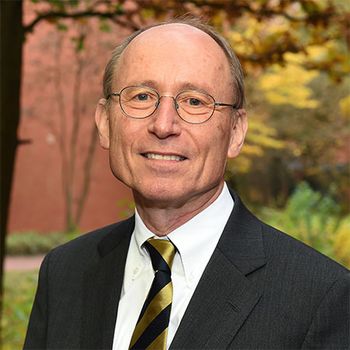
Prof Dr Dr Hans Michael Piper, born in Kiel in 1952, studied medicine, physics and philosophy at the University of Göttingen. His Diplom in physics was followed by a doctorate in medicine and a doctorate in philosophy. In 1985, Piper qualified as a professor in the subject of physiology. In the same year, he was appointed professor at the University of Düsseldorf. After research stays in England and Canada and a call to Kiel, the scientist accepted a professorship in physiology at the University of Giessen in 1994. Piper held various positions there: he was Director of the Institute of Physiology for many years, Vice Dean and later Dean of the Faculty of Medicine, a member of the Board of Directors of Giessen University Hospital and a member of the Management Board of Giessen and Marburg University Hospital. From 2008 to 2014, the physician was Rector of the University of Düsseldorf and subsequently Director of the Institute of Molecular Medicine III at Düsseldorf University Hospital. In August 2015, he took over as President of the University of Oldenburg. Piper has held numerous important positions. For example, he was President of the German Physiological Society, Chair of the Board of Trustees of the German Diabetes Centre (Leibniz Institute), Deputy Chair of the Administrative Board of the Leibniz Institute for Environmental Medical Research and Chair of the Board of Trustees of Düsseldorf Business School.
The choice
After the university's selection committee put me forward as the only candidate for the presidency, I expected the press to get wind of it. It only took two days for notes to appear in the Oldenburg "NWZ" and the Düsseldorf "Rheinische Post". Shortly afterwards, my public presentation took place in Oldenburg, and two weeks later the University Senate election was scheduled. I was expecting an invitation to come to Oldenburg to see the result of the election there. But Oldenburg didn't get in touch. I called the acting president, Prof Dr Katharina Al-Shamery, and asked her about it. She said: "As you are not appearing at the Senate meeting, the decision does not depend on where you are. If the election goes wrong, you'd probably be even more disappointed here than at home." I thought that if I couldn't stand it, the university had backed the wrong candidate anyway. I went and everything went well. At my first Senate meetings, my new colleagues in the President's Office were visibly nervous. When I asked them about it, I was told: "We know the University Senate as a snake pit that has worn down every president in recent years. You've been lucky so far." My luck held, probably because I refused to be provoked. I benefited from the fact that I already had more than ten years of experience with the University Senates in Giessen and Düsseldorf.
Shortly after my election to the University Senate, I made my way to the canteen and bumped into a familiar face. It was the psychology professor Christiane Thiel, with whom I had conducted appointment negotiations in Düsseldorf two years previously. She congratulated me on my choice and asked me: "Do you understand now why I stayed in Oldenburg, even though you made me a great offer?" I admitted that I hadn't understood at the time. She laughed: "You didn't know Oldenburg!" And she explained to me how nice life was here. I soon realised what she meant and that I had to get to know Oldenburg first.
The beginning
When I was preparing to take office as President of the University of Oldenburg in the early summer of 2015, I realised what made this medium-sized university special and what challenges the new President would face. I was a stranger to the university and the region, but my management experience in Giessen and Düsseldorf had given me a trained eye for the circumstances in Oldenburg. Over the past ten years, the university had had four elected or acting presidents and just as many vice presidents for administration and finance. This indicated that it lacked a clear compass. I wanted to try to give the university a stable development strategy. I also noticed that the university had developed very original focal points in research. This suggested that the university was able to attract and retain special talents. I wanted to help develop these strengths further. The University had founded a new School with a degree programme in human medicine in 2012. In the first few years, the School had changing deans and the development had stalled. An important evaluation by the German Council of Science and Humanities was due in 2018. It was immediately clear to me that I had to devote special attention to this School. In order to achieve these various goals, I had already suggested in my application speech that they should not be tackled individually, but on the basis of a structural plan agreed with all the Schools. Only with this kind of backbone would it be possible to avoid fragmentation and keep the priorities in view.
I had to quickly familiarise myself with the special characteristics of the University of Oldenburg and the region. It helped me a lot that I quickly found two wise counsellors. One was my immediate predecessor in office, Katharina Al-Shamery, who had led the university on an interim basis for a year and a half. She stayed on as Vice President for Research and Transfer, along with the other part-time Vice Presidents, for the remaining five months of her two-year term on the Presidential Board. During these months, she helped me a lot to understand the inner workings of this university. The second counsellor was computer science professor Hans-Jürgen Appelrath, who knew the region and its most important personalities very well. I learnt from him how to behave in the "north-west".
A new colleague gave me the tip that I shouldn't wear my dark blue double-breasted suit from Düsseldorf here, because "only captains wear that here". I got used to the "Moin" again, which I had been familiar with in my youth in Kiel and Lübeck. And I also learnt a lot about the region: for example, why there is a sharp religious boundary just a few kilometres south of the city of Oldenburg. Or why the district of "Friesland" lies to the east of East Frisia. Or why you can't quickly drive from the city of Oldenburg to the beach, except to the artificial beach at Dangast. In the first few months, I found it difficult to keep up with social small talk. But I discovered a magic word that helped me overcome my embarrassment: "Göttingen". After all, one person in every group had always spent part of their academic life there - just like me - and was happy to pick up the conversation with the magic word. But it wasn't long before I no longer needed this trick.
In the first few months, I visited the Schools and invited the Deans to regular meetings with the Presidential Board. It was a stroke of luck for me and the University that the Chair of the University Council was filled by the entrepreneur Jörg Waskönig, who opened the doors to regional business and politics for me. I emailed him about difficult topics and he replied shortly afterwards with a clever suggestion and a smiley face. The University Council meetings were always valuable consultations for the Presidential Board.
I soon visited the business associations based in Oldenburg, the Oldenburg Chamber of Industry and Commerce, the Oldenburg Chamber of Crafts, the Oldenburg Chamber of Agriculture and the Oldenburg Employers' Association. I soon had personal contact with the Lord Mayor, local MPs and neighbouring district administrators. Everywhere I went, I was signalled that the "Northwest" region stood behind its university. I learnt this very clearly when it came to the further development of University Medicine Oldenburg. The business representatives from the north-west were able to bring every politician to the region on this topic.
In the first few months, I visited many of the university leaders in Lower Saxony with whom I would be working over the next six years. This tour gave me valuable insights into how Lower Saxony deals with its universities. I gained further insights during personal discussions at the ministry. Afterwards, I realised that Lower Saxony only provides limited funding for its smaller universities, but that the government is always open to special initiatives. The large special budget of the VW Vorab, dividends from the VW Group, is used for this purpose. The two large universities in Göttingen and Hanover are privileged, and the medical heavyweights MHH, UMG and TiHo play a very special role. When I lapsed into professional complaining about the disadvantages of the University of Oldenburg during a visit to the Ministry, my interlocutor said: "Please stop complaining. Your university has always produced many original ideas and has been regularly rewarded for them by the ministry. If you manage to get the university under control after the troubled years, we will support your university. We always have an open ear for Oldenburg." And so it came to pass.
The Presidential Board
When I came to Oldenburg, I had to put together my future Presidential Board. In Jörg Stahlmann, I found a very competent Vice President for Administration and Finance. For the part-time Vice Presidents, I looked at the biographies of professors who had had experience in the Dean's Offices in recent years and made confidential enquiries about these people. I soon had my list for a "dream team" together. I just had to convince the unsuspecting. I have vivid memories of these "engagement talks". After confirmation by the University Senate and University Council, we started working together with the new Presidential Board in January 2016. This was a particularly exciting time.
Solid trust quickly developed with Jörg Stahlmann. When critical issues arose, we sat down briefly and worked together to find a solution. Jörg Stahlmann has a sense of humour. When the meeting room in the Presidium corridor was occupied, we used his office opposite for small joint appointments, where his private penchant for Duckburg cannot be overlooked. This also happened occasionally during appeal hearings. Above the conference table hung a large-format picture depicting a "Ship of Fools" filled with cheerful ducks on a threatening wave. I occasionally asked the surprised visitors for their opinion and sometimes received quick-witted and witty replies, but never was the answer given with the appropriate art-historical reference: "It is a traditional allegory of unreason that goes back to Plato's 'Politeia'". With this relaxed attitude, we began the appointment talks.
I had planned to give the part-time Vice Presidents their own departmental responsibilities. The most labour-intensive of these portfolios was that of Studies, Teaching and Gender equality, which Prof. Dr Sabine Kyora held for four years. She was supported by the Department for Study Affairs (Head: Isabel Müskens). She supervised the constant adaptation of the examination regulations. As part of the structural plans, she drew up a new equality plan for the university and began with the system accreditation of the degree programmes. In the area of teaching, she was successful in federal competitions. She was succeeded by Prof Dr Verena Pietzner, who was responsible for studies, teaching and international affairs. During her two years in office, she drove system accreditation forward with great energy.
Prof Dr Esther Ruigendijk was Vice President for Young Academics and International Affairs for the first four years. In the area of early career researchers, she reorganised the supervision conditions for doctoral students and ensured that doctoral students do not have to carry a high teaching load. Thanks to her initiative, we also won new professorships in the federal government's "Nachwuchspakt" competition. She was our foreign minister in the field of international affairs. In this role, she regularly visited our most important international partners, the Nelson Mandela University in Gqeberha/Port Elizabeth in South Africa and the Rijksuniversiteit Groningen in the Netherlands. Prof Dr Annett Thiele was then in charge of the topic of young talent and was also responsible for Gender equality. With great commitment, she developed a strategy for diversity as part of an audit by the Stifterverband.
In the Research and Transfer department, high-calibre academics alternated every two years: Professors Dr Martin Holthaus, Dr Meinhard Simon and Dr Martin Fränzle. In conjunction with the Department for Research and Technology Transfer (Head: Dr Michaela Muylkens), they looked after young scientific talent, the preparation of Collaborative Research Centres, Research Training Groups, junior research groups and the "Hearing for All" cluster of excellence. In the area of transfer, the federal competitions "EXIST V" and "Innovative University" were won, and in the area of research, the competition for digitisation professorships in the state. Professor of Computer Science Martin Fränzle also took over the new "Digitalisation" department and developed the university's first digitalisation strategy. Despite personnel changes, the Presidential Board was a very successful team. Personal interactions were humorous and respectful.
The Dean's Circle
During my time in Düsseldorf, I had already learnt that the Presidential Board's communication within the university cannot only take place via the University Senate, as many matters directly affect the Schools. That's why I established a regular meeting between the Presidential Board and the deans and faculty management teams in Oldenburg, one week before each University Senate meeting. We discussed current topics at the suggestion of the Presidential Board or the deans. At the beginning, I felt mistrust about what the new Presidential Board wanted from the Schools. But over time, this "Deans' Round Table" created the important trust between the Presidential Board and the deans. During the pandemic, we sometimes met on a weekly basis to coordinate our activities. For me, this round table proved very useful during my time in office.
During the frequent meetings, I observed the learning curves of newly elected deans. According to the university charter, the term of office for part-time positions in the Dean's Offices and the Presidential Board is only two years. New deans are usually prepared for the office by having previously taken on a departmental role as vice dean. But as a dean, they have to take on significantly greater responsibilities. The induction period for this takes at least one semester. I have seen deans only achieve the level of professionalism that brings the best results for their School and the university after a second term of office. The situation is similar with part-time vice presidents. My conclusion is that the two-year terms of office are too short.
Structural plan
The most important "workhorse" of my term of office was the structural plan, which we developed together with the Schools. We needed a lot of patience for this because initial resistance was to be expected. When we asked the Schools to outline their development planning at the beginning of the structural analysis, some submitted vague papers that they had pulled out of old files. In the discussions afterwards, I explained that this would not be enough and once again explained the purpose and aim of the plans. In one School, a member of the dean's office stood out with a demonstrative attitude of refusal. When I met this person alone shortly afterwards, I asked her to explain her attitude to me. She explained that every Presidential Board in the last ten years had come up with such plans. They just ended up in a drawer anyway. "You won't get it done either." I understood the person despite her rudeness. What she hadn't understood, however, was that I would have staying power. After all, I had the full six years of my term at my disposal, as I could not be re-elected at the end for reasons of age. Normally, such ambitious plans end in the middle of the term so as not to jeopardise re-election. In the end, this School actually won in a special way thanks to the structural plan, because we were able to recruit several new professorships in a competition based on it.
Structural planning is a special art because it never starts on a blank sheet of paper. Thorsten Schulz, Head of the Planning and Development Unit, was responsible for coordinating this major project with very capable staff. It was important that concrete interim goals could be achieved from which the Schools could benefit directly. Otherwise, everyone could have run out of steam. We always entered into discussions with the respective Dean's Office with the entire Presidential Board. We divided the spokesperson role among ourselves according to department and prepared ourselves very carefully for each meeting. At the beginning, the Dean's Offices were surprised, but soon came to respect us. Within a few days of the meeting, we drew up a record of the results, which was submitted to the Dean's Office for approval.
We began planning the professorships and the research fields determined by the professorships. We discussed each individual professorship and each current field of research in each School. As a first milestone, we received a cross-school map of research potential and, as a result, coordinated profile papers for the new appointments due in the near future. Appointment management was also improved. As a result, the planning of professorships made a significant contribution to the University's success in acquiring additional professorships in the federal and state competitions "Digitisation Professorships", "Junior Researcher Pact" and the "Female Professors Programme". We then proceeded according to the areas of responsibility of the Executive Board members. Other milestones were, for example, a significant improvement in doctoral supervisors in the area of early career researchers and a new central Gender equality plan in the area of gender equality, which was based directly on the structural plan. These goals were quickly achieved.
At the end of the structural plan, it was down to the nitty-gritty, namely budget control in the Schools and their staff for research and teaching. By law, the Presidential Board is responsible for this resource management. In almost all universities, however, some of this responsibility is transferred to the Dean's Offices. In Oldenburg, financial responsibility delegated particularly far down and inadequate structural plans caused real problems. The Dean's Offices, which were the original addressees of the decentralised financial responsibilities, passed on responsibility to the subordinate Institutes without monitoring them. Increasingly, large reserves were built up "for a rainy day". As a result of this small-scale fear-based saving, reserves equivalent to about one year's personnel costs for the School accumulated in the tightly funded university. Curiously, there was always the impression at faculty level that there was a lack of money. As the Presidential Board, we succeeded in analysing this mismanagement together with the Schools.
There were distortions in the staffing structure of every School and in the teaching load of the teaching staff. In terms of teaching, structural planning is about finding the right point for each School and each teaching unit within it in the triangle of personnel resources, teaching loads of teaching staff and the number of teaching hours for each degree programme. There were only two variables in the above triangle, namely the utilisation of allocated staff resources and the organisation of teaching loads for academic staff. The analysis showed that the youngest academic staff, the doctoral students, were burdened with excessive teaching loads. Vice President Esther Ruigendijk quickly agreed with the Schools that this was detrimental to the development of the youngest members of staff and that doctoral students should therefore be assigned fewer teaching hours in future. This reduction in teaching hours could only be partially compensated for by new posts from the savings ploughed into the programme. It therefore became necessary to set up a number of "high deputising positions", which were to be filled on a permanent basis by experienced staff with good teaching experience.
In one School, there was a great deal of criticism against the "Hochdeputatsstellen". Together with the Vice Presidents Sabine Kyora and Esther Ruigendijk, I held various discussions to explain the logic. Sometimes it was difficult to get through. In one faculty meeting I attended, the criticism culminated in the dramatic words of one member: "In a high deputy position, the employees burn out inside." I was taken aback by this exaggeration and replied that the actual teaching work only took up half of the working hours and that this only applied to the maximum 30 weeks of the annual lecture period. Then the emotions calmed down a little. I found it shocking how little respect was shown to those who are predominantly involved in teaching at the university.
The structural plan process took about three years. As a result, each School had achieved a financially viable plan that could be adapted to new challenges in the coming years. The Dean's Offices were empowered to actually fulfil their assigned management responsibilities. Afterwards, three of the deans involved approached me independently of each other and thanked me for this lengthy process. One of them said: "I have to admit that I have only now understood the structure of my own School."
The University Senate
I always had respect for the University Senate. Firstly, because I had been a member of the Senate in Giessen for many years as a young professor and understood the integrating function of this cross-school body. Secondly, because the University Senate is the seismograph for the moods in the very different parts and groups of the university. Thirdly, because the Presidential Board is well advised to take the opinions of the Senate members into account when making important decisions. The regular Senate meetings serve this purpose. These are always lively and occasionally produce surprises. Senate meetings are always long, lasting four hours on average. This is true regardless of the length of the agenda. The reason is that this body seeks common ground in its meetings and wants to live it out in debates. If the chair of the meeting has too few topics on their agenda, the University Senate spontaneously looks for others.
I liked the Senate chamber in Oldenburg. The large oval, where all the Senate members have just enough space, gave the meetings a special atmosphere. In the last meeting before the lockdown due to the coronavirus pandemic, we discussed - without knowing what was coming - whether the university might also be affected by infections. At that time, there was only one identified coronavirus case in Oldenburg. The next Senate meeting was held digitally. As the video software did not allow all participants to be shown in the picture at the same time, only my face as the chair of the meeting and that of the respective reporter was shown on the screen. I looked at myself mirrored on my screen for hours and tried to make an attentive face. My personal rapporteur took a screenshot while I was eating a banana during a long session. When members of the Senate spoke, I imagined where they normally sat in the Senate chamber and how they moved. That helped me, because I found these blind tours spooky. There would have been better software, but we couldn't use it because of the Staff Council's resistance to IT tools, which was difficult to understand.
One oddity of the University Senate that I noticed in Oldenburg as well as in Düsseldorf and Giessen is that on contentious issues, it is almost never the professors' group that votes unanimously, but usually every other group. This is why the absolute majority of professors' votes in academic committees is very rarely realised in practice. I also experienced a special curiosity in the Oldenburg University Senate: a particular personnel decision led to heated arguments among the Senate members. The secret ballot was cancelled by a narrow majority. Afterwards, the student representatives invoked a provision in Section 12 (7) of the University's General Rules of Procedure (2010), the so-called "suspensive group veto". According to this rule, any group of the University Senate can force a decision that has just been made to be suspended if all members of this group have voted differently from the majority and to decide on the matter again at the next University Senate meeting. I was surprised by this rule and asked the Legal Affairs Unit (Head: Natalie Burwitz) for a statement. This contained clear arguments that this rule was not in accordance with the law (and that the voting behaviour of a group could not be checked anyway in the case of secret ballots). We forwarded the note to the ministry for legal review and requested an urgent response. We received a provisional decision from the lawyer responsible, which confirmed and even supplemented our opinion. The final letter from the Ministry was only issued three months later. Nothing remained of the provisional decision. The letter only stated that the University Senate could change the rules of procedure. The Ministry did not have the backbone for a legal clarification. By this time, a second vote had taken place based on the students' proposal, which resulted in a resolution to the contrary by a narrow majority.
University Medicine Oldenburg
The development of the human medicine degree programme in Oldenburg (European Medical School Oldenburg-Groningen, EMS) was and still is a hurdle race, of which significant sections fell within my term of office. In 2012, the new "Medicine and Health Sciences" School was founded for this purpose, with few professorships for human medicine and only 40 medical study places. Instead of transforming the largest hospital in Oldenburg, Klinikum Oldenburg, into a "university hospital", a bundle of cooperation agreements was concluded with four local hospitals, each of which has a different legal form, under the aegis of the state. It is a creative feature of this degree programme that the curriculum is based on that of the Dutch University of Groningen and is also partly carried out jointly with it. The first six years were to be a trial phase, the success of which was to be reviewed by the German Council of Science and Humanities in 2018. A decision was then to be made as to whether the degree programme could be continued in Oldenburg.
The hurdles were as follows during my time in office: In the summer of 2016, two years before the upcoming performance review, it became apparent that the project was making poor progress. In particular, the School was unable to carry out the necessary appointment procedures quickly. And it had not yet been possible to forge a unified team from the many partners, partly because there were too many committees. I managed to ensure that co-operation with the hospitals was negotiated solely in the "Medical Committee". At the beginning of 2017, a new faculty management team under Prof Dr Hans Gerd Nothwang began to catch up in close coordination with the Presidential Board. This was actually achieved with the greatest efforts of all those involved, because everyone realised that failure would not only cause great embarrassment for the university, but also for all partners. The very comprehensive report for the German Council of Science and Humanities had to be finalised at the beginning of 2018. On the day of the German Council of Science and Humanities' visit in autumn 2018, we were in top form and were rewarded with a good recommendation in 2019. The recommendation to the state government was essentially that the number of study places should be rapidly increased from 40 to 200, but that the additional staff should also be financed and the missing structural infrastructure should be tackled immediately. The state parliament had already approved the increase from 40 to 80 study places. There was no commitment for the missing buildings. These were only secured by the university in the course of 2020 with strong political support from the entire region. However, planning for further growth remained in limbo. This was dangerous because the current legislative period would end in 2022. At the end of my term of office, in the first half of 2021, we mobilised all of the region's forces to secure a further increase to 120 places in the upcoming 2022-23 double budget. The goal was actually achieved three months after I left. It was a photo finish. Every act of this drama was time-critical.
As things developed, it was fortunate that Björn Thümler, a member of parliament from Wesermarsch, became Minister of Science in the 2017-22 state government. The European Medical School was a topic close to his heart and he campaigned for it against much resistance. The parliamentary evening in St. Johannis Church in Hanover in September 2020, which was attended by several ministers and many MPs, was a formative motivational event. Dean Nothwang had packaged the site's demands in a humorous presentation that visibly made an impression on the MPs. This was followed by the promise of €80 million for the first construction phase.
Why was this path so difficult? In southern Lower Saxony, there are the two heavyweights MHH and UMG of university medicine in Hanover and Göttingen, which have no interest in seeing a competitor grow up in the same Federal State. This also has an influence on the members of parliament and the members of the Lower Saxony state government. That is why every step for medicine in Oldenburg had to and must be fought for by the concentrated power of the north-west. In 2021, we had activated the economy and politics, including the "Landfrauen" association, to such an extent that a cancellation of the upcoming expansion would become a very unpleasant topic for both parties in the government in the upcoming 2022 election campaign. Without the massive support of the region, the university would not have got this far.
The partnership with Groningen
The collaboration with the neighbouring Dutch Rijksuniversiteit Groningen was a particularly enjoyable part of my time in office. Shortly after I took office, I met the President, Prof Sibrand Poppema, and other people from Groningen. It was a very warm welcome. Many coordination contacts with Groningen were necessary in connection with the joint degree programme "European Medical School", and I felt that there were always hitches. I lacked the experience of day-to-day collegial communication in the Netherlands. I asked my Vice President Esther Ruigendijk, who had studied in Groningen herself, to help me. She explained to me in detail the most important cultural differences between a Dutch and a German university and, above all, the small gestures and courtesies that are expected in personal communication in the Netherlands. With the help of this "scout", intercultural cooperation went smoothly from then on.
It was a great gesture by Sibrand Poppema's successor, Prof Dr Jouke de Vries, to visit us just before he took office. We celebrated 40 years of co-operation with him in 2020 and signed a new cooperation agreement for ten more years. The evaluation of the EMS medical degree programme by the German Council of Science and Humanities in 2018 coincided exactly with the new President's initial period in office. The experienced Rector magnificus Prof Elmer Sterken therefore represented the University of Groningen. The two of us had coordinated very well and cut a fine figure together in front of the reviewers. I witnessed the glamour and splendour of this tradition-conscious university at the handover of the rectorate in Groningen: all professors in gowns, a joint march through the city, an impressive ceremony in front of hundreds of guests in the university church, and a parade in front of the new rector.
Marine research and neurobiology
Just a few days after I took office, I learned that the marine researchers under the aegis of Prof Dr Helmut Hillebrand were planning to take part in a competition organised by the Helmholtz Association for new Institutes. I immediately realised that the proposal had to be submitted by the university together with the large Helmholtz centre "Alfred Wegener Institute" in Bremerhaven (AWI), and I threw myself into the adventure of marine research. At the time, I had no idea what the special strengths of the Oldenburg Institute of Chemistry and Biology of the Marine Environment (ICBM) were. I quickly learnt that this Institute was an internationally renowned player. I did my best to help prepare a very good proposal. The on-site assessment was crucial. The scientists presented their concepts with confidence. But the Director of the AWI, Prof Karin Lochte, and the Lord Mayor of Oldenburg, Jürgen Krogmann, and I also had contributions to make. The mayor's enthusiasm was a particular surprise for the experts. The proposal was approved. The newly founded Helmholtz Institute HIFMB in Oldenburg is dedicated to questions of functional marine biodiversity. Following approval, the Institute began its work in rented premises with great vigour. The ground-breaking ceremony for the new building took place during my term of office. I was particularly pleased about that.
The dynamic development of neurobiological research on animal navigation in Oldenburg was similarly inspiring. The bird researcher Prof Dr Henrik Mouritsen was planning to establish a special research area on this topic in Oldenburg. I was fascinated by his original research and supported him. Together we travelled to the Ministry in Hanover to ask for additional help. There he enthusiastically presented his plans and clearly made a great impression. The Collaborative Research Centre passed with top marks. Thanks to the School's structural plans, it was possible to fill complementary junior research groups and professorships in such a way that they contributed to this thematic focus. International recognition was confirmed by a prestigious Synergy Grant from the European Research Council, which Henrik Mouritsen received together with his British colleague Peter Hore.
Institutes of Computing Science
OFFIS, the university's largest affiliated Institute, founded in 1991 with state funding, is a think tank for applied IT technology. It serves as an "extended workbench" for many computer science professors. OFFIS is the magnet for new appointments to professorships in Computing Science in Oldenburg. Thanks to its co-operation with industry, OFFIS has become an asset for the entire north-west. In addition, two Institutes of the German Aerospace Centre (DLR) and part of the Lower Saxony site of the German Research Centre for Artificial Intelligence (DFKI) have been brought to the location in recent years, further enriching the IT focus. With the "Oldenburg Innovation Quarter", a structural concentration of the IT expertise of the university and the research institutes has been in the planning stage since 2020 under the joint leadership of the university, OFFIS and DLR. These successes will sustainably strengthen the research and development capacity of the entire north-west. In any case, the foundation of the new Institutes was based on the intellectual capital of the university. The research directors of the new Institutes are all professors at the University. In order to avoid "bleeding" the University itself, it was important to the Presidential Board to conclude cooperation agreements with the research organisations to ensure that both sides made a profit. This was not always easy, but it was successful in all cases.
The cluster of excellence
I had successful experiences in the first and second rounds of the Excellence Initiative in Giessen and Düsseldorf. The third round of this major competition was due in 2018. In Oldenburg, preparations had already been underway since 2016 to extend the "Hearing for All" cluster of excellence established in the second round under the leadership of Prof Dr Dr Birger Kollmeier. The new proposal was intended to continue the successful streak of hearing research in Oldenburg, but in order to be successful, it had to present surprising new ideas for the extension. The cluster was and is a collaboration between the University of Oldenburg, Hannover Medical School and Leibniz Universität Hannover. All three presidents (Hans Michael Piper, UOL; Christopher Baum, MHH; Volker Epping, LUH) realised that their commitment was essential for success. We were therefore personally involved in various preparatory meetings. When the presentation was performed in its entirety and with the specified timing 14 days before the review, it became clear that the central message had not yet come across. The tension increased. The introductory statements by the three presidents were also rehearsed with a stopwatch and changed once again. The appraisal took place in Frankfurt. The day before, we rehearsed the improved presentation in several performances and practised answers to the expected questions. The assessment took place the next morning and our presentation went perfectly. We were successful. The trio of "the three presidents" will remain unforgettable.
The UGO and the "Auftakt"
When I came to Oldenburg, Michael Wefers was the Chair of the Oldenburg University Society (UGO). He invited me to his office in Quellenweg for a chat, which lasted much longer than planned. He explained the UGO to me as a spider's web that had been spun across the entire north-west. He gave me tips for contacts in the region and offered me his advice for the future. I took him up on his offer in a few difficult situations and he was always ready to help immediately. Together with Hans-Joachim Wätjen, the director of the university library at the time, and Swea von Mende, a fellow UGO board member, he had developed the wonderful "Science Soiree" format, an evening for UGO members with popular science lectures and a joint dinner in the library. The second major event organised by UGO and the university was and is the New Year's reception at the State Theatre. Strictly speaking, it is a jointly booked theatre performance followed by a long get-together in the foyer. The New Year's reception was always well attended and everyone had fun. However, there was hardly any room for programme speeches at this event. At my second New Year's reception, I introduced a short opening act before the theatre play, during which the guests of honour - usually the mayor and the minister - gave very brief welcomes. And I used the large stage to award the President's Badge of Honour to particularly deserving members of the University.
When the Chair of the UGO changed to Hon. Prof. Dr Werner Brinker at the end of 2016, I came up with the idea of organising a large annual festive event on campus that would bring university members together with citizens of the region. The most suitable time of year was the beginning of the academic year in autumn. I had already discussed this idea with a few professors. Opinions were divided. One said to me: "It won't work here. You'll make a belly landing." I didn't understand. I experienced the university as self-confident and proud of its successes. Why shouldn't you celebrate what you've achieved? In my first conversation with Werner Brinker, I mentioned this idea and immediately realised that the spark had been lit. Together with Dr Corinna Dahm-Brey, Head of Press and Communication, we developed the format in just a few weeks and called it "Auftakt", a joint event organised by the university and UGO. The first kick-off in autumn 2017 was a resounding success. There was not a single empty seat in the Audimax. And the mix of university members and citizens from the region worked straight away.
The fact that academic freedom can also be jeopardised at a university as tolerant as the one in Oldenburg was something I experienced in preparation for the second kick-off event in 2018. Together with Werner Brinker, I had invited the prominent economist Prof. Dr Hans-Werner Sinn to give the keynote speech. When the programme of the event was announced, there were angry voices from the ranks of the university against this invitation. I asked some of the protesters to talk to me. It turned out that they took particular offence at publications by the invitee that put European energy policy to an economic test. "In Oldenburg, we are always sustainable," I was told. "Such critics don't fit in here. You should invite someone who represents our position." It was only when I offered the protesters the opportunity to ask the guest whether he would address these questions in a seminar on this festive day that the commotion calmed down. Hans-Werner Sinn agreed, came to Oldenburg, gave the seminar and gave an excellent keynote speech. I was delighted that this event had also been a complete success - and also that the protesters realised in the end that at a university you also have to deal with views other than your own.
The pandemic
I remember the shock of March 2020, when the University of Oldenburg was forced to close its doors due to the alarming SARS-CoV-2 pandemic, known as ‘Corona’. It was to my advantage that I am a doctor myself and was therefore able to interpret the infection situation from a professional perspective. Furthermore, I had already experienced a taste of a pandemic situation in Düsseldorf when the city became a hotspot for the H1N1 swine flu in 2009. The Presidential Board immediately set up an advisory group and, with its help, drew up protective measures for staff. And we searched feverishly for solutions to enable the start of the semester in April. It turned out that the IT department had a whole arsenal of data protection-compliant software tools for teaching and administration at its disposal, which had previously been used only very rarely. We set to work using these tools, helping one another to get our work and teaching done in this way. There were heart-warming accounts of how students helped older lecturers to deliver their courses digitally. To everyone’s surprise, this ‘forced digitalisation’ of university operations worked quite well. It was a massive collective effort. By the end of the first semester, everyone was exhausted, but also proud to have pulled it off.
We were also fortunate to have backed up our IT systems shortly before the pandemic. Unfortunately, this had to be done against the opposition of the Staff Council, which objected to a new firewall. This installation was urgently needed because the university was increasingly under threat from cyber-attacks. Elsewhere, entire universities had already been paralysed electronically. The university’s IT specialists had made a selection of software from an American company that had already been used extensively in the public sector. It was certified within the EU. The university’s data protection officer had no objections. The introduction of this software was subject to co-determination. The Staff Council refused to give its consent on the grounds that, with this American product, it could not be ruled out that American intelligence services might use it to spy on the university’s staff. As there was indeed an imminent risk, the firewall software was installed on a provisional basis, after which the arduous process of reaching an agreement began. In the end, the Administrative Court ruled in favour of the university.
Once the first digital semester had come to an end without any major disruption to students’ teaching, the sense of relief at having coped with the emergency quickly faded. Everyone longed for the normality of non-digital, face-to-face university life. This was mainly because it became apparent that the university, as an academic way of life, needs face-to-face interaction. Students found the loneliness of sitting in front of a screen particularly hard to bear. Furthermore, the available digital tools were not ideal and, once they were up and running, were only modified cautiously so as not to jeopardise day-to-day operations. Unfortunately, hopes for a return to normality at the end of the first ‘Corona semester’ were dashed, as the next wave of the pandemic was already rolling in after a lull. This resulted in four semesters – that is, two full years – of digital university operations in Oldenburg and elsewhere in Germany. In the summer semester of 2022, all universities returned to face-to-face teaching, with a few precautionary measures in place. The joy of being able to study, teach and work on the campus again was palpable everywhere.
In teaching, many institutions trialled entirely new teaching and learning formats, some of which deserve to be continued. What was consistently well received by students and lecturers alike was the fact that traditional lectures can be made more interesting in a digital format, that content can be viewed at a later time and repeated, and that a chat function can also be used to facilitate discussion amongst participants about the lecture content. It therefore makes sense to use hybrid formats combining face-to-face and digital communication in lectures in future.
The end of my term of office
I began my term of office as President in August 2015 full of expectation and completed it very happily at the end of July 2021 to retire. At farewells and anniversaries for professors, I always took the time to ask them how they came to their subject and how they felt they were doing in Oldenburg. They were all happy to answer these questions. I always found it moving how they identified with their academic profession and spoke enthusiastically about it. And they all confirmed that their time in Oldenburg had been a happy one. I feel the same way myself: I felt very comfortable in my role as President, as a member of the University Society, as a citizen of the beautiful city of Oldenburg and among the people of the north-west.
I came to Oldenburg with a rough plan for my term of office, but I was aware that surprising opportunities would present themselves and that there could also be dangers. The Presidential Board has achieved almost everything that I set out to do at the beginning, together with excellent employees, which can be read in detail in the "Progress Report 2015-2021"[1]. I found the moments when the university was able to stand up to external reviewers after strenuous preparatory work for major projects particularly moving. These included the award for the Helmholtz Institute HIFMB in Oldenburg, the positive evaluation of University Medicine Oldenburg with the binational degree programme EMS by the German Council of Science and Humanities, the DFG's decision for the second round of the Cluster of Excellence "Hearing for All" and the award for the project "Innovative University Jade-Oldenburg" by the BMBF. The biggest challenge of my time in office was steering the university ship through the pandemic. When it broke out, we were left to our own devices because there was no role model and no good advice from outside because this situation was new for everyone everywhere. Everyone on the Presidential Board kept a cool head, and with the help of our advisory team and the Dean's Circle, we mastered this challenge quite well.
My entire academic appointment has been at universities, especially in Göttingen, Giessen, Düsseldorf and Oldenburg. As a student, a scientist, a professor and in university management positions, I have experienced almost everything you can experience at a university in fifty years. In Oldenburg, I was able to utilise my accumulated experience and skills. A six-year term of office, without having to squint for re-election, has enabled me to complete major tasks in Oldenburg. Of course, my term of office is only a single stage in the history of the university. Universities are not static, but highly dynamic structures - and a university as young as the one in Oldenburg even more so. The successes of today only have a time value, because they are replaced by new initiatives and new ideas. I hope that my university will retain its inventiveness in the future, that it will also implement new ideas structurally, attract new talent and never be satisfied with what it has already achieved.