
Prof Dr Rainer Krüger
Prof Dr Rainer Krüger
Rector of the university from 1974-1979
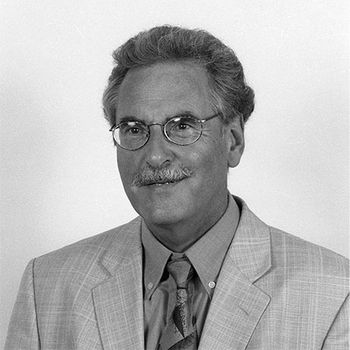
Prof Dr Rainer Krüger, born in Silesia in 1939, studied geography, English language and literature, philosophy and education in Göttingen and at the Free University of Berlin. After gaining his doctorate in 1967, he became a research assistant at the FU Berlin's Institute for Eastern European Studies. In 1968, he moved to the Berlin University of Education as a university lecturer, from where he was appointed full professor of geography at the University of Education in Oldenburg in 1970. His involvement on the board of the founding committee led to his election as founding rector in 1974. After his resignation in 1979 in protest against the state government's university policy, he once again devoted himself entirely to his subject. In 1992, together with Prof. Dr Brake, he founded the Research Institute Region and Environment (FORUM) GmbH at the University of Oldenburg and was its first scientific director until 1998. After retiring in 2004, he managed tourism projects in Germany and Italy and in 2008 founded the "CaravaningConsult" consulting and planning agency for tourism consulting in the state of Brandenburg. Rainer Krüger now lives in Berlin.
The founding of the university - unconventional
unconventional and yet successful!
I am reluctantly embarking on the task of writing about the founding phase of Carl von Ossietzky University. It began almost forty years ago. Memory is thinning out and focussing on situations beyond which the founding events should be examined more broadly. If I nevertheless set myself the task, it should not sound like a cheap late justification. I must try to describe, at least in broad outline, the tasks actually performed by the founding committee and subsequently during the rectorate period up to 1979.
The spectacular history of the naming, the dispute over the Radical Decree in the civil service, the outward appearance of bearded university founders and the revolutionary dangers they supposedly posed, as well as their lamented unprofessionalism - all these points of friction combined to create a mixture that cast the founding of the university in a bad light. Even in the struggle with state governments, which rejected and reinvented the university's expansion goals - study places, new buildings, degree programmes - there was also solidarity in the city and region, but the external perception that the founding committee and founding rectorate had to constantly nag the authorities was stronger.
A negative stereotype of the founding period and its protagonists emerged and became entrenched. The "sensible" university only seemed to develop in the subsequent presidency, a perception that could only benefit the new university management, but led to the perpetuation of the perception of a "red and chaotic" founding phase.
The founders themselves were caught up in their perceived drive to create a "reform university" against a largely hostile outside world. In the early years, we ourselves were too little concerned with external impact and did too little to influence the public, explaining ourselves too little to them. The question remains, however, whether a stronger explanation of the reform goals would have met with a positive response in view of a phalanx of prejudices against this university foundation.
Looking back, I can say that when I and my deputy left the university management, there was a functioning university with 4,905 enrolled students (as of June 1979) and, in addition to the teaching degree programmes covering the entire range of subjects, there were eight new Diplom degree programmes and three Diplom postgraduate programmes. The single-phase teacher training programme (ELAB) was a model experiment appreciated by experts. The planning and financing of the new buildings in the central area on Uhlhornsweg, which were completed in 1980 and cost 107.6 million Deutschmarks, were awaiting realisation. The development work of the founding decade was not in vain.
The time in the founding committee (1971-1974)
When we started work after the founding committee was constituted on 26 March 1971, we had no idea that the founding phase would last until spring 1974. We were a team of fifteen, six of whom came from the then Oldenburg department of the University of Teacher Education Lower Saxony (PHN), two were members of the Oldenburg University of Applied Sciences and seven were academics and students from outside the university. It must have been almost revolutionary that the founding committee was made up of three thirds of the members: one third each of university lecturers, academic staff and students. This parity existed until the Federal Constitutional Court's ruling on higher education on 29 May 1973, after which the founding committee was made up of ten university lecturers, five academic staff, five students and two other members of staff. The founding committee held 47 two- or three-day meetings until it was dissolved in March 1974.
For me, it was a surprise to be appointed to the founding committee by the then Minister of Education, Prof Dr Peter von Oertzen, as one of the two professors at the University of Education. After all, I was not one of my colleagues at Oldenburg University who had been fighting for years to establish a university, such as Hermann Helmers, Hans-Dietrich Raapke or Wolfgang Schulenberg. I had only come to Oldenburg in April 1970 as a thirty-year-old, the Benjamin of the college, to the chair of Geography. I didn't have much experience in the discourse on necessary university reforms, like members of the Federal Assistants' Conference or the constituted student bodies, who were able to contribute their knowledge to the founding process. I had not been an active part of the student movement
, but I had learnt in the maelstrom of the actions and demonstrations of those days. As a young university lecturer in 1969, I was confronted with the fierce resistance against the emergency laws in my first semester as a lecturer in Berlin. The lecture theatre was locked with chains and we were forced to discuss this topic. This experience was also instructive. Perhaps my person promised to bring a breath of fresh air to Oldenburg from the politically high-paced Berlin. I was certainly sensitised and open to the necessity of founding a university as a reform alternative to the traditional university.
So I see myself - perhaps still somewhat lost - among colleagues who were familiar with each other from reform discussions or the Oldenburg years of the struggle for the university, in a smart suit and still without a beard at the constituent meeting of the founding committee in Hanover on 17 February 1971. My appearance then changed in the direction of the image that could serve the image of the "revolutionary" in the external perception, if one wanted to have a simple cliché.
The interested public, not just the educated middle-class circles and conservative politicians who were already opposed to the founding process, found it difficult to understand that, despite the professorial minority, informed planning and decisions could come about due to the one-third parity. However, I do not remember any important discussions and decisions being made on the basis of status boundaries. Most of the substantive decisions on degree programme planning, the organisational structure of academia and services as well as research priorities were made with different majorities across the status groups of a university.
The most important advantage of the equal participation of young academics and students in the founding process was that they brought reform initiatives and subject-specific priorities into the discussion that were often at odds with the academic mainstream but had innovative potential for shaping the university's future profile. For example, the focus on environmental science topics in the social, economic and natural sciences was ahead of its time.
A wealth of tasks for voluntary work
But what was the Founding Committee required to achieve, and how was it able to cope with such a vast array of tasks? During an initial planning phase from March to September 1971, it developed the broad structure of the future university and a corresponding organisational framework. In practical terms, the aim during these first five months was to recruit staff – particularly the full-time planners and the first non-academic staff – and to elect numerous committee members, whilst also attending to simple tasks such as purchasing office furniture. The Chancellor of the Lower Saxony University of Education (PHN), who had actually been commissioned to manage the two new institutions, was based in Hanover and visited Oldenburg only sporadically, without showing much commitment. The administrative work fell to the three board members of the Founding Committee and our small administrative office.
The second phase of work, lasting until the summer of 1972, was crucial in terms of both content and organisation. This was because the focus now shifted to implementing the reform elements deemed essential. On the one hand, the planning committees structured potential degree programmes according to their relevance to practical fields in society. At the same time, emerging new demands arising from specialist research and innovations in university teaching methods had to be incorporated into the curricula. Consequently, it was necessary to devise a model for degree programmes and university organisation that would be in line with financial constraints whilst still facilitating reforms in research and teaching. The integration – still at the planning stage at the time – of the new university nucleus with the College of Education (
) and the regional universities of applied sciences to form a comprehensive university; the model of ‘single-phase teacher training’; and the idea of project-based study, principles of university structure and co-determination – which were later to form the basis of the university charter – as well as new access opportunities for students without the Abitur. These were all challenges for which the Founding Committee had to devise workable structures.
In the third phase, the detailed teaching content had to be translated into degree programme plans with associated examination and study regulations – a task that was subsequently completed by individual degree programme committees. In parallel with the planning of course content, work was carried out on designing the necessary infrastructure:
- Within the Building Committee, this involved the planning steps of ‘survey of existing buildings and assessment of requirements’ in line with student intake targets, a ‘programme of requirements for rapid construction measures’, the ‘application for the second Higher Education Framework Plan’ and the ‘planning of the General Development and Allocation Centre’ (AVZ).
- In the Library and Information Systems (BIS) sub-committee, an initial inventory of the library facilities in Oldenburg was drawn up, followed by the development of guiding principles for the structure of the future BIS. At the time, the BIS itself represented a completely new organisational model compared to traditional university libraries.
- In the Social Services Sub-Committee – which was intended to be far more than just a service provider for students – work focused on analysing the social situation of students and conducting a survey of social facilities as well as future needs.
According to my research, as at 31 December 1971, 134 members had been elected to the Structural Commission, the five Planning Commissions, four sub-committees and ten Appointments Commissions, all of which had commenced their work. This ramified ‘planning machinery’ was overseen by the Executive Board of the Founding Committee and its fifteen members (twenty members from June 1973 onwards) – all of whom worked on a voluntary basis. In addition, there was one full-time senior government inspector, five typists, two research assistants and four planners.
It was, therefore, a very small planning team that had to manage the establishment of the university. What major enterprise would be able to set up a large-scale operation with such modest planning capacity?
Recruitment of scientific staff
The most time-consuming work involved establishing a base of academic staff. The teaching staff of the Oldenburg department of the PHN comprised 87 academic positions, 48 of which were mid-level positions. From 1973 onwards, there were enormous growth rates. In this year alone, 108 new positions were created in the academic area, followed by a further 166 until 1979. The number of positions in the service area grew even more strongly in order to create a tolerable infrastructure.
The ten appointment committees must have had to deal with almost ninety procedures in the founding committee period from 1972 to spring 1974 alone. Assuming that at the University of Oldenburg, as at any other university, academics try to assert their professional and university policy interests, it is clear that there could be fierce disputes in the committee and the founding committee when appointments were made. Nevertheless, for the vast majority of academic appointments, I would say that the procedures led to the selection of qualified academics, with a few exceptions where appointment lists from the first few years were not convincing. The composition of the committees with several external academics, the participation of experienced colleagues from the Oldenburg department of the PHN and the pluralistic composition of each committee in terms of university policy created a filter that usually led to appropriate decisions.
However, it was inevitable that two different worlds would often meet when external professors were elected to planning or appointment committees. The founding of the reform university in Oldenburg aimed to set itself apart from the standard of traditional universities. This concerned design imperatives and the organisation of research and teaching. These included: the participation of all status groups in decisions on the content and forms of teaching academic work, university didactic innovations in the sense of research-based learning and its organisation in project studies, and the orientation of research and teaching towards socially relevant problems.
1972 - Almost the end before the beginning
Twenty-one academic posts had been approved for the 1971 financial year. Consequently, the first appointees were able to take up their posts in mid-1972. There was great joy, as it became clear that the university’s establishment was gathering momentum. However, the newly appointed staff did not view the start of their work with the same enthusiasm. This was because they were unable to throw themselves wholeheartedly into the establishment process, but first had to fight for the practical necessities – such as office space, equipment and secretarial support. A letter from the Ministry of Education and Cultural Affairs, which at the time was also responsible for higher education, replied to a newly appointed university lecturer in 1972: “1. Once the Development and Administration Centre has been completed [October 1975!! – author’s note], university lecturers will be provided with an office … Unfortunately, temporary accommodation must be provided for the time being. 2. Word-processing capacity is still very limited in 1973. I consider the use of academic assistants for typing complex academic texts to be permissible. 3. From budget category 71, only small portable typewriters can be procured for chair holders at best …”
So much for the dry language of ministerial bureaucracy. We could well imagine the shock this unfriendly reception caused among the newly appointed academics. We were unable to help, as we had no authority to allocate budgetary funds.
Whilst the critical public outside the university had already begun, as early as the mid-1970s, to demand (top-level) academic achievements from the newly founded university, the university lecturers and mid-level academic staff working on the ground were busy planning degree programmes and research focuses – and doing so without the necessary material infrastructure. Natural scientists were particularly affected; they were only able to move into their first laboratories in the Development and Administration Centre at the end of 1975, after having been allowed to design them together with the architect.
But at least – things seemed to be looking up in that first year of the university’s founding, 1971. For at the seventh meeting of the Founding Committee on 8–9 July 1971, 96 new posts for teaching and research and 53 posts for non-academic staff were approved. The cold shower came five months later: on 8 December 1971, the *Nordwest-Zeitung* ran the headline: ‘Oldenburg University will not be built in 1972’. Indeed, the Cabinet had decided the previous day in Hanover to ‘postpone’ the construction of the universities in Oldenburg and Osnabrück. The government had evidently come to realise that establishing a university could not be achieved solely through initial investment, but would subsequently require substantial annual running costs.
It is hardly surprising that we, the members of the founding committee, were deeply disheartened and that some of us briefly considered resigning from the committee. Added to this was the fact that the protracted struggle to establish a Faculty of Law had been lost on 5 October 1971, when the state government opted for the Hannover site. The compensation promised in return, in the form of a Faculty of Dentistry, was, as is well known, just as impossible to realise. From the outset, in the hope of establishing a medical faculty, the founding committee had set up a ‘Medical Planning Commission’, which included representatives from Oldenburg’s hospitals as well as medical professionals from university hospitals elsewhere. The efforts to establish a medical training centre therefore date back to 1971.
The blow from Hanover caused consternation locally, even at the *Nordwest-Zeitung*, which had been extremely critical of the university’s foundation at the time. It described it as a ‘scandal’. However, the risk that the university’s establishment might still fail was not viewed as a catastrophe everywhere in Oldenburg and the region. After all, the “Society of Friends of a University in Oldenburg” had existed since 17 December 1965, known simply as the ‘Förderkreis’, which, together with the ‘Nordwestdeutsche Universitätsgesellschaft Wilhelmshaven’, had presented a plan in June 1969 for a ‘North-West University’ with natural sciences and medicine in Wilhelmshaven and humanities in Oldenburg. The ‘Förderkreis’ did not consider the College of Education to be a suitable starting point for the development of a ‘full-scale university’. Under its then chairman, the CEO of EWE, the work of the founding committee was the subject of fierce public criticism, which made it difficult for the committee to campaign for the university’s further development.
Yet it was in this situation that the resilience from within first became apparent, leading to a mobilisation in favour of the university’s expansion in the form of public protest. On 15 December 1971, a rally took place in the city centre attended by more than 2,000 Oldenburg residents from the university, but also from the city itself. The rally had been organised by an ‘Action Committee for a Reform University in Oldenburg’. Even the West German Rectors’ Conference intervened with a strong protest: it “resolutely opposes the decision by the Lower Saxony Cabinet to cut all funding for the state’s universities, at least for 1972 … Particularly affected are the two universities currently being established, which are intended to make an important contribution to the infrastructure of the traditionally disadvantaged north-western German region.”
The atmosphere at the rally was heated. This was partly due to snappy slogans such as “Businesses need idiots from the educational wastelands of north-west Germany”, a slogan that hung on the back wall of the auditorium. Speaking at the rally, alongside Lord Mayor Hans Fleischer and representatives of the founding committee, was the then SPD Member of the State Parliament, Joist Grolle: “The state government may decide whatever it likes, but it will no longer be able to erase the reality of the university from the minds and hearts of the people of this city and this region.”
The founding committee saw the key to overcoming the deadlock in the university’s establishment as the integration of the teacher training department into the university as swiftly as possible: “Integration by the winter semester of 1972” was therefore the resolution passed at that meeting, intended to force through the decisive formal decision to establish the university. The future showed that this strategy was ultimately the successful path.
However, in early 1972, following fruitless interventions, the Founding Committee had to accept that the start of the new university degree programmes, planned for the winter semester 1972/73, was to be postponed until the winter semester 1973/74.
Nevertheless, during this period – without any professional PR resources, as one would say today – we made every effort to raise public awareness. A lasting testament to this is the publication issued by the Founding Committee, ‘Reform University Oldenburg – a model becomes an alternative’. This publication, which is also visually appealing in its layout, describes in detail the various aspects of the material, personnel and pedagogical planning work, which was based on reform objectives and the region’s unmet demand for tertiary education.
The turn for the better
Just as the Oldenburg department of the PH Niedersachsen was ultimately the foundation whose integration into the emerging university decisively stabilised the founding process, it was the "One-phase, integrated teacher training pilot project" (ELAB) that ushered in a positive turnaround in university development. The constructive effect of the ELAB was threefold: firstly, the reform model was almost revolutionary because teachers were no longer to be trained separately according to school type, but together according to school level. It was not only compulsory for all teachers to have specialised knowledge, but also educational, social and didactic qualifications. Secondly, the training was to be organised appropriately in project studies. Above all, however, the single-phase nature of the degree programme ensured that the practical school qualification was integrated into the five-year training course in three stages and thus the traineeship that follows the first examination in the traditional degree programme.
The pilot programme was a helpful support for the state government in implementing the orientation level (5th/6th school year) and starting to establish comprehensive schools. The university benefited because the ELAB included the entire range of school subjects. This meant that specialised training had to be offered for future teachers up to the upper secondary school level. It was therefore a logical step to set up corresponding degree programmes in parallel to the teacher training course.
We were delighted when the Lower Saxony Minister of Education and Cultural Affairs submitted a proposal for a federal grant to the Federal Minister of Education and Science in mid-June 1972. With the federal funds of over 2.3 million Deutschmarks and the state of Lower Saxony's own contribution, over 3 million Deutschmarks were available for the realisation of the pilot project at
for the years 1972 to 1975.
Another favourable factor of the university foundation was added: on 20 April 1972, the "Oldenburg University Society" was founded and the private lecturer Dr Hans-Arnold Simon, Director of the Children's Hospital, already known from our Medical Planning Commission, was elected as the first Chair. He stood for sober, objective co-operation between representatives of public life and the scientists and students involved in the founding process. His friendly, balanced style of communication meant that the aforementioned front of rejection towards the university was less united and some of the members of the "Förderkreis" became involved in the university society from then on.
On 1 October 1972, the Oldenburg university colleague and SPD member of parliament, Joist Grolle, was appointed State Secretary in the Ministry of Education and Cultural Affairs. As he was responsible for university matters, the founding committee now had a contact person who was in favour of the establishment of the university. Whether this was largely due to Grolle or to the state's improving financial situation, at its 25th meeting in October, the founding committee was informed that 108 new posts were expected to be created in the 1973 financial year. At the 27th meeting in December 1972, a further 145 posts were announced for 1974. Never again in its history has the University of Oldenburg been able to achieve such high growth rates.
A calmer planning phase seemed to be on the cards. However, new disputes were on the horizon, this time also concerning co-operation in the founding committee.
Bumpy road to the integration of PH
Since the spring of 1972, a dispute had been smouldering within the founding committee over how the goal of a comprehensive university could be achieved: a phased approach, involving the teacher training department first, followed by the integration of the universities of applied sciences through the establishment of engineering degree programmes; or, alternatively, the integration of the teacher training department and the universities of applied sciences in a single step. The representatives from Hanover were particularly keen on engineering. As such, they favoured a seamless integration. The ‘Integration Sub-committee’ of the Founding Committee, on the other hand, had voted by a majority in favour of the approach of first securing the integration of the teacher training department as the core of the new university. In contrast, the Osnabrück Founding Committee had always focused on prioritising the integration of the local university of applied sciences.
At the turn of the year 1972–1973, the so-called ‘Integration Decree’ reached the Founding Committee, setting out the terms of the merger between the teacher training department and the university. This integration plan would have been linked to elections to the first collegial bodies and the commencement of university studies in the winter semester of 1973/74. However, this ‘integration letter’ was deemed to be legally unsound, whereupon the Ministry presented a ‘preliminary draft of a bill on the establishment of the universities of Oldenburg and Osnabrück’ at the 32nd meeting of the Founding Committee on 3 May 1973. This was discussed at length by the Founding Committee, with the result that the Minister for Education and Cultural Affairs submitted a revised draft bill in September 1973. This ‘Act on the Organisation of the Universities of Oldenburg and Osnabrück’ was passed in the state parliament by a narrow majority of the SPD parliamentary group, against the unanimous opposition of the CDU parliamentary group, and came into force on 5 December 1973. This laid the legal foundations for the establishment of the universities!
However, for another reason, a consensual conclusion to the deliberations on the Integration Act was in jeopardy. On 29 May 1973, the Federal Constitutional Court had declared the parity provision in the ‘Preliminary Act for a Lower Saxony Comprehensive Higher Education Act’ of 1971 to be unconstitutional. This ruling struck at the heart of the university’s foundation: the one-third parity principle (five university lecturers, five research assistants, five students). The question of whether the founding committee should continue its work under the revised parity arrangements – and given that university lecturers could not be outvoted on matters of research and teaching – dominated the committee’s debates for the next five meetings. At stake was the long-standing, self-evident concept of collegial cooperation among all members. Whilst the members of the Osnabrück Founding Committee had decided to resign, we in Oldenburg chose a more realistic path: With seven votes in favour, three against and three abstentions, the new parity arrangement was adopted in July. Looking back, if I ask myself whether the one-third parity practised until the summer of 1973 benefited or hindered the university’s foundation, I would tend to favour the former view. In those early years of the university’s founding, representatives of all status groups shared a firm foundation of common reform ideas and the will to implement them. They knew what they were talking about and what they were deciding on. That is why the student members, too, were able to have a say in the planning process on an equal footing, often contributing their own innovative suggestions.
A brief recourse: The naming
It was a student member, Hans Henning Adler, who, on 6 June 1972, put forward the proposal to the Structural Commission of the Founding Committee that our reform university should be named after Carl von Ossietzky, the Nobel Peace Prize laureate for 1935–36. On 25 October 1972, the commission proposed the name ‘University of Oldenburg’ to the Founding Committee in the text of a first draft of the university charter. The first public mention of the proposed name on 16 February 1973 by Rüdiger Meyenberg ultimately marked the start of the ‘name dispute’ that was to last for many years. The public debate was triggered by a column by ‘Theobald’ in the *
* in the Nordwest-Zeitung on 29 December 1972, which certainly did not do justice to the serious matter of naming the university and merely served as a prelude to the competition organised by the same newspaper on 30 April 1973, inviting the public to vote on various name proposals. The result is well known: Carl von Ossietzky came only fourth, behind ‘no name’, Count Anton Günther and Karl Jaspers.
Thus, the never-ending story surrounding the name Carl von Ossietzky began quite innocently. Within the founding committee, the naming was just one issue among many that had its time before it became a matter of public interest. Although it gradually came to public attention through the actions of the *Nordwest-Zeitung*, it only became a hot-button issue once the University of Oldenburg’s university charter had been ‘provisionally’ approved by the Ministry on 1 February 1975, without the reference to Carl von Ossietzky laid down in Section 1. It was well known that Minister for Education von Oertzen was fundamentally opposed to naming universities after individuals. Thus, the issue remained ‘provisionally’ in limbo.
I do not wish to go into the full saga surrounding the naming process in this article, which continued right up until my resignation as founding rector in the autumn of 1979. Much has been written on the subject. And in Rainer Rheude’s 2009 work *Kalter Krieg um Ossietzky* (Oldenburg 2008), which illuminates all facets of the matter, all the relevant stages and positions are described in detail. Suffice it to say:
The first ‘Ossietzky Days’, which we organised in Oldenburg on 4 and 5 May 1978, took place against the backdrop of the restrictions on academic freedom imposed by the 1972 ‘Radikalenerlass’. The occasion was the 40th anniversary of the death of the 1935–36 Nobel Peace Prize laureate. As part of these events, the Ossietzky memorial—featuring the symbol of a barbed-wire knot—was unveiled on Ammerländer Heerstraße, and the League for Human Rights awarded the Carl von Ossietzky Medals at the university to Willi Bleicher, the legendary former head of the North Württemberg–North Baden regional branch of IG Metall, and to Federal Constitutional Court judge Helmut Simon. Through their powerful speeches and the presence of, amongst others, the former First Mayor of Berlin, Pastor Heinrich Albertz, and Heinz Oskar Vetter, the Chairman of the German Trade Union Confederation, we felt strengthened in our resolve not to waver in our commitment to the naming of the memorial and our resistance to occupational bans.
I myself remember Willi Bleicher – an inmate at Buchenwald concentration camp who saved the life of a young boy whilst hiding there – for the simple clarity and wisdom of his words. A photograph of him hung in my study at the university, much to the amazement of the young students, to whom I was thus able to explain the significance of the naming on numerous occasions. The university fulfilled its academic duty with the publication in 1994 of the critical complete edition of Ossietzky’s writings.
The end of the founding committee
In August 1973, the Founding Committee met in an expanded formation – necessitated by changes to the membership ratios – comprising 22 members: three additional university lecturers from the PHN department ‘
’ in Oldenburg and four from the group of newly appointed university lecturers. Two non-academic staff members were added in an advisory capacity. Ten further meetings took place with this composition. Unfortunately, however – in my view – the almost family-like familiarity of the smaller founding committee had been lost. Admittedly, all members were determined to open the university by the summer semester of 1974 at the very least. And key pillars of the founding process – staffing plans, the teaching methodology framework, the organisational charter, and the organisation of support services – had also been negotiated and finalised.
Nevertheless, as the plans and decisions became increasingly concrete, controversial and at times irreconcilable positions began to emerge. The main areas of contention were the numerous appointment procedures for posts in the 1973 financial year and the allocation of posts for the 1974 financial year. Here, competing academic interests clashed with diverging interests in higher education policy. The curricular planning of the new degree programmes provided further fuel for the fire. Likewise, the discouraging conclusion that the chairman, Hans Peter Riesche, had already voiced in the founding committee in early March 1973 was to prove true: “Law – dead a year ago; Medicine – it won’t happen; Engineering – down the drain.”
Was it a touch of resignation, or the increasingly pronounced factionalism within the founding committee – or both? At the meeting on 5 December 1973, Hans Peter Riesche, as a research assistant, was re-elected to the executive committee, as was the student representative, Rüdiger Meyenberg. I found myself up against a colleague from the group of newly appointed staff, Dieter Schuller, as the other candidate, and was narrowly re-elected. The election, held at the same time, for an “interim rector” – who was to serve until the inaugural rector took office – was narrowly won by Wolfgang Sprockhoff from the PHN department over Irene Pieper-Seier, another newly appointed member. Thus, amongst the university lecturers, the representatives of the University of Education had prevailed, even though they did not constitute a majority on the Founding Committee. Hans Peter Riesche took the election results – particularly Sprockhoff’s election – as an opportunity to decline the post of Chair. Consequently, Jürgen Weißbach was elected Chair from among the research staff for the remainder of the Founding Committee’s term of office.
The elections were a foretaste of the future political factions and, for me personally, the prospect of having to stand against an opponent in the rector’s election on 18 April 1974. That is exactly how it turned out. For the first time, there was a brief but fiercely contested election campaign, during which I advocated a development strategy grounded in a realistic assessment of external conditions. This was not as popular as the promises made by my opponent, who held out the prospect of a new world of university life beyond traditional standards for all members of the university community. The university demonstrated a sense of realism and elected me by a large majority.
Looking back on my time on the founding committee, I come to the conclusion that it was an exciting period and, given the particular mix of people involved, probably unique. It resulted in concrete work with good outcomes. And despite all the (excessive) demands, it was a time when we were also happy: for example, as the weekend approached, after the many visiting committee members had left us, we would clink glasses with our red genever or mingle with the crowd at the many small parties that the students from the PHN department were so adept at organising.
The time as rector (1974-1979)
The Council and University Senate were constituted on 1 April 1974. We were lucky when the first university management took office on
1 May 1974. A "team" had come together that understood and trusted each other. Alongside myself and the first deputy rector, the German scholar Wolfgang Promies, Jürgen Lüthje had been the university's chancellor since December 1973. He rendered invaluable services to the new foundation over the many years of his work. When I appointed Gerhard Harms as Head of Press and Public Relations on 1 October 1974, another member of staff joined our team who, in addition to his original duties, soon became irreplaceable as a communicator in various political and professional circles at the University. Meinhard Tebben and later Johannes Buchrucker, as assistants to the Rectorate, supported our work with prudence. When Friedrich W. Busch took office as the new Deputy Rector in 1976, his committed and hands-on working style was a further enrichment for us all.
Trapped: Overestimated room for manoeuvre
The long ping-pong game over the approval of the examination regulations was a perennial issue from the start of my studies for two and a half years, which I had to admit I was reluctant to devote myself to. In my opinion, they should only lay down minimum rules for examination procedures and the academic knowledge to be acquired and leave room for experimentation in the organisation of studies. However, many of my new colleagues saw them as a vehicle for perpetuating the canon of innovative elements of the Oldenburg reform model in one package: not only essential curricular building blocks, but also the binding nature of project studies as a form of study, social relevance and interdisciplinarity, new forms of performance assessment and the right of students to vote on examination committees.
I have been a supporter of project studies and have myself been involved in a project as part of my professional expertise. I also shared the intention to partially replace selective examinations with course certificates. However, the dispute with the Ministry took on the characteristics of a religious war. The persistence of the reformers on our side was countered by the Ministry. As a result, no more examination regulations were approved until the change of government, and the child had fallen into the well because the new conservative government in office since February saw no reason to allow the university any innovative room for manoeuvre.
The dispute over examination regulations escalated. Provisional examination regulations, which the ministry imposed on the university at the end of April, led to the university taking legal action against the octroi at the Oldenburg Administrative Court. With admirable patience and perseverance, Chancellor Lüthje mediated between the faculty councils, the University Senate and the Ministry. He succeeded in bringing all parties, including the representatives of the Ministry, to a compromise. As a result, the university degrees and examination regulations were made legally secure at the last minute before a court-imposed deadline in mid-September 1977. The university could have received stronger reform components in the degree programmes if it had been more willing to compromise with the old state government.
Expansion targets on a rollercoaster ride
It must be the nightmare of every business start-up when the tap for investment funds is turned on and off. This makes it impossible to plan for a sustainable future. This is what happened to the young university, however, and the overall trend was downwards.
At first, the expansion had begun with hope: On 10 October 1975, the General Availability Centre on Uhlhornsweg was finally put into operation - primarily as a first home for the natural sciences.
By 1 December 1975, the Data Centre was operational with 18 posts. The library was given 10 million Deutschmarks (to be spent by 1977) to build up a basic stock of books. According to the 1975 plan, 53 library positions were available for this purpose. In February 1976, the psychology degree programme was approved. And since the beginning of 1975, the Botanical Garden had been part of the university, a place for research and teaching, but which I - like many others - could use for relaxation from the nearby Margaretenstraße. We also seemed to be able to relax because, following an inspection in December 1975, the German Council of Science and Humanities stated that the new building measures for the natural sciences and sport in Wechloy should be "unconditionally included in the framework plan and realised as quickly as possible". The same applied as a recommendation for the planned central area on Uhlhornsweg. The target figure for the expansion was 9,300 study places. Construction of the central library was to begin in autumn 1976. Then, however, the university was hit with one blow after another. I would just like to briefly list facts and key extracts from documents, but report on one event in more detail:
- The CDU minority government under Prime Minister Albrecht, which took office unexpectedly on 7 February 1976, missed the deadline for admission of the new building measures to the 6th framework plan on 1 March.
- On 30 March, I reported to the Minister of Science in a detailed statement: "I hope that the new state government will also agree to the expansion concept recommended by the German Council of Science and Humanities. It is well known that there is currently a concentration of study places in the south of Lower Saxony compared to the undersupplied northern regions, specifically a ratio of 5:1 in favour of southern Lower Saxony ... The shortfall in the natural sciences will have a particularly critical effect ... The training situation ... is already very critical today, as 400 natural science study places are already facing 780 students ... Until the completion of new buildings in 1980, around 2,500 students would have to make do with the few available study places."
- Our UNI-INFO headline on 25 March: "The catastrophe is here". The news is the reaction to the result of a meeting in the Ministry that the expansion target of 9,300 to 5,800 study places is to be lowered
- A Commission of the Senate is working under the title "Aufbaustopp? On the structural significance of the university expansion in Oldenburg for the north-west region". In particular, the important "pacemaker function" of the university in a structurally weak region is discussed.
- This is followed by the impressive one-off event in the history of the young university: the "bicycle demonstration" from Oldenburg to Hanover from 13 to 16 June 1976. I quote from an earlier report of mine: "In June 1976 (13-16 June), a line of bicycles ... made its way through small towns and villages in Lower Saxony on its way to Hanover. The weight of this process is symbolised when settlements seem to shrink in the face of the 4-kilometre-long chain of demonstrators that extends far beyond the town signs. It is a manifestation of the strength and weakness, power and powerlessness of the University of Oldenburg. In any case, it is an original response to the state government's request to reduce the university's expansion targets from the originally planned 12,000 study places to 5,800." It was a logistical tour de force, about which a police officer accompanying the column told me that it takes almost six weeks to move a battalion of the German army. The university staff managed it in a fortnight: accommodation for a thousand people in churches, schools and tents, shuttle catering from the Oldenburg canteen, mobile bicycle repair vans and press centre, route planning with the authorities, provision of toilet vans, Detlev Rossmann's mobile evening cinema etc. In Hanover, there was an impressive final rally on the Klagesmarkt.
- The demonstration had an effect: on 1 October, the ministry announced the 6th framework plan after all: 161.3 million Deutschmarks are to be made available by 1980 for the construction of a library, sports facilities and central workshop, but no canteen. The reduced number of 5,800 study places remains.
- After the CDU and FDP coalition was formed, the university management was informed in a meeting on 7 June 1977 that the target number of study places would be raised to 6,800.
- Almost in the same breath, Minister Pestel announces that he is endeavouring to concentrate the subject of physics in Osnabrück.
- In May 1978, the ministry in Hanover decides that physics can remain in Oldenburg. In return, the University of Osnabrück is offered the prospect of establishing a law faculty. Osnabrück had not applied for such a department, but Oldenburg had repeatedly done so. This is because all the institutions for training trainee lawyers are available here.
- At the beginning of 1979, work is to begin on the expansion of the university library and a canteen.
- In April 1979, the state government announces its intention to reduce the number of places for science students in Oldenburg from 3,500 to 1,200. Lower Saxony already had too many university places in this area compared to the national average, so a further increase was not justifiable. The Ministry suggests whether a "swap" in favour of a Law department could be considered for the natural science places that would be lost. The university rejects this because it would mean giving up the natural sciences as the "core" of a further expansion in the direction of medicine/pharmacy.
- In an interview with the "Oldenburger Bürger" (9/1979), Minister Pestel states: "Of course it was great nonsense from the outset to found two universities. Osnabrück is 40 kilometres from Münster and just as far from Bielefeld".
- Once again, the university goes to Hanover to protest: on 8 May 1979, 1,900 members of the university travel to Hanover on a special train to demonstrate against the expansion cuts and the associated discrimination against the north-west region. In addition to us rectors of universities and universities of applied sciences from the north-west, Lord Mayor Fleischer and Lord City Director Wandscher and the chairmen of the SPD and FDP (!) parliamentary groups spoke. On the same day, large adverts financed by donations appeared in the "Hannoversche Allgemeine Zeitung" and the "Nordwest-Zeitung" under the slogan "Training and work for Oldenburg and East Frisia too".
- At the Chancellor's suggestion, I submitted a compromise proposal from the university to the Minister at the beginning of June: the planned first and second phases of the natural sciences building should be completed. In return, the university would initially forego the new buildings for the humanities and administration. Also through the mediation of Gerhard Wachsmann, Chair of the University Society, in November 1979, State Secretary Möller indicated to the state parliament that the compromise proposal would be largely accepted.
This announcement came at a time when Hans-Dietrich Raapke had been appointed to take over the President's duties in my place following the resignation of myself and my deputy. He, too, experienced what the university was used to: in mid-January 1980, it was once again a question of reducing the expansion targets.
These constant changes to the expansion targets required enormous commitment from our tightly resourced building department, headed by Alexander Kleinloh, but also from the academics who wanted to use the new facilities. Urban planning concepts had to be constantly adapted and new room programmes written. The academic appointments were actually expected to devote themselves to research. Instead, a large part of their working time was wasted on re-planning.
However, I did have one memorable experience - partly because, as a geographer, I found the challenge exciting. As is well known, a north-east-south-west orientated water network has developed from the glacial meltwater system, which is also followed by the typical North German hedgerow landscape. The task of the "Wechloy urban planning competition" was to carefully integrate a massive development into the planned building site with its landscape conservation character. The prize-winning design by the Lange und Partner consortium surprised with a striking trick: by rotating the mentally familiar north-south fixation of plan drawings by 45°, the building lines and individual sections of the spread-out building masses fitted almost congruently into the landscape.
Unfortunately, it was not until 1983 that the natural sciences were able to find their way into Wechloy.
A bitterly bad time: the rampant inspection practice
In the wake of the political upheaval caused by acts of terrorism in the early 1970s, the "Extremist Decree" was passed by the federal and state governments during the term of office of Chancellor Willy Brandt. From then on, civil servants, including all new recruits and members of universities who were alleged to have acted in a politically extreme manner, had to be checked for compliance with the constitution. It was not a pleasant task for a university management that was confronted with thick files from the Office for the Protection of the Constitution and was sometimes forced to attend hearings. There was soon talk of the "practice of banning professions", which had to be resisted by all means.
At the University of Oldenburg, which as a reform university had a broad majority of liberal-conservative to social democratic orientations, individual members or applicants were either orthodox communists (DKP, MSB-Spartacus) or radically undogmatic leftists (e.g. the so-called K-groups). The university committees and the university management made a point of living with this ideological and academic breadth as long as individuals did not explicitly act in an anti-constitutional manner through their behaviour. However, due to its liberal understanding of constitutional principles, the university repeatedly came under suspicion in the public eye of aligning itself with the political opinions of those concerned. It was therefore always necessary to emphasise that standing up for the freedom of those with different views was not to be equated with accepting their ideological positions.
The state government in Hanover showed no understanding for this tolerant attitude of the University of Oldenburg. So during my time in office, the university management was involved in a whole series of such review procedures. By the end of the 1970s, i.e. the end of my term of office as founding rector, at least five academic assistants and one member of staff were affected, in addition to seventeen teaching graduates from our university.
I would like to describe one case from the majority of the proceedings in more detail, not only but also because the university felt compelled to take particularly elaborate action and because it was a question of my office as rector being called into question. In May 1977, I was asked by the Ministry to initiate preliminary investigations against an academic assistant who belonged to the Communist League of West Germany (KBW) and was a candidate for the Bundestag on suspicion of a serious official offence. The university's position was the opposite: Political expressions of opinion and activities as a member of a party admitted to elections must be permissible for a civil servant if the unconstitutionality of this party has not been established by a prohibition order of the Federal Constitutional Court.
In the case in question, following this view had dramatic consequences. At the meeting of the Council on 20 May 1977, the members of the "Left List" withdrew from it. For them, the decision to defend themselves against the threat of dismissal by all legal means possible was a renunciation of the political fight against the occupational bans. Instead, by participating in the investigation proceedings, the university was making itself a henchman of the radicals' decision. The "Left List" demanded that the resignation of the rector should also be used as a means. The broad majority of the Council, however, saw such a step as a restriction of the university's autonomy and a surrender to state intervention. I did not resign out of conviction.
Nevertheless, this process of splitting the previously unified line of defence against the Radical Decree affected me personally. This was also because I was forced to resort to the last legal remedy available to me as a civil servant against my superior, the minister: remonstration.
The personal hearing must have been a special legal treat for the senior ministerial civil servants - because it was new territory for all of them: from the minister to the head of department level to the specialist advisor, Chancellor Jürgen Lüthje and I sat opposite a whole squad. As a lawyer, the Chancellor could only advise me - during the breaks in the negotiations that I had requested - only I was allowed to speak.
The remonstration did not result in the minister giving in. However, the preliminary investigation to be carried out by the chancellor and myself was refused by the assistant concerned and could not be concluded with a vote in his favour. The initiation of disciplinary proceedings by the Ministry had thus become unavoidable. At least it was possible to ensure that the civil servant was not dismissed, but only suspended with half his salary.
The story had a curious ending when I happened to meet the same person thirty years later near Hamburg. On a walk together, I reminded him, who in the meantime - no longer averse to the capitalist system - was working in a senior management position in a large Hamburg company, of his earlier disbarment. Looking back, the whole process was an exciting interlude for him. It almost cost me my position and the university its ability to act temporarily. So I can only assume that his "martyr role", which he gained through his uncooperative behaviour, was more important to him at the time than the welfare of the university, which had campaigned for him with great vigour.
The NHG of 1978: A blow to reform elements
The new Lower Saxony Higher Education Act (NHG) came into force in October 1978. I remember sitting with the Minister for Science and Art, Eduard Pestel, shortly beforehand at an event organised by the Oldenburgische Landschaft. He took my arm in a fatherly manner and said something like: "I know that the law hurts you, but it will come. If there's anyone who can convey the new situation to the university despite all the difficulties, it's you. You have a very secure position at your university." Again from my memory, I replied: "Mr Pestel, in this case you will have made a mistake. In recent years, under your government, we have supported many a compromise that you have forced upon us. I stood up for this at the university. For me, the new Higher Education Act is the end of the line. Like the members of the university, I will see it as an unfriendly means of undermining university reforms. I can't imagine running for university director again under these circumstances." - And so it came to autumn 1979.
What was so detrimental to the further development of reforms through the new NHG? On the one hand, the ministry was able to intervene more directly in the university's room for manoeuvre. Examination and study regulations were standardised, proof of performance was removed as a subject-specific requirement from the context of interdisciplinary project work and assigned to "normal" exercise and seminar courses - a weakening of the value of project studies. Secondly, and this was even more decisive for the future organisational structure of the university, the opportunities for co-determination for academic staff, students and employees in technical and administrative services (MTV) were significantly restricted. The curtailment of co-determination meant that at the lower organisational level of Institutes, the introduction of which was the subject of controversial debate at the university, the participation of these status groups would be excluded. It became apparent that the four departments had grown to such an extent that it was worth considering introducing a more differentiated organisational level below the departments. Institutes also promised the possibility of closer cooperation with non-scientific staff. However, the counter-argument that the interdisciplinary co-operation, which was a core element of project studies, would suffer as a result of the Institutes could not be dismissed out of hand. The exclusion of co-determination for everyone except university lecturers meant that
the idea of setting up Institutes had been dead for some time. Not even the division of the departments - with the exception of the Department of Mathematics and Natural Sciences - was successful during my time in office.
Science and services: How equal is everyone?
The participation of members of the service sectors in academic decision-making processes with voting rights was indeed a fundamental issue that was on everyone's mind throughout the entire founding decade. I remember how, during the election campaign for my candidature as founding rector, my opponent argued that there was a prospect of all university members being "equal", in other words, equal in co-determination and also in terms of salary, if the collective bargaining law could/would be changed. I thought that was a dream. Nevertheless, my position on this was clear: every individual involved in scientific work - the chemistry professor, the students, the glassblower making the apparatus or the chemical-technical assistant - brings their specific aptitude to the table as a prerequisite, without which the success of the required work is called into question. To avoid being categorised as a reformist from today's perspective: When it came to decisions on research, teaching and study, the law had stipulated since 1975 that the group of university lecturers could not be outvoted. So it was all about promoting team building through motivation. And that means breaking up the traditional one-way dependency relationship between full professor and staff. Specifically, we at the university have utilised the possibilities of the Staff Representation Act as far as possible. It was customary for university management and the Staff Council to meet at regular intervals. Regular afternoon "tea parties" with the university's AStA were also a matter of course. This made sense because despite often differing interests and experiences with the student body, which was politically inhomogeneous enough in itself, consensus was possible on important issues of university policy positioning. It's fair to say today that when a high-ranking state visitor was due to visit and dared to enter a heated plenary session - respect for that! - it was not uncommon for a student "security service" to ensure that the event ran smoothly.
How nice it can be "away from Oldenburg"
When I left Oldenburg on business, it was sometimes a little balm to be able to immerse myself in a friendlier world of perception. The debate about the name had a completely different tone outside Oldenburg and its region. Whether at meetings of the West German Rectors' Conference (WRK) or at the European Rectors' Meeting in Dubrovnik immediately after taking office in 1974 or on other occasions, I was met with interest in the founding of the university everywhere. This was based neither on the university's existing academic reputation - where would it come from when research was just beginning? - nor on me as the youngest German rector colleague, who was hardly known at the time. It was fuelled by a lack of understanding as to how it could be possible that the Nobel Peace Prize winner from the Nazi dictatorship should not be the patron saint of our university. In many conversations, I was encouraged to persevere with the naming. Ultimately, it was a gift - a marketing success - to make the Carl von Ossietzky University known at home and abroad through the name dispute.
But the university was also appreciated institutionally when its representatives were able to demonstrate expertise and professionalism in issues relevant to higher education policy. For example, I was elected by my rector colleagues in Lower Saxony as one of two state members of the University Senate of the West German Rectors' Conference (WRK). There was a reason for this: the subject of academic reform had gained in importance in the mid-seventies. And none other than the reform universities had so much expertise in this area. I was therefore also elected to represent the universities in Lower Saxony on the "Standing Commission for Academic Reform" set up by the Conference of Ministers of Education and Cultural Affairs in 1978 - an academic appointment that I continued to fulfil for the Federal State of Bremen after I left office until 1983.
Otherwise, however, we were met with vehement criticism and scepticism from academic subject and professional organisations, who considered our reform model in research and teaching to be unsustainable.
First research and teaching specialisations as signposts
The concept of ‘Single-stage, single-phase vocational training’ (ELAB), developed by the founding committee and subsequently put into practice when the course was launched in 1974 – despite massive criticism from conservative education politicians and association officials, as well as material constraints – quickly became a hallmark of the young university. The pilot scheme, which had attracted international attention and received three rounds of praise from evaluators, was brought to a halt in 1980 on the instructions of the state government. As my deputy, Friedrich W. Busch, later remarked, not without a touch of sarcasm: ‘Because what must not be cannot be!’, this exciting reform initiative had to be abandoned. Yet Oldenburg remained an innovative centre for teacher training through the Centre for Pedagogical Professional Practice (ZpB). Not only through the ELAB, but also in the humanities – in research, teaching and student studies – it can be demonstrated how priorities deliberately set during the planning stage by the founding committee later developed into key elements of the university’s profile. In brief, one might cite the following milestones, for example: Further education through the Centre for Further Education; mass and recreational sport; psychoacoustics; family sociology; urban and regional sociology and spatial sciences; theoretical and socio-critical foundations of the social sciences.
I would, however, ask for your understanding if, in what follows, I take the successful rise of the natural sciences as an example in certain areas. This was where the most significant expansion of the range of subjects took place. And it was in this area that the scepticism of the scientific community and politicians watching us was greatest. This was because the emerging spectrum of research was unconventional and lay on the fringes of the standard repertoire of traditional Institutes. With an interest in new societal challenges – particularly the sustainable use of resources – we were breaking new ground.
Ecology: The ‘Haarenniederung Habitat’ project had been in existence since the summer semester of 1974. Its aim was to investigate, above all, the ecological conditions in a landscape conservation area into which the university, with its central location on Uhlhornsweg, was to develop. The posts for the key professorships, which came together to form an interdisciplinary collaboration, had been earmarked by the founding committee and were therefore appointed at an early stage: Dieter Schuller (1972/73: Analytical Chemistry), Thomas Höpner (1973: Biochemistry, specialising in enzymology), Wolfgang Krumbein (1973: Geomicrobiology). Key areas of research emerged from the project that were essential for its further development: biochemistry and biochemical analysis, sedimentology and aquatic ecology, and analytical chemistry. The latter branch, under Dieter Schuller, became an independent department of environmental chemistry. The other research areas shifted their focus to investigating the ecological relationships between mudflats and the coast. It was, as it were, a shift from fresh water to salt water. The culmination of this expanding interdisciplinary marine and coastal research was the founding of the ‘Institute of Chemistry and Biology of the Sea’ (ICBM) in July 1987. The driving forces behind this were Wolfgang Krumbein and Thomas Höpner, although a number of other scientists had joined the research cluster in the meantime.
Renewable energies: The appointment of Joachim Luther in 1973 to the post of Professor of Experimental Physics, specialising in physical measurement methods, provided a welcome impetus for the development of this field of research. In recognition of his achievements in this field of research, he himself was appointed in 1993 as Director of the ‘Fraunhofer Institute for Solar Energy Systems’ (ISE) in Freiburg, which had been founded in 1981.
Together with Wolfgang Schmidt, who arrived in Oldenburg in 1975, a research group on ‘Physics of Renewable Energy Sources’ was established. As early as the mid-1970s, when the topic of ‘renewable energies’ was still a rather neglected field, research was being carried out into the fundamentals of the potential use of solar energy, wind and biomass. As a concrete example, the planning of an energy laboratory was undertaken. The ‘Energy House’, which became operational in Wechloy in 1981, is an energy-self-sufficient laboratory built into earth embankments, whose energy is generated through a combination of insulation, solar collectors and wind power. Wolfgang Schmidt was, in particular, a champion of wind energy research and thus a pioneer of the ‘Centre for Wind Energy Research – ForWind’, founded in 2003. And in 2007, on the occasion of the founding of the ‘EWE Research Centre for Energy Technology’, UNI-INFO reported: ‘When the University of Oldenburg, with the construction of the “Energy Laboratory” … in the early 1980s, it set an initial visible example of its research into renewable energies, hardly anyone would have thought it possible that, 25 years later, Germany’s fourth-largest energy supplier, EWE AG, would establish a research centre dedicated to this field. At that time, very few people were convinced that renewable energy sources would play a significant role in the foreseeable future. Today, things are different.”
Acoustics: This field of work began during the time of the Founding Committee. At that time, on the initiative of Fritz Bader – who later became head of the Central Technical Workshops – and Ulrich Radek, planner for the Founding Committee for the Natural Sciences, Volker Mellert was appointed to move from Göttingen to Oldenburg. When he took up his post at the start of the academic year, his work began with ‘investigations into the propagation of sound from stationary and moving noise sources, with a view to identifying protective measures and improving noise prediction models’. In the second half of the 1970s, August Schick, a psychologist specialising in the psychoacoustic assessment of sound signals, joined the research group. This paved the way for the DFG Research Training Group on ‘Psychoacoustics’, which ran from 1992 to 2001; it was initiated by Mellert and Schick, and was joined in 1993 by Birger Kollmeier, also from Göttingen, whom we have to thank for the world-renowned ‘Centre for Hearing Research’ today.
Renewable raw materials: The potential for using renewable raw materials – that is, biomass – to generate energy was a field of research to which Peter Köll, working in Oldenburg from 1975, and Jürgen Metzger, who joined in 1977, devoted themselves. Köll was already a well-known ‘sugar chemist’ when, in the wake of the first oil crisis, the use of renewable raw materials first became a major research topic. Specifically, their work focused on the decomposition of wood and its liquefaction for energy purposes (fuel). For this, both were awarded the prestigious Océ van der Grinten Prize in 1982.
Instead of a conclusion
Andrä Wolter and Wolf-Dieter Scholz's 1979 study ("The University in the Mirror of Public Opinion - A Local Case Study on the Image of the University in the Oldenburg Population") showed that 55 per cent of all respondents thought that the "university in general ... is viewed rather positively" and that 53 per cent of respondents were of the opinion "that Oldenburg would be worse off without the university". Not bad, this testimony from the people, which was obviously better than the published reputation of the university.