
2019
2019
Project: Geographies of food
Head: Prof. Dr Ingo Mose, Prof. Dr Norbert Weixlbaumer (University of Vienna)
Collaborator: Melanie Bühler
Short description: Based on a jointly organised specialist session at the German Congress of Geography 2017 at the University of Tübingen, the two leaders of the project are editing an anthology in the series "Wahrnehmungsgeographische Studien", which will be published in 2019 by BIS-Verlag in Oldenburg with several original contributions by authors from Germany, Austria and Switzerland. The subject of the book is the ubiquitous human interaction with food, which makes the "geography" of food a topic of everyday debate as well as scientific discourse. Food and eating have always been a central element of human existence. They play a fundamental role in everyday survival strategies as well as in people's thoughts on pleasure. Food is also a present topic in the - today increasingly worrying - view of the future of nutrition. In the course of a growing sensitisation to questions of food quality, animal welfare, organic farming or sustainable living, Europe is also placing increasing emphasis on "healthy" food and genuine food. Protected areas such as national parks, biosphere reserves and nature parks have a special role to play in this context: in recent years, initiatives have emerged in many protected area regions that serve the production, processing and marketing of high-quality regional foods. Protected areas are thus becoming promoters of "better food", just as regional culinary products are becoming instruments of regional development and "ambassadors" of area protection.
Duration: 2017 - 2019
Financing: Jean Monnet Programme of the European Union, own funds of the participating working groups
Project: Wat Nu? Demographic change in the Wadden Sea region
Head: Dr Peter Schaal, Prof Dr Ingo Mose
Employees: Dr Nora Mehnen
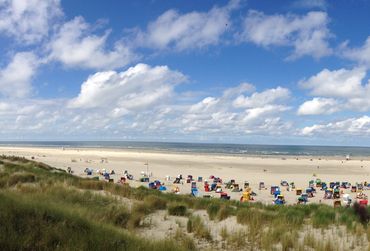
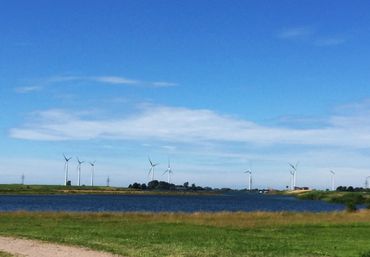
Brief description: As part of "Wat Nu?", sustainable action strategies and measures for dealing with the consequences of demographic change in four Wadden Sea communities in Lower Saxony are being trialled using the methodological approach of real-world laboratories and drawing on governance approaches.
The joint project addresses the question of how the scattered system and transformation knowledge available in tourism communities can be used to develop appropriate options for action and measures. To this end, information and communication technologies and innovative forms of co-operation are being tested in practice and findings on their application are being generated. The project will draw in particular on the transdisciplinary approach of the real-world laboratory. The aim of the project is also to analyse the transferability of the solutions to other tourism regions. Foreign experience will also be incorporated into the project through close co-operation with the Netherlands. In particular, new governance, participation and solution approaches are to be tested.
A comprehensive analysis of the current situation of the four participating municipalities - Wangerland, Spiekeroog, Juist and the town of Norden - will provide information on the areas affected, vulnerabilities and risks, but also opportunities and strengths. The municipalities are facing major challenges that can only be solved with holistic solutions and innovative approaches. This is why local and supra-regional stakeholders from civil society, politics, administration and business are involved through the real-world laboratory approach.
Duration: 2016 - 2019
Collaborative partners: Arbeitsgruppe für regionale Struktur-und Umweltforschung GmbH (ARSU) and the municipality of Wangerland; associated partners: the municipality of Spiekeroog, the island municipality of Juist, the city of Norden, the Wadden Sea Forum (WSF) and the University of Groningen
Financing: Federal Ministry of Education and Research (BMBF) as part of the funding measure "Kommunen innovativ" as part of the framework programme "Forschung für nachhaltige Entwicklung (FONA)" (Research for Sustainable Development)
Jean Monnet Chair "Europeanisation and Sustainable Spatial Development"
As part of the European Union's "Lifelong Learning Programme", Prof. Dr. Ingo Mose and the Applied Geography and Environmental Planning working group were awarded a Jean Monnet Chair for "Europeanisation and Sustainable Spatial Development" in 2012.
Since 2015, Ingo Mose has been a member of the Oldenburg-based Jean Monnet Centre of Excellence "Europeanizing Coastal Regions" (EuCoRe), of which he is the coordinator. Further information on the Jean Monnet Centres of Excellence can be found here.
Europe in practice - excursion programme for Master's students
As part of the Jean Monnet Chair "Europeanisation and Sustainable Spatial Development", the Applied Geography and Environmental Planning working group is organising a series of excursions focusing on the work of European institutions and the implementation of European programmes in the field of spatial and regional development at regional, national and international level. The programme is aimed at interested students on the Master's degree programmes in Landscape Ecology, Sustainability Economics and Management and Water and Coastal Management. Prof. Dr. Ingo Mose is in charge of the excursion programme, while B.Sc. student Carlotta Schulz is responsible for the organisational planning of the excursions.
Colloquium on sustainable spatial development
The established ZENARiO lecture series is co-financed by the Jean Monnet Chair in SS 13, WS 12/13 and SS 14. The topics include heterogeneous spatial development and territorial protection in Europe. Further information on the colloquium and the current programme can be found on the homepage.
Parks of the Future Workshop 2014
In February 2014, an international workshop on the topic of site protection was held in collaboration with the HWK Delmenhorst. Almost 20 participants from all over Europe were invited to discuss issues relating to the future functions of protected areas.