Nationalisation processes in East Central Europe and the Soviet Union after 1917/18
Kontakt
Lehrstuhlinhaber
Team
Institutssekretariat
Anschrift
Nationalisation processes in East Central Europe and the Soviet Union after 1917/18
Project 1: White birch. The Soviet invention of the "Russian tree". National symbol production and reception in the USSR

As a supposedly "Russian" tree, the birch is today a central component of Russian national self-description. And yet its integration into the imagery and meaning of Russian identity did not take place until the Stalin era. As with other core elements of an imagination of "Russianness", the current symbolic practice is thus based on a Soviet cultural intervention and its social appropriation in the decades following Stalin's death.
The project, which is being worked on by Igor Narskii, uses the example of the Soviet "invention" of the birch tradition to examine the transformation process of Russian national self-concepts and their visualisations under the conditions of a cultural industry standardised by the party-state. And it works out the basic features of this Soviet cultural production and its social reception in an exemplary manner.
Three thematic complexes are thus at the centre of the project. Firstly , it analyses the functional mechanisms of Stalinist and post-Stalinist cultural policy. Using the example of the birch symbol, the interaction between party functionaries and creative artists is analysed as a complex negotiation process. The tense relationship between centralised control and decentralised processes, which characterised the cultural sector of the USSR as a whole, can be exemplified with the help of the birch symbol.
Secondly, the project isdedicated to the transformation and popularisation of Russian nationalism through Soviet cultural policy. It clarifies how party functionaries, writers and artists utilised a pre-revolutionary "tradition" to establish and disseminate a new cultural canon. On the basis of the changing semantics of the birch tree , it traces how ideas of "Russianness" were realigned in the USSR and which visualisation strategies were used.
Thirdly, the project deals with the social reception and poses the question of the power of party-state identity politics. The project uses the birch symbol to shed light on the possibilities available to citizens of the USSR in appropriating state-standardised identity offerings. The reasons for the dominance that the "Russian tree" attained in the imagery of Russian national discourses are to be found precisely in the context of such a broad, often obstinate reception.
This multi-layered approach, which structures the material along the research levels of actors, representations (artefacts/semantics) and receptions , allows new insights into the complex interplay that fundamentally characterised cultural production and reception in the Soviet Union. At the same time, this opens up an innovative perspective on the changes in (Russian) national identity concepts and symbolisations in the USSR, which provides suggestions for understanding nationalisation processes in state-socialist regimes.
Project 2: Sovietisation and nationalisation processes in the Polish People's Republic and the Lithuanian Soviet Socialist Republic (1944-1989/91)
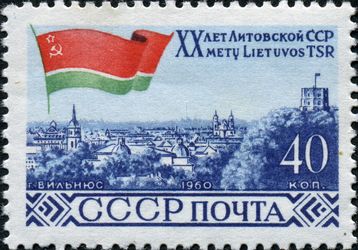
This research project is dedicated to the People's Republic of Poland and the Lithuanian Soviet Republic after the Second World War. It aims to examine the tense interaction between Sovietisation measures, an official nationalisation of the People's Republic and the Lithuanian Soviet Republic promoted by Moscow, as well as their elites and their unintended consequences for individual and social lifeworlds. In addition, the changing role of religion and religious practices in the respective modernising societies will be examined. The translocal and transnational references of transformation dynamics between the People's Republic of Poland and the LSSR will also be analysed. In the medium term, there are plans to expand the project into a comparative research network that will examine the interdependencies of Sovietisation, indigenisation and nationalisation processes in the peripheral republics of the USSR as well as in other People's Republics of East Central Europe.
Publications in the context of this research focus
Essays
- ""Iron Wolves Conquer the Polish Pan". On anti-Polonism in Lithuanian domestic and foreign policy in the interwar period", in: Nation-building and foreign policy in Eastern Europe. Nation-building processes, constructions of national identity and foreign policy positioning in the 20th and 21st centuriesedited by Bianka Pietrow-Ennker, Osnabrück: Fibre, 2022, pp. 149-168.
- "Nationalizing an Empire: The Bolsheviks, the Nationality Question, and Policies of Indigenisation in the Soviet Union (1917-1927)", in: The First World War and the Nationality Question in Europe. Global Impact and Local Dynamics, edited by Xosé M. Núñez Seixas, Leiden: Brill, 2021, pp. 65-86.
- "The Renaissance of the State of Emergency in the "Age of Stability": On the Soviet Mobilisation Dictatorship and the Crisis of State Socialism in the Brezhnev Era", in: Ausnahmezustände. Entgrenzungen und Regulierungen in Europa während des Kalten Krieges, edited by Cornelia Rauh and Dirk Schumann, Berlin: Wallstein, 2015, pp. 92-112.
- "The Nationalisation of the Soviet Union: Indigenisation Policy, National Cadres and the Emergence of Dissent in the Lithuanian Soviet Republic of the Brežnev Era," in: Golden Age of Stagnation? Perspectives on the Soviet Order of the Brežnev Era, edited by Boris Belge and Martin Deuerlein, Tübingen: Mohr Siebeck, 2014, pp. 203-230.