Intoxication and dictatorship
Kontakt
Lehrstuhlinhaber
Team
Institutssekretariat
Anschrift
Intoxication and dictatorship
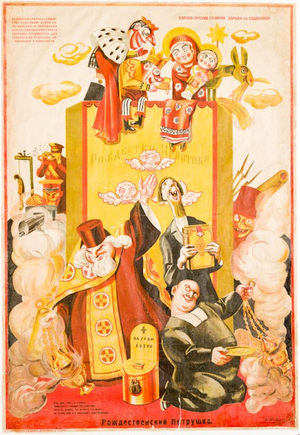
Mass enthusiasm and excesses of violence characterise our image of totalitarian dictatorships. The research focus "Intoxication and Dictatorship" examines the emergence of this modern combination of experiences of dissolution and mobilisation for radical political goals. In the political use of the "intoxication" metaphor in National Socialism and in the Soviet Union, the intricate paths of ecstasy discourses and practices are traced. In the process, differences between the National Socialists' delimiting intoxication and the revolutionary, disciplined enthusiasm of Stalinism come to light. The disruptive potential and dangers that states of intoxication such as alcoholism and escapism pose for dictatorial regimes are also the subject of this research focus.
Publications at the end of project
Monographs and edited publications
Soviet Mass Festivals, 1917-1991 [English translation of The Soviet Mass Festival], Pittsburgh: University Press, 2013.(upittpress.org/books/9780822962397/)
Das sowjetische Massenfest, Hamburg: Hamburger Edition, 2006(www.hamburger-edition.de/buecher-e-books/artikel-detail/d/2278/Das_sowjetische_Massenfest_%28Print%29/156/).
Fest und Diktatur / Festivals and Dictatorship, edited together with Dietrich Beyrau, Munich: C. H. Beck, 2006 (Journal of Modern European History, 3:1).
Intoxication and Dictatorship. Inszenierung, Mobilisierung und Kontrolle in totalitären Systemen, edited together with Árpád von Klimó, Frankfurt/Main: Campus Verlag, 2006(www.campus.de/buecher-campus-verlag/wissenschaft/geschichte/rausch_und_diktatur-2821.html).
Rausch und Diktatur, edited together with Árpád von Klimó, Berlin: Metropol, 2003 (Zeitschrift für Geschichtswissenschaft, 51:10).
Essays
"Public Body. Mass festivals", in: Media and Communication in the Soviet Union (1917-1953). General Perspectives, edited by Kirill Postoutenko, Alexey Tikhomirov and Dmitri Zakharine, London: Palgrave Macmillan, 2022. pp. 149-164.
"Creating a Soviet Festival Culture - Forging a New Civilisation: Mass Celebrations and Inner Sovietisation", in: Vielfalt der Disziplinen - Einheit des Kulturbegriffs? Symbols, Approaches, Perspectives, Discourses, edited by Caroline Kolisang, Bielefeld 2020, pp. 127-143.
"Neue kulturgeschichtliche Perspektiven auf autoritäre Regime", in: Diktaturen. Perspektiven der zeithistorischen Forschung, edited by Johannes Hürter and Hermann Wentker Berlin: De Gruyter/Oldenbourg, 2019, pp. 99-108.
"Empty 'spaces of jubilation'. On the Erosion of the Campaign Public Sphere in the Late Soviet Union", in: "Developed Socialism" in Eastern Europe. Labour, Consumption and the Public Sphere, edited by Nada Boškovska, Angelika Strobel and Daniel Ursprung, Berlin: Duncker & Humblot, 2016, pp. 83-108.
"Die Renaissance des Ausnahmezustands im "Zeitalter der Stabilität": Zur sowjetischen Mobilisierungsdiktatur und der Krise des Staatssozialismus in der Breschnew-ra", in: Ausnahmezustände. Entgrenzungen und Regulierungen in Europa während des Kalten Krieges, edited by Cornelia Rauh and Dirk Schumann, Berlin: Wallstein, 2015, pp. 92-112.
"Writing a Cultural History of Stalinism in Post-Soviet Times", in: Revista de Historiografia, 10:VI (1/2009), pp. 16-25.
"Intoxication and Dictatorship. Emotions, Experiences and Stagings of Totalitarian Rule", together with Árpád von Klimó, in: Rausch und Diktatur. Inszenierung, Mobilisierung und Kontrolle in totalitären Systemen, edited by Árpád von Klimó and Malte Rolf, Franfurt/Main: Campus Verlag, 2006, pp. 11-43.
"Expression of Enthusiasm and Emotional Coding in Dictatorship - The Stalinist Soviet Union", in: UCLA Center for European and Eurasian Studies. Working Papers, December 2004, Paper 3(repositories.cdlib.org/international/cees/wp/3).
"Rausch und Diktatur", edited together with Árpád von Klimó, in: Zeitschrift für Geschichtswissenschaft, 51:10 (2003), pp. 877-895.