

Amphibolite
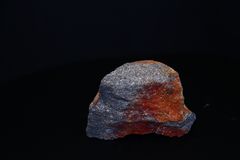
Amphibolite
Amphibolite
|
| |
|---|---|
Colour, properties:
|
Colour grey, grey-green to dark green, green-black. Main constituents are hornblende and plagioclase feldspar; secondary constituents are biotite, chlorite, garnets, epidote, zoisite. Structure usually massive, fine- to coarse-grained. Individual crystals (so-called porphyroblasts) are noticeably larger than the groundmass. Slatey varieties represent transitional members to related rocks. Amphibolite is very strong and weather-resistant. |
Formation:
|
Through intensive transformation (metamorphosis) from rocks low in silica (e.g. gabbro, basalt, diabase) or marls as a result of high pressures and high temperatures. Genetically related to amphibolite is eclogite, which is rare but very decorative due to the red garnets that are always embedded in it. |
Locations:
|
Black Forest, Spessart, Fichtelgebirge, Erzgebirge, Austria (Hohe Tauern), Switzerland (St Gotthard massif), Scandinavia |
Products: |
Crushed gravel for heavy-duty use. Split grades are used as floor and decorative slabs. |