

Species loss
Kontakt
Contact
Dr. Sibet Riexinger
Public Outreach
Room: Wilhelmshaven, EG 004
Room: Oldenburg,
Phone: +49-(0)4421-944-113 / (0)441-798 8113
Dr. Sibet Riexinger
Öffentlichkeitsarbeit
Raum: Wilhelmshaven, EG 004
Tel: +49-(0)4421-944-113 / (0)441-798 8113
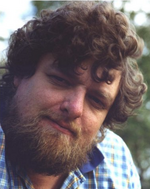
Biodiversity is declining rapidly. (Anzeiger für Harlingerland, 10/07/2014)
Species loss
Dramatic species decline continues
Lecture by ICBM Director Helmut Hillebrand at Sparkasse Wittmund
The world continues to lose species at a dramatic rate. At the invitation of University Ambassadors Heinz Feldmann and Henning Schulz, planktologist Professor Dr Helmut Hillebrand revealed why this concerns us all to an audience of around 40 people on 8 July at the Wittmund Sparkasse. A decline in algae species and invertebrates has been observed for years. This has a negative impact on the stability of ecosystems, with an influence on the production of biomass and ultimately also on the production of oxygen, which is important for humans and animals.
Initially, plant species and smaller animals weaken, but later larger animal species also die out. Hillebrand believes that the driving force behind the decline in biodiversity is the general change in habitats due to climate change, environmental pollution and overexploitation, exacerbated by the introduction of alien species. These species enter foreign ecosystems through ballast water, for example, where they spread and cause damage by displacing native species. Since the 1970s, biodiversity has decreased by a fifth. Politicians have recognised the problem. So far, however, their efforts to preserve the current diversity of species have been unsuccessful.
The Institute of Chemistry and Biology of the Marine Environment (ICBM), of which Hillebrand is currently Director, is currently conducting a research project on biodiversity in collaboration with the University of Göttingen. "BEFmate", as the project is called, aims to clarify, among other things, whether the decline in species on land and in the sea has similar effects.
A 13.5 cubic metre "metal island" is currently being constructed off Spiekeroog as part of the project. Ultimately, six of these artificial islands will simulate different elevation levels with tidal mudflats. Six further artificial islands contain salt marsh sods. These artificial transition areas from land to water will be analysed for changes over the next three years.