
Schultz, Wolfgang-Andreas
Schultz, Wolfgang-Andreas
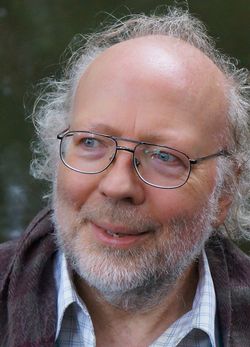
Statement
What happens when the West loses its power to define
what is "modern"? Globalisation could have surprising consequences ...
Biography
Wolfgang-Andreas Schultz, born in Hamburg in 1948, studied musicology and philosophy in Hamburg, then composition and music theory with Ernst Gernot Klussmann and György Ligeti, whose assistant he became in 1977. From 1988 to 2016, he was Professor of Music Theory and Composition in Hamburg. He has written numerous works that have been performed in Germany and abroad, including operas, symphonies, solo concertos and chamber music. Several CDs of his music have been released, most recently: "Japanese Landscapes" (C2Hamburg 2013). Publications: "Das Ineinander der Zeiten - Kompositionstechnische Grundlagen eines evolutionären Musikdenkens" (Weidler-Verlag). In 2014, Schott-Verlag published the most important music-philosophical texts as a book entitled "Trauma.Avantgarde.Spiritualität - Vorstudien zu einer neuen Musikästhetik", and in 2018 Europa-Verlag published the book "Die Heilung des verlorenen Ichs - Kunst und Musik in Europa im 21. Jahrhundert". (www.WolfgangAndreasSchultz.de)
Selection of works
Stage works:
"Das Federgewand", chamber opera based on a Japanese no-play (1978)
"Talpa", chamber opera based on a story by Juan Rulfo (1979)
"Sturmnacht", opera in 2 acts, text by Hanns-Josef Ortheil (1980 - 82)
"Achill unter den Mädchen" opera in one act, text by Hanns-Josef
Ortheil (1993 - 95)
Orchestral works:
"Shiva", dance poem for flute and orchestra (flute concerto, 1990 - 91)
1. Symphony "The Voices of Chartres" (1998 - 99)
4. Symphony "The Voices of Andalusia" for soprano and orchestra (2005 - 06)
"Transfiguration", picture description after Raphael for orchestra (2006)
"Sakuntala", Indian legend for violin and orchestra (violin concerto,
2010 - 11)
Chamber and piano music:
"Capriccio notturno" for wind quintet (1984)
"Mein junges Leben hat ein End" - Totenritual, Fantasie für Klavier
(1995 - 96)
"Japanische Nebelandschaft" for flute solo (2003)
3. Streichquartett "Landschaft der Horchenden - Vier Menschen (2004 - 05)
"Bilder auf dem Grund des Sees", quartet for flute, violin, viola and
violoncello (2009 - 10)
"Landschaft mit der Verstoßung der Hagar", quartet for piano,
violin, viola and violoncello (after Claude Lorrain, 20011 - 12)
"Indras Netz" - a cycle for piano based on the Kegon Sutra (2012)
"Krishnas Verwandlungen" for flute and piano (2015 - 16)
Variations on a theme by Bach for piano (2016)
"Im Blick der Bilder", 5 piano pieces based on paintings by Lorrain,
Tintoretto and C.D. Friedrich, 2018)
Globalisation and new music
There is no such thing as "music" and "ethnic music". Classical and modern
music are the "ethnic music" of Western societies. We
will have to meet the music of other cultures at eye level.
In the West, a way of thinking has developed that isolates the individual from its
relationships, while almost all other cultures seek to understand the
individual precisely through its relationships -
essentialist versus relational thinking. In the modern age of the 20th
century, especially in the avant-garde movements,
essentialist thinking also affected music, most strongly in
serialism, where the individual tone with
its physical properties, detached from all relationships, was at the centre. Detaching sounds from
contexts and from all meanings was misunderstood as "liberation"
and led to only the "material" being in the foreground
.
Saying goodbye to this way of thinking and putting relationships back at the
centre opens the door to new connections to our own
tradition and to the music of other cultures. The aim is neither to
withdraw to the European tradition, nor to say goodbye to
it, but to enrich it through encounters with other
cultures. A beautiful image for this comes from the East:
"Indra's net". There, consciousness is compared to a network of pearls
that all have their own identity and at the same time reflect all
others within them.
Wolfgang-Andreas Schultz