Sparrer
Sparrer
Statement
It's about memorialising smaller and larger "treasures" that we think are worth remembering.
Credo
It is not easy to "read" your own biography and to know about your own gift. All my self-appointed tasks revolve around the communication of music. This applies in particular to my work on the loose-leaf encyclopaedia "Komponisten der Gegenwart", the 67th instalment of which is now being published after 28 years. I was lucky enough to meet composers such as Isang Yun and Alfred Schnittke, who had important things to say and whose works it is hoped will become more and more widely known. If it were possible to filter out from the rubble of interchangeable musical products those pieces and their composers that one would wish to be remembered and perhaps even performed and heard again (or continue to be performed and heard), then this work would have fulfilled its purpose.
The linguistic communication of music is primarily about grasping the original intentions of a composer and tracking them down in the work, ultimately always about "analysis and value judgement", but not just about phenomenological descriptions or even vain self-portrayals, as has often become common today.
Works written in the second half of the 20th century have fallen out of the repertoire of cultural orchestras; this is partly due to their level of difficulty, a lack of knowledge and historical awareness as well as structural circumstances such as reduced rehearsal times. The fact that music is now more often confused with sheer entertainment than in the past does not exactly make it easier to engage with works that were once considered "new".
Biography
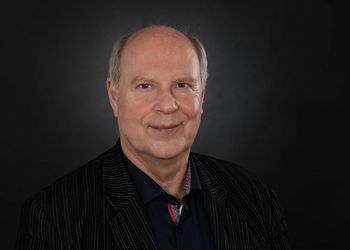
Walter-Wolfgang Sparrer, born in Mainz in 1953, studied school music and musicology (with Carl Dahlhaus), German language and literature, history and philosophy in Berlin from 1973-79 and has worked as a freelancer ever since. Numerous radio programmes, lectures and essays on new music. Together with Hanns-Werner Heister, he edited the loose-leaf encyclopaedia Komponisten der Gegenwart (Munich: edition text + kritik 1992ff.). The lexicon has quickly established itself as a standard work on contemporary music; it currently (Aug. 2020) comprises 67 volumes in ten folders with texts and material on more than 1200 composers from all over the world.
Since the early 1980s, numerous commentaries on Isang Yun's music have been written in collaboration with him. In 1987, together with Hanns-Werner Heister, he published the anthology Der Komponist Isang Yun (Munich: edition text + kritik 1987; revised 2nd edition 1997). In order to preserve and pass on the performance practice of Isang Yun's music and to research his work and influence, he founded the Internationale Isang Yun Gesellschaft e. V. in 1996 after the composer's death, whose yearbook Ssi-ol and a CD series he also publishes. Interview biographies on Toshio Hosokawa(Stille und Klang, Schatten und Licht, 2012) and Walter Zimmermann(Ursache und Vorwitz, with Richard Toop, 2019), picture monograph on Isang Yun(Leben und Werk im Bild, 2020).
From the Tao. About Isang Yun
We do not know to what extent Yun as a composer thought within a system or systems, but it can be assumed that he favoured comparatively open guidelines and procedures, which allowed him a certain freedom of action and interpretation and permitted allusions. His written exploration of the traditional music of East Asia - China, Korea and Japan - began at the latest with the radio programmes he produced for Bavarian and West German radio in 1963. Pieces such as Bara (1960) and Loyang (1962) already refer to these traditions. The order in which the works were composed shows that Yun systematically avoided them: the reference to Buddhism in Om mani padme hum (1964) was followed by a reference to Taoism in the opera The Dream of Liu-Tung (1965), then to Confucianism and the Confucianist musical tradition in the orchestral piece Réak (1966).
The composer Yun avoided clear definitions and explanatory models; he reached and touched the extremes, but he was not interested in black or white, but in the shades, the spaces in between, balance and harmony. The fact that he referred to the Tao (Dao) has several different meanings. The religious strand as a popular belief, as the original folk religion, but also as the basis of East Asian thought, which historically and logically precedes Buddhism, is alluded to, for example, in the "Taoist didactic play" The Dream of Liu-Tung.
Above all, Yun referred to philosophical Taoism, to the reflection of the infinite relativity and relativisability of relationships and dialectical or polar opposites. He repeatedly referred to the writings, speeches and parables of Lao-tse (Lao-tzu, also: Lǎozǐ, 6th century BCE) and Chuang-tse (also: Chuang-tse, Chuang-tzu, Zhuāngzǐ, Zhuāng Zhōu, around 365 to 290 BCE). The central collection of sayings attributed to Lao-tse, the Tao-te-ching (Daodejing, also: Tao Te King), is said to have been compiled in the 4th/3rd century BCE. The hexagrams of the IChing are considerably older, dating back to the 3rd millennium.
Alchemical-medical Taoism focuses on the preservation of the life energy ch'i (also: qì), on a long life by harmonising the opposites of yin and yang. This is also echoed in the title of the oldest known ensemble piece in the Korean tradition: Sujech'ŏn roughly means "long life, as immeasurable as heaven"; Isang Yun translated this title as "long life, administered by heaven".
What we now define as Tao in Yun's work is initially nothing other than the relativity of the phenomena of yang and yin, macrocosm and microcosm, immobility - movement, etc. They can be related to polar or dialectical opposites, which can be interpreted musically and utilised almost indefinitely. [...]
(from: Isang Yun. Leben und Werk im Bild, Hofheim: Wolke 2020, p. 109)