
Schulz, Reinhard
Schulz, Reinhard
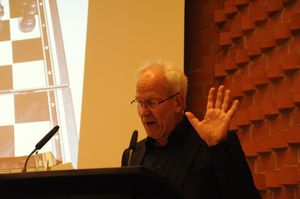
Credo
In the 21st century, changes in the education and research landscape are driving the self-abolition of the humanities. The modularisation of all courses stands in irreconcilable contrast to the interdisciplinary and hermeneutic reflection of humanities studies, which is dependent on the sometimes time-consuming experimentation, risking or even failing to find completely different ways of thinking and detours. The prescribed time cycle for students due to the so-called "workload", the constant confrontation with examination requirements and the associated pressure to organise the entire study period efficiently robs students of the desire for the superfluous, which they often do not know exactly where it should lead, but which is an indispensable element of studying in the humanities. The number of pages to be studied for prescribed texts in credit point-fixed modules puts the icing on the cake, because this stifles any independent student curiosity and the taylorisation of personal education that this entails puts a definitive end to that very education.
The situation is not much different in research either. A model adapted to the collective "piecemeal" nature of research in the natural sciences generally calls into question individual "single excellence" in research, as is still prevalent in the humanities, and elevates researchers working in collective networks to the ideal.
Short curriculum vitae in tabular form
Education and academic appointment
| 8 February 1951 | Born in Bielefeld |
| 1967–1971 | Apprenticeship at the municipal utilities in Bielefeld. |
| 1973 | Abitur at the Westfalenkolleg in Bielefeld. |
| 1974–1980 | Studied biology, philosophy and sociology at the University of Bielefeld. |
| 1980 | Passed the first State Examination to qualify as a secondary school teacher in biology and philosophy at the University of Bielefeld. |
| 1981–1982 | DAAD scholarship holder at the University of California, San Diego and Santa Cruz. |
| July 1984 | Awarded a Dr. rer. nat. degree. |
| January 1985 | Second State Examination for a teaching qualification at upper secondary level in Bremen. |
| 1985–2001 | Student and academic adviser at the University of Oldenburg and Oldenburg University of Applied Sciences |
| 1986–1996 | Lecturer in Philosophy in Oldenburg. |
| 1991–1993 | Research fellowship in ‘Philosophy of Nature’ as part of the VW preliminary programme for the promotion of the humanities. |
| 1996–2005 | Lecturer in Philosophy at the Catholic University of Applied Sciences in Vechta. |
| 1996–2016 | Director of the Karl Jaspers Lectures on Contemporary Issues at the Institute of Philosophy, University of Oldenburg |
| July 2000 | Habilitation to the degree of Dr. phil. habil. with the award of the venia legendi in ‘Philosophy’ at the University of Oldenburg. |
| November 2001–October 2006 | Project leader for the ‘Studium fundamentale’ programme. |
| May 2006 | Appointed as an adjunct professor of philosophy. |
| 2006–2016 | Acting holder of the Professorship for Didactics of Philosophy and Values & Norms. |
| November 2006 | 25th anniversary of service. |
| 02–07/08 | Organisation and scientific management of the Jaspers Year 2008. |
| 2009–2011 | Member of the University Senate of the University of Oldenburg. |
| 2010–2019 | Member of the DFG Research Training Group ‘Self-Formations: Practices of Subjectification from an Interdisciplinary and Historical Perspective’. |
| 2012–2019 | Co-editor of a 35-volume Karl Jaspers Collected Works (KJG). |
| 2012–2019 | Appointed to the Synod of the Evangelical Lutheran Church in Oldenburg. |
| 2013–2015 | Member of the University Senate of the University of Oldenburg. |
| November 2013 | Teaching Award for Socratic Dialogue. |
| 2014–2016 | Director of the Centre for Teaching and Learning (DiZ). |
| January 2015 | Elected Head of the ‘Jaspers Edition’ Commission at the Göttingen Academy of Sciences. |
| 2015–2018 | Member of the VW sustainability project ‘Reflexive Responsibilisation: Responsibility for Sustainable Development’. |
| July 2016 | Retirement from university service. |
| 1/2017 | Elected President of the IAJS (International Association of Jaspers Societies). |
Literature selection
Hermeneutics of the Natural Sciences. A Philosophy of Finitude from Historical, Systematic and Applied Perspectives. Würzburg 2004.
Why Metaphysics Anymore? Philosophising at the Crossroads of Construction and Destruction. In: Allgemeine Zeitschrift für Philosophie (AZP), Vol. 30, No. 3, 2005, pp. 253–269.
Schelling’s Philosophy of Nature and his Organic Conception of the Natural Sciences – Discontinuity or Continuity? In: Klaus Brinkmann (ed.): Critical Concepts: German Idealism. Volume Four: New Horizons and the Legacy of German Idealism, Routledge, UK, 2007, pp. 3–23.
Enabling the Future. Food for thought from fifteen years of Karl Jaspers’ lectures on contemporary issues. In honour of the initiator Rudolf zur Lippe, ed., Würzburg 2008.
Truth is What Unites Us. Karl Jaspers’ Art of Philosophising. International Jaspers Year to mark the 125th anniversary of Karl Jaspers’ birth, Göttingen (together with Giandomenico Bonanni and Matthias Bormuth), Göttingen 2009.
Questions of Natural Philosophy for the Life Sciences. In: Myriam Gerhard/Christine Zunke (eds.): ‘We must make science more human again.’ Aspects and Perspectives of Natural Philosophy, Kassel 2010, pp. 183–201.
Karl Jaspers: Fundamental Concepts of His Thought, Reinbek 2011 (in collaboration with Hamid Reza Yousefi, Werner Schüßler and Ulrich Diehl).
Faith, Science, and Philosophy. In: Helmut Wautischer, Alan M. Olson and Gregory J. Walters (eds.): Philosophical Faith and the Future of Humanity, Dordrecht, Heidelberg, London, New York, 2012, pp. 165–178.
Perceptual Belief and Problems of Making Practices Visible in the Tradition of Merleau-Ponty. In: Self-Formations. Practices of Subjectivisation from a Historical and Interdisciplinary Perspective, Bielefeld 2013, pp. 351–373.
Against Methodological Constraints: Experience, Practices and Observation. In: Allgemeine Zeitschrift für Philosophie (AZP), Vol. 39, No. 1, 2014, pp. 71–86.
Subjectification through or as experience? In: Thomas Alkemeyer, Volker Schürmann, Jörg Volbers (eds.): Thinking Practice. Concepts and Critique, Wiesbaden 2015, pp. 215–234.
Philosophising with Children as a Fundamental Pedagogical Approach and Teaching Principle. In: Bettina Uhlig and Ludwig Duncker (eds.): Questions – Critique – Perspectives. Theoretical Foundations of Philosophising with Children, Munich 2016, pp. 79–91.
A Critique of the Playful Judgement. On the Dialectic of Correcting (Certainty) and Understanding (Uncertainty). (Farewell lecture), Oldenburg University Lectures 209, Oldenburg 2017.
Knowledge and Belief. Reflections on the Scientific and Technological Zeitgeist and Jaspers’ Philosophical Belief. In: Jaspers Yearbook, Vol. 29, 2017, pp. 91–101.
Situated Freedom in Honneth, Foucault and Jaspers. In: Karl-Heinz Breier/Alexander Gantschow (eds.): From the Ethos of Freedom to the Order of Freedom. Statehood in Karl Jaspers, Baden-Baden 2017, pp. 31–40.
Practices of Understanding and Worldview Analysis. In: Stefania Achella/Jann E. Schlimme (eds.): Karl Jaspers and the Multiplicity of Worldviews, Diszipline Filosofiche XXVII, No. 1, Macerata: Quodlibet, 2017, pp. 159–174.
Can happiness be taught? In: Ulrike Graf, Susanne Klinger, Reinhold Mokrosch, Arnim Regenbogen and Sonja Strube (eds.): Learning to Live by Values. Justice – Peace – Happiness. Interdisciplinary Values Education, Vol. 5, Göttingen 2017, pp. 211–220.
Educational Theory and Competence Development. In: Norbert Jung/Heike Molitor/Astrid Schilling (eds.): What Shapes People. Critical Perspectives on Education for a Good Life, Opladen, Berlin, Toronto 2018, pp. 39–52.
Finding One’s Voice. In: Bernhard Möller (ed.): History of Education at the University of Oldenburg in Autobiographies, Vol. 3, Oldenburg 2018, pp. 190–213.
Practices of Normativity and the Normativity of Practices. In: Alexander Max Bauer/Malte Ingo Meyerhofer (eds.): Philosophy between Being and Ought. Normative Theory and Empirical Research in Tension, Berlin/Boston 2019, pp. 139–158.
On the Phenomenology of Seeing. In: Susanne Gottuck/Irina Grünheid/Paul Mecheril/Jan Wolter (eds.): Learning to See and Unlearning: Perspectives on Pedagogical Professionalisation, Wiesbaden 2019, pp. 25–43.
Philosophy of Nature. A Textbook and Study Guide, Tübingen 2020 (in collaboration with Thomas Kirchhoff, Nicole C. Karafyllis, Dirk Evers, Brigitte Falkenburg, Myriam Gerhard, Gerald Hartung, Jürgen Hübner, Kristian Köchy, Ulrich Krohs, Thomas Pothast, Otto Schäfer, Gegor Schiemann, Magnus Schlette, Frank Vogelsang), 2nd edition.
Making Thought Dance. A speech in honour of Rudolf zur Lippe. In: Matthias Bormuth (ed.): Open Horizon. Yearbook of the Karl Jaspers Society 6, Göttingen 2020, pp. 355–360.
Text excerpt
"Questions about how things should continue in the future under these conditions, whether an end to the pandemic is in sight soon or whether sustainable mitigations or ways out of the climate crisis can be found are omnipresent. They not only affect our questions and thoughts, but also directly affect our lives and behaviour, e.g. in the form of a politically imposed mask requirement that allows a gradual lifting of the quarantine that has become essential for survival and is intended to prevent our future worries about infection when we return to the social community. "For Heidegger, the problem of existence is linked to the problem of time." (Marquard 2013, p. 201). Indeed, Heidegger pays particular attention to time with regard to care. "The original unity of the structure of care lies in temporality" (Heidegger 1972, p. 327). This existentially conceived structure of care is directed towards a "Umwillen" (Heidegger) that has not yet occurred, but which can already decisively determine our present life in anticipation of the future. This structure of worry can also be applied to the future dynamics of the climate crisis and pandemic, as well as to our existential decisions that we have to make today in view of the hopes and worries associated with them. Heidegger takes up the immanent transcendence of life postulated by Simmel, which can "go beyond itself", and derives a priority of the future from it: "The "before" and "in advance" indicate the future, as which it makes possible in the first place that existence can be such that it is concerned with its ability to be. The future-based projection of oneself towards the "will of oneself" is an essential character of existentiality. Its primary meaning is the future." (Heidegger, ibid.).
In contrast, however, traditional philosophy, together with modern science, is dominated by the primacy of the present. The scientific discourse on sustainability is also determined by this, as long as it pays no or too little attention to the existential dimension. However, Heidegger's existential analysis (he speaks of "Daseinsanalytik"), which cannot be presented in detail here, criticises this modern philosophical and scientific tradition and its concept of the present as that "mode of time that essentially reduces what is to that which is absolutely within reach. [...] and thereby (calculating, planning, seeing through) subjects it to its power of disposal as that which is available." (Marquard 2013, p. 219) Here it is easy to recognise the claim to dominance of modern natural science, in which "man is conceived as one who primarily recognises, or more precisely: one who looks, who is subject to the pure contemplation of the pure (simultaneously ..."
(from: How much present can the future tolerate? 2020)