
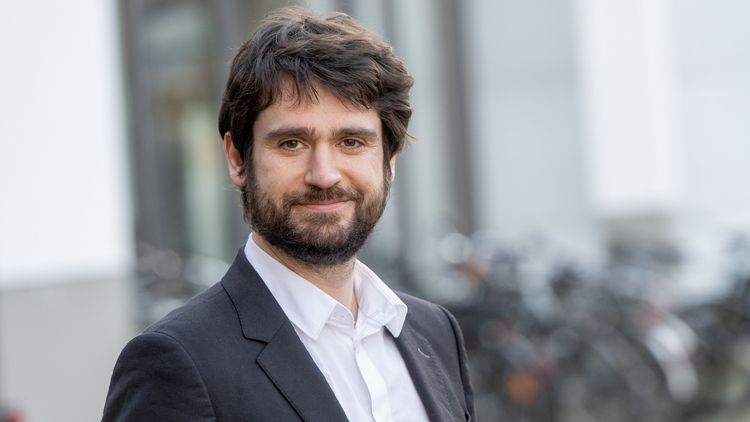


Since mid-August, people in Oldenburg have been able to explore 34 topics relating to the local elections thanks to a local election guide. Researchers from the university are providing academic support for the ‘Lokalomat’. In an interview, political scientist Marius Sältzer explains how the Lokalomat came about and how the researchers aim to strengthen the links between local politics and the public through a voluntary data contribution from eligible voters.
Mr Sältzer, Oldenburg’s ‘Lokalomat’ enables participants to find out the positions of almost all parties and voter groups in Oldenburg on selected issues and to compare them with their own views. Why is it important to have local election guides?
No two elections are the same. At local level, issues specific to that local authority come to the fore, whilst many topics covered by national voting guides do not fall within the remit of local authorities. To make an informed choice, it is essential to focus on the issues at the heart of local politics.
Who is the Lokalomat aimed at?
The Lokalomat requires no prior knowledge and explains which issues are at stake in the election. When evaluating the answers, participants can compare all the positions.
What is special about the Oldenburg voting guide, for example, compared to the ‘Wahl-O-Mat’ produced by the Federal Agency for Civic Education since 2002?
The basic approach is very similar to that of other voting guides. We collect political statements, present them to the parties and use statistical tools to perform a selection of the most informative ones. We then implement this as a website. The key difference lies in how the statements were initially formulated. The Federal Agency for Civic Education’s voting guide relies primarily on party manifestos. In local elections, these are often not available far enough in advance. The Lokalomat team has therefore involved a broad spectrum of interest groups to develop potential statements – such as associations, schools, the Chamber of Skilled Trades, the Council for People with Disabilities and the Diakonie. The Oldenburg Prevention Council organised this collaborative process.
How are you and your colleague Tonio Oeftering from the institute providing academic support for this process?
We helped with the selection of the propositions using statistical criteria. The aim was to be able to draw meaningful comparisons between political parties and voter groups. Many of the other questions developed are also fascinating. However, given the limited time available to eligible voters, it was important to identify the questions that would enable them to make the best-informed decision possible.
You also plan to analyse the participants’ responses. What is this about?
There are no representative surveys specifically for local elections. We are therefore asking those who use the Lokalomat to make their responses available for research purposes afterwards. Participation is, of course, voluntary and anonymous. Whilst we do not receive representative data, we can draw conclusions about the political preferences of people in Oldenburg through statistical weighting. We hope this will help to enhance the quality of democracy.
By making the results public and thus accessible to politicians?
Yes. At its core, democracy is based on an exchange of information between the public and politicians. Voters should be aware of the issues at stake in politics in order to form their own views. But politicians, too, should be aware of the public’s views and priorities. In local politics in particular, these connections are often not well established. There are no surveys through which local politicians can obtain representative data on the public’s wishes. Voters are significantly less informed about local political issues than they are about national politics. At the same time, outside the major cities there is virtually no media competition. A voting guide is intended to alleviate this problem. It shows voters what is at stake. And if many participants in the Lokalomat contribute their data, we will be able – for the first time – to analyse which issues and positions are truly important to the people of Oldenburg.
Interview: Constanze Böttcher