
Computing Science student Gözel Shakeri wants to make online grocery shopping more sustainable. The university is supporting her research with an Ossietzky Fellowship.
Shebuys second-hand clothes and furniture, eats an almost exclusively vegan diet and usually travels by train: sustainability plays a major role in the life of Computing Science professor Dr Gözel Shakeri. This is also true of her research: “My aim is to make online shopping more sustainable,” she explains. Whilst working as a postdoctoral researcher at the University of Glasgow in Scotland, she began developing a browser extension for the website of a British supermarket chain. Her open-source software, Envirofy, is designed to encourage
to shop for food in a more sustainable way. Even the first version, which shows how sustainable products are
, was a success: “In an experimental study, I found that
the carbon footprint per shop reduced by 14 per cent among the participants,” she explains.
In 2021, Shakeri moved to the University of Oldenburg to join the research groupled by media informatics expert Prof. Dr Susanne Boll. In March, she was awarded a ‘Carl von Ossietzky Young Researchers’ Fellowship’. This university-run programme supports highly qualified researchers at the start of their careers. In her project DioniSOS (Digital Behaviour Interventions for Sustainable Online Shopping), Shakeri aims to investigate the impact of digital behavioural interventions on the environmental footprint of food shopping over the next three years.
Her area of specialisation is human–computer interaction, i.e. the collaboration between people and computers and other automated systems. “The great thing about Computing Science is that it allows me to put into practice things that are really important to me,” she says. The researcher has specialised in sustainable human–computer interaction, a relatively new field of research.
The idea ofusingher expertise to promote more sustainableonline shoppingcame to her in 2020 during the pandemic. In the UK, where she was still living at the time, as much as ten per cent of food is bought online, and in Germany, too, more and more food is being sold via the internet. The potential for CO₂ savings is huge: according to a United Nations study, the food sector as a whole is responsible for a third of all greenhouse gas emissions. “Consumer behaviour offers a faster way to reduce the environmental impact of consumption than a long-term systemic shift towards more sustainable production methods,” Shakeri is convinced, citing a 2018 study which found that emissions from the food sector could be halved through relatively simple changes – such as a shift to a regional, predominantly plant-based diet.
Sustainable shopping should befun
However,various barriersstand in the wayof this, Shakeri reports: studies have shown that whilst many consumers would like to buy environmentally friendly products, they often do not know which ones these are. Another problem: “Many people associate sustainability with sacrifice rather than enjoyment.”
The first version of their browser extension primarily addresses the first point: the software indicates how sustainable different products are, for example by using traffic-light colours or by sorting products according to the CO₂ emissions they generate. Envirofy takes various aspects of sustainability into account, including not only greenhouse gas emissions but also the environmental impact of cultivation and transport, as well as social standards. The underlying information is sourced from publicly accessible, expert-verified databases.
In her new project, the Computing Science student nowaims to investigatefurther digital behavioural interventions. To this end, she is developing a recommendation system that offers more sustainable alternatives to the products selected by customers whilst they are shopping online. The system is intended to give consumers the opportunity to get creative – for example, by posting recommendations or background information on specific products, or uploading videos or GIFs. “Ideally, this will foster a sense of community that ultimately encourages more sustainable shopping,” she explains.
The researcher plans to workwith her team to design the new user interface and programme the necessary enhancementsbefore the end of this year. Experimental studies are then due to begin early next year. With several hundred test participants, she intends to investigate which interventions are most effective and at what stage of the purchasing process they should be deployed. Her aim is to lay the groundwork for an application for a third-party-funded junior research group.
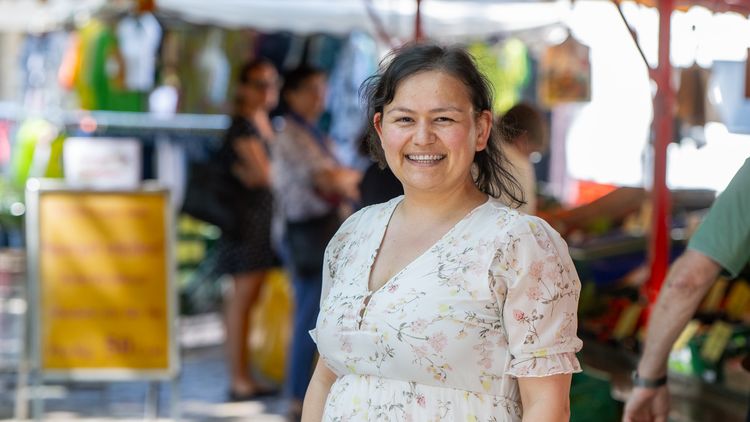
In Oldenburg, she hasnow settledinwellafter a somewhat bumpy start duringthe pandemic. “I love the cycling culture,” says the researcher, who comes from Frankfurt, a city that is not particularly cycle-friendly. She rarely uses an online shop to buy groceries – preferring instead to visit one of Oldenburg’s weekly markets.
This article first appeared in the July issue of the university newspaper UNI INFO .