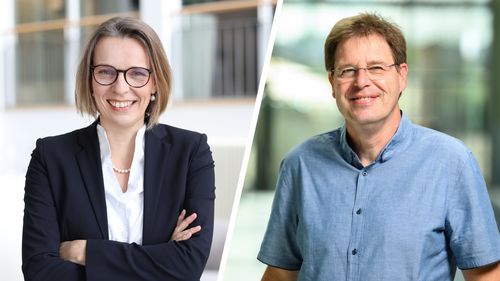
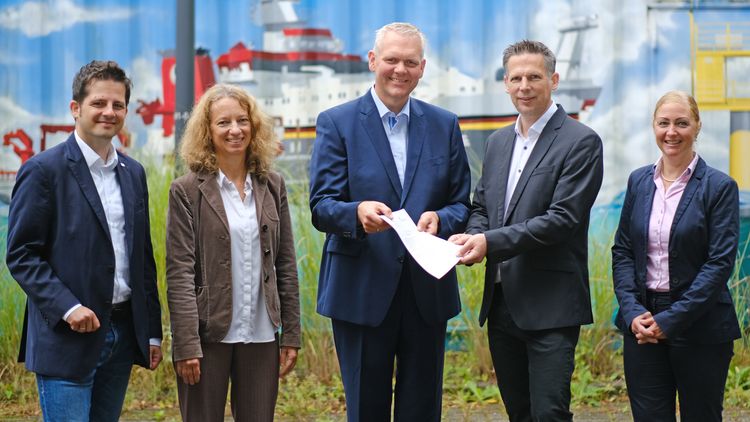


Using water as a resource more sustainably, distributing it more intelligently and protecting its quality: This is what researchers in the "Water Laboratory of the Future" want to achieve through digitalisation. The Lower Saxony research network, led by Oldenburg marine researcher Prof. Dr Oliver Zielinski from the Institute of Chemistry and Biology of the Marine Environment (ICBM), will begin its work at the Centre for Digital Innovations Lower Saxony (ZDIN) on 1 October.
The state of Lower Saxony and the Volkswagen Foundation are funding the project from SPRUNG (formerly Niedersächsisches Vorab) funds totalling 3.7 million euros over five years. The researchers at the Future Lab are using artificial intelligence and modern data science methods to automatically analyse and link data, uncover unknown correlations and identify potential sources of danger at an early stage.
Oldenburg researchers are significantly involved in two work packages: One sub-project, led by business informatics specialist Prof. Dr Jorge Marx Gómez, aims to prepare products that are created in the other work packages - such as programmes for predicting pollutant inputs or recording water consumption in agriculture - in a way that is suitable for users from the water industry and make them available on an open source platform. In a sub-project led by Zielinski, intelligent camera systems are to be developed to determine the flow rate of surface waters, for example, or to automatically identify pollution and extreme events.
Lower Saxony as a land of water
"Lower Saxony is a water state with a long coastline and many bodies of water," explains Zielinski, who also heads the "Marine Perception" research department at the DFKI Laboratory Lower Saxony, which is also involved in the Future Lab. The water industry has been very heterogeneous to date - characterised by numerous associations, authorities and small and medium-sized companies. "In the past, there was no jointly coordinated digitalisation strategy, but different, mostly locally or technically limited solutions - which were often very innovative, however," says the researcher.
Experts from nine research institutions in Lower Saxony now want to join forces in the Water Laboratory of the Future. The aim is to develop digitalisation solutions for all areas of water management together with 38 practical partners, from the Harz Mountains to the coast, from urban to rural environments, from surface waters to groundwater.
"We want to initiate a cross-thematic dialogue in the Future Lab and network the various stakeholders in Lower Saxony," says Zielinski. He sees enormous potential in the involvement of practice partners in particular to advance water management research and development and to develop intelligent, digital solutions.