

Twelve universities in Lower Saxony have worked on a joint framework for their greenhouse gas balance under the leadership of Oldenburg. Following the successful project completion, the web-based balancing tool developed can be used throughout the state in future.
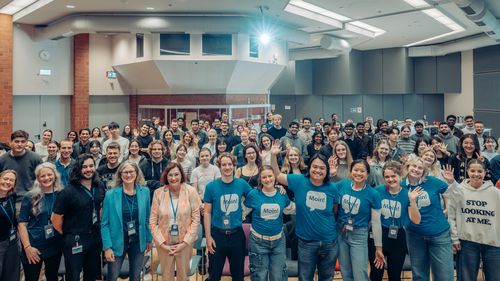
The successful completion of the COUNTS project was celebrated at the beginning of the week at the Lower Saxony Ministry for the Environment, Energy and Climate Protection in Hanover. For three years, the universities involved in the "Network Sustainability of Lower Saxony's Universities" (HochNiNa) project, led by the University of Oldenburg, had been working on the development of a standardised accounting framework for their greenhouse gas emissions. The centrepiece of the results is a web-based accounting tool that can now be made available to all universities in Lower Saxony. The Ministry of the Environment funded the project.
"We are very pleased to finally be able to carry out greenhouse gas balancing, which is important for professional sustainability controlling, in a standardised way and, above all, with significantly less effort," said project manager Anna Krämer, advisor for climate protection and sustainability at the University of Oldenburg. State Secretary for the Environment Anka Dobslaw described the COUNTS project as "an important step on the way to a greenhouse gas-neutral state administration". The project shows "that universities in particular are highly aware of their own role in causing greenhouse gas emissions and are very willing to do the necessary groundwork to reduce them in the future."
State Secretary for Higher Education Prof Dr Joachim Schachtner from the Ministry of Science added: "The COUNTS project shows how sustainability can be effectively implemented at universities: with reliable data, common standards and practical procedures. Climate protection requires not only conviction, but also a reliable basis for decision-making. COUNTS creates this transparency, reduces effort through the common tool and at the same time strengthens the autonomy of the universities. This turns sustainability controlling into a genuine management tool."
Expand and further disseminate CO2 balancing tool: University creates staff position for two years
In addition to Dobslaw and Schachtner, Jörg Stahlmann, Vice President for Administration and Finance at the University of Oldenburg, also took part in the panel discussion on "Managing climate protection effectively - the role of sustainability controlling in the future". "Our goal for the coming years is to expand the accounting tool with additional functions and make it available to even more universities. As the University of Oldenburg, we are creating a staff position for two years for this purpose," said Stahlmann. "Greenhouse gas balancing is not an end in itself, but an important basis for effective climate protection - and that is what we at the university and in the HochNiNa network are all about."
According to Section 3 of the Lower Saxony Climate Act, the state administration is obliged to achieve climate neutrality by 2035. In doing so, the state administration should set an example for society. As a relevant part of the state administration, universities are particularly in demand. The Sustainability Network of Lower Saxony's Universities is a cross-university network of sustainability officers and climate protection managers. COUNTS was the first externally funded project to further professionalise and strengthen cooperation in the university network, which was established in 2018.