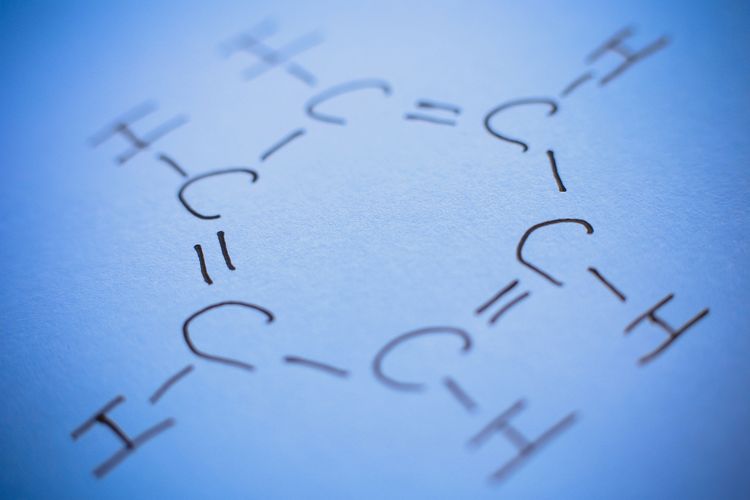

Mixtures of hydrocarbons - such as crude oil or natural gas - are the basis for many products in the chemical industry, from painkillers to plastic packaging. How can carbon-hydrogen bonds be specifically brought to direct reactions that would otherwise only succeed via detours?
This question is at the centre of the new Research Training Group "Activation of Chemical Bonds" at the university, which the German Research Foundation (DFG) is funding with around 3.5 million euros for an initial period of four and a half years. Answers to these questions could save material, energy and time in the chemical industry, pave the way for possible new materials and medicines or help to better combat oil disasters.
"From next autumn, twelve doctoral candidates will be able to conduct research in this highly promising field," says the spokesperson for the Research Training Group, Prof. Dr Sven Doye from the Institute of Chemistry. Up to twelve other doctoral students from the participating research groups at the Institute of Chemistry and the Institute of Chemistry and Marine Biology will also be involved in the Research Training Group.
"Activation of chemical bonds - this field of research, which may not sound very descriptive to laypeople at first, hides a socially, economically and ecologically important topic that is the focus of attention in chemistry worldwide," says University President Prof Dr Dr Hans Michael Piper. "Thanks to internationally renowned researchers, the Oldenburg Institute of Chemistry is ideally positioned to train the experts of tomorrow."
Under the aegis of at least eleven professors, young scientists will be able to approach the activation of the actually inert carbon-hydrogen bonds from different angles - for example against the background of certain catalysts or oil-decomposing bacteria. The aim is to develop and analyse new methods. "We also want to understand: how does this work and why does it work?" emphasises chemist Doye.
A so-called atomic economics approach will also play a role in the basic research carried out in the research training group: If a chemical reaction is designed in such a way that all or as many atoms as possible from the starting materials are also contained in the generated product, this reduces the amount of waste. In the laboratory, these may be small quantities, says Doye, "but in industrial production, we could be talking about tonnes of waste". The fact that some of these chemical waste products are also toxic speaks all the more in favour of nuclear economy: "It saves money and energy, minimises waste and thus protects the environment."
Research Training Groups promote young scientists at universities. The DFG's aim is to qualify doctoral students, support their scientific independence and prepare them for the complex labour market of "science". "Activation of Chemical Bonds" is one of currently seven DFG Research Training Groups at the University of Oldenburg.