
Spiekeroog
Spiekeroog
DynaDeep project
An observatory underground
A variety of chemical, geological and microbiological processes take place in the subsurface of North Sea beaches surrounded by waves, about which little is known. This dynamic underworld, in which salt and fresh water mix and which is known in technical terms as the "subterranean estuary", is the focus of a new research group led by hydrogeologist Prof. Dr Gudrun Massmann, who researches and teaches at the Institute of Biology and Environmental Sciences (IBU) and the Institute of Chemistry and Biology of the Marine Environment (ICBM) at the University of Oldenburg.
New DFG research group; to the press release of the university
DynaCom project
Rapid environmental changes - regional and local effects
When the environment changes rapidly, regional developments and local interactions determine how ecological communities change. On the one hand, it is primarily a question of how organisms spread and gain new territory for themselves, and on the other, how they compete with each other and how they are connected to each other in food webs.
Fundamental role in ecology
Important ecological theories reflect this interplay. However, what scientists around the world have observed in the field and in experiments to date does not allow them to substantiate the core statements on the regional and local interplay of biotic communities.
This is where the German Research Foundation's DynaCom research group comes in: it is developing a comprehensive understanding of the role that the regional spread of species and their local interactions play in the diversity of life ("biodiversity") and its links in the food web when landscapes change rapidly. In doing so, the scientists combine findings on the characteristics of living organisms ("trait-based ecology") and their links in the food web.
The approach
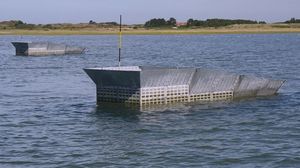
Artificial islands in the Wadden Sea are an ideal tool for observational and experimental research into biodiversity. Marine and terrestrial food webs and their transitions coexist in the coastal zone. In addition, the Wadden Sea is an extremely changeable habitat. It allows modelling to be tested outside of equilibrium conditions.
The DynaCom research group is investigating marine and terrestrial food web components ("primary producers", "primary consumers", "predators"), divided into sub-projects. The intersection of the results will make it possible to extensively generalise the patterns found with regard to different types of organisms. Based on the theoretical predictions, they will also be tested for larger ecological units - up to a global scale - and transferred if necessary.
Spiekeroog permanent measuring station
Continuity since 2002
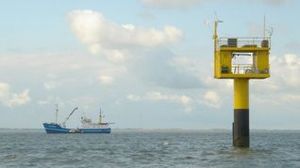
The complex interrelationships in the Wadden Sea ecosystem still need to be understood in greater depth. To this end, the ICBM at the University of Oldenburg has been operating a permanent measuring station in the mudflats between the East Frisian islands of Langeoog and Spiekeroog since autumn 2002. Initially, geochemists, sedimentologists, marine physicists, microbiologists and mathematical modellers researched the Wadden Sea with the help of this measuring station as part of the BioGeoChemie des Watts project. The work of the DFG-funded research group ended in 2009 and their interdisciplinary collaboration was honoured with the first North German Science Award in winter 2012. The 15th anniversary of the station was celebrated in 2017.
Key function in research and teaching
The extremely successful use of the large instrument made it possible to equip it with new technology and sensors as part of the COSYNA (Coastal Observation System off Northern and Arctic Seas) project at the Helmholtz Zentrum Geesthacht (HZG) and thus extend its service life.
The station is also involved in current ICBM joint projects, such as DynaCom and Macroplastics, as well as in co-operations with companies.
The station now plays a key role in current North Sea research at the ICBM. It is also used to train students at the University of Oldenburg.
Real-time data is available here.
New arrivals in the coastal region
More and more plant and animal species are reaching us as (often unintentional) travellers' souvenirs or via global trade routes. In the case of new plant arrivals, science refers to them as neophytes. They often adapt to their new habitat without any problems. However, if they spread massively in their new location, change it and displace native species, they are referred to as invasive.
The beaches, dunes and salt marshes of the East Frisian Islands and the north-west German coastal region are home to species that are strongly adapted to living there. If neophytes spread in their habitats, the specialised native species are particularly at risk as they cannot move to other areas.
Invasive neophytes have been identified and documented in the north-west German coastal region since the early 2000s. The geoecology working group is investigating, among other things, how the invaders affect the diversity of life and stability of coastal ecosystems. Management strategies are also being developed.
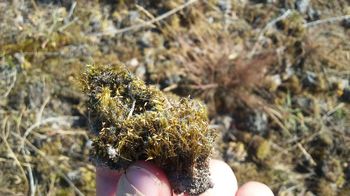
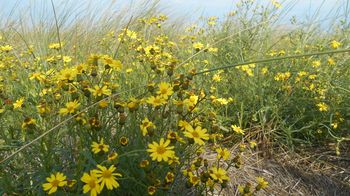
The neophytes studied on Spiekeroog include, for example, the cactus moss, which was originally found mainly in the southern hemisphere, and the narrow-leaved ragwort, which originates from South Africa.
Further information on the research work of the geoecology working group at the ICBM on neophytes can be found here.
The page is under construction
Here you will find public summaries of the research work of the Institute of Chemistry and Biology of the Marine Environment (ICBM) on the island of Spiekeroog at
. Further information will follow.
The additional links to the Institute's scientific pages will provide you with further information on ICBM research on the island:
Research centre in the Wittbülten National Park House
Work and accommodation options in the heart of the Wadden Sea World Heritage Site
