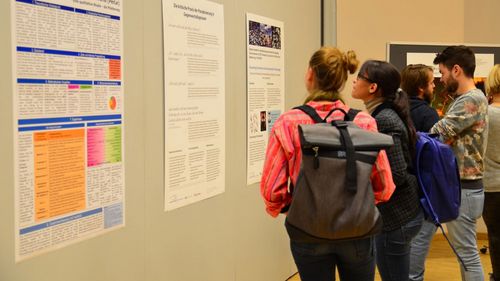
The "Oldenburg School for the Social Sciences and the Humanities" is entering its second round: from 18 to 29 September, four of the University's Schools are once again inviting participants to workshops, lectures, summer schools and masterclasses. Registration is now open.
It's a lateral move in the middle of the Master's programme, for some a leap in the dark: 275 student teachers at the university are currently completing their practical semester at primary, secondary and intermediate schools in the region. They are now teaching several days a week instead of…
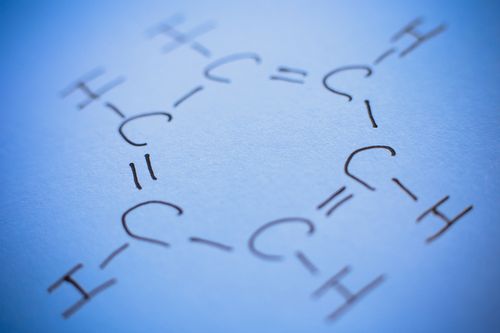
Mixtures of hydrocarbons - such as crude oil or natural gas - are the basis for many products, from painkillers to plastic packaging. How can carbon-hydrogen bonds be brought to direct reactions in a targeted manner? This is what doctoral students in a new Oldenburg research training group will soon…
How can the horror of the Holocaust be made comprehensible to children and young people today? One answer is provided by the "Heimatsucher" project, which is aimed at schools nationwide - and is now being incorporated into teacher training programmes in Oldenburg.
Interlinking science and business in the region even better: The new event series "Zukunft[s]unternehmen Nordwest" organised by the universities of Oldenburg and Bremen is dedicated to this goal. The kick-off event on 29 March in the BIS Hall will focus on "IT and technology in care".
Women think in a networked way, men think hierarchically
The "Women Professors Forum" - a network just for female professors - was launched at the university a few weeks ago. In this interview, founder Katharina Al-Shamery explains how she and her colleagues want to help young female academics.
Young researchers should no longer have to shuffle from short-term contract to short-term contract - this is one of the aims of the new Academic Fixed-Term Contract Act. But what does the amendment mean in practice for young researchers and those who want to employ them?
Irina Geibel and Anna Dierks have discovered a new chemical reaction - an absolute rarity these days. With their discovery, the two chemists could contribute to the development of new medicines.
Broad and multi-layered promotion of young talent: four of the university's Schools are currently inviting Master's students, doctoral candidates and postdocs to the first "Oldenburg School" for the humanities and social sciences. A series of events is open to all interested parties.
The handling of veterinary pharmaceuticals affects us not only as meat consumers, but also as users of water resources. Oldenburg hydrogeologist Victoria Burke analyses residues of veterinary pharmaceuticals from liquid manure in soil and groundwater - as head of a new junior research group.
Test possible products and services of the future and get to know the creative minds behind them: this is the opportunity offered by the university's second prototype party on 18 August. Developers, founders and start-ups will receive direct feedback on their ideas.
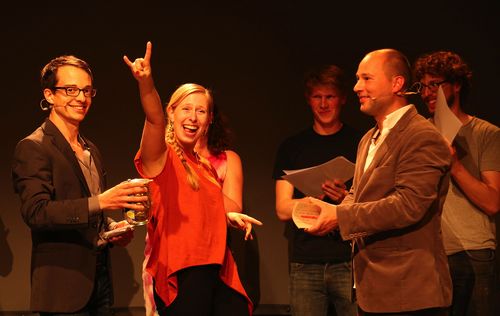
Science presented in an understandable and entertaining way: Bianca Brüggen, Maurits Halbach and Oliver Richters are the winners of the university's 6th Science Slam, which attracted around 150 spectators to the Exerzierhalle.
The state of Lower Saxony will be funding three newly designed doctoral programmes at the university in the coming years. A total of 36 scholarships are available for doctoral candidates. The programmes focus on marine analytics, the migration society and extracurricular learning.
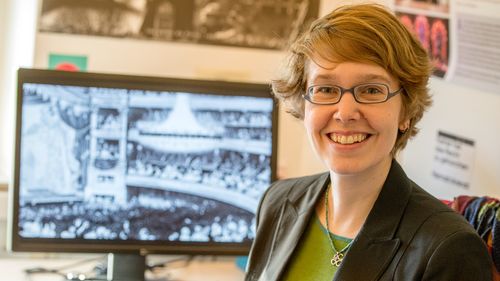
Anyone who watches operas, operettas or musicals often comes across historical musicians who are portrayed. In this way, the audience - quite incidentally - gains knowledge about these musicians. Musicologist Anna Langenbruch wants to find out how this works. The Emmy Noether funding programme for…
Fast-track to a doctorate after completing a Bachelor's degree: the university's fast-track programmes offer selected students this opportunity. Those who would like to work towards a Master's degree and a doctorate at the same time can apply until the beginning of March.
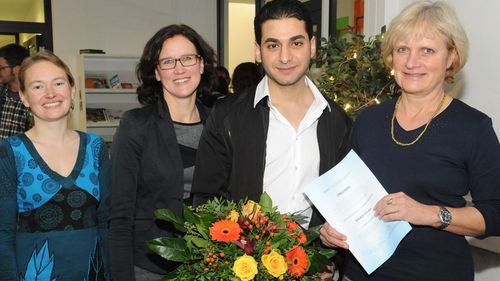
Syrian Feras Karakit, a doctoral candidate at the University of Oldenburg, has been awarded the German Academic Exchange Service (DAAD) prize for his above-average academic achievements and voluntary work at the university.
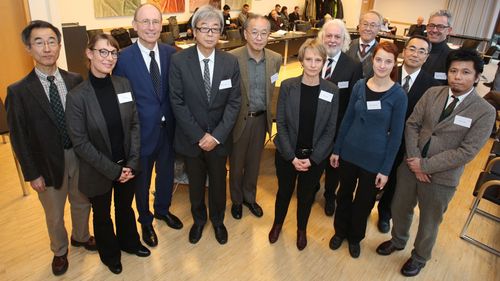
Corporal punishment in school sports, Aristotle's reflections on drunkenness or the colourful world of "Lolita": using examples like these, experts from Japan and Germany analysed the development of self-images and world views at the University of Oldenburg.
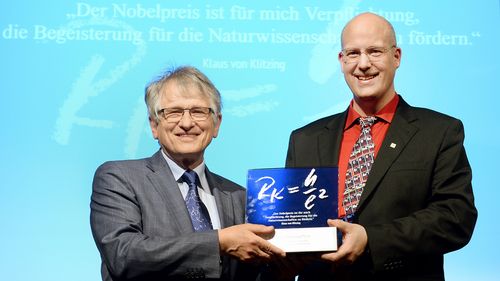
He has set up a professional laboratory, built an observatory and offers experimental workshops in his spare time: Teacher Christian Lorey from Würzburg receives the 2015 Klaus von Klitzing Award for special commitment to STEM subjects.
The Start-up and Innovation Centre (GIZ) invites those interested in founding a company with a "green" business idea to the Sustainable Entrepreneurship School.
How well does German science look after its young researchers? A panel discussion on 28 October is dedicated to the doctoral phase - with all its opportunities and risks.