

Whether it’s voice assistants such as Siri and Alexa, smart home systems, smart grids or autonomous vehicles: digitalisation is causing the physical and virtual worlds to merge ever more closely in our everyday lives. People and machines are collaborating ever more closely, and machines are increasingly taking on tasks that were previously carried out by humans. Researchers at the University of Oldenburg, in collaboration with partner institutions, are investigating the technical and societal challenges posed by these so-called ‘Human-Cyber-Physical Systems’ (HCPS) and how they can be designed responsibly through numerous projects. To consolidate these activities and create synergies, the University has established the interdisciplinary research centre ‘Human-Cyber-Physical Systems: Safety, Acceptance, Social and Cultural Embeddedness’ (FZ HCPS for short). Professors and early-career researchers from all six Schools are involved.
The central research focus of the interdisciplinary teams of scientists is the interaction between humans and machines at all levels. At the individual level, the question is how technical systems can best support each individual. On the one hand, the systems must be able to assess the user’s current capabilities in order to provide optimal support tailored to those capabilities. On the other hand, technical systems should convey complex information in a context-appropriate manner so that people can use this information to make the best possible decisions – for example, in medical diagnostics or in smart energy grids.
At the cooperative level, the scientists are investigating how groups of people can interact optimally with groups of technical systems – for example, in optimising traffic flow, safe environmental detection and lane planning for autonomous vehicles and ships, or the safe and efficient collaboration between teams of emergency services personnel, doctors and medical technology systems in the event of accidents and in disaster scenarios. The researchers are also focusing on the societal level: What ethical, moral and legal principles must autonomous technical systems adhere to? What kinds of decisions are they permitted to make, and which must remain the preserve of humans? The aim is to find ways to improve acceptance of and trust in autonomously operating cyber-physical systems and to draw up rules for their admission.
The research centre is thematically divided into four key areas: fundamentals, health, industry, and education and society. For their work, the researchers have access to a research infrastructure that is unique in Germany: in five real-world laboratories – so-called ‘living labs’ – they can test their developments in the fields of road and maritime transport, smart energy, smart health and smart cities, both in simulations and in real-world environments. In addition to research, the centre’s remit also includes supporting early-career researchers and training specialists and managers. With this in mind, it assists the Schools in developing degree programmes and degree programmes in the field of HCPS. Furthermore, doctoral programmes, research training groups and various continuing professional development formats are to be established.
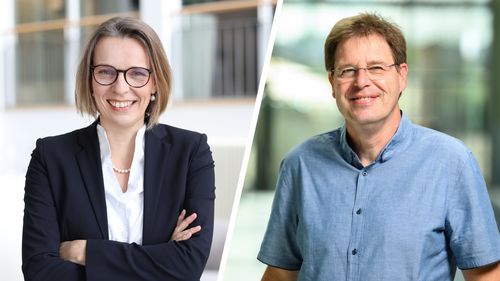
In addition to the University of Oldenburg, the research centre involves Jade University of Applied Sciences, the OFFIS Institute of Computer Science, the German Aerospace Centre (DLR) and the Fraunhofer Institute for Digital Media Technology IDMT. The Computing Science professor Prof. Dr Werner Damm was elected Director, whilst the psychologist Prof. Dr Christoph Herrmann serves as deputy Director (both from the University of Oldenburg).