

Lower Saxony is intensifying its research activities in the fields of digitalisation and artificial intelligence (AI): The previous branch of the German Research Centre for Artificial Intelligence (DFKI) in Osnabrück will be expanded into the DFKI Laboratory Lower Saxony with branches in Oldenburg and Osnabrück.
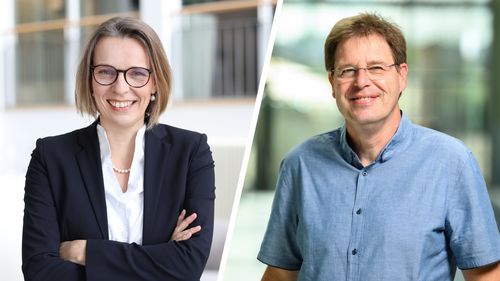
A contract to this effect was signed on 2 April by DFKI Managing Director and Chair Prof. Dr Jana Koehler and the two university presidents Prof. Dr Wolfgang Lücke and Prof. Dr Dr Hans Michael Piper in the presence of Lower Saxony's Science Minister Björn Thümler at the Hannover Messe. At its last meeting in November 2018, the DFKI Supervisory Board approved the establishment of new working groups in co-operation with the universities of Osnabrück and Oldenburg. The new DFKI Lab Lower Saxony began its work on 1 April.
"With our digitalisation offensive for Lower Saxony's universities and research institutions, we are enabling excellent basic research, bringing digital innovation from application-oriented research into practice and training the specialists for our digital future," said Science Minister Thümler at the signing of the contract. As part of the digitalisation offensive, the state government is also targeting funding of around 17 million euros over the next five years from the Volkswagen Foundation's Niedersächsische Vorab for the establishment of the DFKI Laboratory Niedersachsen.
The overarching research topic will be the perception of the environment by autonomous systems. The current "Plan-based Robot Control" research group in Osnabrück will be expanded to include three additional research groups based at the universities of Osnabrück and Oldenburg. "The DFKI Laboratory Lower Saxony will give us the opportunity to become an independent location for the largest German research institution for artificial intelligence alongside Saarbrücken, Kaiserslautern and Bremen," said Thümler.
DFKI CEO Prof Dr Jana Koehler explains: "Artificial intelligence is penetrating all areas of life and DFKI is one of the most innovative drivers of this technology. With our new branches in Osnabrück and Oldenburg and the partnership with the state of Lower Saxony, we are strengthening our research in the fields of robotics, environmental perception and digital business models, as well as in the application fields of agriculture, marine technology and production."
Oldenburg Computing Science and Marine Sciences
"DFKI's decision is an honour for Oldenburg's Computing Science and our marine sciences. Our scientists are already conducting intensive research in the field of artificial intelligence, particularly in the areas of maritime systems, energy-efficient transport and production systems as well as marine sensor technology, and are continuously expanding this research," explains the President of the University of Oldenburg, Prof Dr Dr Hans Michael Piper. The close links between the researchers and the regional economy also make it possible to open up new fields of application.
With the methods of artificial intelligence, it is possible to comprehensively recognise complex situations and environments - for example in production processes or in environmental monitoring. This lays the foundation for autonomous systems to act in an even more targeted manner in the future. The "Industry and Production" group at the University of Oldenburg, headed by the future holder of the "Applied Artificial Intelligence" endowed professorship, will focus in particular on production and transport systems. The aim is to automatically record and analyse the status of these increasingly digitalised systems with the help of AI. Computing Science expert Prof. Dr Axel Hahn is supporting the development of the working group, which is cooperating closely with the Centre for Digital Innovations Lower Saxony (ZDIN) and the Oldenburg computer science institute OFFIS.
The second Oldenburg focus is on the application of AI for marine sensor systems. Marine scientist Prof Dr Oliver Zielinski heads the new "Marine Environmental Perception" group. The aim of the researchers is to develop flexible observation systems that can act autonomously in various situations - for example to recognise damage to maritime installations or combat pollution in waters. The researchers are increasingly using AI methods to automatically record and classify data from various sensors used in the marine environment and to check the quality of the data.
AI Campus Osnabrück
"Artificial intelligence will change all of our lives forever. Shaping this change positively and at the same time transferring new ground-breaking developments from theory to practical application in close co-operation with the strong regional economy is the main task of Osnabrück University's AI Campus," emphasised University President Prof. Dr Wolfgang Lücke. "We are delighted that Osnabrück now has the opportunity to further develop the field of artificial intelligence together with DFKI, initially in two working groups."
The "Plan-based Robot Control" group, headed by Prof Dr Joachim Hertzberg, has been working at the DFKI Osnabrück branch office since 2011. The research question is how robots can act purposefully in natural environments over long periods of time and adapt their actions flexibly to the environment. This requires the ability to analyse sensor data from the robot environment online for relevant objects and events. The group's main area of application is agriculture; however, goal-orientated, environment-dependent actions are also required in flexible production, for example in collaboration between humans and robots.
The "Smart Enterprise Engineering" group focuses on the digitalisation of SMEs. Innovation potential, such as Industry 4.0 and smart services, is systematically tapped, mapped in economically relevant models such as hybrid value creation and transformed into digital training and further education scenarios for companies. The group uses artificial intelligence methods and new technologies such as augmented or virtual reality for this purpose. The team led by Prof. Dr Oliver Thomas from the Department of Information Management and Business Informatics at Osnabrück University is thus emphasising the role of AI in the implementation of innovative business models.