Rural peripheries - are they the "problem areas" that many have long perceived them to be or, on the contrary, the engine of dynamic development, for example for tourism, agriculture or the energy sector? A geographical symposium at the university drew a differentiated picture.
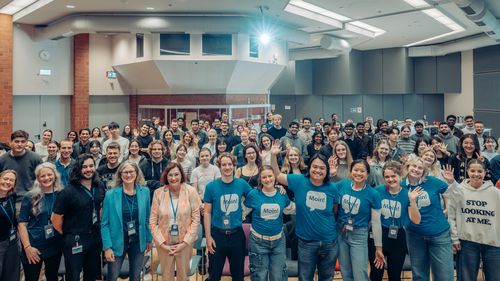
"European peripheries between stagnation and awakening": this was the title of the first annual conference of the German Society for Geography's Rural Areas Working Group at the University of Oldenburg. At the invitation of Prof. Dr Ingo Mose's Jean Monnet Chair "Europeanisation and Sustainable Spatial Development", around 60 geographers from Germany took part, as well as numerous guests from other European countries.
The development of peripheral areas has always been a central topic of research in rural geography. The former image of "problem areas" or even a "remnant" of spatial development is now much more differentiated, as various specialist presentations made clear. "Today, many peripheral regions are characterised by a high level of development dynamism, and in these rural regions 'on the edge', a large number of fields of action are currently under discussion," summarised Mose.
Several examples impressively illustrated the scope of development processes throughout Europe. For example, the Scottish Hebrides, which show how the local population can define their own priorities for regional development. "This is an expression of demands for participatory, self-responsible development that is aligned with principles of sustainability," says Mose. Projects for "soft" tourism, for the regional marketing of agricultural products, but also initiatives for renewable energies provided illustrative material for such approaches.
However, the latter play a not uncontroversial role in many regions, as was also reflected in the conference contributions. In addition to the opportunities offered by renewable energies, for example as a new source of income, the risks were also in the spotlight. "Discussions about the cornification of the landscape, the loss of valuable grassland biotopes and the feared sell-out to major international investors are not leaving various regions in north-west Germany untouched," emphasised Mose.
The consequences of demographic change also pose problems for rural peripheries. The continuing exodus of young people, the ageing of the remaining population and the resulting issues of public services are a concern for peripheral regions in France and Sweden as well as in Germany. However, the experts agreed that universal solutions are hard to find: "The challenge is rather to formulate answers adapted to the respective situation," says host Mose, who is also the spokesperson for the Rural Areas Working Group.
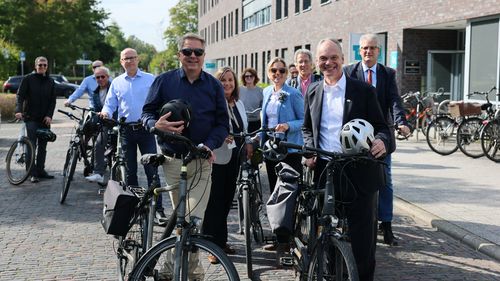
An excursion to the district of Wesermarsch and discussions with various regional development stakeholders there rounded off the three-day specialist meeting. In conclusion, the geographers saw the European networking and mutual learning that took place during the event as an immense opportunity to tackle future challenges facing rural peripheries. The various research approaches of geography can therefore pave the way for understanding processes of regional transformation and allow projections into the future - which is also important for policy advice and practice.
More on the topic
Working group "Applied Geography and Environmental Planning "
Contact
Prof Dr Ingo Mose
Institute of Biology and Environmental Sciences
Tel: 0441/798-4692
ingo.mose@uni-oldenburg.de