
Where gender burns...
Where gender burns...
Lecture by Amelie Kolandt: "God's work and the devil's contribution? On the Christian fundamentalist influence on the provision of abortions in Germany", 22.01.25

Lecture by Amelie Kolandt: "God's work and the devil's contribution? On the Christian fundamentalist influence on the provision of abortions in Germany"
22.01.25, 16-18 h, A01 0-006
The lecture will examine how Christian fundamentalist currents and conservative social attitudes influence the provision of abortions in Germany. Based on qualitative research involving 42 experts from the fields of medicine and counselling, key factors such as the general shortage of doctors, social stigmatisation and legal restrictions will be discussed.
A particular focus is placed on the levels of individual, institutional and socio-political influence exerted by Christian fundamentalists. The lecture will show how pressure on care providers and disinformation are making the care situation and working climate in the healthcare sector more difficult and what role alliances between Christian fundamentalism, radical conservatism and right-wing extremism play in this. A concluding outlook on future prospects for healthcare will outline the possible political and social consequences of these developments as well as possible strategies to strengthen reproductive rights and healthcare.
Short bio:
Amelie Kolandt studied musicology at the Humboldt University of Berlin and human medicine at the Charité. She has been working as a research assistant at the Institute of History of Medicine and Ethics in Medicine at Charité since 2022.
Lecture: Prof. Dr Heinz-Jürgen Voß: "Gender in biology and current social discussions", 01.07.24
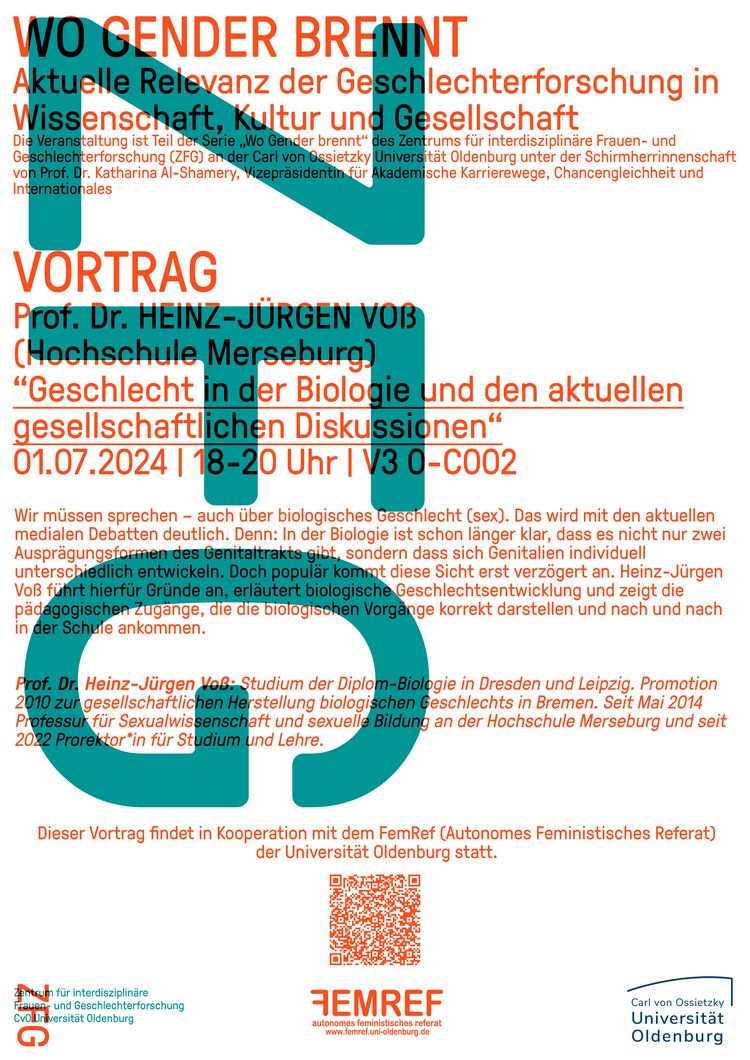
Prof. Dr Heinz-Jürgen Voß (Merseburg University of Applied Sciences): "Gender in biology and current social discussions", 01.07.2024 | 6-8 p.m. | V3 0-C002
We have to talk - also about biological gender (sex). This becomes clear with the current media debates. It has long been clear in biology that there are not only two forms of the genital tract, but that genitalia develop differently from person to person. However, this view has taken longer to become popular. Heinz-Jürgen Voß gives reasons for this, explains biological sex development and shows the pedagogical approaches that correctly represent the biological processes and are gradually arriving in schools.
Prof Dr Heinz-Jürgen Voß: Studied Diplom Biology in Dresden and Leipzig. Doctorate in 2010 on the social production of biological gender in Bremen. Professorship for Sexology and Sexual Education at Merseburg University of Applied Sciences since May 2014 and Vice-Rector for Studies and Teaching since 2022.
This lecture is organised in co-operation with the FemRef (Autonomes Feministisches Referat) of the University of Oldenburg.
Lecture: Prof.in Dr.in Christine Bauhardt: "Gesellschaftliche Naturverhältnisse und Queer Ecologies", 05.07.24
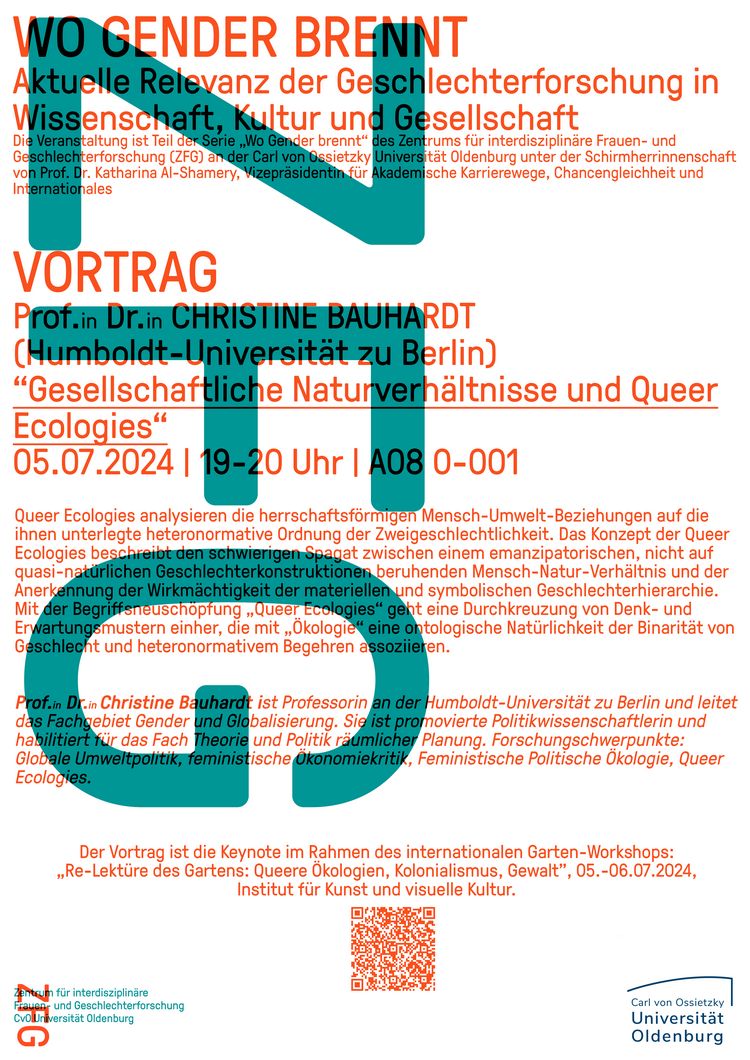
Lecture: Prof. Dr ChristineBauhardt (Humboldt-Universität zu Berlin): "Societal relations to nature and queer ecologies" 05.07.2024 | 7-8 pm | A08 0-001
Queer ecologies analyse the domination-shaped human-environment relationships in terms of the underlying heteronormative order of bisexuality. The concept of queer ecologies describes the difficult balancing act between an emancipatory human-nature relationship that is not based on quasi-natural gender constructions and the recognition of the effectiveness of the material and symbolic gender hierarchy. The neologism "queer ecologies" goes hand in hand with a crossing of thought and expectation patterns that associate "ecology" with an ontological naturalness of the binary of gender and heteronormative desire.
Prof.in Dr.in Christine Bauhardt is a professor at Humboldt-Universität zu Berlin and heads the Department of Gender and Globalisation. She holds a doctorate in political science and a habilitation in the subject of theory and politics of spatial planning. Main research interests: Global environmental politics, feminist economic critique, feminist political ecology, queer ecologies.
The lecture is the keynote at the international garden workshop: "Re-reading the Garden: Queer Ecologies, Colonialism, Violence", 05-06 July 2024, Institute of Art and Visual Culture.
Lecture: Prof. Dr Mathabo Khau: "Guilty by Birth! Womanhood, Motherhood and Femininity in South Africa",
27.06.24
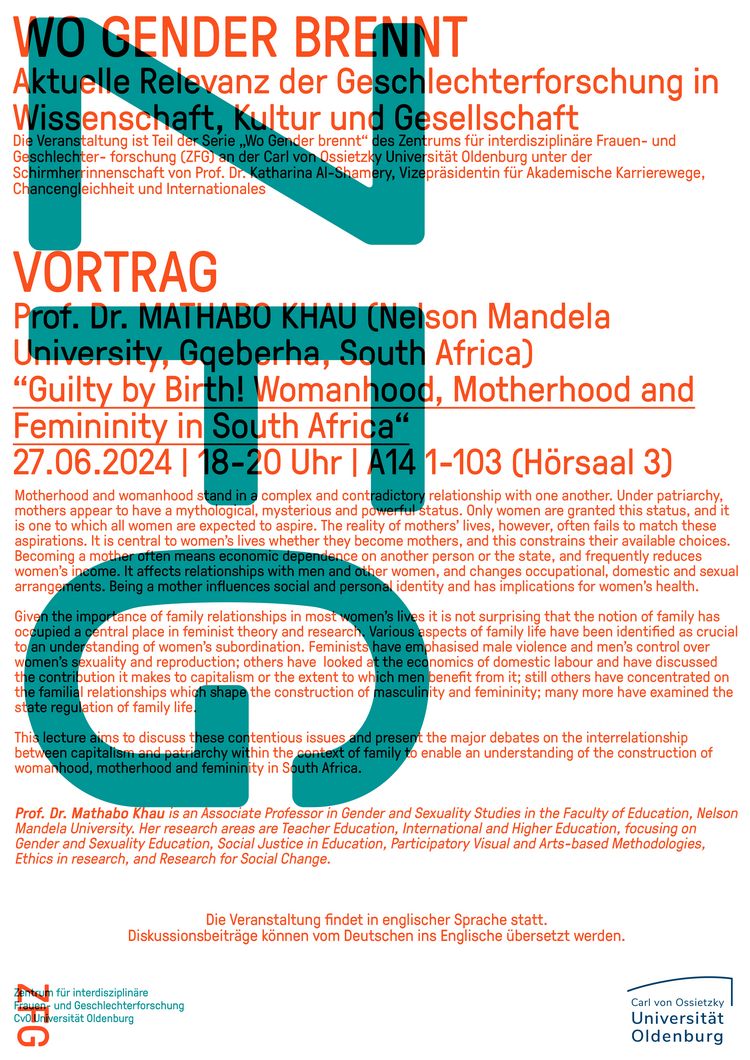
LECTURE: Prof. Dr MATHABO KHAU (Nelson Mandela University, Gqeberha, South Africa)
"Guilty by Birth! Womanhood, Motherhood and Femininity in South Africa"
27.06.2024 | 18-20 h | A14 1-103 (Lecture Hall 3)
Motherhood and womanhood stand in a complex and contradictory relationship with one another. Under patriarchy, mothers appear to have a mythological, mysterious and powerful status. Only women are granted this status, and it is one to which all women are expected to aspire. The reality of mothers' lives, however, often fails to match these aspirations. It is central to women's lives whether they become mothers, and this constrains their available choices. Becoming a mother often means economic dependence on another person or the state, and frequently reduces women's income. It affects relationships with men and other women, and changes occupational, domestic and sexual arrangements. Being a mother influences social and personal identity and has implications for women's health.
Given the importance of family relationships in most women's lives it is not surprising that the notion of family has occupied a central place in feminist theory and research. Various aspects of family life have been identified as crucial to an understanding of women's subordination. Feminists have emphasised male violence and men's control over women's sexuality and reproduction; others have looked at the economics of domestic labour and have discussed the contribution it makes to capitalism or the extent to which men benefit from it; still others have concentrated on the familial relationships which shape the construction of masculinity and femininity; many more have examined the state regulation of family life.
This lecture aims to discuss these contentious issues and present the major debates on the interrelationship between capitalism and patriarchy within the context of family to enable an understanding of the construction of womanhood, motherhood and femininity in South Africa.
Prof. Dr Mathabo Khau is an Associate Professor in Gender and Sexuality Studies in the Faculty of Education, Nelson Mandela University. Her research areas are Teacher Education, International and Higher Education, focusing on Gender and Sexuality Education, Social Justice in Education, Participatory Visual and Arts-based Methodologies, Ethics in research, and Research for Social Change.
The event will be held in English. Contributions to the discussion can be translated from German into English.
Lecture: Annika Artmann, Véronique Sina: "Privileged or marginalised? Class issues and the concept of Jewish Whiteness", 12.06.24, 6-8 pm

LECTURE
ANNIKA ARTMANN, B.A. ( Ruhr University Bochum)
Prof.Dr VÉRONIQUE SINA (Goethe University Frankfurt):
“Privileged or marginalised? Class Issues and the Concept of Jewish Whiteness”
12 June 2024 | 6–8 pm | A08 0-001
Despite the diversity of Jewish lived experiences, normative notions dominate the portrayal of Jewish people in broader societal discourse. Within the framework of these one-dimensional, ‘goy-normative’ stereotypes, Jewish people are often imagined as white and privileged and excluded from intersectional discourses. When it comes to Jewish people, issues of gender, sexuality, race, class, or even the multiple intersections of various identity categories and the resulting discrimination therefore rarely play a role. This lecture aims to explore this stereotypical conflation of Jewishness with whiteness and to highlight the relevance of the category of class, as well as other structural categories, to the concept of so-called ‘Jewish whiteness’. Against the backdrop of Jewish Visual Culture Studies, the talk will not only examine representations of ‘Jewishness’ in relation to class attributions in US television series and films. It will also demonstrate the extent to which (audio-)visual depictions of ‘Jewish Whiteness’ contribute to the current debate on antisemitism following 7 October.
Annika Artmann, B.A. ( she/her), is studying for a Master’s degree in Media Studies and Art History at Ruhr University Bochum and works as a student assistant on the DFG research project ‘Queering Jewishness – Jewish Queerness. Discursive Representations of Gender and ‘Jewish Difference’ in (Audio-)Visual Media’, led byProf.Dr Véronique Sina. Her Master’s thesis examines the construct of Jewish Whiteness in US television series and films.
Prof.Dr Véronique Sina (she/her) is a research fellow at the Institute for Theatre, Film and Media Studies at Goethe University Frankfurt, where she has been leading the DFG-funded research project “Queering Jewishness – Jewish Queerness. Discursive Representations of Gender and ‘Jewish Difference’ in (Audio-)Visual Media’. In the summer semester of 2023, she held the visiting professorship in Film Studies at Goethe University Frankfurt; prior to that, she was a visiting professor of Media Studies specialising in ‘Media Actors and the Media Public, with a particular focus on gender’ at Ruhr University Bochum.
This lecture is taking place in co-operation with the series of lectures: ‘Is it all a question of class?! Intersectional and queer perspectives in art and visual cultural studies’ at the Institute of Art and Visual Culture.
Lecture by Corinna Bath: "AI in an intersectional perspective: controversial practice of the present - liveable and desirable futures", 14.05.24, 6-8 pm

Lecture Dr.in-Ing Dr.in h.c. Corinna Bath (KoFo Netzwerk Frauen- und Geschlechterforschung NRW): "KI in intersectional perspective: Controversial practice of the present - livable and desirable futures", 14 May 2024 | 6-8 p.m. Senate meeting room (A14 1-111).
Since the publication of the chat program ChatGPT in autumn 2022, AI has aroused enormous media interest. While new potential applications are also being celebrated in the sciences, fears have been raised that AI will perpetuate social inequalities and discrimination. In her lecture, Bath will discuss what alternative technology designs could look like from the perspective of intersectional gender research and how they could be incorporated into corresponding ethical guidelines.
Dr.in-Ing. Dr.in h.c. Corinna Bath (Coordination and Research Centre of the Network Women's and Gender Studies NRW) is a mathematician, computer scientist and gender researcher; from 2012 to 2022 she held the Maria Goeppert-Mayer Professorship for Gender, Technology and Mobility; since then she has headed the Coordination and Research Centre of the Network Women's and Gender Studies NRW. For her "outstanding scientific achievements in the field of gender research and its integration in the technical sciences", she was awarded an honorary doctorate by the Graz University of Technology in 2022.
Lunchtalk: "Gender Studies & AI", 24.04.2024, 4-6 pm (ZFG)
Since the publication of the free chatbot ChatGPT in November 2022, artificial intelligence (AI) has become an increasingly hot topic of discussion. It is changing academic work and research. What does this mean for degree programmes and the field of gender studies?
At the lunchtalk "Gender Studies and AI" on 24 April 2024, 16:00-18:00 c.t. in the ZFG (A03 1-117), we want to discuss the following questions, among others
- what risks does AI harbour for scientific work? From the non-transparent black box with potential misinformation to the crisis of traditional scientific methods and critical thinking
- What opportunities does AI offer for the accessibility of university work? From facilitated research and inspiration for writer's block to potential use as an accessible teaching/learning tool in seminars
- What could be researched from a critical gender studies perspective? E.g. the (re)production of discriminatory biases by algorithms and the interaction with users.
- How can AI technologies support gender research?
Mo Haldenwang (no pronouns, tutorial on academic work in gender studies) will provide insights into examples of the use of AI. Pia Schlechter (she/they, ZFG) will briefly present the university's AI programmes.
We would like to invite all Gender Studies teachers, students and interested parties to an exchange. A short registration via is requested.
The Lunchtalk* is part of the event series "Wo Gender brennt. Current Relevance of Gender Studies in Science, Culture and Society" of the Centre for Interdisciplinary Women's and Gender Studies at the University of Oldenburg under the patronage of Prof. Dr. Katharina Al-Shamery, Vice President for Academic Career Paths, Equal Opportunities and International Affairs.
Lecture: René_ Rain Hornstein: "TIN vs Gender? An introduction to trans*, inter* and non-binary studies and their relationship to gender studies", 17.01.24, 4-6pm
Trans*, inter* and non-binary studies are relatively new fields of study - what exactly do they deal with? Who do they want to address? To what extent can they have the effect of introducing previously excluded content and dimensions of power into the academy? Are they different from queer studies? And what is their relationship to gender studies?
These and other questions can be discussed with René_ Rain Hornstein (pronouns: em/ none), scientist (TU Braunschweig), psychologist and activist in the field of trans*, inter* and non-binary rights.
Presentation as part of the interdisciplinary lecture series "Wo Gender Brennt. Current Relevance of Gender Studies in Science, Culture and Society" of the Centre for Interdisciplinary Women's and Gender Studies (ZFG) and the series of lectures of the B.A. Gender Studies "Doing Knowledge - Doing Gender. Inter- and transdisciplinary perspectives on gender studies".
Poster as pdf

Roundtable: Responsibility in Gender and Queer Studies, 24.06.23
Roundtable: "Responsibility in Gender and Queer Studies"
24.06.2023 | 16:30-18:00 Room A01 0-010a
PUMLA DINEO GQOLA (NMU), MATHABO KHAU (NMU), NAMUPA SHIVUTE (journalist), DEBORAH NYANGULU (University of Bremen), KARIN ESDERS (University of Bremen), Moderation: KÜBRA GÜMÜŞAY (Hamburg, writer, pol. scientist)
The event is part of the series "Where gender burns. Current relevance of gender studies in science, culture and society" of the Centre for Interdisciplinary Women's and Gender Studies (ZFG) at the University of Oldenburg under the patronage of Prof. Dr Annett Thiele, Vice President for Early Career Researchers and Gender Equality.
Short films and discussion: "Building Lives in the Context of Forced Migration", 11.6.23
SHORT FILMS AND DISCUSSION at cine k (Bahnhofsstraße 11): "Building Lives in the Context of Forced Migration"
11.06.2023, 3:00 pm
guest: KOLLEKTIV POLYLOG
Three Syrian women and two Nigerian refugee students from Ukraine will present short films about the lives of refugees in Berlin. These were created in 2022 in close collaboration between the Polylog collective, the Tubman Network Berlin and the participants of a film seminar at Freie Universität Berlin. After the presentation of the short films, we will discuss how empowerment of refugees can be achieved and what pitfalls need to be overcome, especially in the case of co-operation. The event will be held in Arabic, English and German. In co-operation with cine k, Radio Globale, City Friendship Oldenburg Afrin, Autonomous Feminist Department University of Oldenburg
Part of the event series "Colonial Continuities" at cine k
The event is part of the series "Where gender burns. Current relevance of gender studies in science, culture and society" of the Centre for Interdisciplinary Women's and Gender Studies (ZFG) at the University of Oldenburg under the patronage of Prof. Dr Annett Thiele, Vice President for Young Academics and Gender Equality.
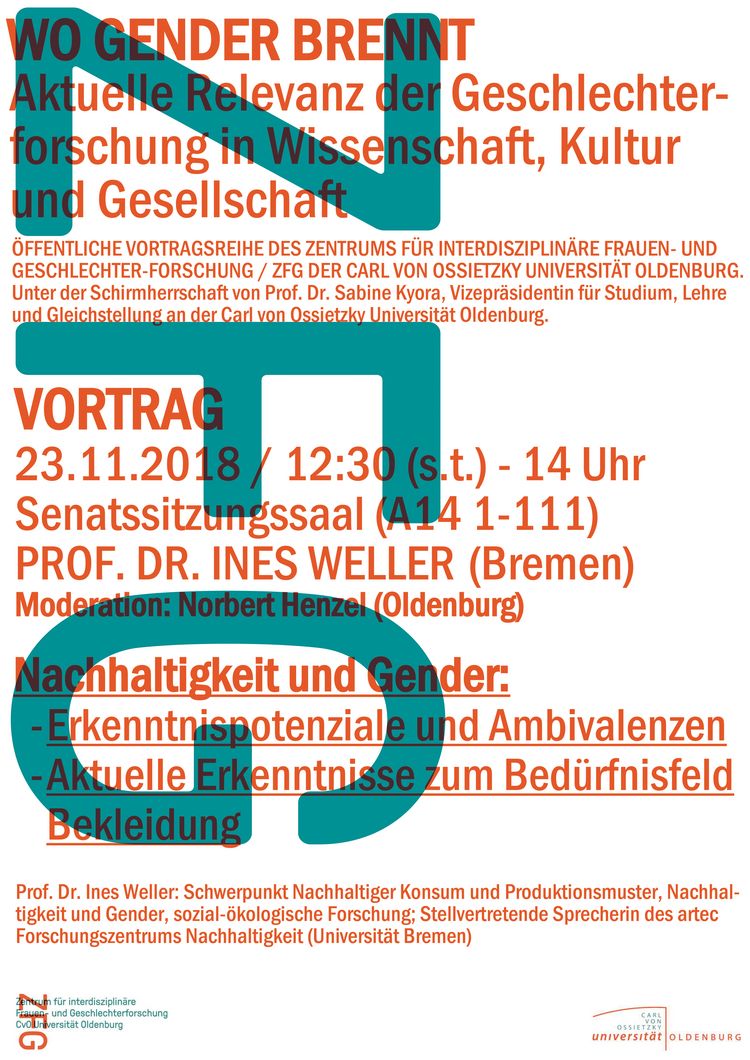
Lecture: Dr Olha Harmatiy: "The importance of science and science communication, and the role of gender in Russia's war against Ukraine", 23.11.22
Online lecture as part of the ZFG event series "Wo Gender brennt: Aktuelle Relevanz der Geschlechterforschung in Wissenschaft, Kultur und Gesellschaft" (under the patronage of Prof. Dr Annett Thiele, Vice President for Early Career Researchers and Gender Equality at the University of Oldenburg)
The following will speak:
Olha Harmatiy (Lviv Polytechnic National University, Ukraine / University of Tübingen, Germany): The importance of science and science communication, and the role of gender in Russia's war against Ukraine
On Wed, 23.11.2022 16:15 - 17:45, online presentation with subsequent discussion in A01 0-006. Or online participation under BBB.
Assoc. Prof. Dr Olha Harmatiy from the Department of Journalism and Mass Communication at the Lviv Polytechnic National University/ Ukraine is currently staying at the University of Tübingen/ Germany. She will speak about the current situation of Ukrainian academics inside and outside of the country and the role of science/ communication within the war. Furthermore, she will present observations regarding media coverage of LGBTQ military and volunteers' activity in the full-scale Russian invasion of Ukraine.
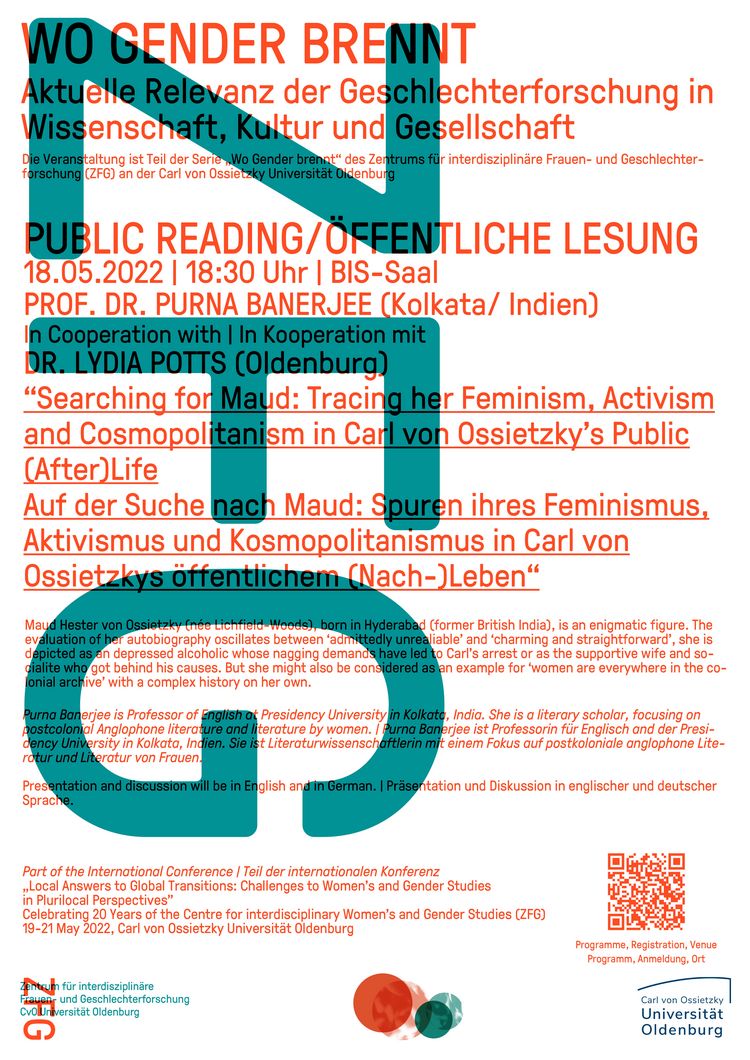
Public Reading/ Public Reading: "Searching for Maud: Tracing her Feminism, Activism and Cosmopolitanism in Carl von Ossietzky's Public (After)Life", Purna Bannerjee, 18.05.22
Public Reading/ Public Reading
18.05.2022 | 18:30 | BIS-Saal
PROF. DR. PURNA BANERJEE (Kolkata/ India)
In co-operation with | In co-operation with
DR. LYDIA POTTS (Oldenburg)
"Searching for Maud: Tracing her Feminism, Activism and Cosmopolitanism in Carl von Ossietzky's Public (After)Life /
Searching for Maud: Tracing her Feminism, Activism and Cosmopolitanism in Carl von Ossietzky's Public (After)Life"
Maud Hester von Ossietzky (née Lichfield-Woods), born in Hyderabad (former British India), is an enigmatic figure. The evaluation of her autobiography oscillates between 'admittedly unrealiable' and 'charming and straightforward', she is depicted as a depressed alcoholic whose nagging demands have led to Carl's arrest or as the supportive wife and socialite who got behind his causes. But she might also be considered as an example for 'women are everywhere in the colonial archive' with a complex history on her own.
Purna Banerjee is Professor of English at Presidency University in Kolkata, India. She is a literary scholar, focusing on postcolonial Anglophone literature and literature by women. | Purna Banerjee is Professor of English at Presidency University in Kolkata, India. She is a literary scholar, focussing on postcolonial Anglophone literature and literature by women.
Presentation and discussion will be in English and in German. | Presentation and discussion will be in English and in German.
Part of the International Conference | Part of the international conference
"Local Answers to Global Transitions: Challenges to Women's and Gender Studies in Plurilocal Perspectives" Celebrating 20 Years of the Centre for interdisciplinary Women's and Gender Studies (ZFG), 19-21 May 2022, Carl von Ossietzky University of Oldenburg.
The event is part of the series "Where Gender Burns" of the Centre for Interdisciplinary Women's and Gender Studies (ZFG) at the University of Oldenburg.
Queer(ing) Belongings in the Indian Nation-State. In/Visibilities in Digital and Physical Spaces, An Online Series of Listening, Talking & Viewing Rooms on Post/Decolonial Theories and Concerns, 29.10. & 15.11.2021

INVITATION
Gender on/ under fire:
QUEER[ING] BELONGINGS IN THE INDIAN NATION-STATE. IN/VISIBILITIES IN DIGITAL AND PHYSICAL SPACES.
An Online Series of LISTENING, TALKING & VIEWING ROOMS on Post/Decolonial Theories and Concerns
Gender politics in India have been intertwined with neoliberal politics especially since the 1990s. At the core of the national modernisation programme is the push for "Digital India". This provokes questions about inclusions and exclusions of queer people. Which obstacles and opportunities can be identified for queer people beyond their appellation as consumers and integration as human capital? What counter strategies have been developed? How do queer individuals in the Indian nation-state navigate in/visibility in online digital spaces and/or offline physical spaces? What are some modes of recognizing a multiplicity of gender and sexual identities that goes beyond Western ideas? What other modes of queer liberation are available to indigenous queer bodies from the 'global south' that depart from and problematise the western template of queerness? The emergence of Homo-Hindu-nationalism that has its roots in brahminical structures of caste oppression and colonial prohibitions on queer expression must also be questioned within this frame of modernisation.
We invite you to listen to, to talk about and to view a film in our event-rooms where we want to address these questions through an intersectional lens that attends to the confluence of gender, sexuality, class, caste and religion.
You can register now (see below).
PROGRAMME
29.10.2021
13:00 GMT/14:00 CEST/ 17:30 IST: Opening
Introduction by the organisers: Yashka Chavan (Mumbai/Münster), Baldeep Grewal (Mumbai/Potsdam), Katharina Hoffmann and Sylvia Pritsch (Oldenburg)
13:30 GMT/14:30 CEST/ 18:00 IST : "No vernacs, speak proper English - Class, Caste and Privilege in Digital Queer India"
Lecture by Rohit Dasgupta (School of Culture & Creative Arts, University of Glasgow)
Followed by a Q/A session
14:20 GMT/15.20 CEST/18:50 IST: "What does it take to survive? Towards a practice of abolition of transphobia"
Lecture by Vikramaditya Sahai (New Delhi)
Followed by a Q/A session
15.11.2021
13:00 - 15:00 GMT/14:00 -16:00 CET/ 17:30 -19:30 IST: Workshop
Workshop with Baldeep Grewal (RTG Minor Cosmopolitanism, University of Potsdam)
The workshop focuses on the film Papilio Buddha (Jayan K. Cherian 2013) that describes the mul-tilayered entanglements of sexuality, caste, and the fight for land rights in the Western Ghats of India. In this session, we will discuss how the issues of Dalit rights, ecological activism and queer liberation come together in the film. Participants must watch the film and fill out a short questionnaire prior to the workshop.
Film presentation at cine K; information as well as online access to the film will be available after registration.
To register, please send an e-mail to zfg@uol.de. We ask that you also indicate which events you will be participating in.
*Under the auspices of Prof. Dr Annett Thiele, Vice President for Early Career Researchers and Equal Opportunities, University of Oldenburg/ Germany
These events are the next chapter in the Indian-German Autumn School (Re-)Reading - (Re-)Writing: Postcolonial Theories in Critical Transnational Gender Perspectives (2019).
Current focal point: QUE(E)RULIERT!, 02-03.07.21, ONLINE
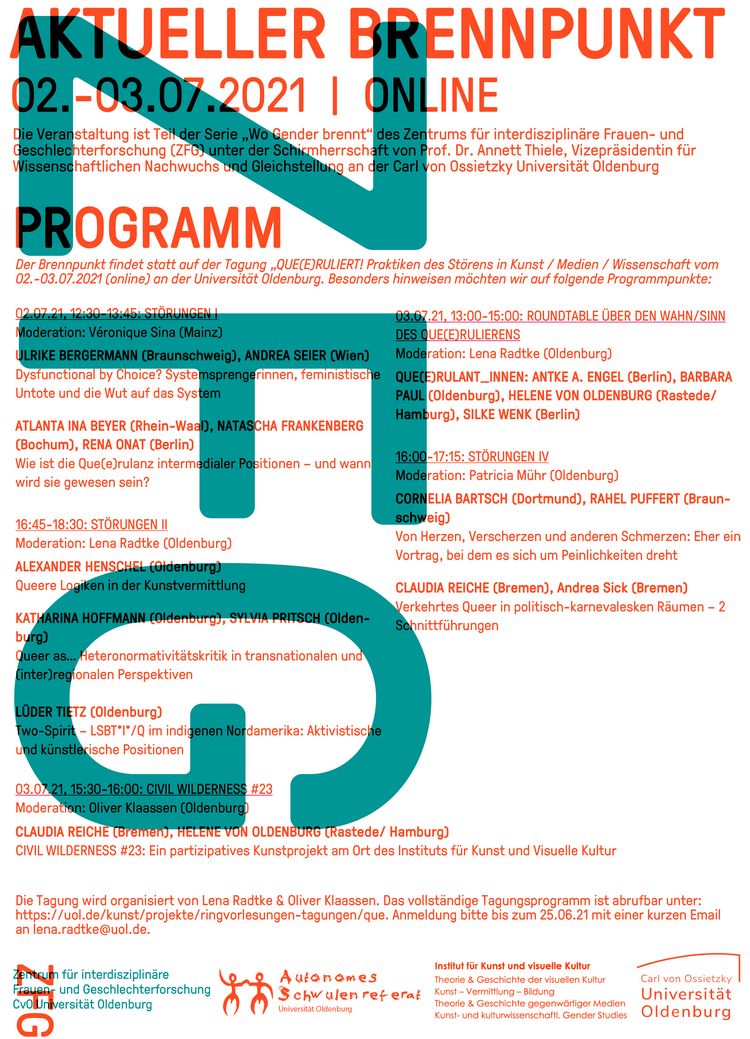
The focal point will take place at the conference "QUE(E)RULIERT! Practices of Disruption in Art / Media / Science from 2 - 3 July 2021 (online) at the University of Oldenburg. We would like to draw your attention to the following programme items:
02.07.21, 12:30-13:45: STÖRUNGEN I
Moderation: Véronique Sina (Mainz)
ULRIKE BERGERMANN (Braunschweig), ANDREA SEIER (Vienna)
Dysfunctional by Choice? System disrupters, feminist undead and anger at the system
ATLANTA INA BEYER (Rhine-Waal), NATASCHA FRANKENBERG (Bochum), RENA ONAT (Berlin)
What is the que(e)rulance of intermedial positions - and when will it have been?
16:45-18:30: STÖRUNGEN II
Moderation: Lena Radtke (Oldenburg)
ALEXANDER HENSCHEL (Oldenburg)
Queer logics in art education
KATHARINA HOFFMANN (Oldenburg), SYLVIA PRITSCH (Oldenburg)
Queer as... Heteronormativity Critique in Transnational and (Inter)Regional Perspectives
LÜDER TIETZ (Oldenburg)
Two-Spirit - LGBT*I*/Q in Indigenous North America: Activist and Artistic Positions
03.07.21, 13:00-15:00: ROUNDTABLE ON THE WAHN/SENSE OF QUE(E)RULING
Moderation: Lena Radtke (Oldenburg)
QUE(E)RULANT_INNEN: ANTKE A. ENGEL (Berlin), BARBARA PAUL (Oldenburg), HELENE VON OLDENBURG (Rastede/ Hamburg), SILKE WENK (Berlin)
16:00-17:15: STÖRUNGEN IV
Moderation: Patricia Mühr (Oldenburg)
CORNELIA BARTSCH (Dortmund), RAHEL PUFFERT (Braunschweig)
Von Herzen, Verscherzen und anderen Schmerzen: Rather a lecture centred around embarrassment
CLAUDIA REICHE (Bremen), Andrea Sick (Bremen)
Upside-down queer in political-carnivalesque spaces - 2 intersections
03.07.21, 15:30-16:00: CIVIL WILDERNESS #23
Moderation: Oliver Klaassen (Oldenburg)
CLAUDIA REICHE (Bremen), HELENE VON OLDENBURG (Rastede/ Hamburg)
CIVIL WILDERNESS #23: A participatory art project at the site of the Institute of Art and Visual Culture
The conference is organised by Lena Radtke & Oliver Klaassen. The complete conference programme is available on the homepage of the Institute of Art and Visual Culture. Please register by 25.06.21 with a short email to lena.radtke@uol.de.
Where gender burns - the Centre for Interdisciplinary Women's and Gender Studies (ZFG) at the University of Oldenburg turns 20
Gender is a central element of all societies – and yet it was not explored from a social and cultural studies perspective until relatively late. The Centre for Gender Studies (ZFG) at the University of Oldenburg played a pioneering role in establishing gender studies: it opened on 17 May 2001 as the first centre of its kind in Lower Saxony and one of the first in Germany, and has since made a significant contribution to enriching the research landscape.
Since its foundation, the ZFG has repeatedly tested and implemented the principles of inter- and transdisciplinary, as well as transnational and cross-cultural, perspectives. This includes research projects at regional, national and European levels, but also beyond: from the very beginning, the ZFG has had a strongly international focus. It maintains a wide range of co-operations with research institutions in India and African countries such as South Africa, Morocco, Sudan and Uganda. Particular emphasis is also placed on supporting early-career researchers in the field of gender studies and queer studies, for example through graduate colleges or the annual Gender Studies Day. Another key aspect of the ZFG’s work is supporting existing degree programmes in gender studies and queer studies, and in particular the close integration of research and teaching to ensure the research-oriented design of the BA in Gender Studies.
Twenty professors, research assistants and scholarship holders were involved in the founding process, supported by the then Office for Women’s Equality, the university management and the University Senate. At the inauguration, the Ministry official Dr Barbara Hartung praised the courage to pursue innovations in higher education policy, which provided a central hub for the tradition of women’s and gender studies in Oldenburg – a tradition that was already over 30 years old at the time. Co-operation between research and teaching could now be further deepened through the two degree programmes established as early as 1997 – namely the Magister minor in Women’s and Gender Studies and the postgraduate programme in Cultural Studies of Gender – later as a doctoral degree programme – the first such degree programmes in Germany, alongside those at the HU Berlin – could now be further developed.
In the early years – eight of which were under the leadership of the recently deceased Professor Heike Fleßner – research focused primarily on the social sciences and educational sciences, and the foundations for important academic co-operations were laid. In addition to numerous international visiting professorships, funded by the MWK’s Maria Goeppert Mayer Programme, a junior professorship in Gender, Biotechnologies and Society was also filled between 2003 and 2009, although this was not made permanent
Since 2009, the centre has been based in School III - School of Linguistics and Cultural Studies, where it has developed its cultural studies profile under the leadership of Professors Silke Wenk, Barbara Paul and Melanie Unseld. The research clusters ‘Knowledge/Institution/Memory’ and ‘Transculturality/Migration’, owing to their foundational research—including in the philosophy of science—offer numerous points of connection for other disciplines and projects, even beyond cultural studies in the narrower sense.
Research findings are communicated to the interested public through the event series, which has been running successfully since 2017: ‘Where Gender Burns: The Current Relevance of Gender Studies in Science, Culture and Society’ (under the patronage of Vice-President Prof. A. Thiele) and through two publication series. Among other things, the following questions have been addressed: How can gender and sexual diversity be lived out and taught? Is the recognition of queer lifestyles a Western phenomenon, or is it also found in India? What impact do digitalisation and artificial intelligence have on gender selection in recruitment? What role did women’s movements play in the Arab Spring?
The work of the ZFG demonstrates that the need for a central point of contact and coordination for the interdisciplinary field of gender and queer research is more important than ever, as all too often these issues fall outside the disciplinary framework.
To mark this extraordinary anniversary in a fitting manner, to further strengthen existing co-operations and to forge new ones, the ZFG is organising an international conference in May 2022 entitled ‘Local Answers to Global Transitions – Challenges to Women*’s and Gender Studies in Plurilocal Perspectives. This anniversary conference – postponed by a year due to the coronavirus pandemic – also serves as a tribute to the inaugural conference in 2001 , ‘Societies in Transition – Challenges to Women’s and Gender Studies’, which established a wide range of national and international research links that continue to characterise the ZFG to this day.
Lecture: Dr Esra Ummak (Oslo): Untangling the Relationship between Internalised Heterosexism and Psychological Intimate Partner Violence Perpetration, 11.05.21
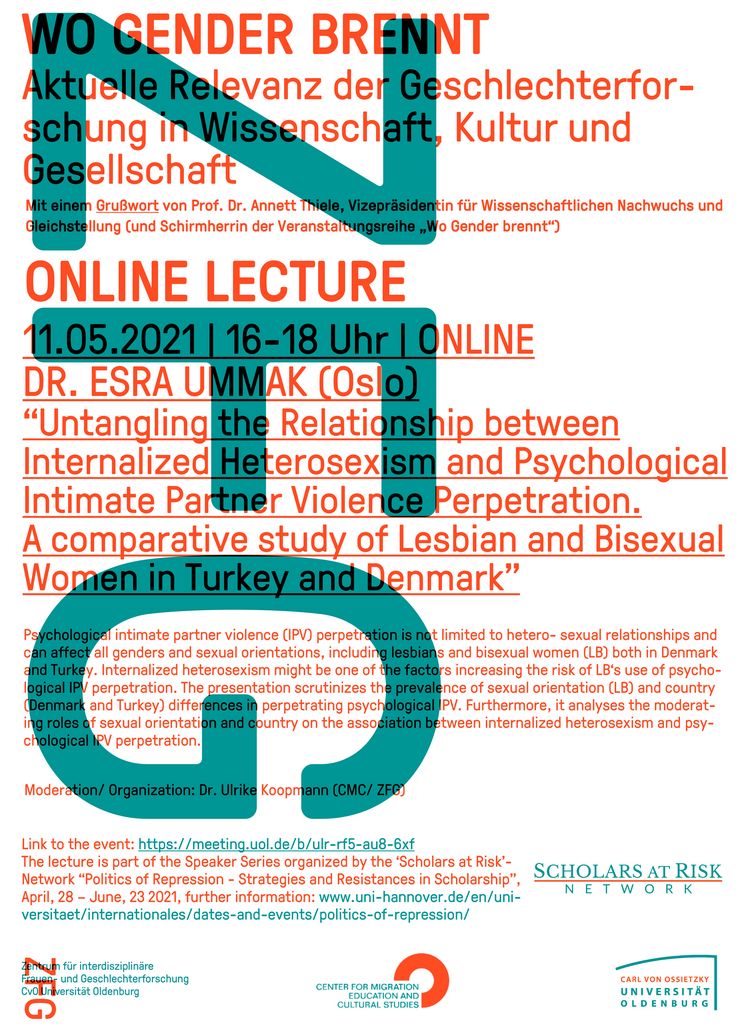
On 11 May 2021, Dr Esra Ummak (Oslo) will give an online lecture on "Untangling the Relationship between Internalised Heterosexism and Psychological Intimate Partner Violence Perpetration. A comparative study of Lesbian and Bisexual Women in Turkey and Denmark". The event will take place at as part of the event series "Wo Gender brennt. Current relevance of gender studies in science, culture and society".
With a welcoming address by Prof. Dr Annett Thiele, Vice President for Early Career Researchers and Gender Equality (and patron of the event series "Wo Gender brennt").
Psychological intimate partner violence (IPV) perpetration is not limited to hetero- sexual relationships and can affect all genders and sexual orientations, including lesbians and bisexual women (LB) both in Denmark and Turkey. Internalised heterosexism might be one of the factors increasing the risk of LB's use of psychological IPV perpetration. The presentation scrutinises the prevalence of sexual orientation (LB) and country (Denmark and Turkey) differences in perpetrating psychological IPV. Furthermore, it analyses the moderating roles of sexual orientation and country on the association between internalized heterosexism and psychological IPV perpetration.
Moderation/ Organisation: Dr. Ulrike Koopmann (CMC/ ZFG)
Link to the event (via BigBlueButton)
The lecture is part of the Speaker Series organized by the 'Scholars at Risk'-Network "Politics of Repression - Strategies and Resistances in Scholarship", April, 28 - June, 23 2021. Further information
LUNCHTALK* "Digital Gender Studies - and what next?", 27.01.21
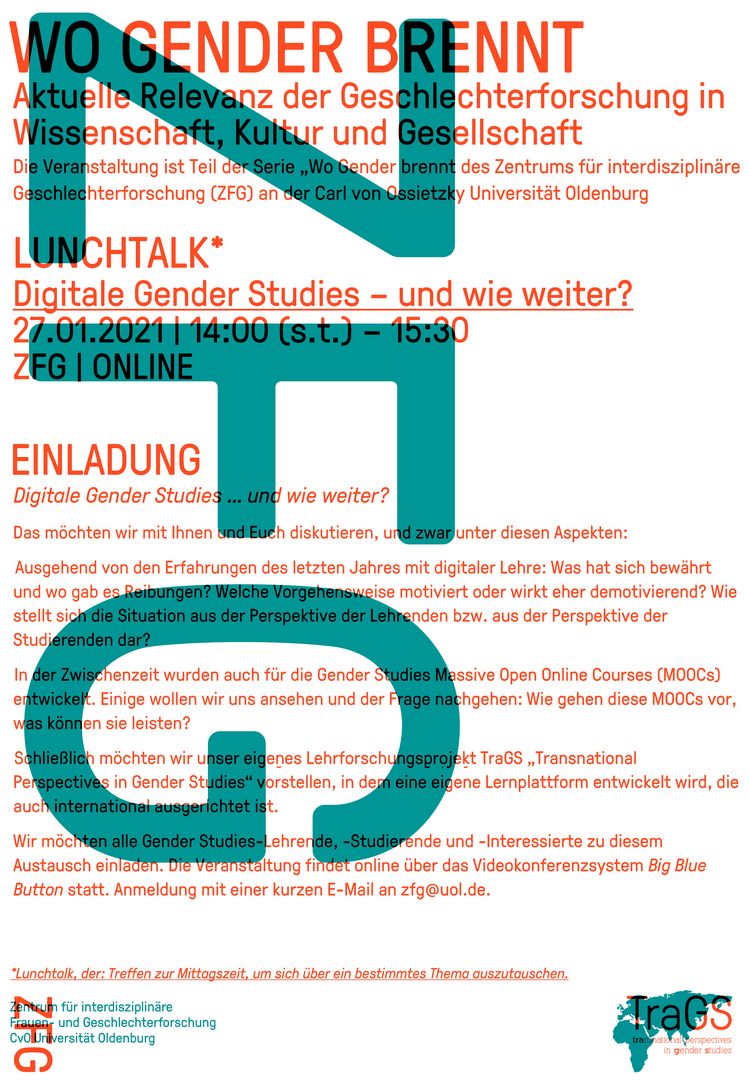
Digital gender studies ... and what next?
We would like to discuss this with you under these aspects:
Based on last year's experiences with digital teaching: What has proved successful and where has there been friction? Which approach is motivating or rather demotivating? How does the situation look from the perspective of teachers and students?
In the meantime, Massive Open Online Courses (MOOCs) have also been developed for Gender Studies. We want to take a look at some of them and investigate the question: How do these MOOCs go about it, what can they achieve?
Finally, we would like to present our own teaching research project TraGS "Transnational Perspectives in Gender Studies", in which we are developing our own learning platform that is also internationally orientated.
We would like to invite all Gender Studies teachers, students and interested parties to this exchange. The event will take place online via the Big Blue Button video conferencing system. Please register by sending a short email to
There will be an input in English, the discussion will take place in German and English.
Gender on/ under fire: Online Round Table "Transnational Feminist Perspectives on the Corona Pandemic", 30.06.20
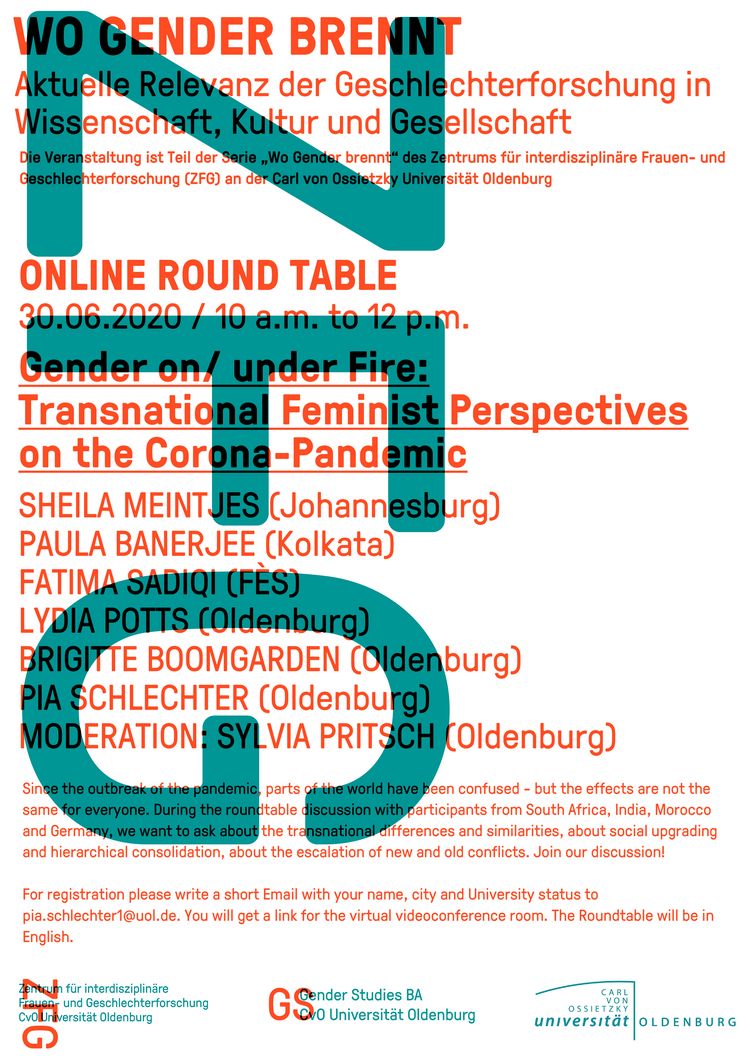
Where gender burns - Gender on/ under fire
Online Round Table "Transnational Feminist Perspectives on the Corona Pandemic"
30 June 2020, 10-12 a.m.
with
Prof. Dr Sheila Meintjes (Johannesburg/ South Africa)
Prof. Dr Paula Banerjee (Kolkata/ India)
Prof. Dr Fatima Sadiqi (Fez, Morocco)
Dr Lydia Potts (Oldenburg)
Brigitte Boomgarden (Oldenburg)
Pia Schlechter (Oldenburg)
moderated by Dr Sylvia Pritsch (Oldenburg)
Since the outbreak of the pandemic, parts of the world have been confused - but the effects are not the same for everyone. During the roundtable discussion with participants from South Africa, India, Morocco and Germany, we want to ask about the transnational differences and similarities, about social upgrading and hierarchical consolidation, about the escalation of new and old conflicts. Join our discussion!
For registration please write a short Email with your name, city and University status to pia.schlechter1(at)uol.de. You will get a link for the virtual videoconference room. The Roundtable will be in English.
Invitation: Video Lecture Series "Transnational Feminisms in India, South Africa, Morocco"

How have (queer) feminist movements developed in non-Western countries? What issues are dominating current discussions? Three international experts will provide information in their video lectures and will be available for questions and discussions afterwards:
26.05.20 (10-12 am): Sheila Meintjes (Johannesburg/ South Africa):
Current Debates in South African Feminism
02.06.20 (10-12 am): Paula Banerjee (Kolkata/ India):
Women's Activism in India (Bengal)
16.06.20 (10-12 a.m.): Fatima Sadiqi (Fez/ Morocco):
Feminist Achievements in Morocco)
If you are interested in attending, simply send a short email (to Pia.Schlechter1(at)uol.de) and you will receive a link to participate in the video lectures via the BigBlueButton web conferencing system. Participation is possible for external participants of the university. Registration is not necessary. The event will be held in English.
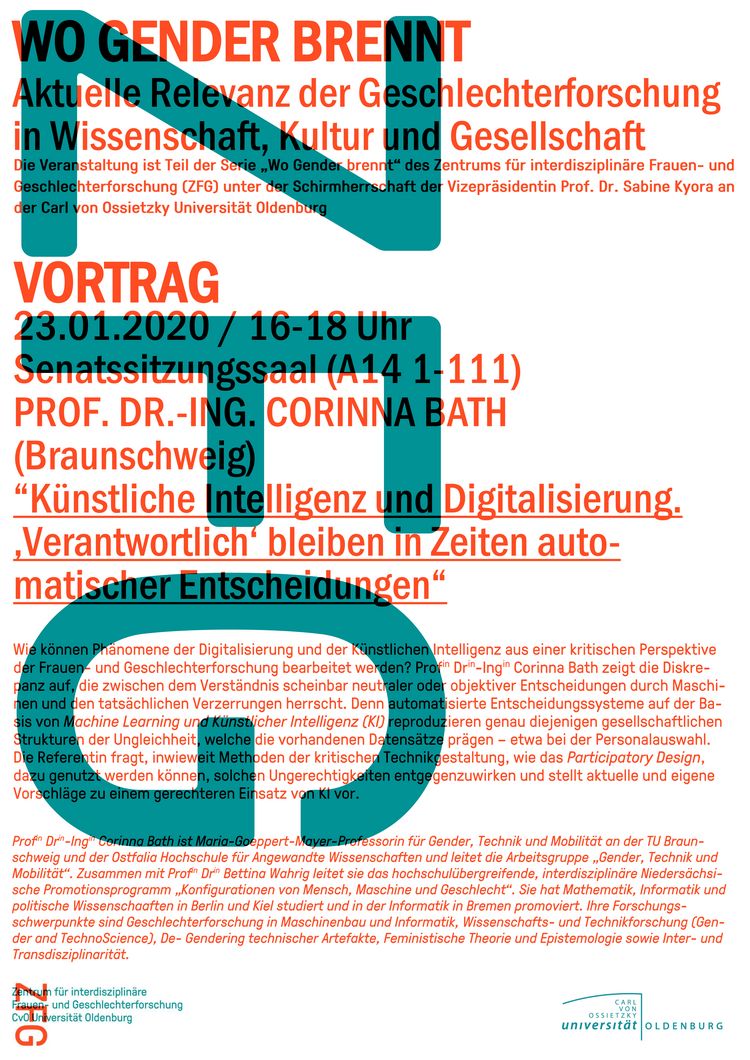
Lecture: Prof.in Dr.in-Ing.in Corinna Bath (Braunschweig): "Künstliche Intelligenz und Digitalisierung. Staying responsible in times of automated decisions" on 23.01.20, 4-6 p.m.
Gender on/under Fire: Gender, Family and Migration, 13.12.19
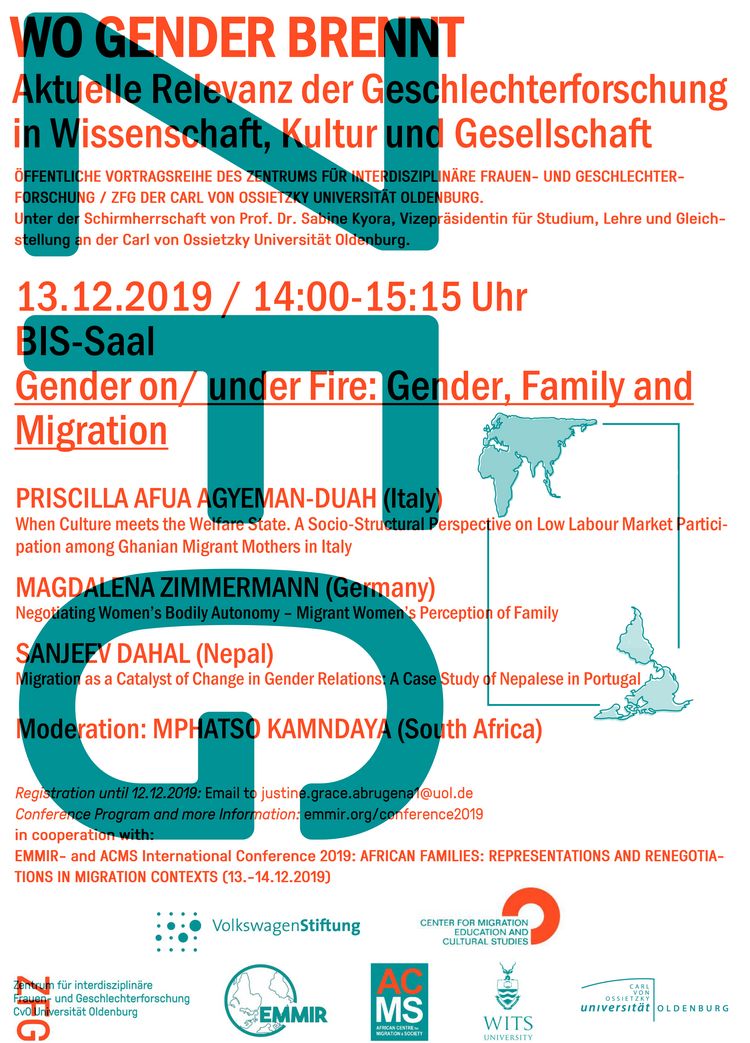
in co-operation with the EMMIR and ACMS International Conference 2019: African Families: Representations and Renegotiations in Migration Contexts (13-14 December 2019)
Please register by 12 December at
(Re-)Reading - (Re-)Writing: Postcolonial Theories in Critical Transnational Gender-Perspectives (Indian-German Autumn School), 29-30.10.19
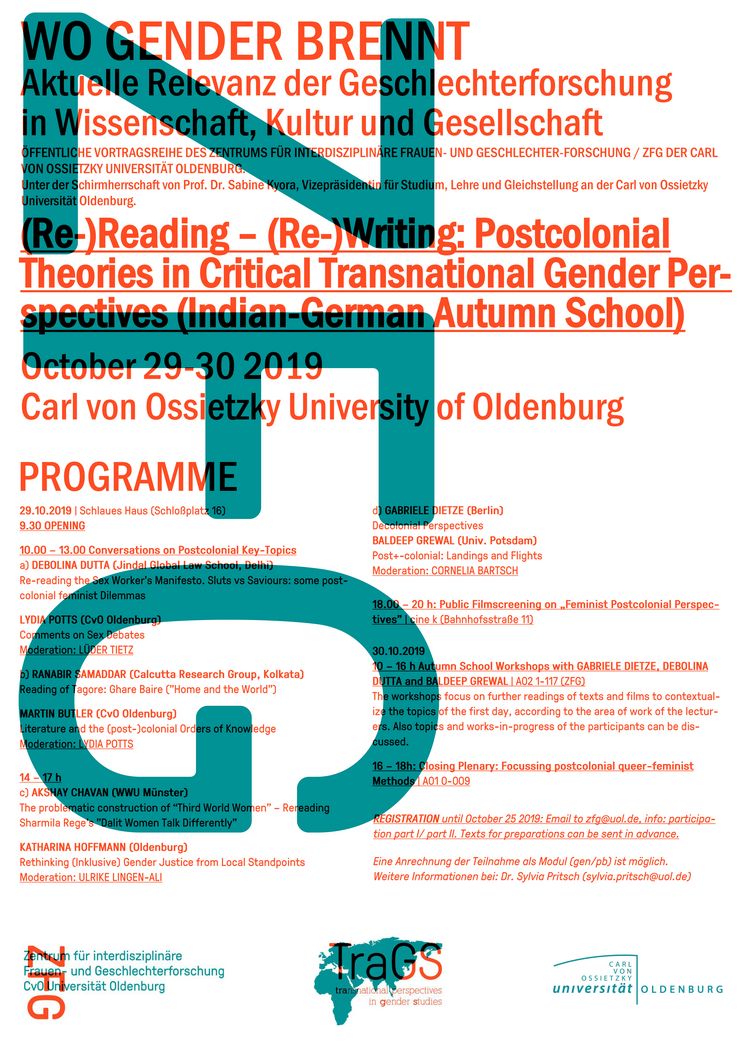
Workshop offers:
30 October 2019
10 - 12 h Parallel workshops
AJAY SATHJAN, A01 0-004
as part of the event "Inter- and transdisciplinary perspectives on gender studies"
Hegemonic white patriarchy and submissiveness in post-colonial Bollywood
BALDEEP GREWAL, A03 1-117 (ZFG)
Speaking for the Inside: Worlding and our Place in it
12 - 14 h, A03 1-117 (ZFG)
DEBOLINA DUTTA
Representations of Sex Work in Law and the Media
14 - 16 h, A03 1-117 (ZFG)
GABRIELE DIETZE
30.10.2019
10 - 12 h Parallel Workshops
AJAY SATHJAN, A01 0-004
as part of the event "Inter- and transdisciplinary perspectives on gender studies"
Hegemonic white patriarchy and submissiveness in post-colonial Bollywood
BALDEEP GREWAL, A03 1-117 (ZFG)
Speaking for the Inside: Worlding and our Place in it
12 - 14 h, A03 1-117 (ZFG)
DEBOLINA DUTTA
Representations of Sex Work in Law and the Media
14 - 16 h, A03 1-117 (ZFG)
GABRIELE DIETZE
Feminist Tasks in a postcolonial/decolonial framework
16 - 18h: Closing Plenary: Focussing postcolonial queer-feminist Methods | A01 0-009
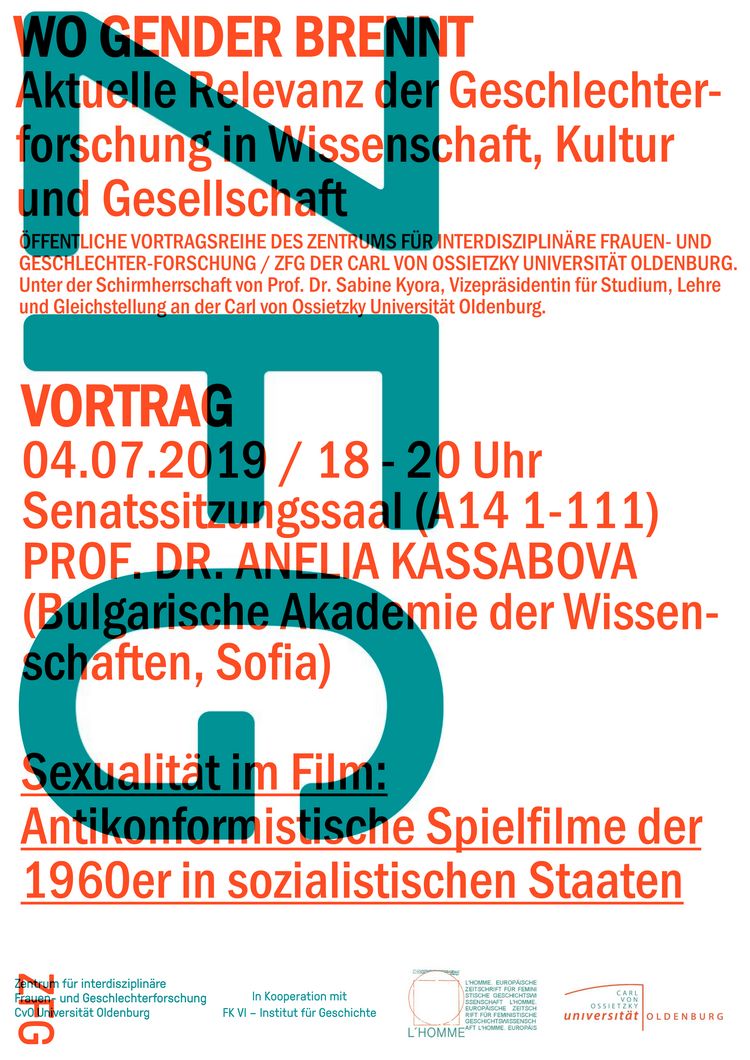
Lecture by Prof. Dr Anelia Kassabova: "Sexuality in Film: Anticonformist Feature Films of the 1960s in Socialist States", 04.07.19

Round Table: "Islam and Feminism. Contested positions in science and activism" with Kathrin Klausing (Osnabrück) and Rida Inam (Frankfurt), 17.06.19, 6-8 pm

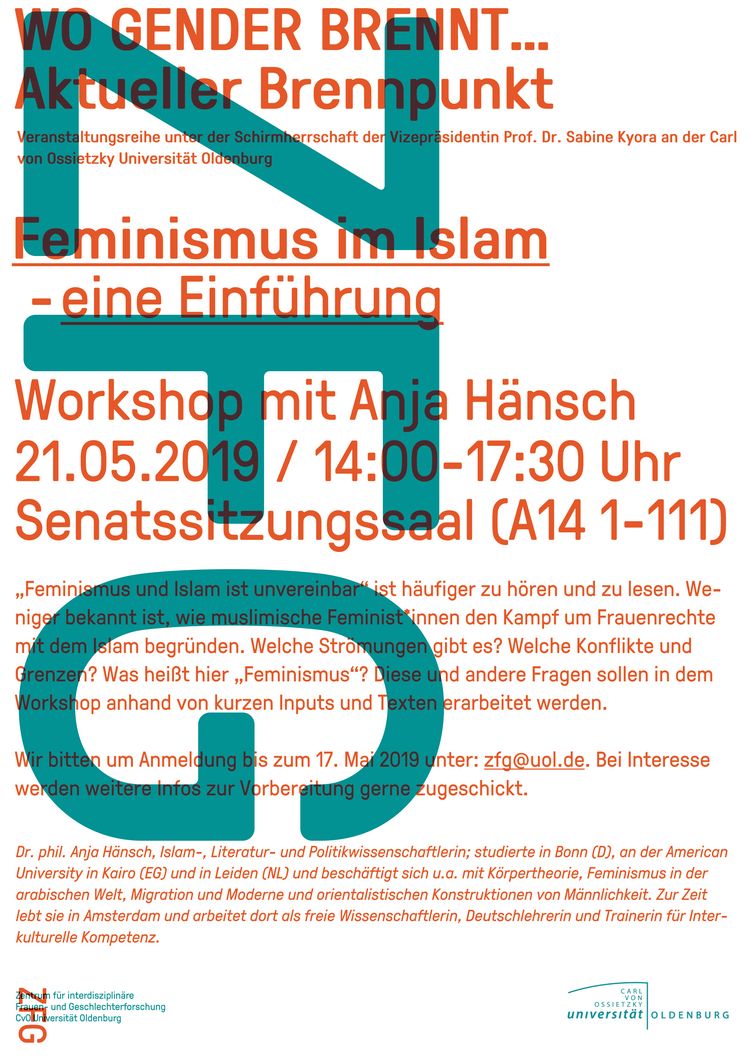
Current focal point: "Feminism in Islam - An introduction". Workshop with Anja Hänsch, 21.05.19, 14-17:30

LUNCHTALK*: Generations of gender studies, 16.01.19
16 January 2019, 12:00 - 14:00 in the ZFG (A03 1-117)
Generations of gender studies: Do the feminist wheels always have to be reinvented?
On the occasion of the anniversaries of "100 years of women's suffrage" and "50 years of the autonomous women's movement", we want to take a look at older theoretical texts in women's and gender studies under the question "Do feminist wheels always have to be reinvented?". Are the themes of the first and second women's movements outdated today or do they need to be brought back to the fore, adapted to today's conditions? Can we still talk about the "mysterious male ghetto of the university" (Modelmog 1983) today and what do we think about turning "science into a passion" (ibid.)? What are the indispensable core topics? Where are there gaps?
Dear Gender Studies teachers, students and interested parties, we would like to invite you to a convivial exchange over coffee and biscuits. Excerpts from your favourite texts in queerfeminist fields or women's and gender studies are welcome!

Current Focus: Music & Gender Politics, 25 June 2018, 4-10 pm, The Smart House Oldenburg
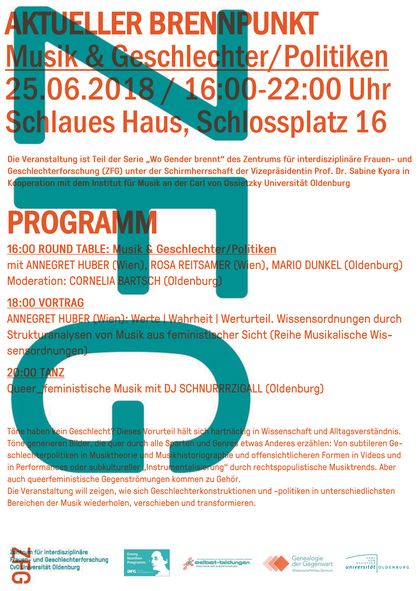
Sounds have no gender? This prejudice persists in science and everyday understanding. Sounds generate images that tell a different story across all disciplines and genres: Of more subtle gender politics in music theory and music historiography and more obvious forms in videos and performances or subcultural "instrumentalisation" through right-wing populist music trends. But queerfeminist counter-currents will also be heard.
The event aims to show how gender constructions and politics are repeated, shifted and transformed in the most diverse areas of music.
16.00: Round table with Prof.in Dr Annegret Huber (mdw/ Vienna),
Ass.-Prof.in Dr Rosa Reitsamer (mdw/ Vienna), Prof. Dr Mario Dunkel (CvO University Oldenburg)
Moderation: Drin. Cornelia Bartsch (Professor of Administration CvO University of Oldenburg)
18.00: Lecture by Prof. Dr AnnegretHuber : Values | Truth | Value judgement. Orders of knowledge through structural analyses of music from a feminist perspective (series Musikalische Wissensordnungen)
20.00: Dance: Queer_feminist music with dj schnurrzigal (Oldenburg)






Gender on/ under Fire: A Public Conversation on Gender-Based Violence with Perspectives from South Africa, India and Germany with Sheila Meintjes, Paula Banerjee, Lydia Potts and Daniela Arias Vargas, 19.06.18, 6-8 pm, Senatssitzungssaal
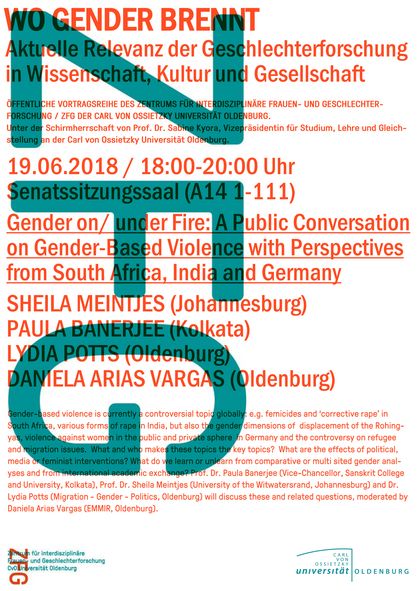
Prof. Dr Sheila Meintjes (University of the Witwatersrand/ Johannesburg), Prof. Dr Paula Banerjee (Vice Chancellor, Sanskrit College and University of Kolkata), Dr Lydia Potts (Migration - Gender - Politics, CvO University of Oldenburg) Moderation: Daniela Arias Vargas (EMMIR, CvO University of Oldenburg)
Gender-based violence is currently a controversial topic globally: e.g. femicides and 'corrective rape' in South Africa, various forms of rape in India, but also the gender dimensions of displacement of the Roh-ingyas, violence against women in the public and private sphere in Germany and the controversy on refu-gee and migration issues. What and who makes these topics the key topics? What are the effects of political, media or feminist interventions? What do we learn or unlearn from comparative or multi sited gen-der analyses and from international academic exchange? Prof. Dr Paula Banerjee (Vice-Chancellor, San-skrit College and University, Kolkata), Prof. Dr Sheila Meintjes (University of the Witwatersrand, Johannesburg) and Dr Lydia Potts (Migration - Gender - Politics, Oldenburg) will discuss these and related ques-tions, moderated by Daniela Arias Vargas (EMMIR, Oldenburg).
Lecture by Prof Dr Konstanze Plett (Bremen): "On the right to gender diversity: background to the Federal Constitutional Court's decision on the "third gender"", 25.04.18, 4-6 p.m.
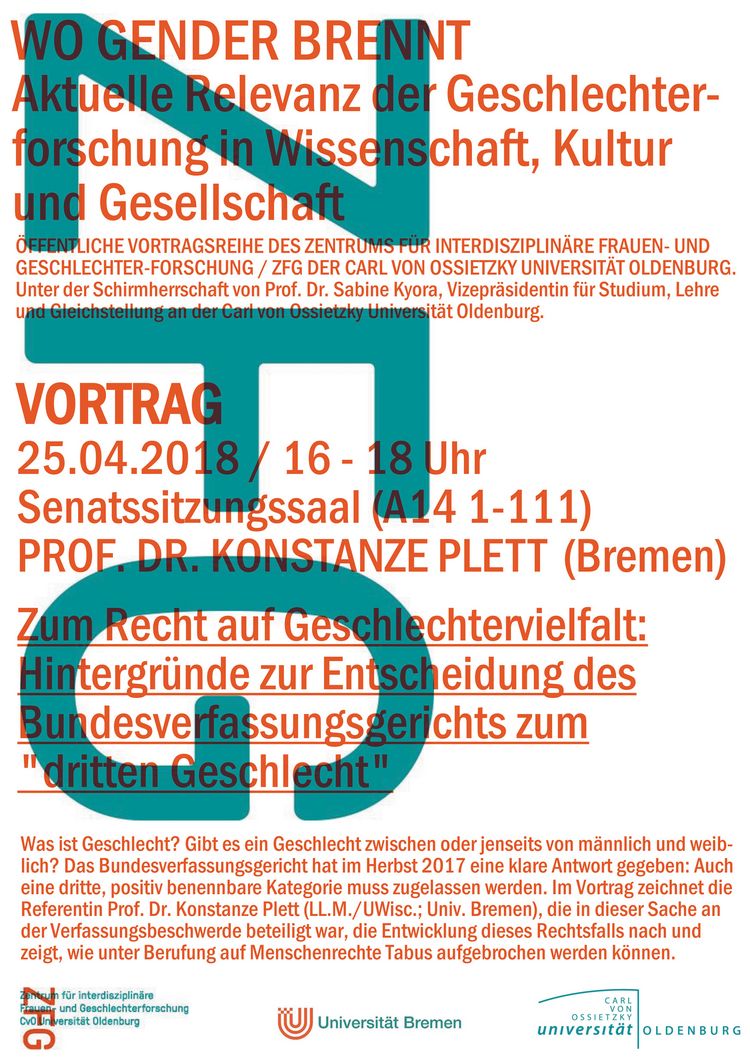
What is gender? Is there a gender between or beyond male and female? The Federal Constitutional Court gave a clear answer in autumn 2017: A third, positively nameable category must also be admitted. In this lecture, advisor Prof Dr Konstanze Plett (LL.M./UWisc.; Univ. Bremen), who was involved in the constitutional complaint in this case, traces the development of this legal case and shows how taboos can be broken by making academic appointments based on human rights.

AFTER-LUNCH-GAMING - A board game through life: Identity Lotto. Invitation to the test game on 18.04.18, 2-4 pm

What is life like in a different identity that I acquire by chance?
New identities can be playfully adopted based on the categories of gender, sexual orientation, origin, body and education. The aim is to go through various life themes with this "new" identity.
The ZFG invites you to try out and evaluate this game developed by the Braunschweig Centre for Gender Studies (TU).
Homepage of the game
Flyer for download
LUNCHTALK*: Gender and diversity in teaching?, 29.11.17

Gender studies are controversial - this has been evident since the beginning of their institutionalisation. Today, depending on the discipline and often also within the disciplines, they appear to some as a natural part of research and teaching, to others as an annoying requirement - and still all too often as a blank space. Experiences with the thematisation of gender studies, possibly also in conjunction with diversity and intersectionality, vary accordingly and raise a number of questions:
- What does it mean in concrete terms to regard gender studies as a "self-evident" part of the discipline? For which subjects is it claimed/is it true? For which not?
-To what extent is there a historical understanding of gender studies in the subjects?
- To what extent are insights of feminist academic criticism taught and implemented, such as interdisciplinarity, situating one's own perspective, intersectionality?
- What is the relationship between gender and diversity in teaching?
- Gender studies and gender equality policy are increasingly exposed to attacks and pressure to legitimise themselves. How can or should this be dealt with?
We want to discuss these and other questions and experiences with all those who have a serious interest in this subject area. To this end, we invite you to a
LUNCHTALK* on 29 November 2017 at the ZFG, 12.30 - 14.00 (A03 1-117)
*Lunchtalk, the: Meeting for lunch together to discuss a specific topic. Everyone brings their own snack; hot and cold drinks are available on site.
Lecture by Prof Dr Sabine Hark "Distinguish and rule. On the ambivalent entanglements of racism, sexism and feminism in the present", 26 October 2017

The ZFG's event series "Where gender burns" continues with a lecture by Prof Dr Sabine Hark from Berlin: "Distinguishing and ruling. Racism, sexism and feminism in the present".
In co-operation with the Research Training Groups "Cultures of Participation" and "Self-Formations".
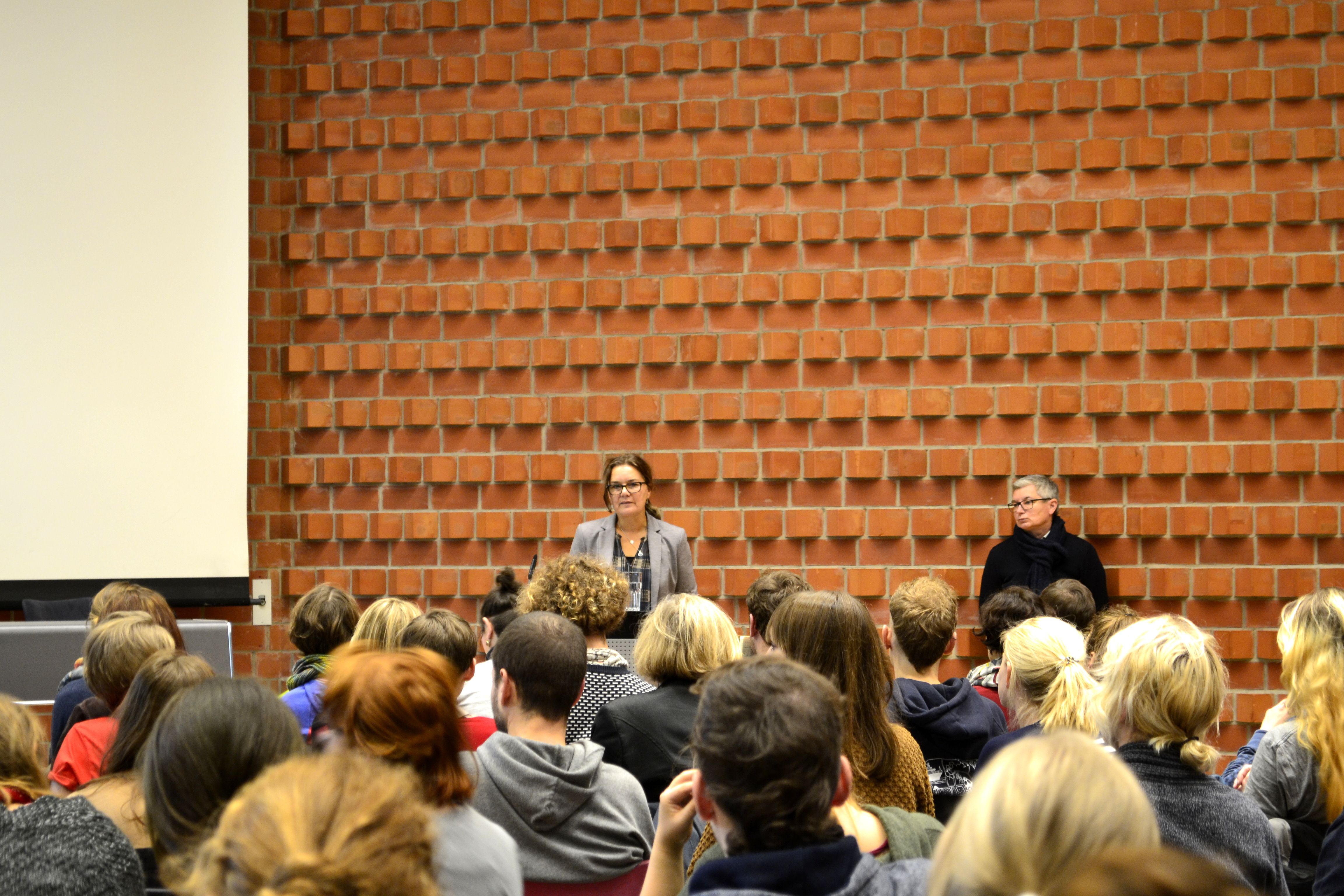
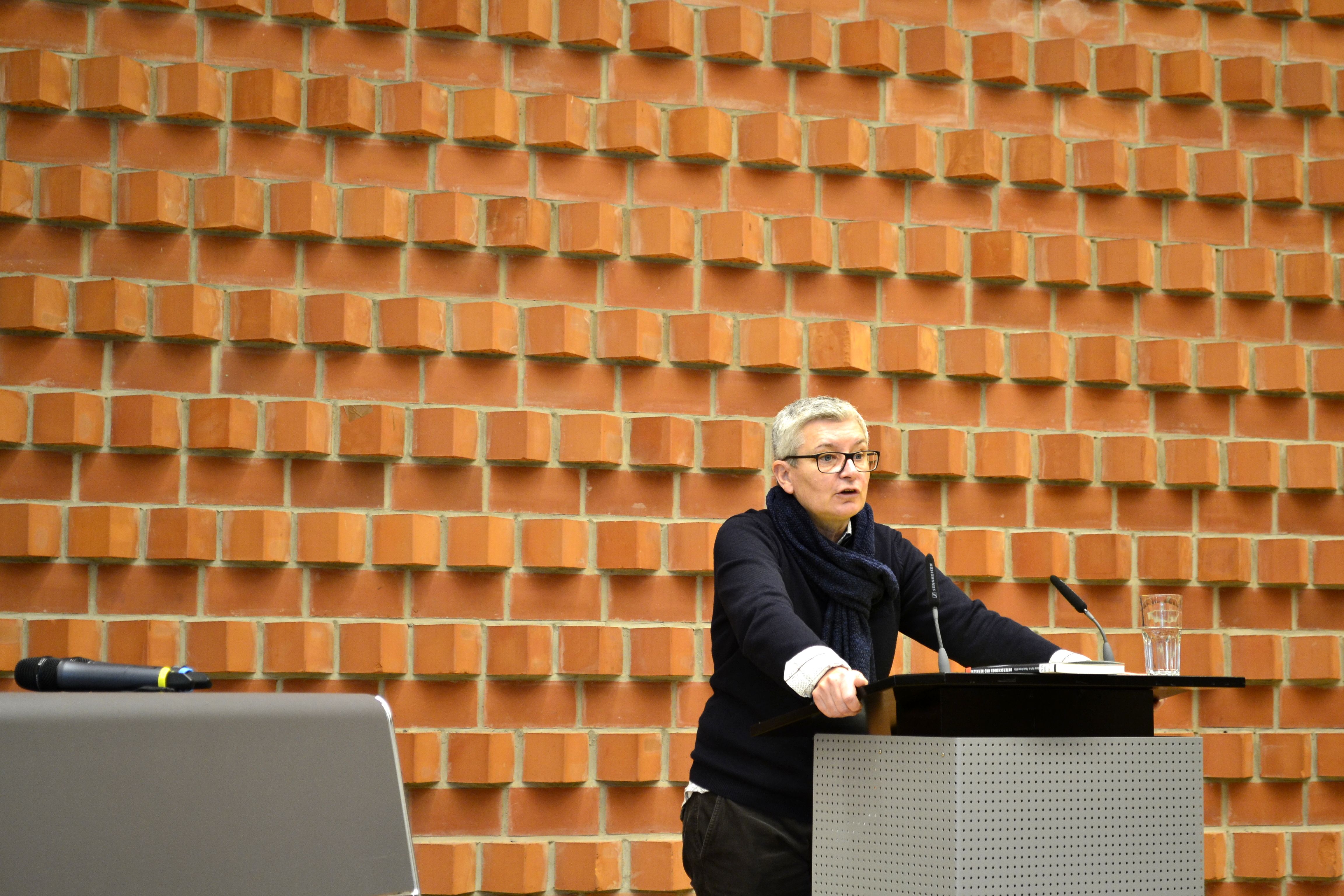


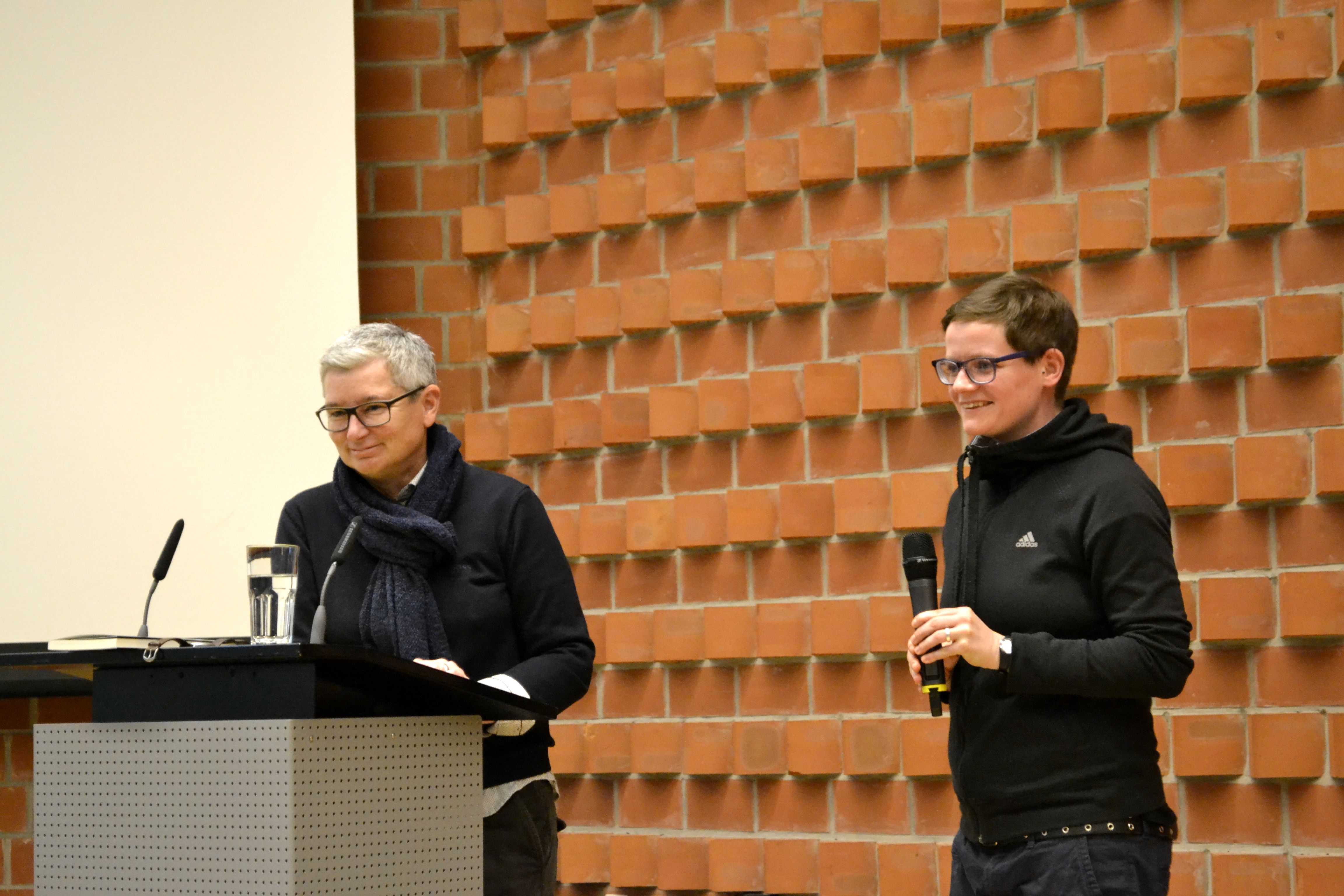
Lecture: Prof. Dr Andrea Maihofer (Basel): Gender studies: current obstacles and opportunities. 24.10.17, 6 pm, Aula

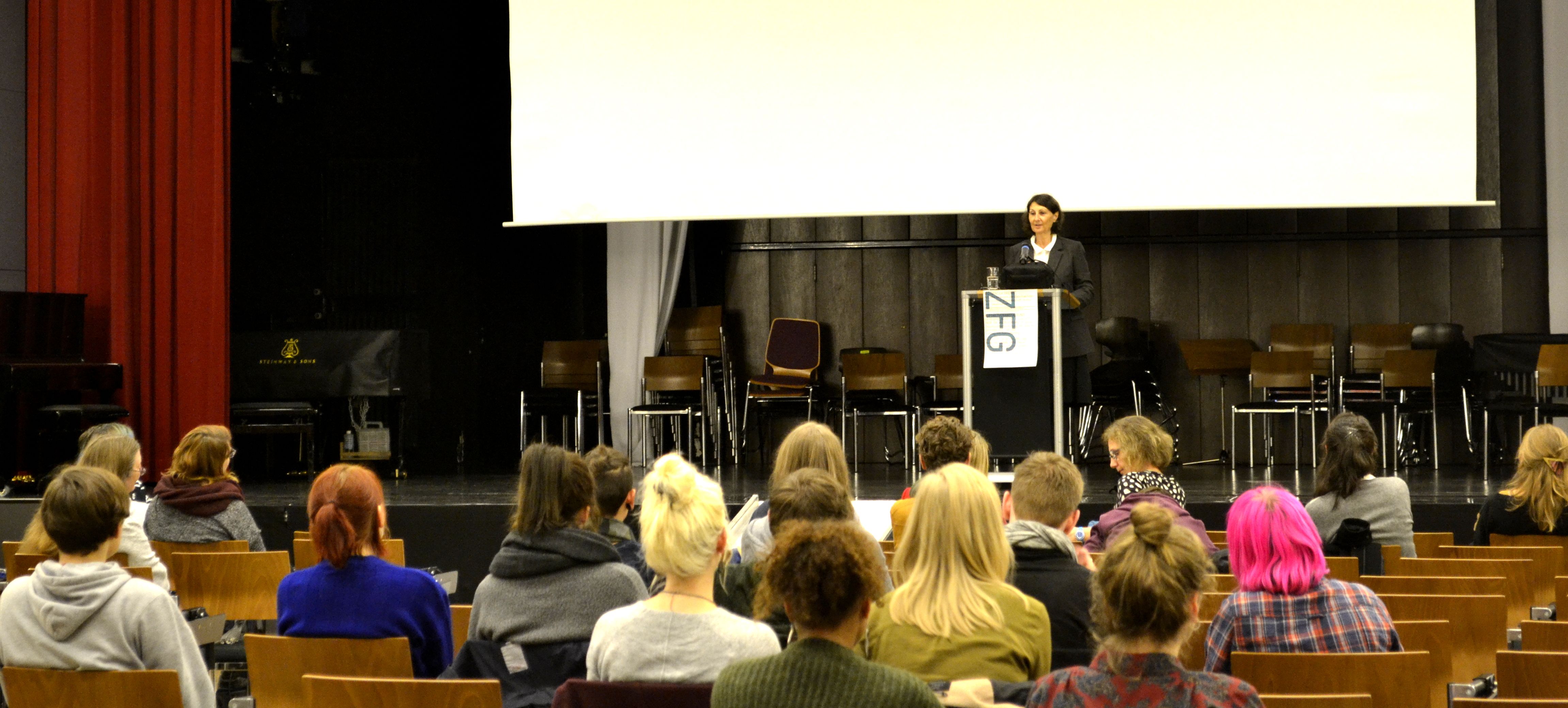
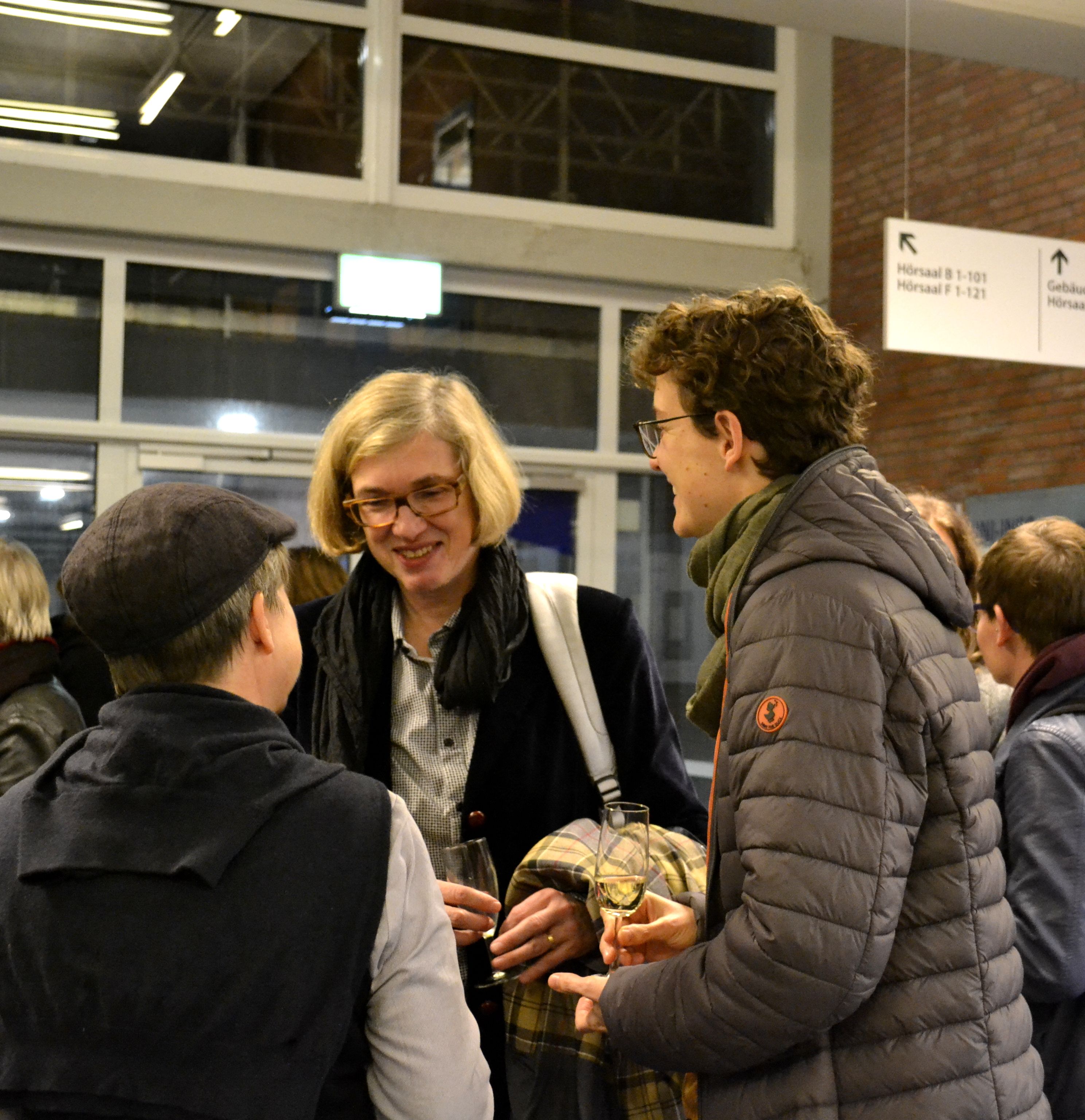
On Tuesday, 24 October 2017, the kick-off event of the event series "Wo Gender brennt: Aktuelle Relevanz der Geschlechterforschung in Wissenschaft, Kultur und Gesellschaft" will take place at 18:00 (s.t.) in the Aula (A11). Prof Dr Andrea Maihofer from Basel will give a lecture on the topic "Gender Studies: Current Obstacles and Opportunities". This will be followed by a champagne reception.
"Where Gender Burns: Current Relevance of Gender Studies in Science, Culture and Society" Public lecture series by the Centre for Interdisciplinary Women's and Gender Studies/ZFG at the University of Oldenburg.
Under the patronage of Prof Dr Sabine Kyora, Vice President for Studies, Teaching and Gender equality at the University of Oldenburg.
Current social, cultural and higher education policy issues are always also gender policy issues. The inter- and transdisciplinary lecture series analyses gender politics in a broad spectrum of problem areas in which gender hierarchies, together with other categories of difference, come into play and "burn under the nails". Prof Dr Andrea Maihofer will begin with a look at the current state of gender research/gender studies. She is Professor of Gender Studies and Head of the Centre for Gender Studies at the University of Basel as well as President of the Swiss Society for Gender Studies.
The series will continue with a lecture by Prof. Dr Sabine Hark (Berlin) on 26 October 2017, 2 - 4 p.m. in the BIS-Saal: "Unterscheiden und Herrschen. Racism, sexism and feminism in the present" (in co-operation with the Research Training Groups "Cultures of Participation" and "Self-Formations").
Reading:
Andrea Maihofer with Franziska Schutzbach: "Vom Antifeminismus zum 'Anti-Genderismus'. A time-diagnostic observation using the example of Switzerland"
in: Sabine Hark, Paula-Irene Villa (eds.):"Anti-Genderism. Sexuality and gender as sites of current political debates". Bielefeld, transcript GenderStudies (2015).
The article is available online via the library system.






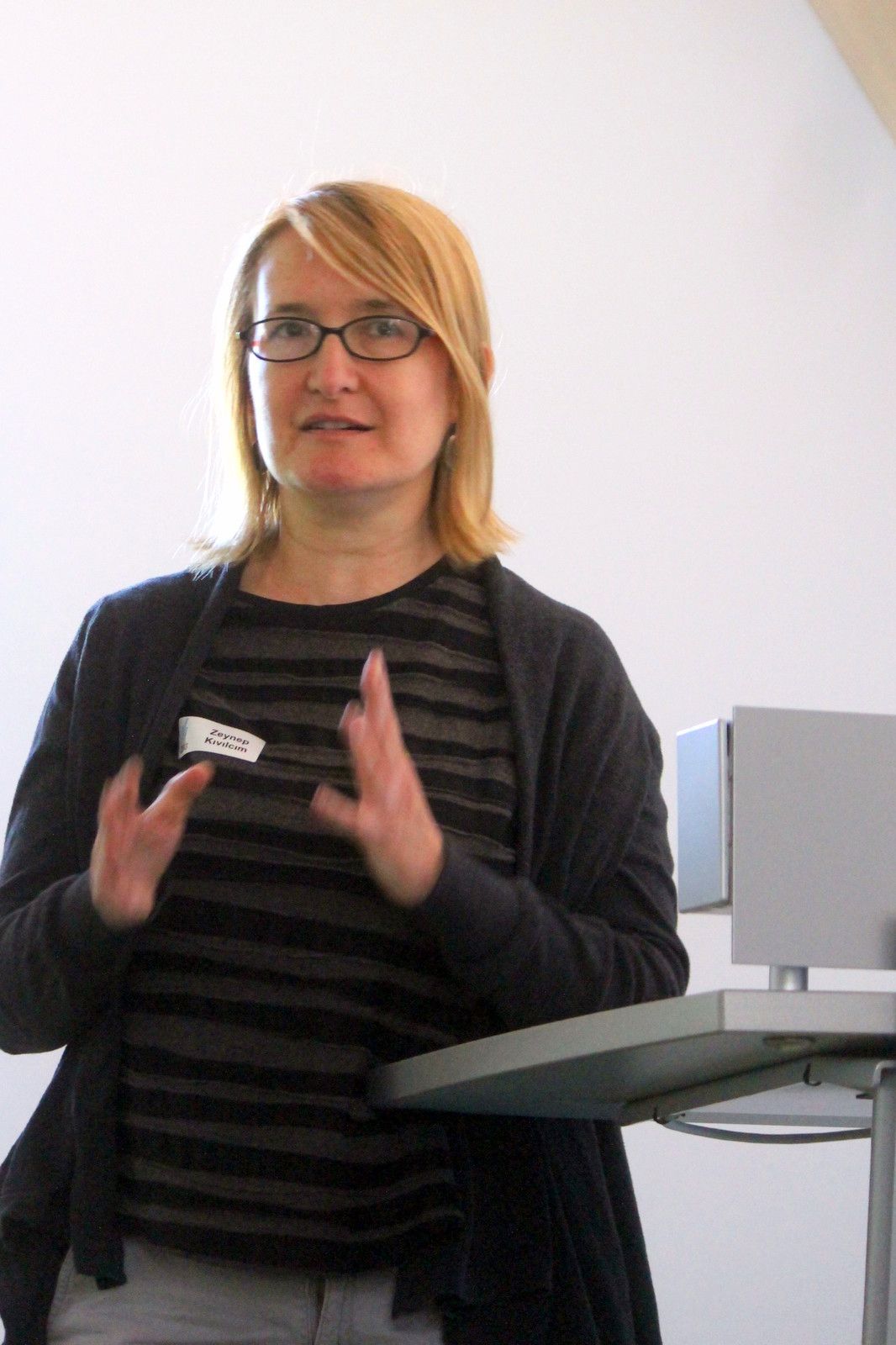
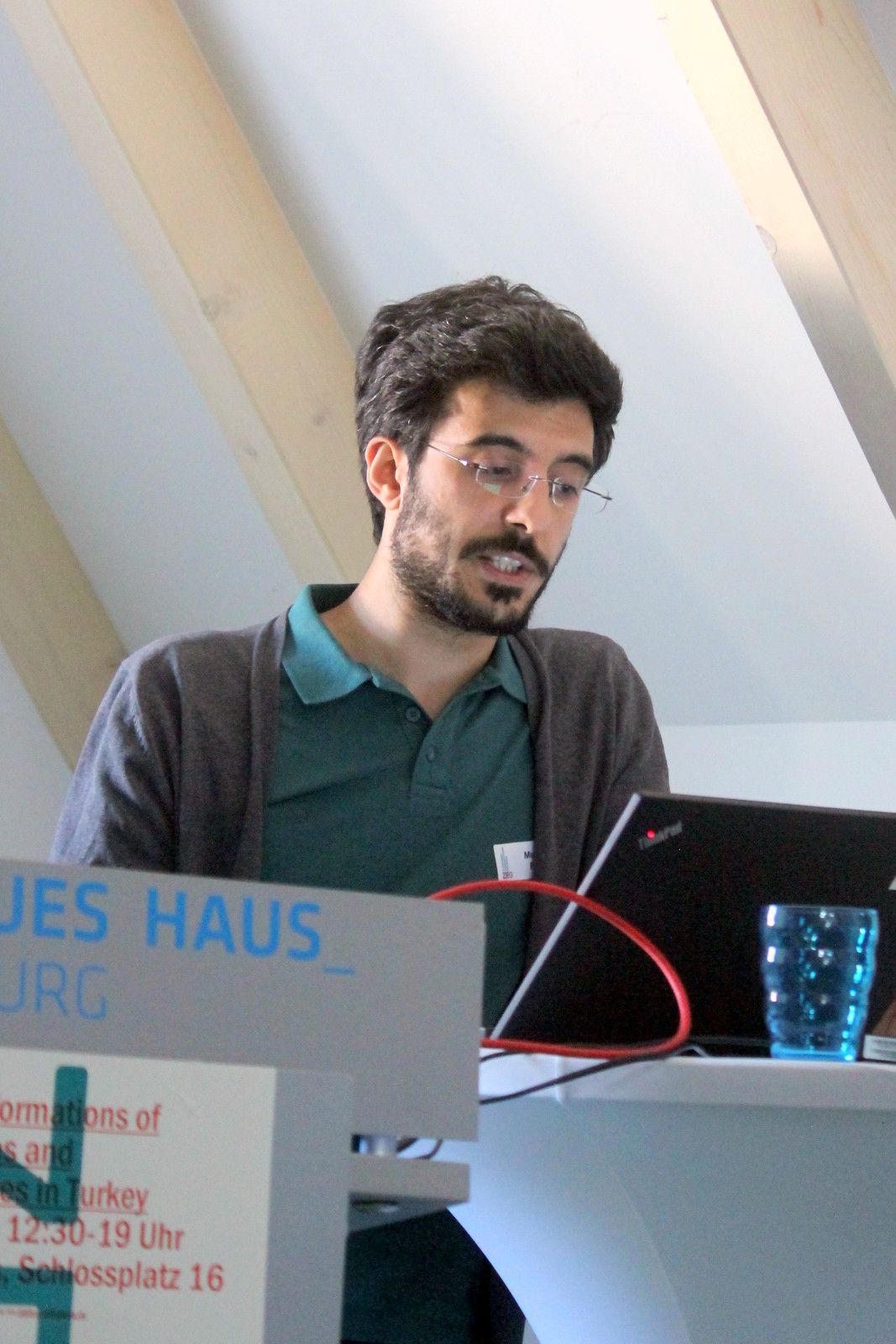
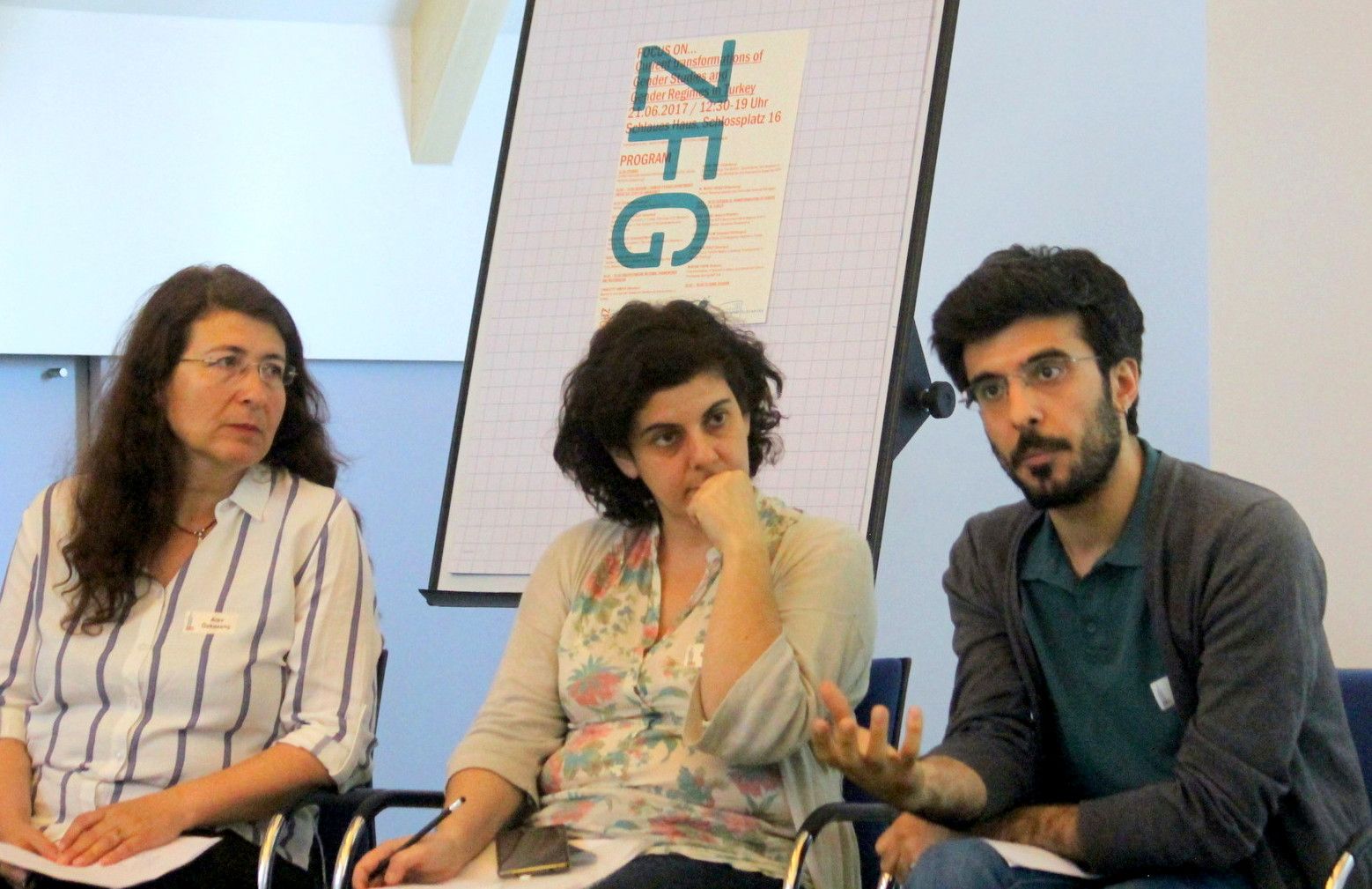
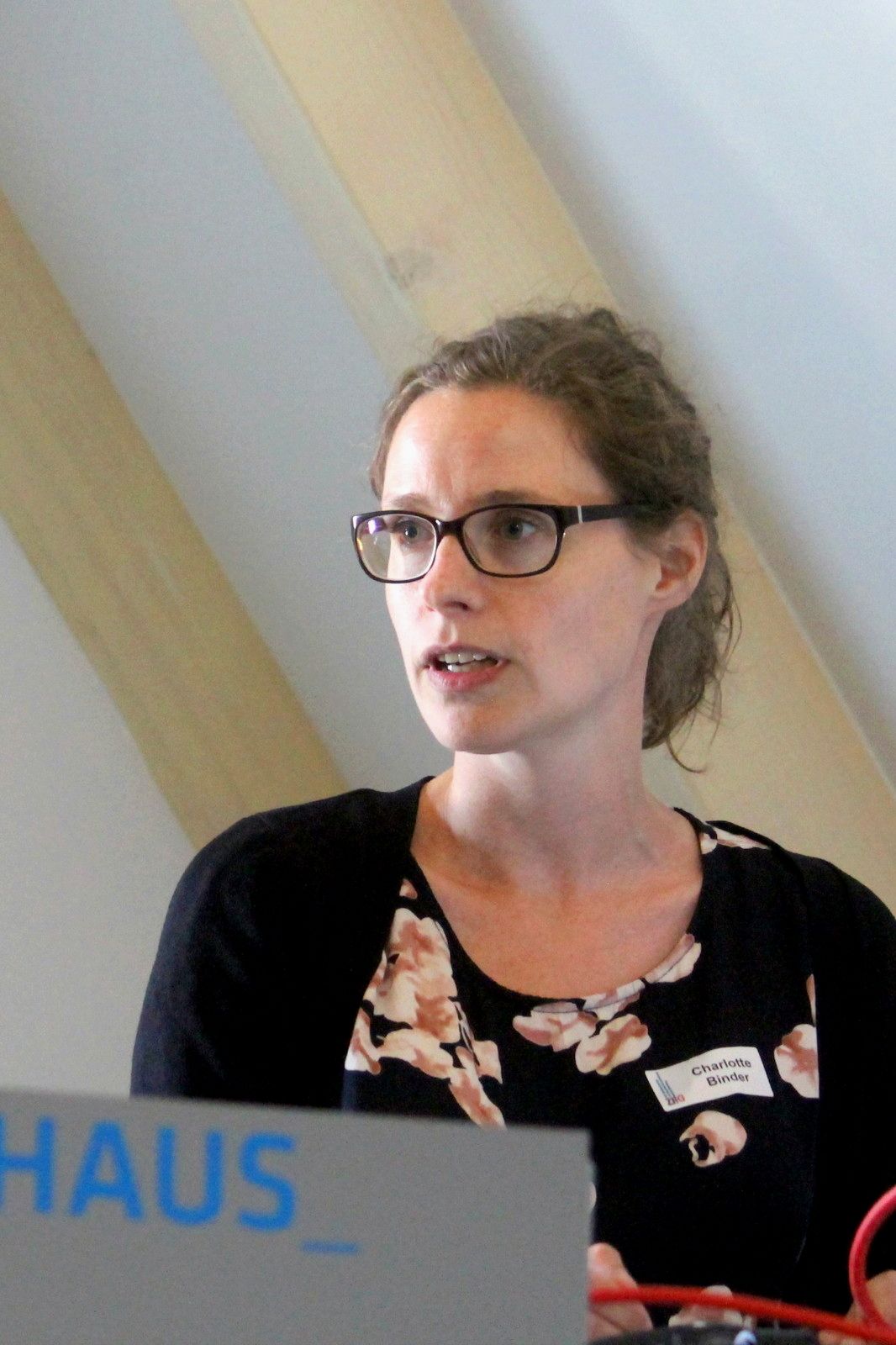
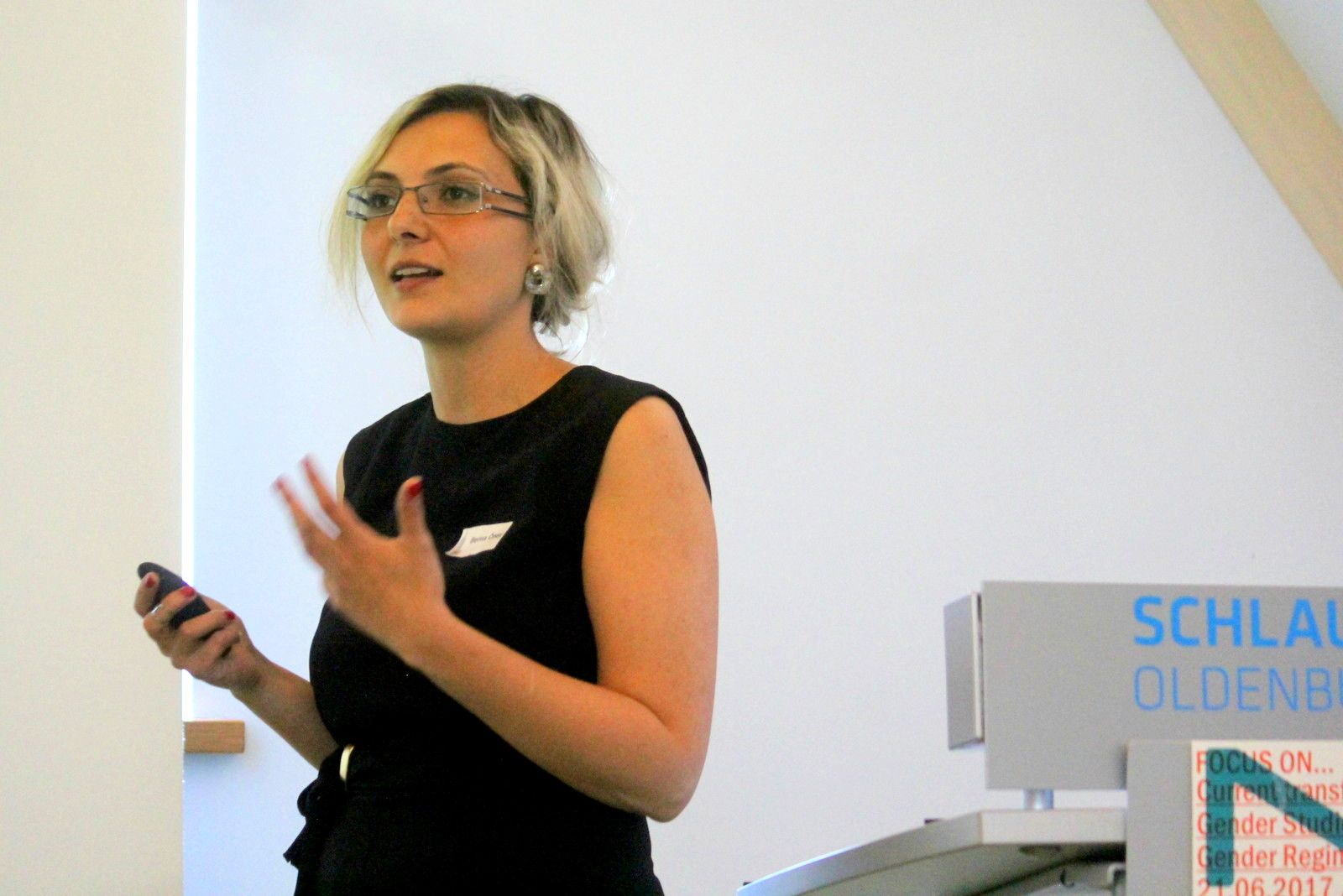
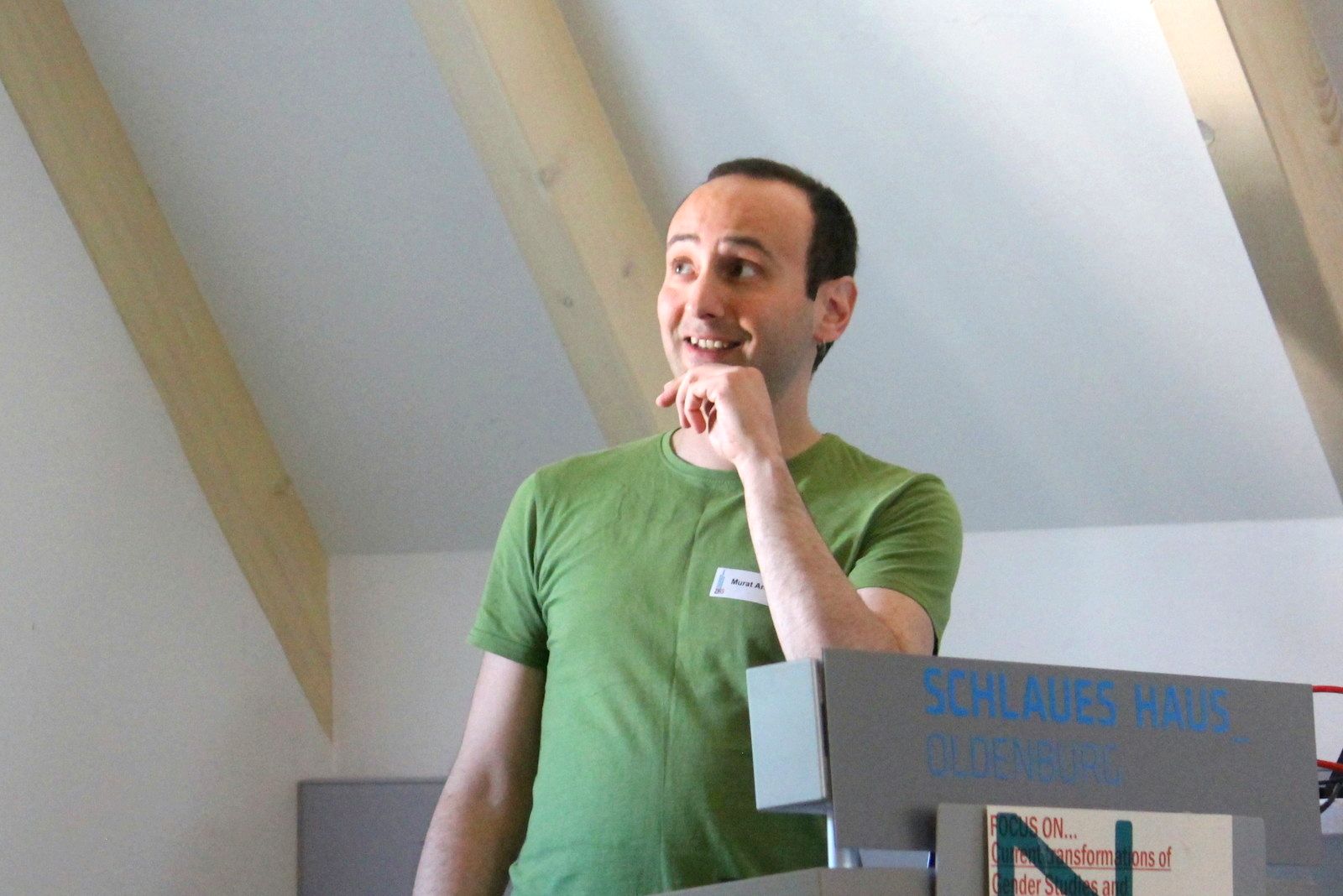
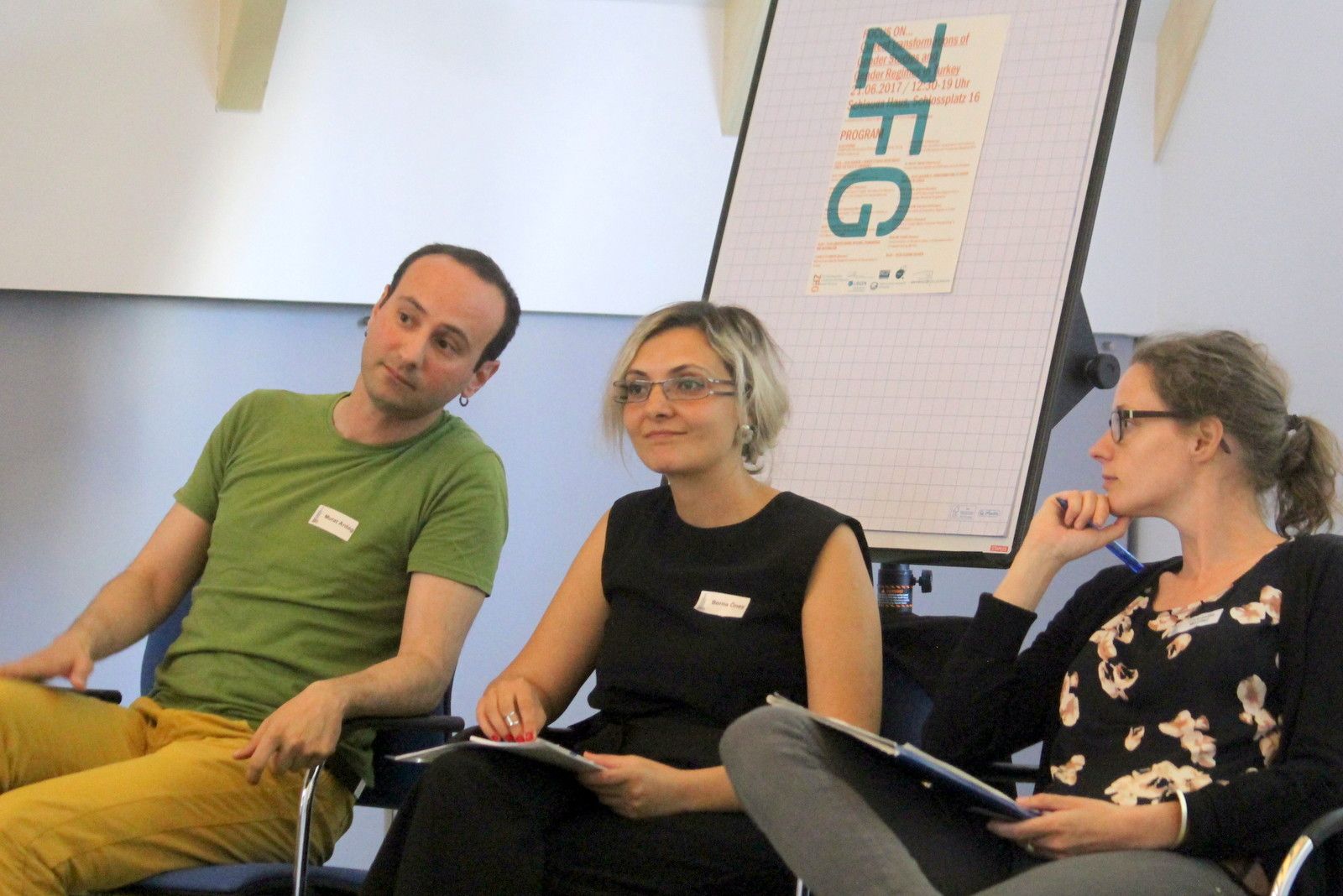
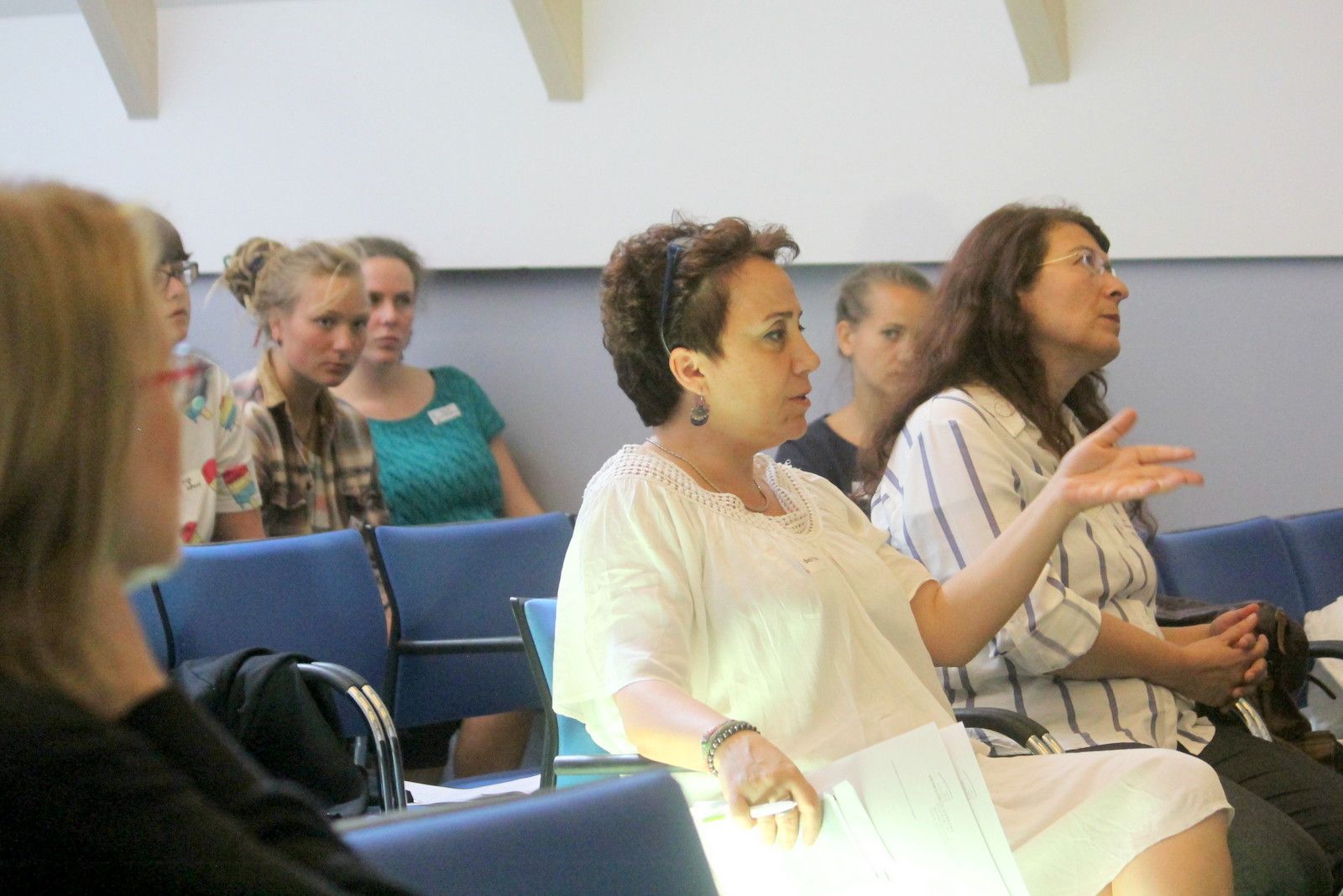
Current transformations of gender studies and gender regimes in Turkey, 21.06.17

- CURRENT HOTSPOT....
12h30 - 19h00, The Smart House Oldenburg (Schloßplatz 16), D-Oldenburg
Under the neoconservative regime and in the context of refugee and reception policies, not only have gender regimes in Turkey changed, but under the emergency legislation, the possibilities for researching and analysing this situation have also been severely restricted. Critical (gender) researchers have been dismissed from the civil service or sent into retirement, especially if they have signed the "Academics for Peace" petition.
How do critical academics and students of gender studies deal with this? What is the current situation of the Gender Studies Departments at the larger universities in Ankara or Istanbul? What form of support is needed or possible?
Turkish academics (professors, doctoral candidates) and students will present their assessments of the situation and discuss it with us:
- Gender Studies Departments under the Emergency Law
- Transformations of gender regimes in Turkey
Further research projects and other activities will be presented.
- Please register informally by email to zfg@uol.de
The conference language is English. Please contact us as soon as possible if you require a translation into Turkish or German. We will endeavour to make appropriate arrangements.
Conference organisation: Lydia Potts, Sylvia Pritsch (ZFG - Centre for Interdisciplinary Women's and Gender Studies University of Oldenburg) in co-operation with Zeynep Kıvılcım (Göttingen Centre for Gender Studies and LAGEN Network "Gender and Migration @ Lower Saxony")
+++The conference is part of the series "Aktueller Brennpunkt" of the Centre for Interdisciplinary Women's and Gender Studies (ZFG) of the University of Oldenburg +++