

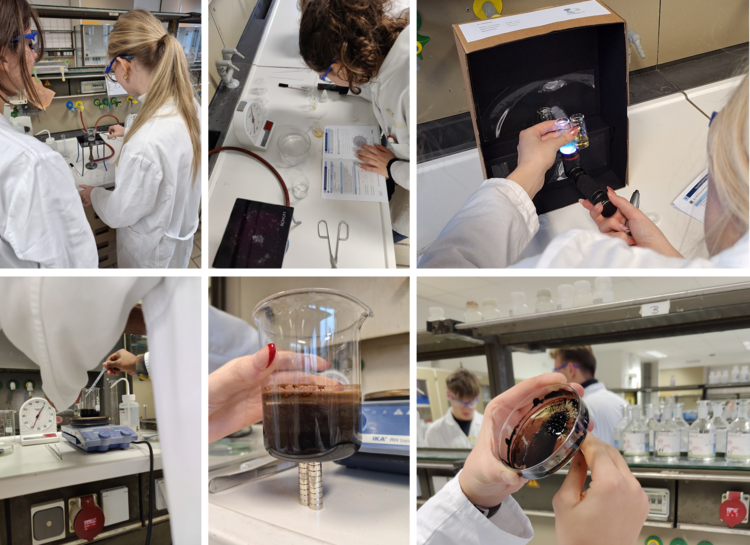


On 16 December 2025, we welcomed the advanced level 12 course from Werner-von-Siemens-Gymnasium Bad Harzburg to the Didactics of Chemistry. Malte Petersen and Elisabeth Dietel guided the course through the day and answered many questions about studying, training and more. The students were then given an exciting insight into various departments at the university: Alexander Simon took us through the laboratories of the Wark working group and explained how to use the gas chromatograph, sunlight simulator and glove box. Willi Rathje delighted the students with a tour of the chemical laboratory technician training labs and showed us a wide range of topics from aspirin synthesis and the separation of leaf dyes to the extraction of dyes or fats from foods and luxury foods such as peppermint liqueur or speculoos. Ramona Bartsch and Jonathan Bauschulte then ventured into the handling of gas chromatography with the course. The students were able to operate and analyse one measurement themselves. A second measurement required a good nose: using our GC with olfactory unit, the students were able to sniff out the various substances found in coffee extract.
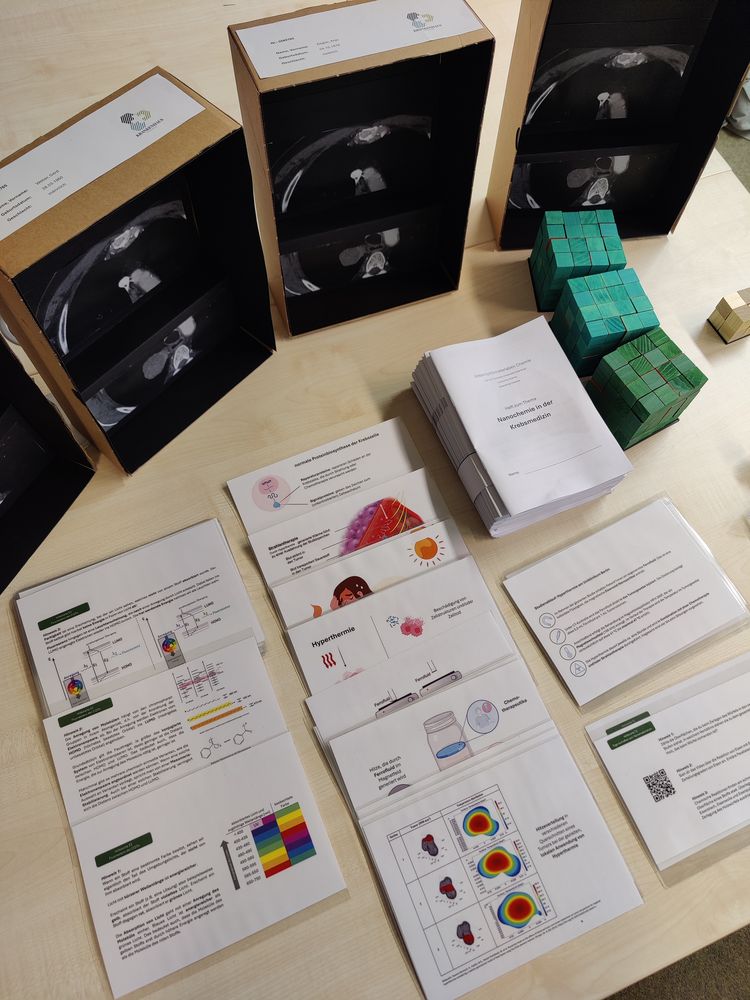
Finally, on 17 December, the students were able to work hands-on in our laboratories. In our project "Nanochemistry in cancer medicine" (part of Elisabeth Dietel's doctoral project), the course developed a definition of nanomaterials and investigated in the laboratory how different nanomaterials are used in cancer research. To this end, they synthesised pH-dependent carbon quantum dots that can be used for improved fluorescence imaging in tumour diagnostics. They also produced their own ferrofluid and used it to model the therapy method of hyperthermia. The entire day was centred around the question of how such new therapies and their testing in clinical trials should be evaluated.
After many productive and exciting questions about cancer, cancer research and nanomaterials, we said goodbye to the course. We would like to thank the Werner-von-Siemens-Gymnasium and the two accompanying teachers Angelika Garms and Dr Björn Bartram for the great cooperation!