A nationwide online series of lectures, to which the University of Oldenburg will be connected via video conference, will focus on the "unease about Europe".
Hearing for all:
DFG funds research group for another three years
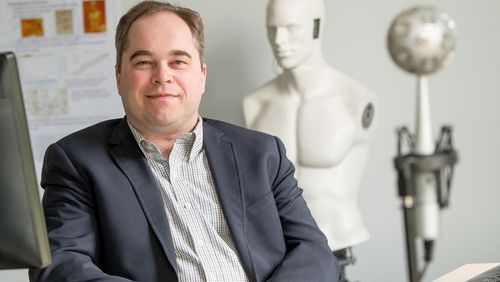
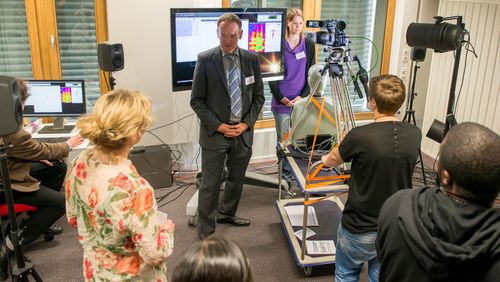
With its research, it represents the technological core of the Hearing4All cluster of excellence: the "Individualised Hearing Acoustics" research group. The German Research Foundation is now funding this for a further three years with an amount of almost two million euros.
Processors in computers and mobile phones contain billions of tiny switches: transistors. Can't get any smaller? It is possible, and more than a thousand times faster, says physicist Martin Silies. He convinced the Federal Ministry of Education and Research with his idea of an optical transistor and…
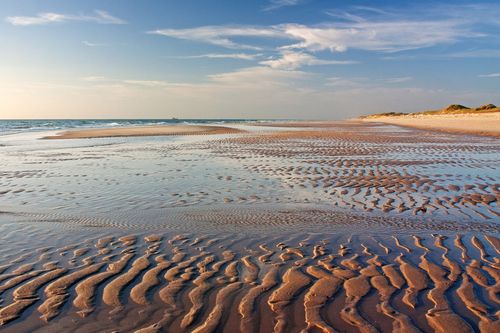
Oldenburg scientists have created 120 square metres of artificial islands in the Spiekeroog mudflats. The globally unique large-scale project provides new findings for biodiversity research.
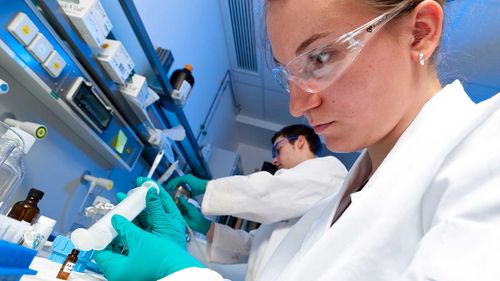
Reintroducing insects and other aquatic animals to streams in their natural environment: This is the aim of a new research project led by biologist Ellen Kiel. For three years, she and her team, with the help of students, are developing suitable "mobile homes" made from natural materials such as…
At this year's CeBIT in Hanover, scientists from the University of Oldenburg and the OFFIS computer science institute will be presenting the analysis of large amounts of data, flexible and secure solutions for teleworking and interaction options for palliative care patients.
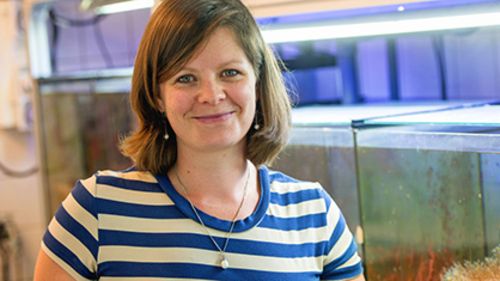
Smartphone plus app is not enough: Oldenburg computer scientist Susanne Boll and her team are developing mobile assistance devices that people really want - because they fit in well with everyday life, because they help and because they look good. A portrait
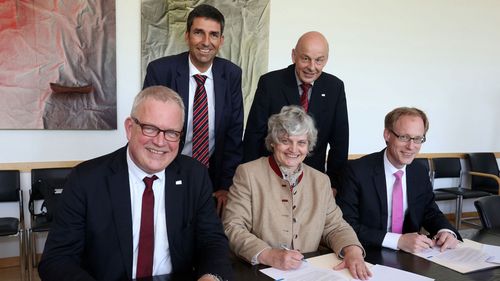
Newly appointed physicians admitted to the Research Centre Neurosensory Science
The conference "New appointees and neurosensory science - getting to know each other and impulses for professional cooperation" took place in mid-January / Basis laid for new research initiatives
Psychiatrist Andreas Heinz is Karl Jaspers Visiting Professor
One of Germany's most renowned psychiatrists will take over the Karl Jaspers Visiting Professorship in the 2014/2015 winter semester: Prof Dr Dr Andreas Heinz, Director of the Department of Psychiatry and Psychotherapy at Charité Universitätsmedizin Berlin.
Small but treacherous: midges of the genus Culicoides are much smaller than the related mosquitoes, but as disease vectors they can cause epidemics in sheep or cattle with losses in the hundreds of millions. Young researchers at the university are investigating the ecology of the bloodsuckers.
He deals with things that remain hidden: Christoph Lienau has established the "Ultrafast Nano-Optics" research area at the university. In the international research community, Oldenburg is now known as the "city of short pulses".
New science blog analyses
The present and its perception
How do different scientific disciplines analyse and describe the present? And how do these descriptions influence social reality, or at least our perception of it? A new Oldenburg science blog discusses questions like these.
The University of Oldenburg celebrated its 40th birthday in 2014. What makes it special? What should education look like in the future, and how can students' thirst for knowledge be encouraged? An exchange of views between Katharina Al-Shamery, Sabine Doering, Birger Kollmeier and Niko Paech.
Infectious diseases from a medical and cultural-historical perspective: An interview with the physician and chemist Klaus Peter Kohse and the contemporary historian Malte Thießen.
Rural peripheries - are they the "problem areas" that many have long perceived them to be or, on the contrary, the engine of dynamic development, for example for tourism, agriculture or the energy sector? A geographical symposium at the university painted a differentiated picture.
An international team of researchers has had 20,000 litres of seawater from the North Atlantic transported by tanker to Heidelberg University for analysis - including marine researchers from the University of Oldenburg.
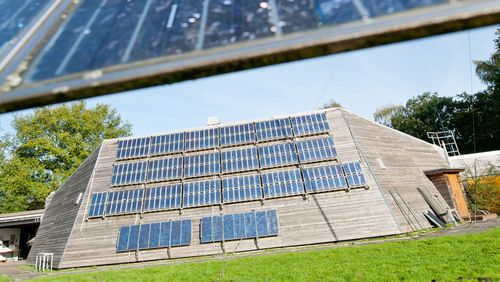
Wind energy research network receives North German Science Award
The 2014 North German Science Award goes to the "Wind Energy Research Network". ForWind - Centre for Wind Energy Research at the Universities of Oldenburg, Hanover and Bremen, the Fraunhofer Institute for Wind Energy and Energy System Technology (IWES) Northwest and the German Aerospace Centre (DLR)…