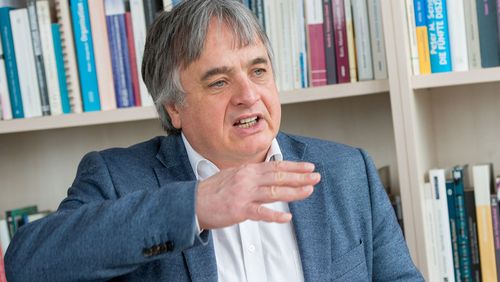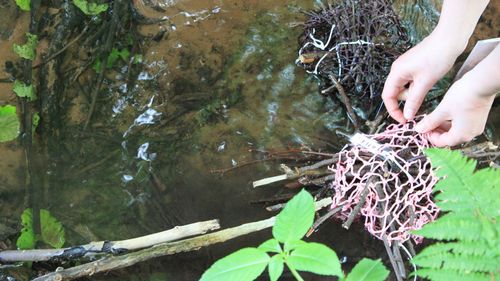
On 19 November, Oldenburg researcher Prof. Dr Henrik Mouritsen, who is known worldwide for his research on migratory birds, accepted the €5,000 prize for excellent research from the Oldenburg University Society (UGO).
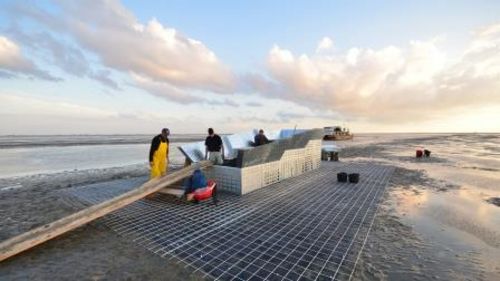
The world's most modern research vessel is now in the service of science. The "Sonne" was handed over to German marine research by politicians at the ICBM site in Wilhelmshaven - where it also has its home port. In December, she will set off on her first expedition to the Indian and Pacific Oceans.
BKGE celebrates 25th anniversary with international conference
It was founded shortly before the fall of the Berlin Wall and the Iron Curtain: The Federal Institute for the Culture and History of Germans in Eastern Europe (BKGE) - an affiliated institute of the University of Oldenburg - is celebrating its 25th anniversary at an international conference.
Symposium: "The idea of the university - historical and current positions"
"The idea of the university" is the focus of an international symposium hosted by School IV - School of Humanities and Social Sciences on 13 and 14 November.
What constitutes a university? To approach this question, Prof Dr Volker Berghahn from Columbia University, New York, will begin by comparing…
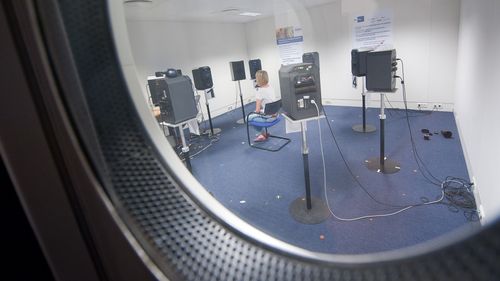
When there is noise from several sources, hearing aids often no longer help the hearing impaired. With the help of electroencephalography (EEG), scientists at the Hearing4all cluster of excellence are working on developing a new type of hearing aid - controlled by the wearer's thoughts.
Series of lectures: "Paths to communicative reason"
Prof. em. Dr Stefan Müller-Doohm, sociologist at the University of Oldenburg, will be focusing on Jürgen Habermas over the course of six evenings at the Karl Jaspers House.
The Ebola epidemic makes his book highly topical: historian Malte Thießen has published an anthology on the history of epidemics in modern and postmodern times. In this interview, he talks about tapping into current fears, health policy as a national prestige gain and missed lessons from history.
Making the illegible legible - even in
even in Klingon
Blotted, scribbled on or mouldy in the archive: Oldenburg scientist Prof Dr Jörg Lücke is researching how dirty and therefore unreadable texts can be cleaned automatically. The newly developed text cleaning software can do a lot more in the future.
EXIST funding:
University strengthens start-up climate
The University's Start-up and Innovation Centre is continuing its successful work: the Federal Ministry for Economic Affairs and Energy (BMWi) is extending funding from the EXIST IV programme for a further two years. The central theme of the second project phase: "Female Entrepreneurship".
Heat-controlled mini-storage tank
with double balance
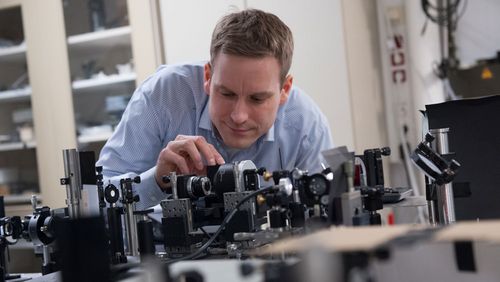
Controlling heat flows even at the smallest level and thus preventing computer chips from overheating, for example - an Oldenburg physicist and two colleagues from Paris have come a step closer to achieving this goal. The highlight of their ideas is a material with very special properties.
29th Annual Conference of the Society for Neuropsychology at the University of
Neuropsychological therapies aimed at regaining cognitive abilities in brain diseases such as stroke, Parkinson's and dementia are the focus of the 29th annual conference of the Society for Neuropsychology. It will take place from 18 to 20 September at the University of Oldenburg.
"Germany is exemplary in the area of data protection"
Credit scoring is a mathematical-statistical procedure that allows conclusions to be drawn about a buyer's creditworthiness, for example. Oldenburg lawyer Prof Dr Jürgen Taeger has examined the legal aspects of these procedures in an international comparison.
Club of Rome Honorary President talks about the impact of technological progress
Jischa's lecture is part of the 28th international conference on environmental informatics "EnviroInfo", which is being held at the university from 10 to 12 September with over 150 participants.
What actually is "crowdinvesting"? EFNW GmbH, an Institute affiliated with the University of Oldenburg, has published a study on the phenomenon. The authors have found that the "fun investors" of the past have been joined by professional investors.
The protein KCC2 plays an important role in the body: if it does not function properly, this leads to chronic pain and epilepsy - and if it fails completely, newborn babies cannot breathe. Biologists at the University of Oldenburg have published new findings on the evolution of this protein and its…
Inclusion: "It's no longer a question of if, it's a question of how"
He is helping to shape the inclusion process at schools in Oldenburg and is also providing scientific support. In this interview, Dr Holger Lindemann talks about visions and concerns, about new, different teaching and the journey as a goal.
German Chancellor Angela Merkel has christened it: The deep-sea research vessel "Sonne". Its home institute is the Institute of Chemistry and Biology of the Marine Environment (ICBM) at the University of Oldenburg. Marine researcher Prof Dr Oliver Zielinski talks about the ship, the research work on…
Minister of State for Culture Monika Grütters visits the BKGE
A few months after taking office, the new Federal Government Commissioner for Culture and the Media (BKM), Monika Grütters, visited the Federal Institute for Culture and History of the Germans in Eastern Europe (BKGE) in Oldenburg.
Why are most players in European national youth football teams born in the first quarter of the year? And why does this continue in the later teams? Sports scientists have looked at the birth dates of all World Cup players - and have uncovered some interesting facts.
Computer science lessons:
"We need to start as early as possible"
Not knowing how the Internet works and what it is based on is dangerous, says Ira Diethelm, Professor of Computing Science Education. In this interview, she explains why she believes compulsory computer science lessons in schools are essential - and what its great opportunities are.