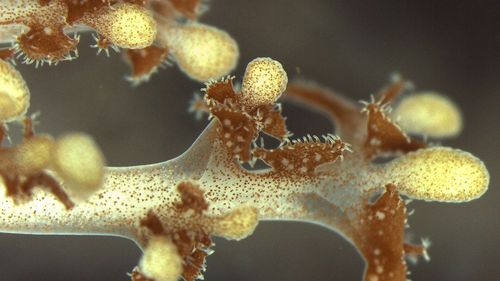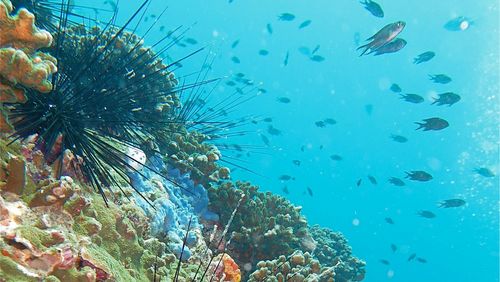
If it gets even warmer in the tropics as a result of climate change, will this affect the plant species there? Apparently the opposite is true for most pineapple plants, as the Oldenburg biologist Lilian-Lee Müller discovered. The surprising result of her research concerns up to 3000 species.
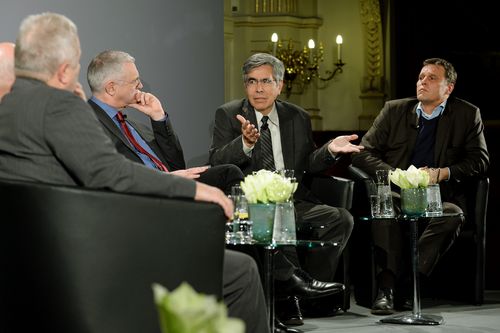
What "music and well-being" have to do with each other - from goosebumps to cognitive benefits for stroke patients - is the subject of a specialist conference at the university on the second weekend in September. Host Gunter Kreutz in an interview.
She wants to know how different animal species adapt to their environment and at what cost: Australian Dr Gabrielle Miller is conducting research as an Alexander von Humboldt Fellow at the Institute of Biology and Environmental Sciences.
Research for a sustainable
energy supply of the future
What could a sustainable electricity supply in Lower Saxony look like in a few decades, and how can it be achieved? This is the focus of a new interdisciplinary joint project involving the University of Oldenburg and its affiliated Institute OFFIS, among others.
Open Access - worldwide, convenient and free access to scientific knowledge on the Internet: The university shares this goal with more than 500 other scientific and science-related institutions and organisations. It now has its own guidelines for open access publishing.
A junior research group for rehabilitation sciences will begin its work at the School of Medicine and Health Sciences in future. The new junior research group will be funded for five years by the German Pension Insurance Oldenburg-Bremen. The foundation agreement has now been signed.
Why can't a microphone "hear" like a human? Oldenburg researchers led by Simon Doclo and Timo Gerkmann presented the interaction with sound together with partners from an international project at an exclusive London science show.
The new NeSSy research building on the Wechloy campus has been officially opened. It offers three of the university's outstanding research focuses a place for intensive exchange.
Bacteria in the sea:
Hugely important for the global carbon cycle
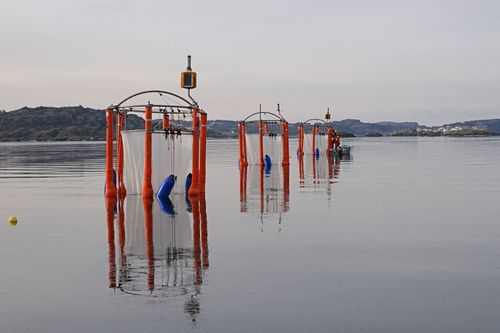
How is it that organic material dissolved in the sea can store carbon over thousands of years and thus keep our climate relatively stable? To get a little closer to the answer to this question, marine researchers at the university have conducted a laboratory experiment lasting several years.
Homogenisation of ecosystems:
Species communities are harmonising
The European Mediterranean snail can now also be found in South Africa and Australia. How this came about and what snails have to do with the homogenisation of ecosystems - ecologist Hanno Seebens researched this in an international team and published the results in the journal "Science".
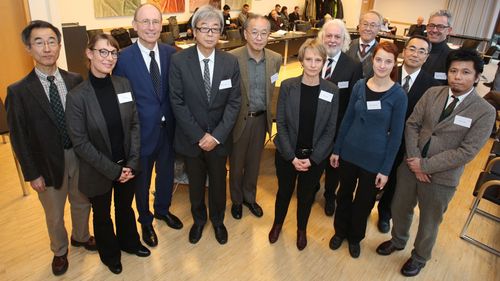
Supplying the growing population with a sustainable source of energy without environmentally harmful waste is the centre of an interdisciplinary and international conference at the University of Oldenburg from 15 to 18 June.
The resources that a society has to distribute are scarce - for example in the social or healthcare system. Which distribution is considered fair and why? Political scientist Markus Tepe and philosopher Mark Siebel are investigating this in a new DFG research group.
Palmyra World Heritage Site:
"Conditio of being human is up for grabs"
The feared iconoclasm of the world cultural heritage site by IS terrorists leaves most people in this country cold. Yet the site belongs in the cultural memory of European nations. An article by Michael Sommer, ancient historian and expert on Roman Syria.
People in central Ukraine often speak a mixture of Russian and Ukrainian. Slavicist Gerd Hentschel is currently investigating the phenomenon on site - and is also feeling the effects of the political crisis.
The university was invented during this period and the idea of "education" as a life-long endeavour was born: The Middle Ages were nowhere near as medieval as many people think. Especially as there is no such thing as "the" Middle Ages. An article by philosopher Johann Kreuzer.
"Media and practices of 'counter-royal' rule in the German Empire of the High Middle Ages" - this is the title of the lecture to be given by medievalist Dr Michaela Muylkens on Wednesday, 6 May at 7 p.m. in The Smart House Oldenburg (Schlossplatz 16).
Analysing how European societies are growing together - or not: this is the centre of the research group coordinated by Oldenburg sociologist Martin Heidenreich, which the German Research Foundation continues to fund. An interview.