In the AVACS Collaborative Research Centre, top Computing Science researchers have made supposedly "undecidable" problems in safety-critical systems manageable. In this interview, spokesperson Werner Damm looks back on an exciting twelve years.
"Immigrant" plants and animals can change entire ecosystems and cause millions of euros worth of damage. A team of researchers led by Oldenburg is predicting which regions are particularly at risk. Far ahead: the North Sea.
Outstanding in Lower Saxony: the Cluster of Excellence Hearing4all is to receive millions in funding from the state to open up further fields of research and increase its chances in the follow-up programme to the Excellence Initiative. The new findings could have a lasting impact on our daily lives.
Like the University of Oldenburg, the Ocean University of China in Qingdao is also known for its marine research. In future, both universities want to cooperate in research and exchange students and lecturers.
Medication in nursing homes: don't forget the kidney
Oldenburg care researchers warn: one in five nursing home residents receives medication whose dose has not been adjusted to their kidney function or which should even be discouraged altogether. The results of their study were recently published in the German Medical Journal.
Success for Oldenburg didactics experts: The German Federal Environmental Foundation (DBU) is funding four projects conceived at the university with a total of 800,000 euros. They are intended to help make socially challenging topics such as climate change accessible to young people.
The state of Lower Saxony will be funding three newly designed doctoral programmes at the university in the coming years. A total of 36 scholarships are available for doctoral candidates. The programmes focus on marine analytics, the migration society and extracurricular learning.
MRI scanner goes into operation:
New possibilities for research
Psychological and medical research at the university has access to a new piece of large-scale equipment: The new magnetic resonance tomograph at the School V - School of Medicine and Health Sciences is being used for the first time for a study on the effects of chronic pain on numerical reasoning.
The first step in the formation of dunes and thus an island is what are known as primary dunes - in Platt: "Wittbülten". The national park house of the same name on Spiekeroog, which has been operating a research centre in co-operation with the university since 2011, is now celebrating its tenth…
Scientists always want to know exactly what's going on, to get to the heart of the matter - not so with the new XPS spectrometer at the Institute of Chemistry, where only the surface counts.
Federal Ministry continues to support start-up "MiCROW
Another tailwind for the Oldenburg start-up MiCROW: The Federal Ministry for Economic Affairs and Energy (BMWi) is also supporting the young company, which has its roots in the Oldenburg Computing Science Institute OFFIS - an affiliated institute of the university - in the second phase of the "EXIST…
Germany is neglecting e-government - electronic administration and government - and is leaving important potential for innovation and value creation untapped: This is the conclusion reached by the Expert Commission on Research and Innovation, headed by Oldenburg economist Christoph Böhringer, in its…
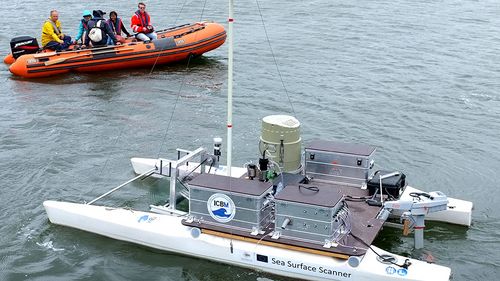
Another major success for Oldenburg's marine and coastal researchers: they are coordinating several new research networks with millions in funding. The focus is on plastic waste, light penetration and nutrients in the sea - as well as small crustaceans with a central role in the marine food web.
Anyone who watches operas, operettas or musicals often comes across historical musicians who are portrayed. In this way, the audience - quite incidentally - gains knowledge about these musicians. Musicologist Anna Langenbruch wants to find out how this works. The Emmy Noether funding programme for…
New DFG project investigates the role of EU Commissioners
Do the members of the EU Commission act first and foremost in the European interest or do they rather have the welfare of their respective home country and its government in mind? The Oldenburg political scientist and EU expert Prof Dr Torsten Jörg Selck wants to get to the bottom of this question.
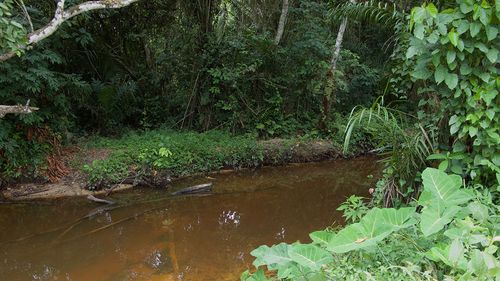
When it comes to the protection and utilisation of nature, we have evidently been working on the basis of oversimplified assumptions. An international team of researchers has analysed more than 1100 grasslands on five continents in order to gain a more differentiated understanding of this ecosystem.…
Searching for clues: German-Dutch research leads to exhibition in Groningen
Where is Count Adolf of Nassau, brother of William of Orange and 16th century freedom fighter of the Netherlands against the Spanish occupation, buried? Dr Ralph Hennings, theologian and private lecturer at the University of Oldenburg, investigated this question together with Groningen historian…
The collected knowledge about the plants of the earth
All plants on earth are to be recorded with their most important properties in the global database "Try". This is an ambitious project in which a team from Oldenburg is playing a key role. An article has already been published in "Nature", for which the database was fundamentally important.
Do I have to be close to a person in order to trust them? Innovation researcher Jannika Mattes has analysed this in relation to the world of work and published the results in the European Management Journal. In an interview, she talks about coffee breaks as a think tank, challenges for bosses and…
Five Oldenburg scientists elected to DFG review boards
Oldenburg expertise for the German Research Foundation (DFG): Five scientists from the University will help shape DFG research funding in future as review board members.