Contact

Press and Communication

+49 (0) 441 798-5446

News feed of the news

https://uol.de/en/news/rss (XML)
Copy address and paste into feed reader

News articles

News search

Research Top News

Robots: soulless psychopaths or useful helpers?

Robots that come close to human behaviour and one day even subjugate us - is this something from Hollywood or is the advancement of artificial intelligence actually a threat to humanity? Five experts tackled this question at the Oldenburg Castle Talks.

more: Robots: soulless psychopaths or useful helpers?
Research Studying More news

Making student research visible

University organises first nationwide conference for researching students / Submission of contributions now open

more: Making student research visible
Photo 2013 from www.ChristianSchwier.de
Research Top News

On a treasure hunt for data in municipal election results

Accepting refugees, maintaining the swimming pool or the location of the new kindergarten - local elected representatives shape politics in cities and municipalities. Political scientist Markus Tepe wants to take a closer look at the factors that play a role in their election and participation.

more: On a treasure hunt for data in municipal election results
Research Campus Life

So that coastal regions do not do not perish

What do climate-related increases in rainfall mean for a region that lies one third below sea level? How can and must it adapt its drainage management? These questions are the driving force behind a new research project at the university.

more: So that coastal regions do not do not perish
Research More news

Large-scale project "Freedom Space Reformation" to receive further funding in 2016

"Freiheitsraum Reformation", a co-operation project between the University of Oldenburg and partners from culture, science and society to mark the 500th anniversary of the Reformation in 2017, will receive further funding in the coming year.

more: Large-scale project "Freedom Space Reformation" to receive further funding in 2016
Research Campus Life Early Career

"Positively alienating" - German-Japanese workshop

Corporal punishment in school sports, Aristotle's reflections on drunkenness or the colourful world of "Lolita": using examples like these, experts from Japan and Germany analysed the development of self-images and world views at the University of Oldenburg.

more: "Positively alienating" - German-Japanese workshop
Research Top News

How bacteria break down crude oil

Deepwater Horizon, Exxon Valdez, Prestige - how does nature manage to recover from such immense interventions? Scientists have known for some time that bacteria play a key role here. Oldenburg researchers have now discovered how these microorganisms manage to clean their environment.

more: How bacteria break down crude oil
Research Studying Campus Life

When one jellyfish becomes many

Who wouldn't sometimes like to be able to split up and be in several places at the same time? Jellyfish can do this: reproduce, for example, by simply cutting off parts from which a new individual then emerges. Biology student Anneke Heins got to the bottom of the strategies of one particular…

more: When one jellyfish becomes many
Research Top News

Against the secret hearing loss

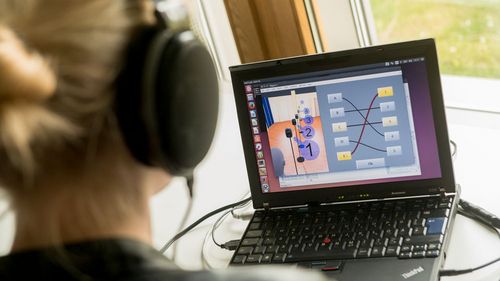
Hearing damage caused by noise has hardly been recognised to date. Oldenburg hearing researcher Sarah Verhulst wants to change this. The junior professor in the "Hearing4all" cluster of excellence is receiving 1.5 million euros from the European Research Council.

more: Against the secret hearing loss
Research More news

Open Access Publication Fund: Making scientific findings freely accessible

Making scientific knowledge gained at the university freely accessible to everyone: This is the aim of an Open Access Publication Fund, which the University Executive Board is now setting up with the help of funding from the German Research Foundation (DFG).

more: Open Access Publication Fund: Making scientific findings freely accessible
Research Top News

Actively shaping the research landscape

Doctoral researchers are currently being called upon to elect their representatives to the DFG's review boards and thus help shape the research landscape of the coming years. In this interview, Katharina Al-Shamery, Vice President for Research and Transfer, explains why it is important to take part…

more: Actively shaping the research landscape
Research Top News

From the smallest organisms and the longest periods of time

A new research network in the marine sciences is aiming for a future cluster of excellence together with Bremen. Coordinator Helmut Hillebrand from the Institute of Chemistry and Biology of the Marine Environment (ICBM) talks about developing a joint agenda - and a new perspective on biodiversity.

more: From the smallest organisms and the longest periods of time
Maike Nicolai, GEOMAR
Research Top News

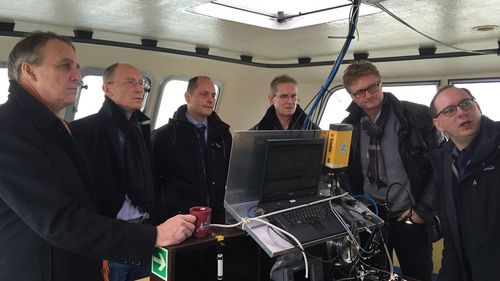
Researchers simulate the ocean of the future

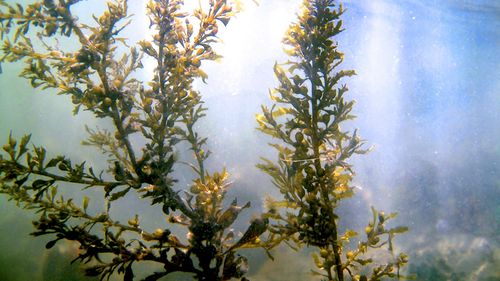
The oceans are becoming more acidic. What does this mean for the global climate? To find out, researchers have simulated the ocean of the future off the coast of Sweden. A team from Oldenburg took part - and were in for a surprise.

more: Researchers simulate the ocean of the future
Research Top News

In the sights

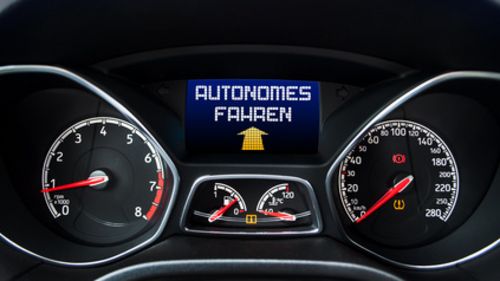
Small and always online: "Smart cameras" concealed on glasses, jewellery or bicycle helmets could soon completely digitalise our lives in public spaces. A new research project is analysing technical opportunities and the need for legal regulation - an interview with project leader Jürgen Taeger.

more: In the sights
Research Top News

Researchers uncover the secret of the deep sea

More than half of the Earth is covered by water, but even the far side of the moon has been more thoroughly explored than the world's oceans. Researchers have now solved one of the oceans' mysteries: they have discovered how the hot springs in the deep sea help to keep the global climate stable.

more: Researchers uncover the secret of the deep sea
daniel schmidt
Research People More news

Koch new director of the Research Centre Neurosensory Science

The interdisciplinary Research Centre Neurosensory Science (FZN) at the University of Oldenburg has a new board of directors. Following a unanimous election, biochemist Prof. Dr Karl-Wilhelm Koch will serve as Managing Director of the cross-faculty centre for the next two years.

more: Koch new director of the Research Centre Neurosensory Science
Research Top News

Why migratory birds always find their way

Migratory birds are masters at navigating. Young animals that do not learn this in the first few months of their lives permanently lack a sense of direction - or so biologists previously thought. A team of researchers from Oldenburg has now discovered that nature gives animals a second chance, for…

more: Why migratory birds always find their way
Research Campus Life

Educational research on a new level

Together with four South and East African partners, the university has launched an international scientific centre. The aim: to take educational research and management in Africa to a new level.

more: Educational research on a new level
Research Top News

When economic activity meets sensitive ecology

What happens to the sensitive ecology of the coast as Europe grows ever closer together? What problems will arise and how can they be solved? Oldenburg researchers are looking for the answers at the newly established Jean Monnet Centre "Europeanising Coastal Regions".

more: When economic activity meets sensitive ecology
Research More news

Oldenburg "life sciences" ranks third in Germany for DFG funding per researcher

(Changed: 30 Mar 2026)  Kurz-URL:Shortlink: https://uol.de/p60209en
Zum Seitananfang scrollen Scroll to the top of the page

This page contains automatically translated content.