Contact

Press and Communication

+49 (0) 441 798-5446

News feed of the news

https://uol.de/en/news/rss (XML)
Copy address and paste into feed reader

News articles

News search

Research Top News

"The key lies in co-creation"

How should a classroom be designed so that pupils and teachers feel comfortable in it? In his new volume, the Oldenburg educational scientist Klaus Zierer addresses a fundamental - and hitherto largely ignored - question.

more: "The key lies in co-creation"
More news Research

Promoting learning - relieving teachers

Educator and school developer Heinz Klippert gives lecture at the Pedagogical Week

more: Promoting learning - relieving teachers
Research Top News

150 horsepower for coastal protection

The "Zephyr" is the new research boat of the Institute of Chemistry and Biology of the Marine Environment (ICBM). It is small, manoeuvrable and fast - and is intended to help understand the little-researched interaction of the Wadden Sea between land and the open North Sea.

more: 150 horsepower for coastal protection
Research Top News

Karl Jaspers House opened: "A place for interdisciplinary thinking"

It is a "gem of humanities research": the Karl Jaspers House, restored and furnished over the past two years, is home to Karl Jaspers' 12,000-volume library. The villa in the Dobbenviertel has now been opened with a grand ceremony.

more: Karl Jaspers House opened: "A place for interdisciplinary thinking"
Research Top News

Top athletes: "Turning to drugs is compliant behaviour"

In high-performance sport, the boundaries between "permitted" and "unauthorised" are fluid, says Thomas Alkemeyer. The Oldenburg sports sociologist analyses the current doping debate - and finds the public uproar over the use of performance-enhancing drugs "astounding".

more: Top athletes: "Turning to drugs is compliant behaviour"
Research Top News

Hearing implants: On the way to customised therapy

The Neurogenetics working group headed by Hans Gerd Nothwang is researching deafness genes. The scientists have now published their findings in the renowned Journal of Biological Chemistry. They show that Deafness genes fulfil an extremely important function for the hearing process.

more: Hearing implants: On the way to customised therapy
Research Top News

In search of the right dose

Radiotherapy is one of the three pillars of cancer treatment, alongside surgery and drug therapies. Oldenburg scientists have been researching measuring devices that record the distribution of radiation doses in the body for ten years. A contribution by medical physicist Björn Poppe and the "Medical…

more: In search of the right dose
B. A. Schaefer
Research Top News

Energy turnaround: New impact of an old idea

More and more citizens are participating in energy cooperatives. What role can this co-operative form of business play in the future? The new BMBF joint project "EnGeno" aims to provide answers to this question. Irene Antoni-Komar and Niko Paech talk about the specific research objectives.

more: Energy turnaround: New impact of an old idea
Research More news

Babette Simon appointed to the advisory board of the German Consortium for Translational Cancer Research

Prof. Dr Babette Simon, President of the University, has been appointed to the Scientific Advisory Board of the "German Consortium for Translational Cancer Research (DKTK)" - one of six German centres for health research.

more: Babette Simon appointed to the advisory board of the German Consortium for Translational Cancer Research
Research More news

Al-Shamery elected to the University Senate of the German Research Foundation

Prof Dr Katharina Al-Shamery, chemist and Vice President for Research at the University, has been elected as a new member of the Senate of the German Research Foundation (DFG) by the General Assembly in Berlin.

The University Senate is the DFG's most important science policy body. It addresses…

more: Al-Shamery elected to the University Senate of the German Research Foundation
Research More news

Impact study on service learning

Having fun, learning new things, making a difference and helping: These are the most important motives for participating in service learning. The majority of students get involved for intrinsic and altruistic reasons. This is one of the results of an impact study.

more: Impact study on service learning
Research Top News

The world power that knew no crisis

From a small town in central Italy to the centre of a huge empire: how was the incredible rise of the Romans possible? And why is Roman history particularly interesting for us as contemporaries of globalisation? An interview with ancient historian Michael Sommer.

more: The world power that knew no crisis
Research More news

Helene Lange Kolleg "Queer Studies and Intermediality"

The Helene Lange College "Queer Studies and Intermediality: Art - Music - Media Culture" is focusing on queer art, music and media culture and will kick off on Thursday, 4 July at 5 p.m. (Haarentor Campus, Building A8, Room 0-001).

"Queer questions binary gender systems such as male and female,…

more: Helene Lange Kolleg "Queer Studies and Intermediality"
Research Top News

How fish find their way

How do fish larvae that have drifted for kilometres manage to return to the reef where they were born? An international team of researchers has investigated the migratory behaviour of coral reef fish. And discovered that the animals use a solar compass to navigate in the open ocean.

more: How fish find their way
Research Top News

Remember, change!

2017 marks the 500th anniversary of the posting of Martin Luther's theses. What is the function of the Reformation anniversary? Can it be used for ecumenical commemoration? And is it possible to commemorate the Reformation "differently"? An article by theologian Andrea Strübind.

more: Remember, change!
Research More news

"Karl Jasper's lecture on questions of time"

"Learning from and with each other: For a common future of humanity" is the title of this year's "Karl Jaspers Lecture on Contemporary Issues" on Monday, 24 June at 4 p.m. at the University of Oldenburg (A14, Lecture Hall 2).

more: "Karl Jasper's lecture on questions of time"
Research Top News

The desert in the rainforest

They have conquered the treetops of the tropical rainforest in a fascinating way: epiphytes, so-called epiphytes. The Oldenburg ecologist Gerhard Zotz describes how they withstand the extreme solar radiation - and why their prospects are nevertheless not good.

more: The desert in the rainforest
Research More news

"Palmyra - City on the Silk Road"

Palmyra: legendary trading centre for Bedouins, ancient trading and cultural centre for merchants and their caravans - that was the oasis city in present-day Syria. In his lecture "Palmyra. City on the Silk Road. Old and new archaeological research in Syria", Prof. Dr Andreas Schmidt-Colinet will…

more: "Palmyra - City on the Silk Road"
Research Top News

Understanding how active listening works

The DFG has approved nine million euros for the third funding phase of the Collaborative Research Centre "Active Hearing". What are the scientists' goals and how can their findings be applied in practice? An interview with Georg Martin Klump, head of the research project.

more: Understanding how active listening works
Research Top News

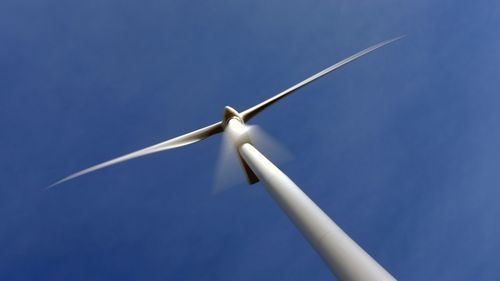
The major influence of turbulence

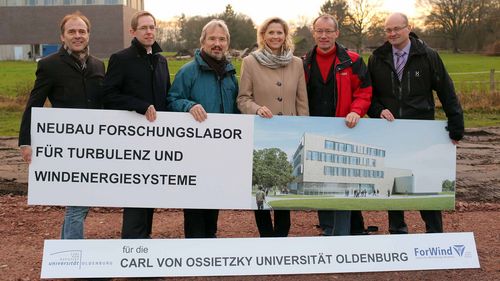
How can wind energy be fed into the electricity grid in a controlled manner? A question that poses challenges for science and industry. Oldenburg physicists show how turbulence affects the electricity production of large wind farms.

more: The major influence of turbulence
(Changed: 30 Mar 2026)  Kurz-URL:Shortlink: https://uol.de/p60209en
Zum Seitananfang scrollen Scroll to the top of the page

This page contains automatically translated content.