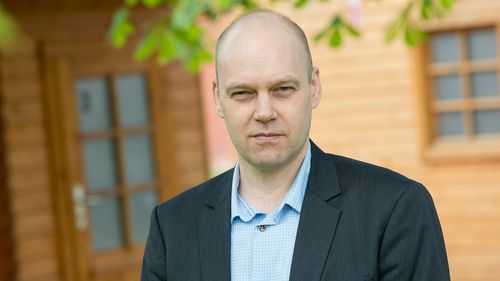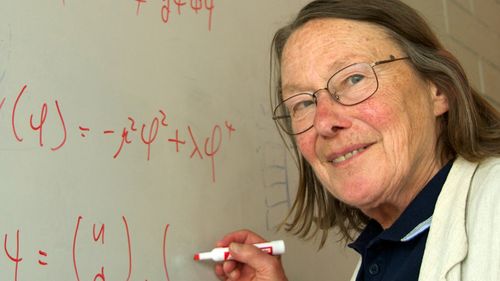
Computers and robots are becoming increasingly powerful thanks to artificial intelligence. Computing Science expert Oliver Kramer is convinced that humans will benefit. However, social discourse about the risks is important. A contribution to the Science Year 2018 "Working Worlds of the Future".
As part of a joint project, Oldenburg scientists are investigating how much microplastic enters the North Sea through the Weser and what it consists of. Detective work for the chemists.
Henrik Mouritsen has been researching the magnetic sense of birds for more than 15 years. He has now summarised the current state of research in the journal Nature. In this interview, the neurobiologist talks about his fascination with birds and why basic research is so important.
Psychologist Josef Meekes is investigating neurofeedback - a method that could help paralysed stroke patients to relearn certain movements. In February, he received a "Carl von Ossietzky Young Researchers' Fellowship" from the university.
Excellence Strategy
Research
Top News
Marine Sciences
Bioreactor underground
In the middle of the Atlantic, researchers have discovered a previously unknown part of the global carbon cycle. Subterranean microbes break down residues in the ocean crust that their relatives in the open ocean spurn. Thorsten Dittmar from the ICBM and colleagues report this in the journal Nature…
Hearing Research
Excellence Strategy
Research
Top News
New special research centre on hearing acoustics
The University is getting a new Collaborative Research Centre: the project on the topic of "Hearing Acoustics" is expected to receive around eight million euros in funding from the German Research Foundation (DFG) over the next four years. The head of the SFB is psychoacoustician Volker Hohmann.
Scientists from the Alfred Wegener Institute and the Universities of Oldenburg and Potsdam have succeeded in identifying a new species of amphipod in the North Sea. To characterise the new species, they used genetic information that is otherwise used in other areas of genetics. This approach could…
With electricity against the cocktail party effect
A research team led by psychologist Christoph Herrmann wants to improve speech comprehension with a special form of electrical brain stimulation. The Oldenburg researchers and their partners want to develop a new hearing aid as part of a BMBF joint project.
Starting signal for a historical research project that is one of the largest in Germany: The "Prize Papers" academy project was opened in Oldenburg Castle on Wednesday in front of around 130 guests from the worlds of science, politics and culture.
Chemist Jannika Lauth was awarded a Carl von Ossietzky Young Researchers' Fellowship this year. She is investigating two-dimensional nanoparticles using innovative laser processes. Possible applications include ultra-thin solar cells, fast transistors and energy-saving LEDs.
For the first time, a team of researchers led by Oldenburg has been able to scientifically describe a bacterium isolated from oil-contaminated samples from the Deepwater Horizon accident in 2010. It belongs to the Roseobacter group and is therefore one of the most important groups of marine…
Deafness is one of the most common congenital diseases of the sensory organs in newborns. Cochlear implants can compensate for hearing loss in a good two thirds of those affected. However, the hearing prostheses do not help a third. Oldenburg scientists are on the trail of this phenomenon.
Scientists from Oldenburg are currently travelling to the Antarctic on the research vessel Polarstern. Led by marine biologist Bettina Meyer, they are investigating, among other things, how climate change is affecting krill stocks in the Atlantic part of the Southern Ocean.
The more electricity comes from renewable sources, the more complex the electricity grid becomes. Energy computer scientists at the University of Oldenburg are researching the transformation to a flexible and intelligent system as part of a DFG Priority Programme.
In a joint project, scientists led by biology education specialist Corinna Hößle are investigating what pupils know about genome editing and how they evaluate it ethically. The researchers want to sensitise adolescents and their teachers to the topic.
Paul Bekker was one of the most influential music critics of the early 20th century. One of his studies on Ludwig van Beethoven was considered lost for over 80 years - until the musicologist Anna Langenbruch discovered it.
Why did the carbon dioxide content of the atmosphere suddenly rise after the end of the last ice age? Processes at the bottom of the Southern Ocean could be responsible, report researchers led by geochemist Dr Katharina Pahnke in the journal Science.
The Winter Olympics in Pyeongchang are still young, but there has already been the first case of doping. In this interview, sports scientists Prof Dr Dirk Büsch and Dr Katharina Pöppel talk about why testing and repression alone do not make sport cleaner.
On the trail of the monster wave phenomenon: an international team of researchers led by Oldenburg has succeeded in estimating the probability of a monster wave - a mountain of water up to 30 metres high - occurring based on the waves in the surrounding area.
Using scientific findings for social debates - that is the aim of the new "Discourses on the Future" funding programme of the state of Lower Saxony. Three Oldenburg projects were successful in the call for proposals.