A new study published in Science Magazine has shed light on how birds navigate back to their breeding site after flying across two continents. Magnetic information seems to play a key role.
Excellence Strategy
Research
Top News
Marine Sciences
Microbes produce oxygen in the dark
There would be no oxygen on Earth were it not for sunlight; the key component in photosynthesis. Now researchers have made the surprising discovery that oxygen is also produced without sunlight, possibly deep below the ocean surface.
More and more plastic litter accumulates in the oceans. Remote sensing specialist Shungudzemwoyo Garaba from the Institute of Chemistry and Biology of the Marine Environment develops monitoring tools to identify and track the long-lived debris.
Languages are often more variable than we imagine. In this interview, Slavic scholar Gerd Hentschel talks about German loan words in Upper Silesian and the aspirations of Upper Silesians to gain appreciation for their idiom.
When crystals consist of only a single layer, they often exhibit strange properties. The Quantum Materials working group makes the two-dimensional semiconductors glow - a first step towards future, tiny laser light sources.
Oldenburg neuroscientist Martin Bleichner has received this year's "Prize for Excellent Research" from the University Society. Two recent doctoral graduates have also being honoured.
New findings on magnetic sensing in birds are presented by an international team of researchers led by Oldenburg biologist Henrik Mouritsen. The results are published in the journal Nature.
Exercise is the best remedy for back pain - preferably in the form of regular exercises at home. An interdisciplinary team of Computing Science specialists and doctors is developing a smartphone app that monitors the course of therapy with AI support.
The wind turbines of the future – and their digital twins
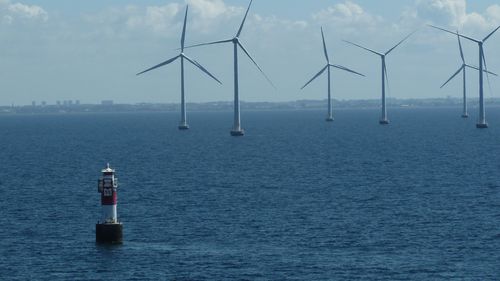
The new "Offshore Megastructures" Collaborative Research Centre is developing concepts for massive offshore wind turbines. In two sub-projects, Oldenburg researchers are investigating rotor designs and wind conditions at high altitudes.
Physicist Jan Vogelsang uses innovative laser systems to study ultrafast processes. The University has awarded him a Carl von Ossietzky Young Researchers' Fellowship for his work.
Hearing Research
Excellence Strategy
Research
Top News
Medical Physics and Acoustics
Tracking down speech signals
Background noise, reverberations and acoustic feedback often hamper speech comprehension when technical devices are in use. Hearing researcher Simon Doclo uses mathematical methods to tackle the problem.
Bringing science and companies into contact - that is the aim of the Innosys NordWest project. University researchers can offer laboratories, training courses or advice via an online platform.
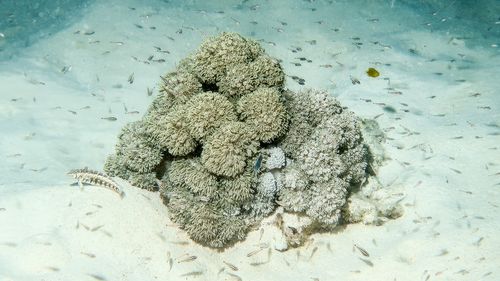
Scientists at the Institute for Chemistry and Biology of the Marine Environment (ICBM) scored a success: in the aquariums in Wilhelmshaven they were able to induce sexual reproduction in stony corals for the first time in Germany.
Data has become one of the most important economic assets of the 21st century. Jorge Marx Gómez and a team of Oldenburg business informatics researchers are investigating how big data can help companies to glean new knowledge.
Producing batteries in a completely new way is the goal of chemist Dmitry Momotenko. He has now started his research work at the university - funded by a Starting Grant from the European Research Council.
Research
Top News
Health Services Research
International affairs
Effective health services research beyond national borders
How do the different healthcare systems in Germany and the Netherlands affect the healthcare of individual citizens? In a new project, health services researchers from Oldenburg and Groningen are now addressing this question.
The imperatives of ecology and the economy are often seen as contradictory. But for Jörn Hoppmann, Professor of Management at the Department of Business Administration, Economics, and Law, sustainability is a promising business strategy.
Research
Covid
Top News
Medical Physics and Acoustics
Close-up of coronaviruses on the attack
Researchers at the University of Oldenburg are using electron microscopy images of SARS-CoV-2 to generate images that for the first time provide a highly detailed impression of the infection process. The new method relies on machine learning.
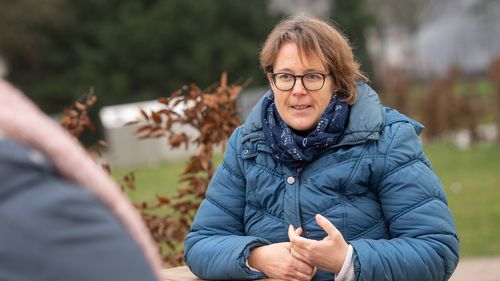
How to work from home and manage from a distance is a topic that is currently on many people's minds - and is also occupying a project team at the university. Two experts, currently working from home themselves, in an interview.
An underestimated source of marine microplastic pollution
Marine paints can be a major source of microplastics in the North Sea. In a new study, Oldenburg environmental geochemists hypothesize that ships leave a kind of 'skid mark' in the water.