The Immanuel Kant Research Prize of the Federal Government Commissioner for Culture and the Media (BKM) will be awarded for the first time on 15 June at 6.00 pm. Interested parties can register for the subsequent public conference "Cultural Landscapes" until 8 June.
The way is clear for a major new project at the University of Oldenburg: the German Council of Science and Humanities has approved the construction of a new "Research Laboratory for Turbulence and Wind Energy Systems". The building is to cost 20 million euros and provide space for more than 130…
Edward O. Wilson, the outstanding American evolutionary biologist and "father of sociobiology", is dedicating an annual lecture series on biodiversity, which starts at the university on Wednesday, 30 May. The renowned biologist Prof Dr Georgina Mace will kick off the series.
"The reader has more influence than you might think"
How does a novel become a bestseller, an author a star? These are questions that scientists will be discussing at the "Precarious Alliances" conference. Oldenburg-based popular culture researcher Martin Butler is already revealing that personal networks and social media play an important role.
Marine researchers call the substance that gives seawater its yellowish colour "Colored Dissolved Organic Matter". It can be used to track the path of water through the oceans. Its sky-blue fluorescence enables highly sensitive spectral fingerprints.
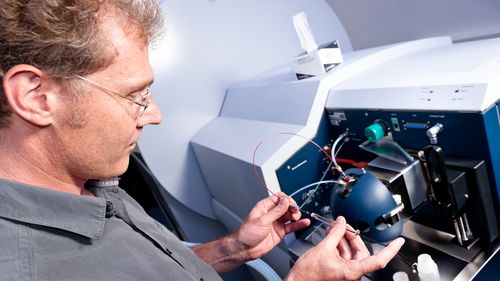
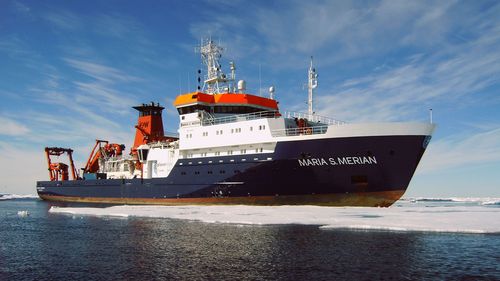
They use a new mass spectrometer to analyse isotopes and fossil marine sediments: Scientists from the second Max Planck Research Group at the university. Their aim is to decipher the role of the world's oceans in the climate.
The idea has fascinated researchers for centuries: capturing and storing light. This is particularly complex in nanostructures. A German-Japanese research team led by Prof Dr Christoph Lienau, physicist at the University of Oldenburg, has now achieved a breakthrough.
"From Witches Cauldrons in Material Science" - this is the motto under which female scientists from Germany and abroad are gathering in the Harz Mountains.
Prof. Dr Dr Birger Kollmeier, hearing researcher at the University of Oldenburg, has received the International Award of the American Academy of Audiology in Boston - one of the highest honours for international researchers in the field of audiology.
The Start-up and Innovation Centre (GIZ) is committed to a successful start-up culture on campus. The opening will take place on 17 April - hosted by Klaas Heufer-Umlauf.
The university's Field Theory working group has been researching Einstein's theory of relativity for years - and at the same time going beyond it. The Oldenburg physicists have now demonstrated the existence of wormholes with astonishing properties.
"Tea leaves meet Robinson. Collectible pictures for world explorers" is the title of an exhibition that will be on display at the East Frisian Tea Museum in Norden from 22 March to 21 October and was created in co-operation with the University of Oldenburg.
How does innovation work in companies? The most successful products are the result of spontaneous initiatives by individuals - rather than a strategically organised process. Excerpt from a research article by Prof Dr Jannika Mattes.
The history of epidemics and their control in the 20th century is the focus of an international conference organised by the Institute of History at the University of Oldenburg.
"Distributed systems" consist of many interconnected computers. Users can utilise them like individual computers. Computing scientists at the university have now completed a German-Russian project to ensure the security of these systems.
A higher risk of storm surges, silted-up harbours and a lower ecological value - this is the current situation in the Ems-Dollart. The German-Dutch research project "Future-Ems" aims to help solve the environmental problems of the border region.
How do small energy sources become networks? To answer this question, researchers in the "SmartNord" project are taking their lead from state-forming insects. An interview with spokesperson Prof Dr Michael Sonnenschein and energy computer scientist Prof Dr Sebastian Lehnhoff.
Oldenburg University Professor of Molecular Systematics, Prof Dr Olaf Bininda-Emonds, is an expert in superfamily trees. The scientist has now published an updated version of the super phylogenetic tree for carnivores in the journal BMC Biology.
Managers are increasingly working at the limit of their capabilities. This is the conclusion of a study recently presented by the "Corporate Health Management" working group at the Centre for Lifelong Learning (C3L).