
Senate representatives*
Senate representatives*
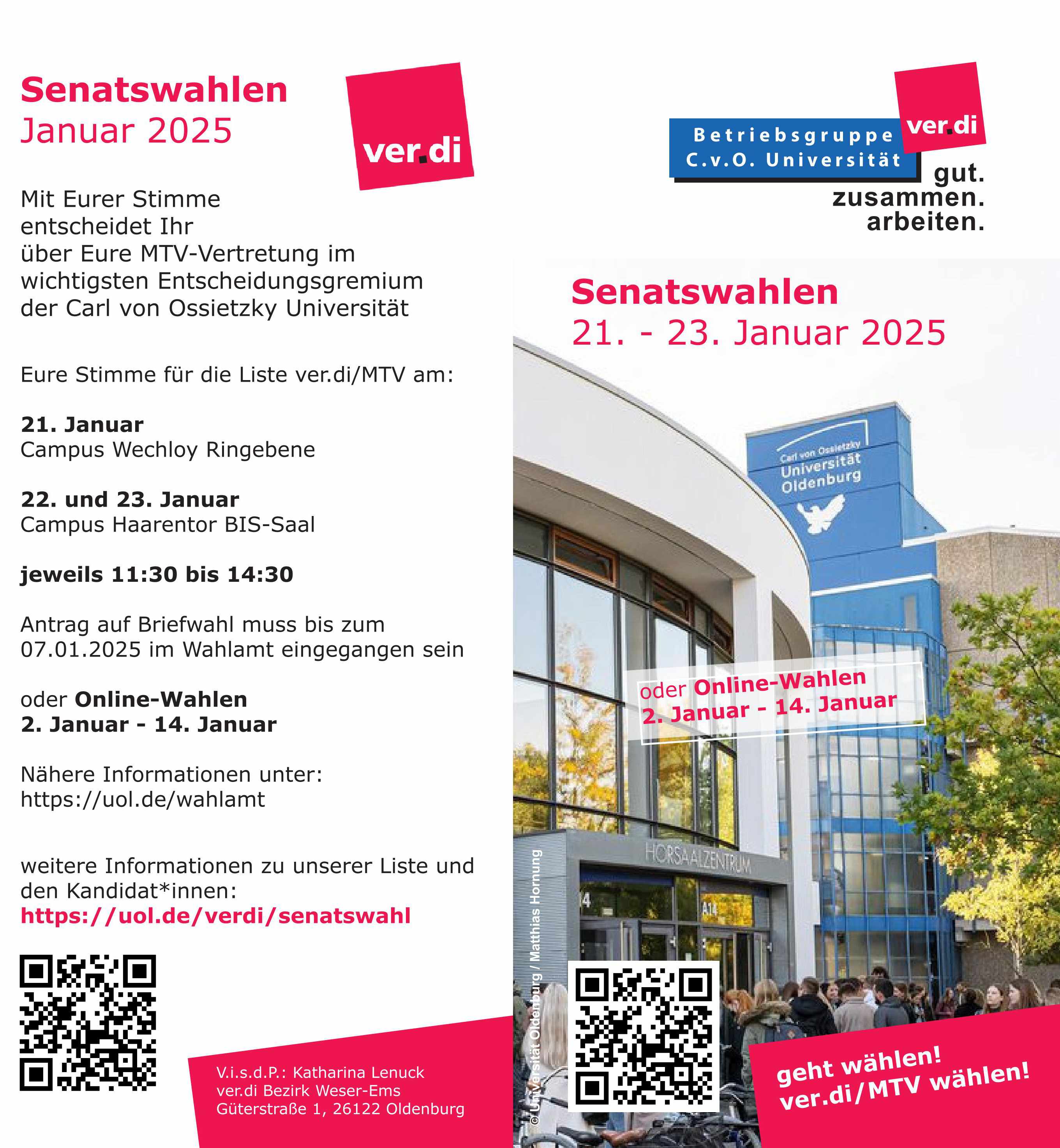
2025 Senate Elections
Dear colleagues,
You have elected the University Senate representatives.
In the MTV status group, our colleague Markus Glötzel has been elected to the University Senate on the ver.di list. We have significantly improved our result compared with the last University Senate election. Among research assistants, our ver.di colleague Nikolaj Schulte-Wörmann has secured a seat on the Senate for the Mittelbauinitiative list. We are also delighted that so many ver.di colleagues have been elected to the faculty councils.
The full election results have been published by the Elections Office. (Direct download)
We would like to thank you for your support and congratulate the elected members!
The new University Senate will be appointing new members to all commissions and committees. We are always looking for fellow campaigners to join us in this work. Please feel free to contact us via email or the if you’re interested or have any questions.
A list of the commissions and committees can be viewed here.
With best regards,
The organising team of the ver.di works council
at the CvO University of Oldenburg
Dear colleagues,
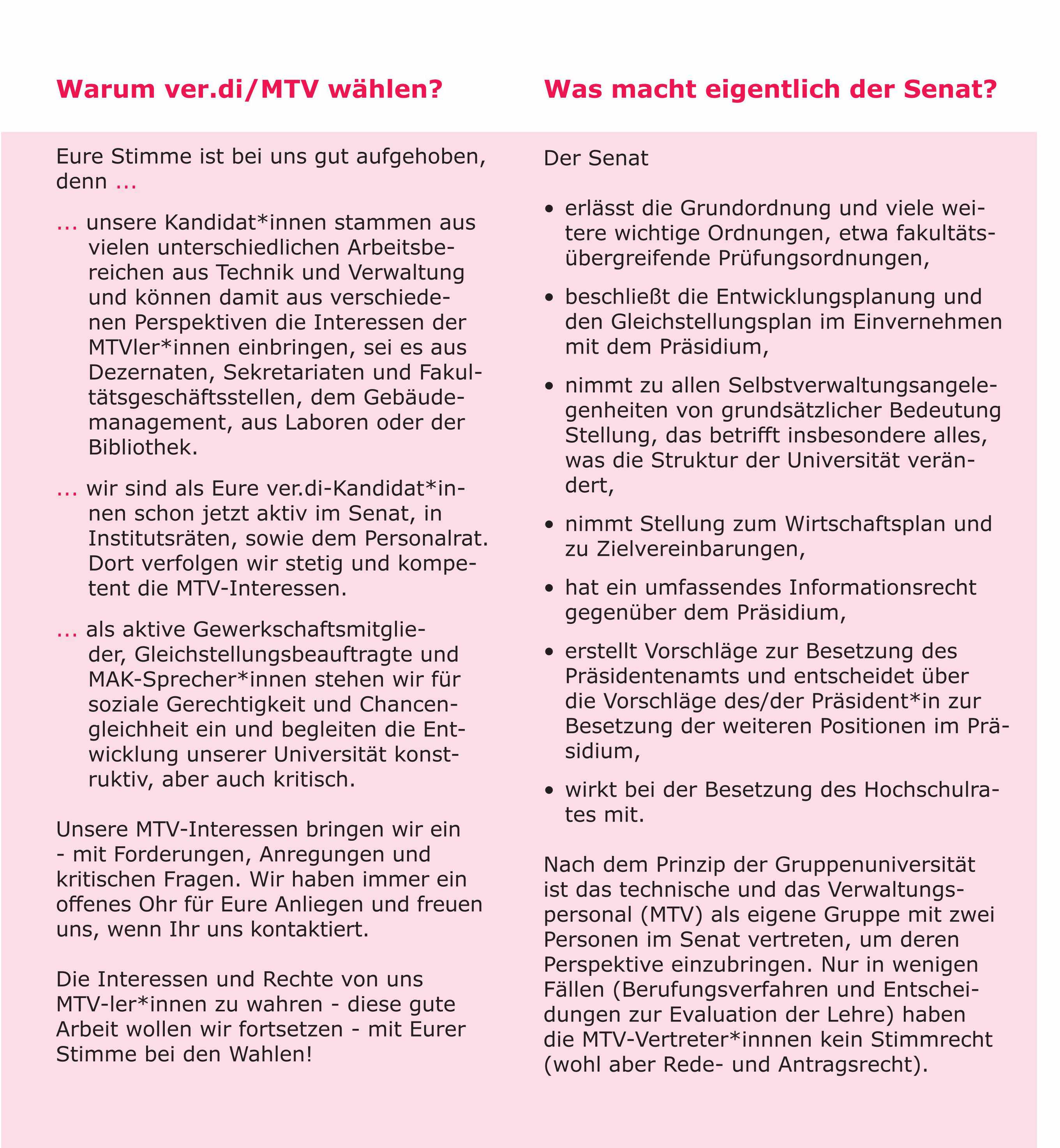
We are living through turbulent times of social upheaval, in which many changes are not all for the better. This trend can also be observed within the university. We therefore need strong trade union representation to counteract this. We are campaigning for this in the University Senate and ask for your support!
For we want to shape the university’s growth process through our voice in the University Senate, in the interests of all staff. One thing is clear: all decisions – from the potential development into a university of excellence, through the introduction of new degree programmes, to the establishment of new research focuses – also have an impact on the working conditions of staff in technical and administrative roles (MTV). We must therefore – and indeed intend to – play a critical role in the university’s development and help shape the new challenges constructively. This includes the digitalisation of teaching, research and administration; ensuring adequate working conditions for our status group; organising a mix of on-site and remote working (e.g. two days of remote working); and the further development of the equality plan, as well as issues relating to the university’s internal governance. We reject any amendments to the university charter in which the University Senate itself curtails its remaining powers.
We want
- advocate an increase in basic funding for universities compared to competitive funding so that more permanent jobs can be created,
- reduce unnecessary bureaucratic processes and make work easier through sensible digitalisation,
- achieve a more appreciative management culture,
- achieve more working time autonomy for employees - in the home office and when working on site,
- greater democratisation of the university and more co-determination for other status groups beyond professors,
- campaign for gender equality and the elimination of discrimination,
- campaign for more social justice and equal opportunities.