
Research
Research
Current research
Lower Saxony Ministry of Science - Innovation plus
Teaching sustainable judgement and action globally in digitally supported learning units-Digital Learning Lab Wadden Sea
A key objective of the university is to involve teacher-training students in internationalisation processes, with a view to not only imparting intercultural and linguistic teaching and learning skills, but also highlighting opportunities for long-term international networking. Given the current COVID-19-related obstacles preventing study abroad, an alternative approach is required. It therefore makes sense to make full use of the opportunities offered by digital learning and to utilise these to promote digital skills among both students and school pupils. The global theme ‘Our Oceans – Threats and Ways to Protect Them’ not only aligns with the interests of the partner organisations in South Africa and Oldenburg, but is also an integral part of international science education and is therefore ideally suited as a subject for digital learning.
The aim of the project, which is funded with 50,000 euros as part of the ‘Innovation plus’ initiative by the State of Lower Saxony, is to introduce biology teacher-training students at the ‘Lernlabor Wattenmeer’ school laboratory to experiments relating to the threats to and ways of protecting the oceans, as well as to selected digital media, with a view to subsequently encouraging them to independently develop digital learning modules in English. At the same time, pupils at the partner school in Muizenberg are being prepared for joint lessons in the digital classroom. The implementation of the digital learning units brings the students together with their South African counterparts in the digital classroom to stimulate learning processes and facilitate international exchanges.
For quality assurance purposes, the students’ subject knowledge, digital skills and diagnostic competences are assessed using tried-and-tested instruments as part of a pre-post-test design.
The pilot study was completed as early as the 2021/22 winter semester, and the first learning modules on the topics of plastic in the ocean and oil spills, sea-level rise and upwelling; these were implemented at the Liebfrauenschule and Paulusschule and reflected upon during group discussions with students:
“Working with digital tools in a digitalised world seemed like an insurmountable barrier to me, but then I realised that I can actually do it.” (Quote from a student (training to teach Biology and English) from the Wadden Sea Learning Lab). This quote illustrates how it is possible to address concerns regarding digitalised learning and successfully convey ways of taking action.
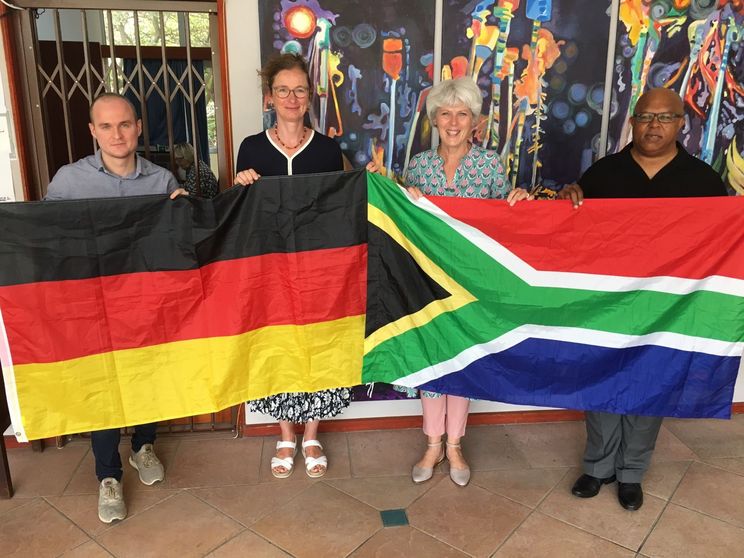
At present, students on the Biology Teacher Training programme are at Muizenberg High School in Cape Town, South Africa, to assess the current conditions for digital learning and explore ways of promoting environmental awareness.
In October, Leonie Jacobsen, Education Specialist and Chief Circuit Manager, will visit the Department of Biology Education in Oldenburg to report on her role as supervisor of 24 schools in Cape Town, as well as to present the possibilities for large-scale implementation of the project and the student exchange programme.
City of Bremen - The Youth Climate Council Bremerhaven
The Bremerhaven Youth Climate Council
The Youth Climate Council is part of the "Climate City Course" campaign organised by the Bremerhaven Environmental Protection Agency. It is intended to ensure the participation of young people in municipal climate protection and in the development of measures to adapt to the consequences of climate change. These participation rights are regulated in Bremerhaven's city constitution. It is supported by the Bremerhaven Schools Department, the Stadtjugendring Bremerhaven, the Klimahaus 8° Ost Bremerhaven, the Alfred Wegener Institute, Bremerhaven Bus, the German Climate Foundation, Bremerhaven University of Applied Sciences, the Climate Office for Polar Regions and Sea Level Rise and the University of Oldenburg. Seventeen young people between the ages of 12 and 20 are active in the Youth Climate Council. In regular meetings, which the young people organise and carry out independently, they work on topics of their own choice and actively implement them in the city. The first Repair Café in Bremerhaven was opened by the Youth Climate Council on 13 December 2014.
As part of the accompanying research being conducted by Isabelle Lange, the expectations and motives of the young people involved with regard to their participation, their preferred lifestyles and their understanding of the principle of sustainability are to be recorded. In a second survey phase, it will be determined what effect the young people's participation has on the above-mentioned characteristics and to what extent the concept of education for sustainable development can be successfully implemented. 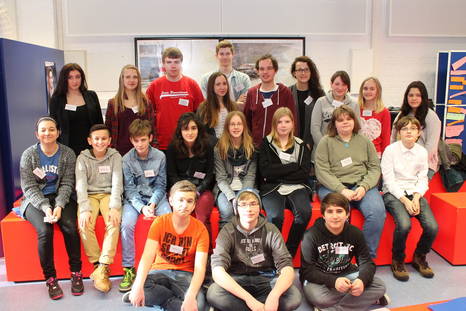
Youth Climate Council opens its own Repair Café
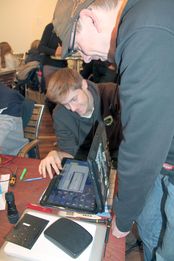
What do you do with a toaster that no longer works? Or a broken favourite toy? Or a broken smartphone? Throw it away? Why should you! The first Repair Café in the seaside city starts today.
Bremerhaven, 13.12.2014
Today, everything revolves around repairing in the Alte Bürger workshop 212. From 12 noon to 6 p.m., citizens have the opportunity to drop by with broken everyday objects and repair them together with volunteers. Toasters, lamps, hairdryers, smartphones and toys can be brought along. "We want to do something about the throwaway society and the short lifespan of many electrical appliances and thus contribute to protecting people and the environment," says 13-year-old Swantje Malin Schäfer from the Bremerhaven Youth Climate Council, whose initiative led to the opening of the first Repair Café in the seaside city. "The commitment of the young people is absolutely remarkable and I am delighted that they are making a contribution to the Climate City course through their projects. I will continue to work to ensure that the Youth Climate Council is also heard in political bodies," says Bremerhaven's Environment Councillor Maurice Müller, who did not miss the opening.
By promoting repairing, the Youth Climate Council wants to contribute to reducing the mountain of waste. "We throw away an incredible amount in Germany. Even items that have almost nothing wrong with them and could be put to good use again after a simple repair. We want broken or used items to be made usable again," explains Maurice Frost (17) from the Jugendklimarat. The purpose of the café is not to drop off and collect things - rather, the aim is to find a solution together and pass on knowledge. A pleasant side effect: over coffee and cake, which was donated by the Bremerhaven Sinti Association and the Turkish Islamic Community of Bremerhaven, many a good conversation develops about the technical details. Repairs save money and precious raw materials and also help to reduce CO2 emissions. The Repair Café aims to show that repairing is fun and often very easy. Another positive side effect is that it brings people in the neighbourhood into contact with each other in a new way. In this way, people in the most diverse life situations can come together and discover how much knowledge and practical skills are actually available and that these are also needed. For anyone who missed the opening, there is now a new opportunity every second Saturday of the month. "We always need volunteers and welcome anyone who is interested in supporting us," continues Maurice Frost.
The Youth Climate Council is part of the "Kurs Klimastadt" campaign organised by the Bremerhaven Environmental Protection Agency. It is intended to ensure the participation of young people in municipal climate protection and in the development of measures to adapt to the consequences of climate change. These participation rights are enshrined in Bremerhaven's city constitution and were confirmed by a resolution of the city councillors. It is supported by the Bremerhaven Schools Department, the Stadtjugendring Bremerhaven, the Klimahaus 8° Ost Bremerhaven, the Alfred Wegener Institute, Bremerhaven Bus, the German Climate Foundation, Bremerhaven University of Applied Sciences and the Climate Office for Polar Regions and Sea Level Rise. The Department of Didactics of Biology at the University of Oldenburg is also providing scientific support to the committee over a period of three years.
BMBF - OLE+

Biography-orientated and cross-phase teacher training in Oldenburg (OLE+)
The project "Biography-oriented and cross-phase teacher training in Oldenburg" (OLE+), funded as part of the "Teacher training quality offensive" initiated by the federal and state governments, is a development project for the qualitative further development of teacher training at the University of Oldenburg. OLE+ pursues two overarching goals. On the one hand, teacher training is to be more closely aligned with the training needs of students relevant to their professional biographies. Secondly, co-operation between specialised disciplines, subject didactics and educational sciences as well as co-operation between the first, second and third phases of teacher training are to be promoted in the long term. These overarching goals are realised in 4 core processes. A dissertation by Bianca Kuhlemann is being written as part of core process 4: Establishing theory-practice spaces .
Core process 4:
Systematic improvement of the theory-practice relationship in teacher training programmes through the establishment and further development of theory-practice rooms and through the implementation of practice-oriented teaching-learning formats at the teacher training Schools of the University of Oldenburg
Completed research
DBU - Litter in the sea
Litter in the sea - Pupils research the causes and occurrence of plastic waste in the sea-A co-operation project between the Biology Didactics Department in Oldenburg and the AWI on Helgoland
The topic of "plastic waste in the sea" has been the focus of public and scientific interest for some time now. Since the 1950s, global production of plastics has risen from 0.5 million tonnes to more than 300 million today (APME; Association of Plastics Manufacturers in Europe). As a result, the amount of plastic waste in the world's oceans has also risen continuously. The European Union (EU) has recognised the need for an overarching maritime policy to ensure that the economic use of the sea is compatible with the ecosystem and that the marine environment is protected at the same time: The European Marine Strategy Framework Directive (MSFD) came into force in July 2008. The aim is to achieve a good status of the marine environment. The individual EU countries must take the necessary measures to achieve a good status of the marine environment by 2020 at the latest in order to preserve marine species and habitats. To this end, a programme has also been developed for the North Sea that includes seven objectives to improve the state of the marine environment. The 5th environmental goal relates specifically to the issue of marine litter and aims to one day find "seas free of litter" again ( Lower Saxony Ministry for the Environment, Energy and Climate Protection 2016, 6). An important way to achieve this is seen as "anchoring the topic of marine litter in teaching objectives, curricula and materials" (MSFD environmental objective 5-01).
The co-operation project between Biology Didactics Oldenburg (Prof. Dr C. Hößle) and the AWI on Helgoland (Dr Antje Wichels), funded by the DBU with 110,000 euros, focuses on this environmental goal and aims to contribute to it by developing didactically reflected teaching concepts. This is because not only pupils (SuS), but also prospective and experienced teachers are experiencing increasing uncertainty with regard to sustainable behaviour in view of the growing complexity of the global topic of "plastics in the environment".
The aim is to offer secondary school pupils (SuS) a didactic concept in the sense of education for sustainable development and sustainable consumption, which allows the topic of environmental protection and sustainable use of resources to be dealt with in a very practical way using plastic waste in order to teach pupils evaluation and action skills in this way. In addition to teaching experimental skills, the project aims to offer concepts for this current topic for pupils that enable them to assess the consequences of being exposed to plastic waste themselves and to form their own knowledge-based judgement. By changing the awareness of the target group of pupils, the aim is to set a long-term course in dealing with plastic. At the same time, the modules can be trialled by prospective teachers as part of their university training.
For this reason, the topic of "Plastic waste in the sea" will be addressed in an interdisciplinary approach through the interaction of subject didactics experts from the University of Oldenburg's biology department (Prof. Dr C. Hößle, Anja Wübben), specialist scientists (AWI microplastics working group, Dr Gunnar Gerdts and the University of Oldenburg) and the University of Oldenburg's research team. Gunnar Gerdts and the ICBM, Dr Holger Winkler) and the AWI student laboratory OPENSEA (Dr Antje Wichels) in such a way that high-quality learning materials can be made available to school classes and prospective and experienced teachers. The aim of this close co-operation with research is to develop learning modules consisting of learning sequences and experiments that can be implemented at extracurricular learning locations, but can also be easily modified and adapted to the conditions in schools and integrated into lessons. In addition, selected learning units can be made available to the Wadden Sea Learning Laboratory for use in the training of future biology teachers.
In close cooperation between the extracurricular university learning centre Wadden Sea Laboratory and the learning centre OPENSEA on Heligoland, learning sequences are developed that are combined with experimental units such as field work (e.g. taking samples on the beach, in rocky mudflats or by boat) or with laboratory experiments (e.g. examining sand or plankton samples), but also combined with chemical, physical or biological experiments. In this way, pupils acquire comprehensive, modular background knowledge on the topic of plastic (including raw materials/production, energy balance, economic perspectives, alternative raw materials) and on topics such as the environmental relevance of plastic/microplastics in marine ecosystems (plastic as nesting material for seabirds, plastic as fake food, fishing nets as a hazard (entanglement)), but also on approaches to avoidance/disposal. Consequences for the marine environment and marine food webs are presented as examples. An accompanying study will determine how the ethical evaluation competence and sustainable consumption knowledge of the pupils involved changes as a result of the learning sequence.
The long-term goal is to promote a responsible and reflective approach to plastic products.

BMBF - Ethical evaluation competence
Ethical evaluation competence and everyday fantasies of young people and students about the possibilities of genome editing
Objective
On the basis of ethical dilemmas, the ethical evaluation competence and everyday fantasies of young people and students on the subject of genome editing with CRISPR/Cas9 are to be surveyed. Based on the results, didactic approaches for the promotion of ethical evaluation competence in schools and universities will be developed.
Project data
Financing: Federal Ministry of Education and Research; BMBF funding measure "Ethical, legal and social aspects of modern genome editing methods and their possible applications" Duration: 1 October 2016-30 September 2019
Project leader
Email: corinna.hoessle@uol.de
Phone: +49-441-798 3639
Project coordination
Email: wiebke.rathje@uol.de
Phone: +49-441-798 3678
Sub-project Oldenburg: Ethical evaluation competence of young people on the possibilities of genome editing
Head:
Prof. Dr Corinna Hößle
Dr Wiebke Rathje
Collaborator:
Laura Maria Heinisch
Sub-project Hanover: Ethical evaluation competence of students on the possibilities of genome editing
Head of the project:
Prof Dr Brigitte Schlegelberger
Hanover Medical School
Director of the Institute of Human Genetics
Carl-Neuberg-Str. 1
30625 Hanover
Email:
Employee:
Dr Beate Vajen
Email:
Phone: +49 511-532 9252
Hamburg sub-project: Everyday fantasies of young people and students about the possibilities of genome editing
Head of the project:
University of Hamburg
Didactics of the social sciences and mathematics and natural sciences subjects
Von-Melle-Park 8
20146 Hamburg
Email:
Staff member:
Marie-Christine Duval
Email:
Project description
The promotion of ethical evaluation skills is an important goal of science education (Kultusministerkonferenz, 2005). Pupils should be enabled to participate in public discourses on ethical issues (e.g. in the field of bioethics) and to form a reflected opinion (Reitschert, Langelt, Hößle, Scheid, & Schlüter, 2007). Since 2012, a new method of genome editing has been the subject of public debate (Jinek, et al., 2012). The targeted modification of gene sequences in somatic cells and also in the human germline using the endonuclease CRISPR/Cas9 is a realistic prospect, which once again focuses on central ethical values such as human dignity and the fundamental rights of the embryo (Berlin-Brandenburg Academy of Sciences and Humanities, 2015). CRISPR/Cas9 is a "cutting tool" that could make it possible to cure diseases such as cancer, HIV or cystic fibrosis (Lander, 2015; Savic & Schwank, 2016). However, this method can also be misused. Due to the topicality and ethical debatability of the possibilities of genome editing with CRISPR/Cas9, it is relevant to assess the ethical evaluation competence of future users as well as everyday perceptions regarding this topic. In the present project, the ethical evaluation competence and everyday fantasies (Gebhard, 2003) of pupils and students on the subject of genome editing with CRISPR/Cas9 are to be surveyed on the basis of ethical dilemmas. These age groups in particular can pave the way for a responsible approach to possibilities such as the CRISPR/Cas9 method. For this reason, analysing the ethical evaluation competence of these age groups is particularly relevant. Against the background of the results, didactic approaches for the promotion of ethical evaluation competence in schools and universities will be developed.
Literature
Berlin-Brandenburg Academy of Sciences and Humanities (ed.). (2015). Genome surgery in humans - on the responsible assessment of a new technology. Available as PDF [14.12.2016]
Gebhard, U. (2003). Everyday myths about genetic engineering. An opportunity for political education. Praxis Politische Bildung, 7(3), 180-188.
Jinek, M., Chylinski, K., Fonfara, I., Hauer, M., Doudna, J., & Charpentier, E. (2012). A programmable dual-RNA-guided DNA endonuclease in adaptive bacterial immunity. Science, 337, 816-821.
Standing Conference of the Ministers of Education and Cultural Affairs (2005). Educational standards in the subject of biology for the intermediate school-leaving certificate. Resolution of 16 December 2004, Munich: Luchterhand.
Lander, E. S. (2015). Brave New Genome. The New England Journal of Medicine, 373(1), 5-7.
Liang, P., Xu, Y., Zhang, X., Ding, C., Huang, R., Zhang, Z., . . Huang, J. (2015). CRISPR/Cas9-mediated gene editing in human tripronuclear zygotes. Protein Cell, 6(5), 363-372.
Reitschert, K., Langelt, J., Hößle, C., Scheid, N. M., & Schlüter, K. (2007). Dimensions of ethical judgement competence. MNU(1), 43-51.
Savic, N., & Schwank, G. (2016). Advances in therapeutics CRISPR/Cas9 genome editing. Translational Research, 168, 15-21.
BMBF - FLiF
Research-based learning in focus (FLiF)
“Communicating socially relevant topics in biology” – A module run by the Biology Education Working Group as part of the University of Oldenburg’s “Research-Based Learning in Focus” (FLiF+) initiative
The higher education pedagogical concept ‘Research-Based Learning in Focus’ (FLiF+) describes a culture of teaching and learning in which the acquisition of academic content and skills is understood as a self-directed, active process, supported by lecturers. The lecturers are themselves engaged in research, initiate resulting academic projects and set their own individual priorities. The close integration of research and teaching offers students the opportunity to participate independently in academic investigations into a research topic and thereby expand their knowledge. The structure of the courses is therefore based on the criteria of an ‘individual, open-ended research process’, including, amongst other things, the formulation of a research question, the reasoned selection of a research method, and the evaluation, interpretation and presentation of the research findings ([1], p. 2).
To this end, the Department of Biology Education at the University of Oldenburg runs a course comprising two seminars in both the winter and summer semesters, each of which is dedicated to current issues in medical and environmental ethics. In the seminars, students first explore key bioethical concepts and then independently develop, carry out and present small-scale research projects on the communication of bioethical conflicts within society. Students are free to choose whether to focus on an environmental ethics topic – such as renewable energy, climate change, micro- or macro-waste – or a medical ethics topic, such as genome editing, cloning technologies or embryo research. The implementation of the research projects is guided by a research question chosen by the students themselves (e.g. ‘What are the views of students at the University of Oldenburg on genome editing?’ or ‘What knowledge and attitudes do the citizens of Oldenburg have regarding micro-litter in North German waters?’). Building on this, students are guided in identifying and applying suitable research methods to investigate and answer this research question. After analysing the data collected, the results are compiled and initially presented to and discussed with fellow students in the seminar. The module concludes with a research conference, which is open not only to students but also to the interested public. At the conference, the results of the research projects are presented in the form of a talk or poster and put up for discussion, whilst new research questions are generated from the findings.
The design of the module, entitled‘Communicating socially relevant topics in biology’, thus contributes to the concept of research-based teaching and learning at the University of Oldenburg, as “research-based teaching practises science, promotes relevant practical experience and thereby also the development of competences for scientific practice. It is in line with the aim of competence development.” ([2], p. 14)
Contact persons:
M.Sc. Isabelle Plewka ()
M.Sc. Julia Warnstedt ()
References
[1] Research-based teaching and learning at the University of Oldenburg – Self-image and principles. Project management team of the ‘Focus on Research-based Learning (FLiF)’ project. November 2015
[2] Ludwig, J. (2011): Research-based teaching as teaching in the format of research. In: Brandenburg Contributions to Higher Education Didactics, 3 (last accessed on 4 Feb. 2016 at: www.faszination-lehre.de/files/bbhd03.pdf).


DBU - "Network development"
From marine research to the national park houses:
Development, testing and implementation of new environmental education programmes on the topic of 'Endangerment and protection of the UNESCO Wadden Sea World Heritage Site'
The idea for this project developed from the co-operation between the ICBM (Prof. Dr Hillebrand, Dr Holger Winkler) and biology didactics (Prof. Dr Corinna Hößle, Dipl. Biol. Anja Wübben) in the jointly managed "Lernlabor Wattenmeer"(www.lernlabor-wattenmeer.de). The project aims to establish a network between the University of Oldenburg and the national park centres on the Wadden Sea coast of Lower Saxony. In the network, educational programmes on the topic of "Endangerment and protection of the UNESCO World Heritage Wadden Sea" are developed directly from the current research of the ICBM under the aspect of preventive environmental protection. Current research topics are didactically and methodically revised and initially tested with local schoolchildren in the "Wadden Sea Learning Laboratory" before being adapted to the needs of the national park houses and presented to a wider audience beyond the specialised scientific community. During an initial network meeting with representatives from three national park centres, five key topics from the ICBM's fields of work were narrowed down.
The aim is to link current findings from marine research with basic concepts of environmental education in the national park centres in order to support the responsible use of the Wadden Sea ecosystem. In order to achieve this goal, those responsible for the project are working closely with the managers of the national park centres in Sehestedt, Spiekeroog and Wangerooge. As the project progresses, an effectiveness analysis will be carried out to determine whether the new educational programmes contribute to the promotion of evaluation skills, practical knowledge and specialist knowledge among the participating visitors to the national park houses. Based on the results, a book will be produced that will make the tested learning programmes available to all other national park houses.
Participating institutions of the CvO University of Oldenburg:
Biology didactics
ICBM
Wadden Sea Learning Lab
Coordinator of the project:
Anja Wübben
Co-operation partner:
Lower Saxony Wadden Sea National Park Authority
Sehestedt National Park Experience Centre
Wangerooge National Park House
Wittbülten National Park House
Duration:
16.01.2016 - 16.01.2019
The cooperation in the newly established network between the University of Oldenburg and the national park houses on the Wadden Sea coast of Lower Saxony was stabilised beyond the project duration.
Telekom - Diagnosis and promotion of heterogeneous groups (4DiF)
Diagnosis and promotion of heterogeneous groups (4DiF)
The University of Oldenburg was the only university to win the Telekom Foundation's university competition for better teacher training in the STEM subjects (Mathematics, Computing Science, Natural Sciences and Technology) in two subject areas. A total of 63 proposals were submitted. A total of 400,000 euros will flow to Oldenburg for the areas of "Teaching and Learning Laboratories" and "Development in Heterogeneous Learning Groups". In nationwide networks, a total of nine locations will deal with central issues of STEM teacher training, with the foundation investing a total of four million euros.
Biology didactics was successful in both subject areas and is the spokesperson for the "Development Network Teaching-Learning Laboratories" and "Diagnosis and Promotion of Heterogeneous Learning Groups" programmes. Together with the educational sciences and the didactics of biology, physics and mathematics, courses are being developed that support students in developing diagnostic skills. Another goal is the development of vignette-based teaching and learning tools. An overarching concept for the curricular dovetailing of didactic and educational science training sequences is being developed.
Spokespersons for the project: Prof Dr Corinna Hößle (Biology Didactics), Dr Julia Michaelis (Chemistry Didactics)
Biology didactics is participating in the project with two research projects: Julia Warnstedt and Lea Brauer
Collaborative partners
TU Dortmund University (coordination)
University of Bremen
University of Giessen
Co-operation project
School laboratories as teaching-learning laboratories
Duration
01.10.2014 - 31.12.2017
Lea Auen was able to complete her dissertation as part of the project.

DBU - Climate change in court
Publications resulting from the project
Book articles & book projects
Hößle, Corinna; Oelgeklaus, Helen: Canteen without meat? - A role play on the topic of climate change. In: M. Fansa, C. Ritzau (eds.): Kalte Zeiten - Warme Zeiten, Klimawandel(n) in Norddeutschland, Darmstadt: Primus (2010), 132-135
Oelgeklaus, Helen; Hößle, Corinna; Höttecke, Dietmar; Eilks, Ingo; Feierabend, Timo; Menthe, Jürgen; Mrochen, Maria: Climate change in court: Of flying fruit, farting cows and soya in the tank. In: M. Fansa, C. Ritzau (eds.): Kalte Zeiten - Warme Zeiten, Klimawandel(n) in Norddeutschland, Darmstadt: Primus (2010), 128-131
Buß, Melanie; Goltermann, Rainer; Hößle, Corinna; Kittel, Rebecca (eds.): Bon voyage, little swallow! An Arctic tern on the trail of climate change. Children's book for the special exhibition Kalte Zeiten - Warme Zeiten, Klimawandel(n) in Norddeutschland. Oldenburg: Verlag Isensee (2010)
Höttecke, Dietmar; Hößle, Corinna; Eilks, Ingo; Menthe, Jürgen; Feierabend, Timo; Mrochen, Maria; Oelgeklaus, Helen : Judgement and decision-making about socio-scientific issues: A cross-faculty approach for learning about the climate change. In: <?xml:namespace prefix = st1 ns = "urn:schemas-microsoft-com:office:smarttags" /><st1:place>I.</st1:place> Eilks & B. Ralle (Eds.), Contemporary Science Education, <st1:city>Aachen</st1:city>: Shaker (2010), 179-192
Höttecke, Dietmar, Eilks, Ingo, Hößle, Corinna, Menthe, Jürgen, Feierabend, Timo, Kellinghaus, Helen, Mrochen, Maria : ESD in secondary education - simulation games as a learning approach with reference to everyday life and the self Evaluation competence and education for sustainable development in secondary education . In: F. Brickwede, & A. Bittner (eds.), Childhood and youth in transition! Environmental education in transition? , Berlin: Erich-Schmidt-Verlag (2009), 61-69
Journal articles
Eilks, Ingo; Feierabend, Timo; Hößle, Corinna; Höttecke, Dietmar; Menthe, Jürgen; Mrochen, Maria; Oelgeklaus, Helen: Assessment learning and climate change in four subjects - Insights into the project "Climate change in court" (Part 1). In: Mathematics and Science Education 64 (1) (2011)
Eilks, Ingo; Feierabend, Timo; Hößle, Corinna; Höttecke, Dietmar; Menthe, Jürgen; Mrochen, Maria; Oelgeklaus, Helen: Assessment learning and climate change in four subjects - Insights into the project "Climate change in court" (Part 2). In: Mathematics and Science Education 64 (2) (2011)
Articles in conference proceedings
Höttecke, Dietmar; Hößle, Corinna; Eilks, Ingo; Menthe, Jürgen; Mrochen, Maria; Oelgeklaus, Helen; Feierabend, Timo: Judgement and decision-making about socio-scientific issues: A cross-faculty approach for learning about the climate change. In: <st1:place>I.</st1:place> Eilks & B. Ralle (Eds.), Contemporary Science Education - Implications from Science Education Research about Orientations, Strategies and Assessment, <st1:city>Aachen</st1:city>: Shaker (2010), 179-192
Oelgeklaus, Helen; Hößle, Corinna: "Teaching climate change ". A study on the PCK of teachers on the subject of climate change. In: D. Höttecke (ed.): Development of scientific thinking between phenomena and systematics. Society for Didactics of Chemistry and Physics. Annual conference in Dresden 2009. Münster: LIT-Verlag (2010), 359 - 361
Eilks, Ingo; Höttecke, Dietmar; Feierabend, Timo; Mrochen, Maria; Hößle, Corinna; Kellinghaus, Helen; Menthe, Jürgen: Climate change in court - The promotion of ecological evaluation competence among young people. In: D. Höttecke (ed.): Chemistry and physics didactics for teacher training, Münster: LIT-Verlag (2009), 413-415
For further information please contact:
Prof. Dr Corinna Hößle
C.v.O University of Oldenburg
Institute of Biology and Environmental Sciences
AG Biologiedidaktik
Carl von Ossietzky Straße 9-11
26111 Oldenburg
corinna.hoessle@uol.de
Dr Dietmar Höttecke
University of Bremen
FB 1 - Institut für Didaktik der Naturwissenschaften
Physikdidaktik
Otto-Hahn-Allee 1
28334 Bremen
Tel. 0421 218 3397
postmaster@dietmar-hoettecke.de
Prof. Dr Ingo Eilks
University of Bremen
FB 2 - Institute for Didactics of Natural Sciences Chemistry Didactics
Leobener Str. NW 2
28334 Bremen
Tel. 0421 218 2870
ingo.eilks@uni-bremen.de
German Federal Environmental Foundation funds educational project on climate change by the Biology Didactics working group at the University of Oldenburg with €250,000
 Everyone is talking about climate change and it is present in the media every day. Unfortunately, however, the general public and young people in particular are slow to develop an awareness and understanding of the interrelationships involved in climate change. Even in schools, there is only a limited in-depth discussion and assessment of climate change. This is where the project "Climate change in court" comes in, for which the German Federal Environmental Foundation (DBU) has now approved funding of €250,000 until 2011.
The project is a joint endeavour of the Biology Didactics Department at the University of Oldenburg in co-operation with the Chemistry and Physics Didactics Department at the Institute for Didactics of Natural Sciences at the University of Bremen. Prof Dr Corinna Hößle and Dr Jürgen Menthe from Oldenburg as well as Prof Dr Ingo Eilks and Dr Dietmar Höttecke from Bremen will jointly tackle this project. Together with teachers, teaching units and teaching materials will be developed and the effect on pupils' learning analysed. On the one hand, this is about the important scientific foundations for an understanding of climate change, but also about promoting the skills of young people to better understand and evaluate decisions relating to climate change and climate protection. The project title also stems from this perspective: the pupils should learn to understand how society makes or rejects decisions on climate protection measures in parliamentary bodies, for example.
It is particularly important here that materials are developed for dealing with this topic in schools as well as in extracurricular educational venues, such as environmental houses or science centres, and in the youth work of environmental associations. Education should not stop at the school gates. Nevertheless, the development and investigation is initially carried out in teams of teachers in order to involve them in the process and utilise their expertise in the development of lessons. The teachers are working together with scientists from the university on this development and, through the co-operation of the various subjects, are incorporating the perspectives of all three natural sciences on the global problem of climate change. It will be exciting to see how differently biology, chemistry and physics deal with climate change in school, but also in public. We are still looking for interested colleagues from biology lessons who would like to work on this project.
State of Lower Saxony - HannoverGen
Project phases
The project will be realised as follows after its set-up phase (2005-2007):
- 2008 summer semester: Phase I teacher training
- 2008/09 winter half-year (21.08.08 - 31.01.09): Phase IIA Practical testing of support point schools
- 2009 Summer half-year (04/02/09-24/07/09): Phase IIB Practical trial involving the partner schools
- 2009/2010 Winter half-year (06/08/09-31/01/2010): Phase IIIA Optimisation
- 2010 Summer half-year (03.02.-23.06.10): Phase IIIB Optimisation
- 2010 until the end of the year (05.08-21.12.): Completion of sub-projects I-IV
- 2011: Completion of sub-project V Integration (31.12.2011)
Current status
In the 2008/2009 school term, around 1000 pupils visited the HannoverGEN school laboratories.
Project topics
Experimentation / imparting knowledge
Cell biology - Classical breeding - Green genetic engineering - DNA extraction - Restriction digestion - PCR - Gel electrophoresis - Gene transfer - Gene cloning - In vitro regeneration
Ethical judgement
Six steps to moral judgement - Models for risk assessment - Dilemma discussion - Simulation game - Role play - Pro and con discussion
Communicating
Student reporter - www.hannovergen.de - www.schul-internetradio.de - Further education project "Radio school - school radio online"
Experimental programmes
The following experimental programmes are currently offered at HannoverGEN (the range is constantly being expanded):
Cabbage, the botanical dog (Year 10)
The aim of this experiment day is to refute the widespread opinion among pupils that only genetically modified foods contain genes. Although genes cannot be seen, DNA can be isolated from plants, e.g. fruit, by simple means and then recognised with the naked eye. By mechanically crushing the fruit and treating it with washing-up liquid, the cell wall or cell membrane is dissolved and DNA is thus made available. Using the example of cauliflower, the pupils will also learn that each cell nucleus contains the complete genetic information and that plant hormones can control the formation of organs (shoots and roots). Depending on the combination and concentration of hormones, differentiated plant organs or undifferentiated tumour tissue are formed from the tissue. The guiding principle of the experiment day is cabbage. The example of cabbage is used to demonstrate the development from the wild plant to the numerous variations of the cultivated plant, thus teaching the basics of genetics and plant breeding.
Frits or foil (cl. 11/12)
The example of the genetically modified potato line "Amflora" is used to illustrate the use of green genetic engineering and the safety research criteria applied to it. In the experimental part, students learn about the main methods and tools used in genetic engineering to produce transgenic plants. The focus is on gene transfer using the agrobacterium thumefaciens. In the ethical embedding section, the pupils are asked to make an ethical assessment of this area of conflict using the "Six steps to moral judgement" method. To do this, the pupils go through a set sequence of steps in which they describe the problem, determine options for action, weigh up arguments, weigh up values, weigh up consequences and finally make a judgement.
Bt maize (Years 11-13)
In addition to the content-related information on this topic, HannoverGEN focusses on experimentation and subsequent ethical evaluation. During the experiments, important methods of modern biotechnology, such as DNA isolation, the polymerase chain reaction (PCR) and gel electrophoresis, are illustrated through the students' own experiments. The ethical evaluation deals with the opportunities and risks of Bt maize and the students' own judgement on the question: "Should Bt maize be allowed in Germany?".
Photos of the project
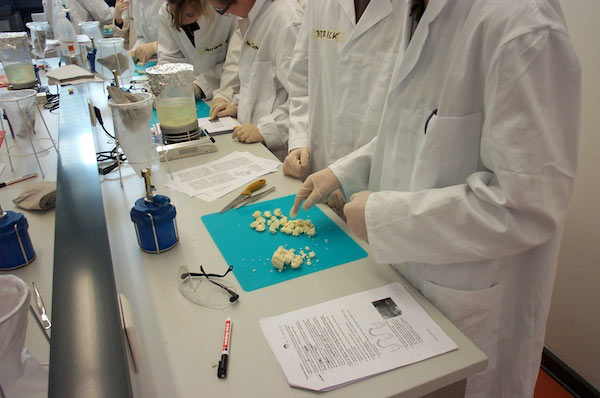

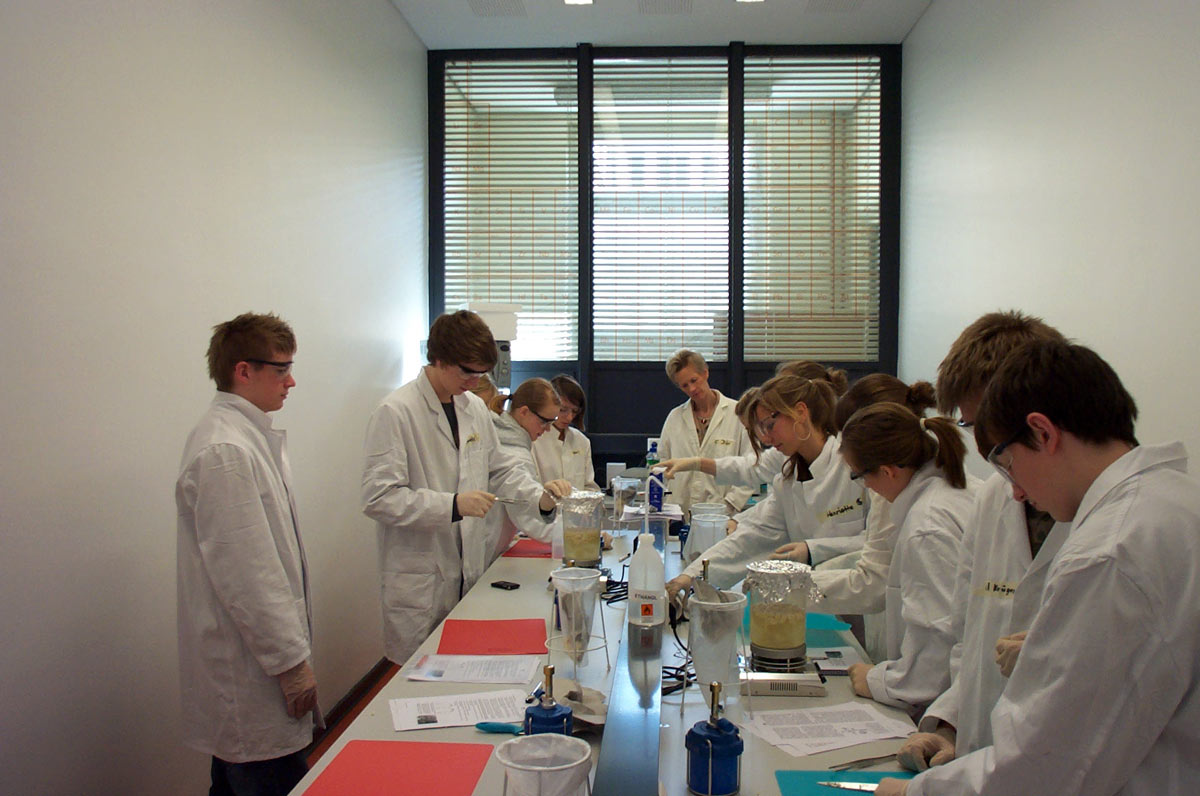
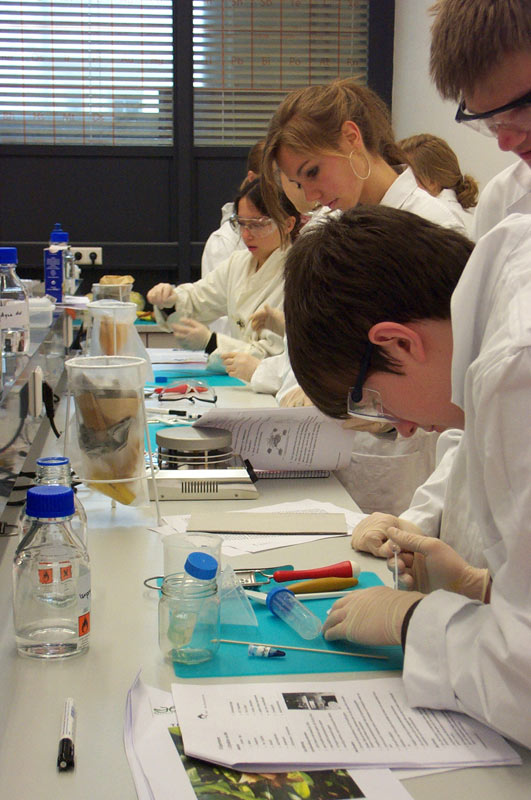
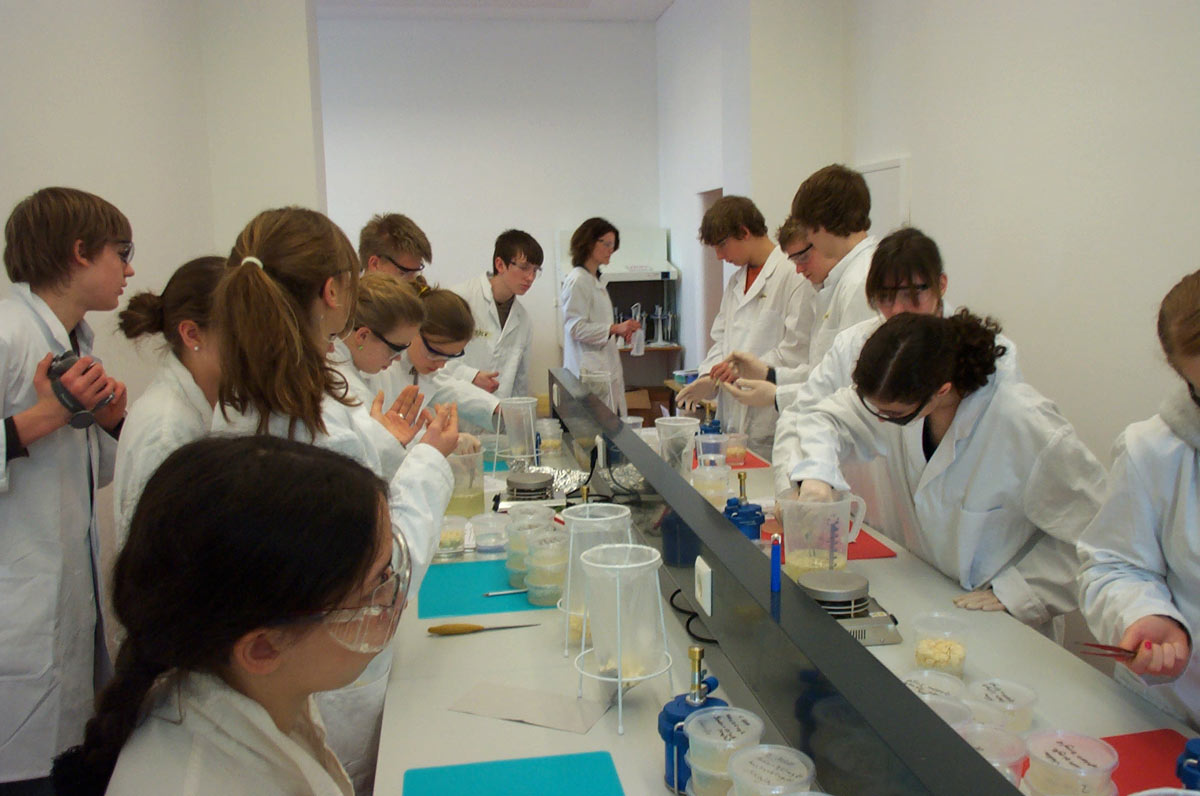
(click to enlarge)
Financing
HannoverGEN covers its expenditure from the state budget (55%), the Lower Saxony Innovation and Future Fund (43%) and industry (2%).
Project goals
Through sound theoretical knowledge, experimental experience and ethical evaluation, the project participants should arrive at a responsible judgement about the potential uses and risks of green genetic engineering. HannoverGEN achieves additional added value with its multimedia components. In detail:
- molecular and cell biology experiments are carried out in the school laboratories, which are generally not possible in schools with conventional equipment
- underpin specialised theoretical knowledge of modern molecular biology and plant biotechnology with experimental work
- acquired experimental skills
- the areas of application of plant genetics and green gene technology are presented in detail
- reflected ethically on the experimental laboratory work in class and taught and applied models for forming judgements and risk assessment
- trained selected teachers and students in radio journalism and used them for reports and web radio programmes about HannoverGEN.
Co-operation partner
HannoverGEN's cooperation partners are responsible for designing and implementing the project content:
| Sub-projects | ||||
| I Experimentation | II Imparting knowledge | III Evaluating | IV Communicating | V Integrate |
| Institute of Plant Genetics Leibniz Universität Hannover | Institute of Educational Sciences Leibniz Universität Hannover | Institute for Biology and Environmental Sciences, Working Group Biology Didactics University of Oldenburg | I: "Lernort Labor" Leibniz Institute of Educational Sciences (IPN) Christian-Albrecht-Universität Kiel II: n-21: Schulen in Niedersachsen online e.V. Hannover | Institute for Biology and Environmental Sciences, Working Group Biology Didactics University of Oldenburg |
The Lower Saxony state government is responsible for the implementation of the project: Lower Saxony Ministry of Food, Agriculture, Consumer Protection and Regional Development (ML), Lower Saxony Ministry of Education and Cultural Affairs (MK) and Lower Saxony Ministry of Science and Culture (MWK).
HannoverGEN is managed by a steering committee under the direction of ML and MK. At the level of the support schools, HannoverGEN is organised in the Wilhelm-Raabe-Schule (AKWRS) working group.
The internet portal www.hannovergen.de, the work of student reporters from n21 student online editorial offices and the internet radio of "n-21: Schulen in Niedersachsen online e.V.", who produce reports, podcasts and internet presences of the project, serve to ensure transparency and communication of HannoverGEN.
Target group
The project is a contribution to education for sustainable development through the use of green genetic engineering in agriculture. To this end, biotechnological student experiments are carried out with teachers and students in school laboratories at the Helene-Lange-Schule (Hanover), Wilhelm-Raabe-Schule (Hanover), Erich Kästner Gymnasium Laatzen and IGS Garbsen (support schools) and linked to teaching content including ethical aspects. Each support centre school is equipped with a modern biology laboratory. The school laboratories are also used by other grammar schools in the Hannover area that have been selected for HannoverGEN (partner schools). The central topics of the project include biotechnological experiments and ethical evaluation methods. Students and teachers will deepen their knowledge of green genetic engineering through experimentation and improve their ability to make judgements about the benefits and risks of genetic engineering. In addition, access to molecular biology and genetic engineering should be made easier and pupils should be made curious about science and technology. The acquisition of evaluation skills is intended to promote the moral judgement of the project participants.
Project initiative
Green genetic engineering is regarded as one of the most important key technologies for modern agriculture and food production. However, no other current technology is as controversial in Germany. However, depending on the specific areas of application, attitudes vary between support, ambivalence and rejection. Many people find it difficult to evaluate green genetic engineering without emotion and to form a balanced judgement. HannoverGEN is a model project for secondary schools in the Hannover region to deepen knowledge and develop moral judgement about green genetic engineering. Schools have a key role to play in imparting specialist knowledge and promoting young people's ability to make judgements. Supported by scientists and communication experts, selected project schools will in future disseminate specialist knowledge and evaluation skills to society in a sustainable manner and support the formation of reflected judgements regarding genetically modified crops. The project was initiated by the "3rd Lower Saxony Agricultural and Food Industry Discussion Forum" in 2006. It will run for three years (2008-2010). The project organiser is the state of Lower Saxony. HannoverGEN is personally supported by the Prime Minister of Lower Saxony, Christian Wulff.
Telekom - Student labs as teaching-learning labs
Student labs as teaching-learning labs
The "Student labs as teaching-learning labs" project, funded by the German Telekom Foundation, is part of a network of six universities with teacher training programmes in the STEM subjects. It aims to strengthen the professional relevance of teaching degree programmes.
At the University of Oldenburg, the existing student laboratories in the didactics of biology, physics, Computing Science and technology are being further developed into teaching-learning laboratories and systematically expanded into pillars of STEM teacher training.
Biology didactics is the spokesperson for the programme together with physics didactics and has created two dissertations as part of the project: Julia Warnstedt and Lea Auen (dissertation now completed).
Network partners
Freie Universität Berlin
Humbold Universität Berlin
Institute of Educational Sciences and Mathematics Kiel
University of Koblenz-Landau
Westfälische Wilhelms-Universität Münster
Duration:
01.10.2014 - 30.09.2017
Publication (in preparation)
Burkhard Priemer, Jürgen Roth (eds.):
Teaching and Learning Laboratories: A Driver of Innovation in STEM Teacher Training
In teacher training for STEM subjects, there is a growing emphasis on the integration of teaching and learning laboratories (TLLs). These facilities bring together the promotion of pupils’ STEM learning, the integration of theory and practice in teacher training, and, at many sites, research into subject-specific teaching methods. The aim is to implement evidence-based, innovative teaching concepts and to further develop STEM teaching, both directly and indirectly through future teachers. This volume presents concepts and empirical findings from the teaching and learning laboratory work carried out by the development network ‘Pupil Laboratories as Teaching and Learning Laboratories’, initiated by the Deutsche Telekom Foundation. These experiences from the participating university sites in Berlin, Kiel, Koblenz-Landau, Münster and Oldenburg are thus made available for further development and implementation at other locations.
This book is aimed at STEM subject didacticians, STEM teacher training students, STEM subject leaders and STEM teachers.
Biology in context
Since June 2005, the Didactics of Biology (Prof. Dr C. Hößle, Nicola Mittelsten Scheid) has been involved in the three-year project "Biology in Context" funded by the BMBF. The project aims to promote the quality development of biology teaching. To this end, the development of pupils' skills is to be stimulated by strengthening the professional attitude of biology teachers. The framework concept of our project is based on the educational standards published by the KMK and methodologically aims to increase the use of application contexts in the classroom. Specifically, the project has set itself the following objectives:
1. context orientation to promote competence
A central concern of Biology in Context is to embed biological concepts, working methods and strategic knowledge in selected contexts when teaching them in biology lessons in such a way that pupils are specifically supported in their competence development.
2. competence structure models and competence development
Taking up the approach of the educational standards published by the KMK, the promotion of competence development is based on four areas of competence: Expertise, knowledge acquisition, evaluation and communication. The Oldenburg didactics of biology focusses on the development of a competence structure model for student assessment competence.
3. developing the professionalism of teachers
The implementation of innovations in the classroom can only be realised with the involvement of teachers. We would like to motivate and support the teachers involved to implement the concept of biology in context and to continuously develop their own professionalism as teachers. In this context, we would like to thank the biology teachers at the cooperating schools in Oldenburg and Jaderberg for their excellent cooperation.
Together with our co-operation partners (Universities of Kiel, Göttingen, Gießen, Essen), the concept of Biology in Context is being integrated into schools in nine Federal States.