
Projects
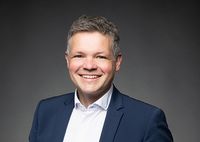
Tim Zentner
Geschäftsführer des C3L
Contact

Prof. Dr. habil. Olaf Zawacki-Richter
T +49(0)441 798-2765
F +49(0)441 798-4741
E
Projects
Development and research at C3L
In our research and development projects, we cooperate with scientific institutions outside the C3L, with partners from industry and with other institutions. The majority of our projects result in practical educational programmes for specific target groups. In doing so, we bring together technical, methodological and didactic expertise.

Energy transition pilots for the north-west metropolitan region

FinMa - Financial education from companies for employees

TEN.efzn - Transformation of the Lower Saxony energy system

FLOW - Flexible & open further education

NaTuL - Sustainability in the transport and logistics industry

Consolidation and regional anchoring of the "Hydrogen for subjects and managers" further education programme

ProPriHo - Professors at private universities

Contact study programme: Pedagogical competence in the migration society
Online course Innovation Scouts (StartupTied)
Brief description and objectives
As part of the EXIST-Potentials project "The University of Oldenburg - Engine of a cross-border startup region" funded by the Federal Ministry of Economics and Climate Protection (BMWK), the Department for Research and Technology Transfer is developing an open, cross-border "Entrepreneurship Education Platform" - the StartupTied- together with the C3L - Centre for Lifelong Learning. On this platform, the University of Oldenburg (UOL) is bundling start-up-relevant content and materials and making them available as an open educational resource. In addition, the C3L is developing an online course for innovation scouts, which can be completed with a certificate of participation. The task of the innovation scouts is to identify resources and innovations in their own company, develop them further and drive them forward.
Target group
The target group of the online course for innovation scouts are employees in companies who are entrusted with the task of identifying and utilising innovations. These can be, for example, managers, project or product managers or employees from various departments such as research and development, marketing or strategic planning.
Project partners/network
The aim of the EXIST-Potentials project is the regional networking of all start-up activities in the north-west region, which is why the UOL cooperates with numerous companies, chambers, business development organisations, public institutions, industry networks and successful start-ups. In addition, the UOL also cooperates internationally with the Rijksuniversiteit Groningen, the Hanzehogeschool, also located in Groningen, and the Nelson Mandela University (NMU) in Port Elisabeth, South Africa.
Duration
July 2020 to June 2024 (extension until December 2024)
Project organiser/funding
Federal Ministry for Economic Affairs and Climate Protection

Contact person
Silke Welter, T +49(0)441 798-3244, E
Sabine C. Joos, T +49(0)441 798-4747, E
Further information
Further information on the overall project can be found here.
Prospects for the future of Learning - Artificial Intelligence in Higher Education (AIEd)
Brief description and aims
The aim of the project is to explore the current and potential use of artificial intelligence applications in teaching and learning from the perspective of faculty members in higher education. Scenarios of artificial intelligence applications in the university context as well as their ethical and practical implications will be considered. The scenarios will be derived from a systematic review on AI applications (Zawacki-Richter et al. 2019). The development of strategic scenarios will follow a systematic procedure described by Gutschow and Jörgens (2016), which is based on the scenario technique of Fink and Siebe (2011). The scenarios will be evaluated comparatively by university lecturers from five countries (Germany, China/Japan, USA, Spain and Turkey) from two subject areas (Social Sciences and STEM). The university lecturers' views on the scenarios will be collected in a mixed-method design, both quantitatively (through an online survey) and qualitatively in online focus groups. The aim is to derive validated recommendations for the integration of AI applications in higher education.
Target group
Teachers in higher education in six countries
Project partners/network
COER
Duration
June 2021 until May 2024
Project organiser/funding
VW Foundation and MWK
Contact person
Prof Dr Olaf Zawacki-Richter, T +49 (0)441 / 798 27 65, E
Reconstruction of non-traditional educational biographies

Brief description and objectives
In recent years, the educational careers of non-traditional students have moved to the centre of educational policy discussions and educational and higher education research. Due to increased permeability between vocational and higher education, the trend towards lifelong learning and increased biographical choices, the proportion of people who have gained access to higher education through a vocational qualification is increasing, and the composition of the student body is becoming increasingly heterogeneous. One way of gaining access to higher education is to take an examination to obtain a subject-related higher education entrance qualification after prior academic appointment (Z examination). These developments lead to more biographical options: For example, a degree programme can still be taken up at a supposedly late point in a student's life. The University of Oldenburg has a long tradition of admission examinations and is based on the understanding that it is an open university whose educational programmes are intended to benefit not only traditional students, but also a broad and heterogeneous target group; in some cases, over 10% of students were so-called 'Z examinees'. Although knowledge about this group is of crucial importance for higher education practice and policy, there have only been a few studies to date that empirically analyse non-traditional educational and career paths from a holistic biographical perspective. What has not yet been researched are the long-term consequences of the supposedly late decision to study for a degree on further academic appointments and careers, which biographical developments have occurred after graduation and how these can be explained biographically. The study focuses on the following aspects: (1) gaining a broader understanding of the target group and their motivation for studying (taking the Z exam), (2) generating insights into the influence of academic socialisation during studies and the degree achieved on subsequent academic appointments, (3) analysing the biographical scope for action taken by the interviewees after graduation and the structural characteristics on which these are dependent. Building on the results of a quantitative preliminary study already conducted (N = 6205), types of 'Z examinees' are to be analysed, which were explored with the help of a latent class analysis. The aim is to reconstruct the educational and professional biographies of this case group through an objective hermeneutic interpretation of autobiographical impromptu narratives, which are elicited through narrative interviews. In this way, life-historical processes can be depicted in their temporal boundedness as well as in their formation of meaning and context.
Target group
Non-traditional students, students without A-levels
Project partners
- Prof Dr Detlef Garz (Hanse-Wissenschaftskolleg (HWK), Institute for Advanced Study, Delmenhorst),
- Prof Dr Sylke Bartmann, Emden/Leer University of Applied Sciences
Duration
January 2020 until October 2023
Project organiser/funding
DFG German Research Foundation
Contact person
Prof Dr Olaf Zawacki-Richter, T +49 (0)441 798-2765, E
Hydrogen economy for subjects and managers
Brief description and objectives
Green hydrogen will realise its market potential in various sectors over the next ten years and will therefore be an important building block for the success of the energy transition in many industries. The development of a green hydrogen economy will require competent subjects and managers in all areas along the value chains as well as in politics and administration. In view of the expected new jobs in the hydrogen economy (the German Hydrogen and Fuel Cell Association (DWV) expects up to 70,000 additional jobs nationwide by 2030 and 150,000 jobs by 2050), the demand for skilled labour is generally expected to increase.
The Hydrogen Economy for Subjects and Managers project is developing and piloting a new training programme for the management of hydrogen projects so that planners and decision-makers with the necessary know-how can initiate, assess and implement hydrogen projects along the entire value chain.
Target group
The training programme is aimed at subjects and managers with a connection to hydrogen projects at energy producers, grid operators, transport companies and municipal utilities as well as in the automotive, steel and chemical industries. The programme is also aimed at employees in public institutions and administration who decide on and support hydrogen projects.
Project partners/network
Leibniz University Hannover
Energy Research Centre of Lower Saxony (EFZN)
Duration
January 2022 to December 2023
Project organiser/funding
Lower Saxony Ministry of Science and Culture
Hannover Region (Economic Development)
City of Oldenburg (Economic Development)
Contact person
Manuel Karczmarzyk, T +49 (0)441 798-4443, E
Imparting expertise in research data management for energy research in Lower Saxony
Brief description and objectives
The secure handling of large amounts of data is more important than ever with increasing digitalisation. In energy research in particular, data is an important basis for innovative research results due to the wide range of research. Special requirements are placed on energy research data due to the large number of different projects. For example, the aim is for data to be usable beyond its own field of research. Research data management is of particular importance in energy research, which is why basic methods are being prepared and adapted for use in energy research in this project. Effective research data management aims to make data available to science beyond the boundaries of research projects and institutes in the long term. The FAIR criteria (Findable, Accessible, Interoperable and Reusable) play a special role here: FAIR data is findable, accessible, interoperable and reusable and therefore particularly valuable for research, as it can be used again and again in different contexts. At the same time, they also improve reproducibility and thus the results of research. The aim of the project is to develop free teaching and learning materials (OER) for research data management in energy research.
Technical advice is provided by Prof Dr Astrid Nieße, Department of Computing Science (UOL).
The course is available as OER on relevant portals and has been made available under Research Data Management (liascript.github.io) and Twillo, among others.
Target group
Energy research in Lower Saxony is characterised by a wide range of research topics, including networked energy systems, storage technologies, solar and wind energy and the social impact of changing energy systems. The resulting materials impart knowledge on research data management to scientists and junior staff in the field of energy research in Lower Saxony and beyond.
As a result, scientists can further qualify themselves in the handling of research data so that the use of research data is strengthened. On the one hand, this enables fundamentally new research, e.g. in the field of artificial intelligence and digitalisation, as large amounts of data are often required here. On the other hand, data sets can be used more frequently and the tedious creation of new data sets can be avoided.
Duration
January 2023 to June 2023
Project organiser/funding
Energy Research Centre of Lower Saxony (EFZN)
Contact person
Annabelle Jandrich, T +49 (0)441 798-4643, E
Creating and disseminating open educational resources for energy informatics
Brief description and objectives
In the project "Creating and disseminating open educational resources for energy informatics", free teaching and learning materials (OER) for an introduction to energy informatics were developed, revised and digitised. The aim of the introduction to energy informatics is to impart basic knowledge about energy systems, electrical energy systems, players relevant to the energy industry and current research topics in energy informatics, such as the application of methods in the field of artificial intelligence. The University of Oldenburg's Department of Computing Science (Prof. Dr Astrid Nieße) and the C3L - Centre for Lifelong Learning were involved in the project.
All learning materials developed in the project were published via the Lower Saxony OER portal Twillo and stored with corresponding metadata. The educational resources can be downloaded, used and, in some cases, edited. This makes practical knowledge available to all interested parties free of charge.
Target group
Energy informatics is a specialised discipline at the intersection of Computing Science, Energy Technology, Electrical Engineering, Industrial Engineering and Mechanical Engineering. The current and foreseeable demand for specialists for the operation of current and the development of future energy systems is fed by all these disciplines: Such specialists are needed, for example, for the design of business models for providers of electromobility, software development in the operation of decentralised energy systems, or in the development of forecasting methods for generation and consumption based on machine learning methods. A basic understanding of energy systems, technical boundary conditions and market positioning is essential for all of these areas, which are only mentioned here as examples, while the basic training typically takes place in one of the specialist disciplines.
In response to this need in industry, courses on the introduction to energy informatics are usually anchored as a separate module in the respective curricula; for example, at the Universities of Hanover (Leibniz University of Hanover, LUH) and Oldenburg (University of Oldenburg, UOL) in Computing Science, Business Informatics, Energy Technology and Electrical Engineering.
Duration
December 2022 to September 2023
Project organiser/funding
Lower Saxony Ministry of Science and Culture
Contact person
Annabelle Jandrich, T +49 (0)441 798-4643, E
Creating and disseminating Open Educational Resources for Business Administration
Brief description and objectives
In the project "Creating and disseminating Open Educational Resources for Business Administration", free teaching and learning materials, so-called Open Educational Resources (OER), for economics and Business Administration were edited, newly created and digitised. Digital information and learning objects are to be used to develop comprehensive OER on the topics of human resource management, organisation, financing and investment and combine them into learning paths.
The University of Oldenburg's School of Business, Economics and Law (Prof. Dr Thomas Breisig) and the C3L - Centre for Lifelong Learning were involved in the project. The Jade University of Applied Sciences (Prof Dr Dirk Fischer) was a partner in the project.
All learning materials developed in the project were published via the Lower Saxony OER portal Twillo and stored with corresponding metadata. The educational resources can be downloaded, used and, in some cases, edited. This makes practical knowledge available to all interested parties free of charge.
Target group
The OER on the topics of human resource management, organisation and financing and investment are part of almost every business or economics degree programme. They can therefore be used by students and lecturers throughout Germany in teaching and higher education.
Project partners/network
Jade University
Duration
April 2022 to September 2023
Project organiser/funding
Lower Saxony Ministry of Science and Culture
Contact person
Annabelle Jandrich, T +49 (0)441 798-4643, E
EU-dUR - A European Network for Digital Undergraduate Research: Digital readiness, lifelong learning inclusion
Brief description and objectives
This Strategic Partnership includes five European universities and two associated organisations. With the focus on both innovative practices in the digital era and the ongoing global Covid-19 pandemic, our common goal is to advance digital under-graduate research in Europe. In the long term, this should also strengthen the undergraduate research network in Europe (similarly to that achieved by our associated partner CUR, the US Council on Undergraduate Research) and improve its global integration. The joint development of digital undergraduate research should serve as a catalyst for the European network. The aim of the subproject is to develop an online training programme for developing the digital competences and skills of university educators for UR (Undergraduate Research). If time and resources allow, the development of a specific educational resource (OER) that could be used by universities to support the mentoring of digital UR and the development of digital competences
Target group
University educators
Project partners/network
Université de Paris, with the Center for Research and Interdisciplinarity (CRI); University of Vienna, with the Center for Teaching and Learning (CTL); LCC International; University of Warwick; Associated Organisations: PH Luzern; US Council on Undergraduate Research
Duration
March 2021 until February 2023
Project organiser/funding
Erasmus+ / DAAD
Contact person
Prof Dr Olaf Zawacki-Richter, T +49 (0)441 798-2765, E
VWA Business Economist
Brief description and objectives
A concept is to be developed and implemented in which the business administration graduates transfer to the University of Oldenburg with a maximum credit transfer of 90 CP and complete a part-time Bachelor's degree in Business Administration at a reasonable cost. The VWA adapts its own continuing education content to the Bachelor's degree in order to maximise credit transfer. The VWA will be advised on this by the C3L. The co-operation is to take place with the planned further development of the Bachelor's degree programme in Business Administration from 2022. The potential is around 10-20 people per year who could transfer from the VWA to the Bachelor's programme.
Benefit:
- The University of Oldenburg increases the number of students in the (planned) BA Business Administration programme in the long term.
- Long-term development of a nationwide continuing education model for VWA graduates that could be applied nationwide for different VWA or business administration programmes.
- We are developing a "comprehensive" admission and permeability model for business administration that could also be transferred to other partners (VWA, BBS, IHK, etc.).
- Networking with co-operation partners in academic appointments in the region is strengthened and made available for possible follow-up projects.
- The attractiveness of Oldenburg as a location in the segment of further education will be strengthened by offering talented commercial specialists an all-round attractive, transparent and permeable educational pathway in the region.
- The innovation and competitiveness of companies will be strengthened by offering attractive qualification programmes in the region to retain particularly talented junior staff and offer them prospects.
Target group
Participants of the VWA further education programme
Project partner/network
- Competence Centre for Credit Transfer at the University of Oldenburg
- School II or programme management of the University of Oldenburg
- C3L - Centre for Lifelong Learning at the University of Oldenburg
- Lecturers and management of the VWA Oldenburg
Duration
The project will start with preparation in January 2021 and will be completed by March 2022, followed by rollout and enrolment of the first students in October 2022.
Project organiser/funding
City of Oldenburg
Contact person
Manuel Karczmarzyk, T +49 (0)441 798-4443, E
Open university - Change of course project

Brief description and objectives
The "Kurswechsel" project is a new offer for counselling and support for drop-outs with experience of flight and migration, with a focus on the group of highly qualified refugee drop-outs. The aim is to create an individualised and digital support service to enable a self-determined and sustainable career start in Germany. Five measures are to be offered to participants within the project: portfolio creation, a digital learning platform, individual and needs-based support, workshops and an internship. The project is a continuation of the existing project "Qualification of refugees", in which the Competence Area Recognition offered academically and vocationally trained refugees the opportunity to work through their educational biography independently of certificates and document their skills and potential with the help of a skills portfolio from October 2015 to June 2020. The overall aim of the project is to develop, create and test the measures and materials. By participating in the project, we want to increase participants' chances of finding an apprenticeship or job despite dropping out of university. To this end, it is important for us to visualise and reflect on their own skills, familiarise them with the education and vocational system in Germany and enable them to navigate it independently.
Target group
Education drop-outs, with a focus on the group of highly qualified refugee drop-outs
Duration
July 2020 - June 2022
Project organiser/funding
European Social Fund (ESF); funding guideline "Opening up universities"
Contact person
Britta Klages T +49 (0)441 798-2158, Lea Sophie Mustafa T +49 (0)441 798-2988, E
Further information
Detailed information on this project can be found on the project website.
PLAR BCBQ (Blended Counselling for Academic Appointments)
Brief description and objectives
The PLAR BCBQ (Blended Counselling for Professionally Qualified Students) project follows on from the PLARnet project and is intended to develop and test a blended counselling concept for the entire field of action (information, support, counselling) for the target group of professionally qualified prospective students and students for the recognition of competences acquired outside of higher education as well as university admission, studies and career opportunities. To this end, the University of Oldenburg's existing counselling and support services are to be enhanced with online components. Non-traditional prospective students and students (NTS) are to be given the opportunity not only to find out about the courses on offer, access to higher education and recognition of non-university competences, regardless of time and place, but also to check their personal study and credit transfer requirements at a low threshold in order to be better prepared for face-to-face study and credit transfer counselling. Furthermore, the introduction of online office hours and the use of an online portfolio simulation and an online tutorial are intended to support the university's entire credit transfer process through digital media.
Target group
Students/prospective students with academic appointments
Project partners/network
Educational counselling centres, BBSs from the region
Duration
June 2019 - May 2021
Project organiser/funding
European Social Fund (ESF); "Opening up universities" funding guideline
Contact person
Anja Eilers-Schoof, PD Dr Wolfgang Müskens, +49(0)441 798-4789,
Further Information
Detailed information on this project can be found on the project website.
Establishing part-time study programmes in STEM subjects - MINT-Online
Brief description and objectives
After three years of developing high-quality part-time degree programmes and certificate programmes in the field of Environment - Sustainability - Renewable Energies (1st funding phase), the 2nd funding phase is working on finalising course content, setting up and anchoring the study programmes at the partner universities and institutions in a sustainable manner and transferring them to regular operations.
Duration
April 2015 to September 2017 (implementation phase)
Project partner/network
- Fraunhofer Society (Dr Götter)
- University of Hagen (Prof Dr Breitmeier)
- University of Kassel (Prof Dr Kuhl)
- University of Oldenburg
(network coordination: Prof. Dr Röbken, Prof. Dr Zawacki-Richter) - University of Stuttgart (Prof Dr Mehra)
- EWE research centre NEXT Energy (Prof. Dr. Aggert)
Project organiser/sponsor
The project is funded by the BMBF
Further information
Detailed information on this project can be found on the project website
Open Universities Network
Brief description
The "Open Universities Network" was created in 2015 from an initiative of several universities in the federal-state competition "Advancement through Education: Open Universities". The network is coordinated by the three partners at the Bauhaus-Universität Weimar, the University of Ulm and the University of Oldenburg.
The aim of the network is the long-term and successful establishment of lifelong learning programmes in the German higher education landscape. To this end, various networking and support offers as well as co-operations - also beyond the competition - are initiated, organised and implemented. The focus is on networking, counselling, qualification and communication and is implemented in formats such as working meetings, webinars and webinar series, as well as study visits. The universities involved in the network contribute ideas, questions and their own projects, at the same time gaining partners for these and benefiting in the short and long term from a collegial exchange. The mediation of experts in the sense of peer-to-peer counselling and the promotion of an overarching exchange also make it possible to meet diverse expectations in accordance with heterogeneous requirements at the end of projects and at the universities.
Duration
01.04.2015 - 30.09.2017 (1st funding phase)
01.02.2018 - 31.07.2020 (2nd funding phase)
Target group/s
- Projects from the first and second round of the federal and state competition "Advancement through Education: Open Universities"
- Stakeholders and experts who deal with the topics of open higher education, lifelong learning and advanced scientific training and are interested in exchange, discourse and further development
Project partners/network
- University of Oldenburg / Centre for Lifelong Learning (C3L)
Project leader: Prof. Dr Anke Hanft, Dr Christiane Brokmann-Nooren
Project manager: Dr Joachim Stöter - Bauhaus-Universität Weimar
Project leader/coordination: Dr Andreas Mai - University of Ulm
Project leader: Prof. Dr.-Ing. Hermann Schuhmacher
Project responsibility: Dr Gabriele Gröger
Project organiser/funding
The project is funded by the BMBF; the project organiser is VDI/VDE IT
Further information
Detailed information on this project can be found on the project website
Shaping the permeability of studies and vocational training through digitalisation
Brief description
The project focuses on the permeability of vocational education using the example of the "State-certified business economist" further education programme at the vocational schools in Oldenburg/Wechloy and Aurich to the part-time Bachelor's degree programme "Business Administration for SMEs" at the University of Oldenburg. The aim is to develop attractive educational careers for working participants using digital formats such as online-supported teaching and counselling.
The project operates on three levels:
- The systematic transition from vocational training (here: business administration) to a university degree programme is being developed as an example. The focus here is on the aspects of credit transfer and deficit equalisation as well as the interlinking and exchange of teaching content and educational formats. The aim is to go far beyond generalised credit transfer and the offer of bridging courses: For the first time, a general crediting recommendation will be drawn up for further education in business administration regulated by state law.
- As an example, digital counselling formats will be further developed and expanded into a blended counselling portal in order to meet the needs of working participants for counselling options that are independent of time and location.
- The existing blended learning study model will be further developed at the interface between vocational training and higher education and supplemented with specific online formats. This will enable working target groups to participate even more flexibly (incl. training concept).
The project will establish a new form of cooperation for the two participating vocational schools as well as for the University of Oldenburg, which can also serve as an example for other universities and non-university partners.
Duration
May 2018 - April 2020
Target group
Graduates of the advanced training programme "Staatlich geprüfter Betriebswirt" who wish to take up the part-time Bachelor's degree programme in Business Administration in medium-sized companies at the university.
Project partners
- University of Oldenburg / Centre for Lifelong Learning (C3L)
Academic director: Prof. Dr Anke Hanft
Project leader: Tim Zentner
- Berufsbildende Schule Aurich 1
Head of the business school department: StD Jörn Menne
- Berufsbildende Schule Oldenburg
Head of Business School: StR Dr André Bloemen
Project organiser/funding
The project is funded by the European Social Fund (ESF) and the Lower Saxony Ministry of Science and Culture.
Development of part-time study programmes in nursing and health sciences "PuG" II
Brief description
As part of the PuG II joint project, innovative study formats are being (further) developed and sustainably implemented in the second funding phase: two part-time Bachelor's degree programmes and five part-time Master's degree programmes including subject-specific university certificates. The basis for this is the conceptual results of the first funding phase, the results of research and evaluation as well as the changes in the educational and higher education policy framework. The overarching importance of the network is to counteract the shortage of skilled workers and to promote the expansion of advanced scientific training in this field. In order to achieve this, the study programmes are basic, application and project-oriented and aim to quickly integrate current research results into practice in this dynamically developing field.
Funding period (2nd funding phase)
30th months: 01.02.2018-31.07.2020
Form of the planned programme and type of degree envisaged
Further education degree programmes:
- Master's in Advanced Nursing Practice ANP (University of Oldenburg)
- Master's in Health Management in Rehabilitation (University of Oldenburg)
- Master Advanced Nursing Practice ANP (Bochum University of Applied Sciences for Health)
- Master's in Evidence-Based Speech Therapy (Bochum University of Applied Sciences)
- Bachelor of Speech Therapy - Upgrade (Jade University of Applied Sciences - Oldenburg)
- Master Public Health - Upgrade (Jade University of Applied Sciences - Oldenburg)
- Bachelor of Applied Nursing Sciences - Upgrade (Ostfalia University of Applied Sciences - Wolfsburg)
Specialisations addressed
- Bachelor: Nursing professions, e.g. healthcare and nursing, healthcare and paediatric nursing, geriatric nursing and comparable nursing professions; all disciplines of outpatient and inpatient (long-term) care, rehabilitative care, palliative care and counselling; nursing and health sciences, medicine, healthcare professions (especially speech therapy, occupational therapy and physiotherapy), gerontological nursing, health and nursing science, gerontology, geriatrics, rehabilitation sciences.
- Master's degree: Professionals with a Bachelor's degree in nursing, therapy, rehabilitation, (special, remedial, rehabilitation) education, sociology, gerontology, health economics, public health, epidemiology, biostatistics; academically qualified professionals in the fields of speech therapy, speech therapy, clinical linguistics, speech therapy education, patholinguistics, clinical speech sciences.
Project partners/network
- University of Oldenburg / Centre for Lifelong Learning (C3L)
Network coordination: Prof. Dr Gisela C. Schulze, Prof. Dr Olaf Zawacki-Richter
Project leader: Prof. Dr Gisela C. Schulze, Prof. Dr Hans-Gerd Nothwang (acting) - Bochum University of Applied Sciences (Bochum)
Project leaders: Prof Dr Kerstin Bilda, Prof Dr Markus Zimmermann - Jade University of Applied Sciences Wilhelmshaven/Oldenburg/Elsfleth
Project management: Prof. Dr Frauke Koppelin - Ostfalia University of Applied Sciences (Wolfsburg)
Project leader: Prof. Dr Martina Hasseler
Other participants (participation without funding)
Hanse Institute Oldenburg Education and Health GmbH
Project organiser/funding
The end of project is funded by the BMBF.
Further information
Detailed information on this project can be found on the project website
Climate WA? - Development of training modules for municipalities on the use of GIS-based instruments for adaptation to climate change
Brief description
Since the adoption of the Adaptation Action Plan, knowledge about climate adaptation and the information base for the creation of promising action strategies at municipal and regional level has improved significantly. Nevertheless, there is a considerable deficit in the communication of these results from the model regions and model municipalities. The nationwide implementation of the findings into municipal planning practice and the application of the diverse analysis and evaluation tools developed and tested in the research projects is often slow. Small and medium-sized municipalities and cities in particular have neither the financial nor the human resources to continuously inform themselves about current developments, to build up corresponding adaptation capacities and to develop and implement their own adaptation strategies.
Objectives of the project:
- Compilation of central GIS-based tools and offers for regional and municipal practice
- Identification of requirements and criteria for a further training programme on climate adaptation for spatial, regional and urban land-use planners, municipal decision-makers and administrative staff
- Target group-specific processing of the available information and findings
- Development of a didactic education and counselling concept
- Development and establishment of an information platform
- Implementation of the content in offline and online training programmes and concepts
- Testing and evaluation of the concepts
- Development of business and realisation models
Within the project, the C3L is responsible in particular for the development of the media didactic concept (blended learning), its media technology implementation and the provision of the educational technology infrastructure (C3LLO).
Duration
May 2017 - October 2018
Target group
Spatial, regional and urban land-use planners, municipal decision-makers and administrative staff
Project leader (overall)
Working Group for Regional Structure and Environmental Research (ARSU) GmbH
Network partners
- Working Group for Regional Structure and Environmental Research (ARSU) GmbH
- Centre for Lifelong Learning, University of Oldenburg
- GeoDok GmbH
- Ecco Management Consultancy GmbH
- Professorship for Innovation Management and Sustainability, University of Oldenburg
Funding body
Federal Ministry for the Environment, Nature Conservation, Building and Nuclear Safety (BMUB)
Project Management Organisation
Project Management Organisation Jülich (PtJ)
Funding programme
Funding for measures to adapt to climate change
Development of an interactive, media-supported educational and counselling intervention as well as field-related intervention measures for prevention and health promotion in the setting of inpatient care facilities (SaluPra)
Brief description
In order to exploit the health-promoting potential offered by nursing homes for the elderly and other inpatient facilities even more effectively in future, further standards are being developed in co-operation with practitioners and other experts. On the one hand, these are to be incorporated into the training of specialist advisors and, on the other, help to make it easier to implement health programmes in care facilities. The aim is to create a quality-assured basis for effective counselling management by the long-term care insurance funds in the inpatient care setting.
The Prevention Act requires the long-term care insurance funds to provide advice and active support for prevention and health promotion in inpatient care. In order to be able to fulfil this function effectively, it is important to provide the relevant specialist advisors with sound qualifications and to familiarise specialist staff in care facilities and other stakeholders with the topic even better. The "SaluPra" project aims to achieve quality-assured, evidence-based standards that are easy to integrate. The experts want to make the first results available as early as this year.
Duration
March 2017 - September 2018
Target group/s
Specialist advisors from care insurance companies responsible for prevention and health promotion, as well as inpatient care facilities
Project partner/network
- University of Oldenburg / Centre for Lifelong Learning (C3L)
Scientific director: Prof. Dr Anke Hanft
Project leader: Anno Stockem
Scientific coordinator: Prof. Dr Martina Hasseler - Martin Luther University Halle-Wittenberg / Institute for Health and Nursing Science
Scientific project leader: Prof Dr Gabriele Meyer
Project organiser/funding
The project is funded by the Verband der Ersatzkassen e.V. (vdek), Berlin
Portfolios for refugees
Brief description
The project offers pre-trained and vocationally qualified refugees the opportunity to create skills portfolios. The aim of the portfolios is to present your own educational biography in a structured way and to show the competences you have already acquired.
The offer is primarily aimed at prospective students who lack evidence of their previous academic career or only have incomplete evidence. The portfolio serves to check the plausibility of the educational biography and can be used as part of the procedure for obtaining a higher education entrance qualification.
In addition, the portfolio can also be used to analyse other non-traditional academic appointments. The detailed descriptions of educational and professional experience as well as the competences acquired have proven to be helpful in application situations.
Duration
01.10.2016-31.12.2018
Project organiser/funding
Lower Saxony Ministry of Science and Culture (MWK)
PLARnet: Recognition of academic appointments at the University of Oldenburg
Brief description
A central "Prior Learning Assessment and Recognition Service" (PLAR) is to be set up at the University of Oldenburg to support the transfer of competences acquired outside of higher education to university degree programmes. The PLAR Service supports students and prospective students who wish to have their competences acquired outside of higher education recognised for degree programmes (in particular by creating credit portfolios). The tasks of the PLAR Service include
- Recording competences acquired outside of higher education (especially academic appointments) through portfolios and other forms of competence recording (e.g. learning diaries or case studies),
- supporting students in obtaining evidence and compiling documents that prove the acquisition of creditable competences (e.g. framework curricula for further vocational training),
- comparing the content of the competences acquired in academic appointments with the learning outcomes of the study modules (equivalence comparison),
- science-based support for those responsible for credit transfer in the School when deciding on credit transfer applications.
The PLAR service helps drop-outs to present their academic achievements to companies in a comprehensible and competence-oriented manner.
Duration
October 2016 - September 2018
Target group/s
Students/prospective students
Project partners/network
Educational counselling centres from the region
Project organiser/funding
European Social Fund (ESF); funding guideline for opening up universities
Detailed information on this project can be found on the project website.
Development of part-time study programmes in nursing and health sciences "PuG" I
Brief description
The four universities - University of Oldenburg, Bochum University of Applied Sciences for Health, Jade University of Applied Sciences Wilhelmshaven/Oldenburg/Elsfleth, Ostfalia University of Applied Sciences - have joined forces in the joint project "PuG" to develop part-time degree programmes in nursing and health sciences in response to the emerging shortage of skilled workers in the field of nursing and health, with the help of the BMBF-funded competition "Advancement through Education: Open Universities" competition to conceptualise, develop and establish demand-oriented and needs-based study programmes.
The aim of the project network is to develop high-quality, competitive, science and research-orientated study programmes that are designed to directly transfer science at the interface between universities and universities of applied sciences and help to meet the growing demand for academically trained specialists in the nursing and healthcare professions.
Duration
01/09/2014-31/01/2018 (1st funding phase)
Target group/s
Professionally qualified nursing staff in all healthcare settings; nursing staff who have completed three years of vocational training with or without a university entrance qualification; working people who would like to study part-time alongside their academic appointment; people with family responsibilities; people returning to work; Bachelor's graduates who are aiming for a Master's degree while working after gaining initial professional experience.
Project partner/network
- University of Oldenburg / Centre for Lifelong Learning (C3L)
Network coordination: Prof. Dr Gisela C. Schulze, Prof. Dr Zawacki-Richter
Project leader: Prof. Dr Martina Kadmon, Prof. Dr Gisela C. Schulze - Bochum University of Applied Sciences
Project leader: Prof. Dr Anke Fesenfeld, Prof. Dr Kerstin Bilda - Jade University of Applied Sciences Wilhelmshaven/Oldenburg/Elsfleth
Project management: Prof. Dr Frauke Koppelin - Ostfalia University of Applied Sciences (Wolfsburg)
Project leader: Prof. Dr Martina Hasseler
Project organiser/funding
The end of project is funded by the BMBF
Further information
Detailed information on this project can be found on the project website
Teaching Trends 2014
Brief description
The conference "Teaching Trends 2014: Open for new ways - Digital media in higher education" took place from 15-16 October 2014 at the University of Oldenburg. You can find the conference proceedings here.
Duration
October 2014
Project partners/network
- University of Oldenburg
- elan e. V.
Project organiser/funding
The project was funded by the Ministry of Science and Culture of Lower Saxony.
Scientific support for the "Advancement through education" programme
Brief description
Scientific monitoring of the projects funded by the BMBF as part of the "Advancement through Education: Open University" programme.
Duration
November 2011 to December 2015
Project partner/network
- University of Oldenburg (Prof. Dr Anke Hanft)
- Humboldt University, Berlin (Prof. Dr Andrä Wolter)
- German University for Further Education, Berlin (Prof. Dr Ada Pellert)
Project organiser/funding
The project is funded by the BMBF
Development of part-time study programmes in STEM subjects - MINT-Online
Brief description
Development of high-quality part-time degree programmes and certificate programmes in the field of environment - sustainability - renewable energies
Duration
1st funding phase: October 2011 to March 2015 (conception phase)
Project partner/network
- Fraunhofer Society (Dr Götter)
- University of Hagen (Prof Dr Breitmeier)
- University of Kassel (Prof Dr Kuhl)
- University of Oldenburg
(network coordination: Prof. Dr Röbken, Prof. Dr Zawacki-Richter) - University of Stuttgart (Prof Dr Mehra)
- EWE research centre NEXT Energy (Prof. Dr. Aggert)
Project organiser/funding
The project is funded by the BMBF (with funds from the ESF)
Further information
Detailed information on this project can be found on the project website
Individualised online study preparation programme for academic appointments (InOS)
Brief description
Individual counselling and support for participants in commercial further education and training courses who wish to study for a Bachelor's degree in "Business Administration in SMEs"
Duration
October 2011 - September 2014
Project partners/network
- University of Oldenburg (academic management: Prof Dr Zawacki-Richter, Prof Dr Anke Hanft)
- University of Bremen: Institute Technology and Education (ITB)
- IHK for East Frisia and Papenburg
- Oldenburg Chamber of Industry and Commerce
- wisoak, Bremen
- Wolfgang Schulenberg Institute
Project organiser/funding
The project was funded by the BMBF.
Further information
Detailed information on this project can be found on the project website
Educational professionals with a migration background in day-care centres: resources - potentials - needs
Brief description
Expansion of the continuing education initiative for early childhood education professionals (WiFF) in the fields of transparency, quality and connectivity to include findings on the identified migration-specific needs and models of recognition as well as adaptation and post-qualification
Duration
October 2011 - March 2014
Project partners/network
- School of Education and Social Sciences
- Institute of Educational Sciences
-
Interdisciplinary Centre for Education and Communication in Migration Processes (IBKM)
Project organiser/funding
The project is funded by the BMBF.
Further information
Detailed information on this project can be found on the project website
CREDICARE: Quality-oriented Accreditation of Vocational Learning Outcomes in Health Care and Nursing
Brief description
Development of common standards to describe the learning outcomes, level and workload of learning units in the health and care sector.
Duration
October 2011 to September 2013
Project partners/network
- Adult education institutions
Project organiser/funding
The project was funded by LEONARDO DA VINCI - Transfer of Innovation.
Further information
Detailed information on this project can be found on the project website
Healthcare research in Oldenburg on necessary support for families with extremely premature births
Brief description
Scientific evaluation of the concept for the care of parents with premature babies in the Oldenburg area by the Perinatal Centre at Oldenburg Hospital.
Duration
September 2011 to August 2013
Project partners/network
- Perinatal Centre, Centre for Paediatric and Adolescent Medicine, Oldenburg Hospital
Further information
Detailed information on this project can be found on the homepage of the training centres and university outpatient clinics for psychotherapy
Open university
Brief description
Establishment of special study programmes for academic appointments and non-traditional target groups and facilitation of transitions between vocational and higher education through the recognition of competences acquired outside the higher education system and through the integration of adult education programmes into higher education.
Duration
2008 - 2012
Project partners/network
- Adult education institutions
Project organiser/funding
The project was funded by the Ministry of Science and Culture (MWK) of Lower Saxony.
Further information
Detailed information on this project can be found on the website of the pilot project
Study programme for professionals (StuBe)
Brief description
Success factors for lifelong learning at universities
Duration
2009 - 2012
Project partner/network
- University of Duisburg-Essen, sub-project: Didactics + Media and project coordination (Prof. Dr Michael Kerres)
- University of Oldenburg, sub-project: Strategy + design of courses and management of studies (Prof. Dr. Anke Hanft)
- TU Dortmund University, sub-project: Organisation + Management (Prof. Dr. Uwe Wilkesmann)
Project management organisation/funding
The project sponsor is the German Aerospace Centre.
The project was funded by the Federal Ministry of Education and Research.
Further information
Detailed information on this project can be found on the website of the Centre for Higher Education and Quality Development (ZfH) at the University of Duisburg-Essen
EduKult3 - Further education for artists and cultural professionals
The "EduKult³ - Fit for the cultural market" project, in which more than 80 participants from the cultural and creative industries took part in further education programmes between 2008 and 2010, came to an end in 2011. At the Centre for Lifelong Learning (C3L) at the University of Oldenburg, seminars were held on the key topic of "Project and Event Management" and, in 2011, the additional qualification "EduKult³ - Digital & Grenzenlos". In co-operation with the Centre for Lifelong Learning at the University of Hildesheim Foundation, seminars were offered in the area of "Curatorial Practice and Exhibition Management". Experts from the creative industries came to both locations and taught directly applicable methods on the respective focal points in one to four-day seminars.
The aim of the further education courses was to expand the participants' skills in all areas of cultural management as well as to promote their personal professionalisation. In addition to increasing artistic self-confidence, the focus was also on securing and expanding their economic livelihoods. The participants were thus given perspectives that enable them to become (more) independent of transfer payments and non-artistic activities.
In addition to the remarkable personal development of the participants, the extensive evaluations of the further education programmes have shown that positive developments in terms of the participants' economic situation were already achieved during the 12 to 18-month course. In addition to a significant increase in income, a clear shift in working hours away from non-artistic activities towards artistic and cultural-organisational activities has been demonstrated. Through the networking of participants and teachers, many projects were initiated and realised at renowned institutions and international festivals.
The continuing education project "EduKult³ - Fit for the Cultural Market" is unique in Germany in its form of a demand-orientated curriculum with practical seminars - all courses were carried out with a different focus depending on the needs of the participants. This was reflected in various invitations to (inter)national symposia and conferences, where project leader Thomas Schneeberg was able to present the training concept and the results of the evaluations.
Since 2011, key findings from the further education courses have also been applied to undergraduate teaching at the University of Oldenburg: this is done in a cross-faculty professionalisation programme offered by Thomas Schneeberg.
Further information can be found in the press release of the nds. MWK (27.12.2011).
Educational professionals with a migration background in daycare centres
In co-operation with the Center for Migration, Education and Cultural Studies (CMC), the C3L carried out the research project "Educational professionals with a migration background in daycare centres: resources - potentials - needs". The project was funded by the Federal Ministry of Education and Research (BMBF) on the basis of the guideline for the funding of educational research in the area of "Expansion of the Further Training Initiative for Early Childhood Education Professionals" for a period of two and a half years (October 2011 - March 2014) (FKZ: 01NV1112).
Research context
The starting point for the research project was the integration and education policy demand for more employment of migrants as specialists in educational institutions, which is expressed in particular in the National Integration Plan (2007). In numerous places, this plan sets out the voluntary commitment of the federal government, federal states and local authorities as well as non-statutory welfare organisations to increase the proportion of educational specialists with a migrant background in child daycare facilities and, as part of this, to make better use of the school, educational and professional qualifications acquired by immigrants abroad (in line with the Bologna Process).
One difficulty in developing strategies for action, however, is that empirical studies on educational specialists with a migration background in child day care centres are largely lacking as a basis for management. However, the particular need for research and action emerges from the special evaluation of the 2008 microcensus on the academic, family and economic situation of educators and child carers in a study by Fuchs-Rechlin (2010), which for the first time provided valid statistical data on the group of professionals with a migrant background. The key findings include the continuing under-representation, poorer occupational status and low retention rate of migrants in the profession. Against the backdrop of the predicted shortage of staff, particularly in child day care in many western German Federal States (see WiFF study by Rauschenbach and Schilling 2010), these figures are a real reminder to take a closer look at the situation of early childhood education professionals with a migrant background in a research project.
Project objective
The research project aims to gain insights into the professional situation of early childhood education professionals with a migration background in the field of "child day care centres". In the form of an explorative study, the project focuses in two research parts on the life situations, potentials, resources and needs of
- migrant professionals who have an early childhood education qualification through training and/or studies in their country of origin (research part A)
- Migrants who are completing or have already successfully completed training at a (vocational) college or academy in Germany and are employed in a childcare centre (research part B).
The project was able to expand the Further Training Initiative for Early Childhood Education Professionals (WiFF) to include migration-specific aspects and focus the (specialist) public's attention more strongly on the potential of professionally qualified migrants, which has often remained untapped to date.
Research approach
The quantitative and qualitative surveys focussed on the potential, resources and needs of early childhood education professionals with a migration background. On the one hand, the self-assessment of the professionals and, on the other, the perspective of recognition centres as well as specialist schools, specialist academies and daycare centres were taken into account. The questions were not focussed solely on the professionals with a migration background themselves. The views of all respondent groups were also explicitly included, e.g. on the status of the intercultural opening of the educational institutions mentioned and their needs for further education and training in intercultural competence, diversity-conscious pedagogy and managing diversity.
With regard to the target group of migrant early childhood education professionals with training/studies in their country of origin (research part A), the project results were used, among other things, to develop a profession-specific overview of the recognition bodies and procedures as well as a catalogue of recommendations for improving the procedures.
The results of research part B (early childhood education professionals with a migration background with training in Germany) were prepared in a differentiated manner for various user groups (e.g. counselling and further training institutions, specialist schools, daycare providers, daycare centres) so that migration-specific and intercultural aspects can be incorporated more strongly and in a more targeted manner into career guidance, training, recruitment and employment as well as into the development of further education and training concepts.
For project results, see also
Bedia Akbaş/Rudolf Leiprecht (eds.): Pädagogische Fachkräfte mit Migrationshintergrund in Kindertagesstädten; this is the first part of the series "Differenzverhältnisse", published by BIS-Verlag, Oldenburg.
Feasibility study "Regional innovation through cooperation between culture and business"
Career changers such as humanities scholars, cultural scientists and artists have a different perspective on the development of products and services as well as organisational structures. This potential is already being utilised by globally active commercial enterprises, as it can pave the way for new development potential.
It was discussed whether innovative structures can be created through this networking that also enable regional companies from the cultural and business sectors to gain a head start in their respective areas. Questions:
- Can culturally characterised companies, for whom process-oriented work with an open outcome is indispensable, and classically economically oriented players, who work with a predetermined goal in a results-oriented manner, develop a mutual understanding of production processes and their planning and, if necessary, integrate this into their processes in a sustainable manner?
- Can cooperation in the sense of lateral thinking unleash innovative potential not only for the creative industries, but also for regional companies from the traditional economy and thus contribute to economic development?
- Is collaboration with "non-specialists" who are given an insight into internal processes even an option?
- Are commercial enterprises in particular prepared to make time and personnel resources available without any guarantee of short or medium-term economic success and to implement the knowledge gained in their own company?
OER for education and science management
Brief description and objectives
In the project "Open Educational Resources for Education and Science Management in the Context of Digitisation", free teaching and learning materials for the management of education and science are developed, revised, digitised and distributed. The C3L - Centre for Lifelong Learning at the University of Oldenburg and the School of Business, Economics and Social Sciences at Osnabrück University of Applied Sciences are involved in the joint project. Open Educational Resources (OER) offer an outstanding opportunity to meet the growing need for qualification in the educational and scientific context. All materials developed in the project are published via the OER Portal Niedersachsen and stored with corresponding metadata. The educational resources can be downloaded, used and, in some cases, edited. In this way, practical knowledge on current topics in the field of education and science management will be available free of charge to all interested parties.
Target group
Students and teachers of the 18 degree programmes in Germany that offer programmes in education, higher education or science management; those interested in further education who have not yet decided on a formal qualification; private further education providers; universities of the network partners.
Project partners/network
Osnabrück University of Applied Sciences
Duration
December 2020 until May 2022
Project organiser/funding
Lower Saxony Ministry of Science and Culture
Contact person
Prof Dr Olaf Zawacki-Richter, T +49 (0)441 798-2765, E
Further information
Detailed information on this project can be found on the programme website.