The Institute at the Ahoy MINT Festival 2025


The Institute at the Ahoy MINT Festival 2025
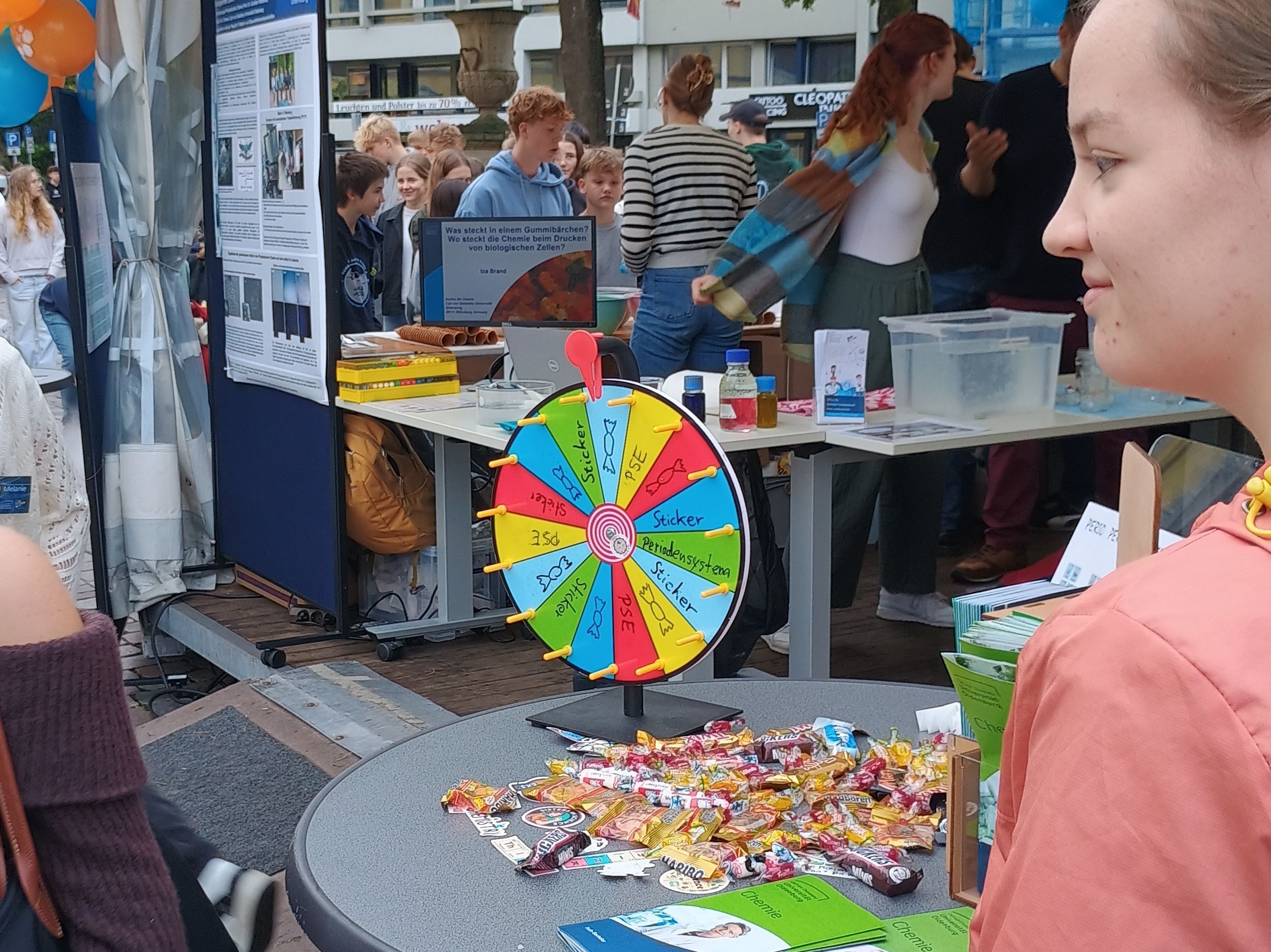
The Ahoy MINT Festival took place in Oldenburg on Friday, 19 September. More than 40 hands-on activities and lectures invited children and families to experience maths, computer science, science and technology up close and playfully.
The Institute of Chemistry took part with the following activities:
3D printing in the nanoscale and chemistry
Karuna Aurel Kanes and Simon Sprengel, members of Prof Dr Dmitry Momotenko's working group, gave a family lecture entitled "3D printing in the nanoscale and chemistry" and addressed the following topics:
Everyone knows what 3D printing is. But did you know? Chemistry and 3D printing go hand in hand? Chemists can use a 3D printer to print tiny structures out of metal that are so small you can't see them with the naked eye! The short presentation at the Schlaues Haus explained how 3D printing works at a size up to 5000 times smaller than your hair and what this has to do with chemistry.
Butter with the fish: Application of biomaterials in the 3D bioprinting process

Bioprinting is an additive manufacturing technology in which material arrangements are usually produced in layers. The development of additive manufacturing was only made possible relatively recently by the advancement of computer-aided design tools, which opened new doors in terms of flexibility in shapes and materials and enabled a high degree of customisation and fast, virtually waste-free on-demand production. What sets bioprinting apart from other forms of additive manufacturing is the ability to integrate biomolecules and cells into structures using four bioprinting techniques: Extraction, ink-jet, laser-assisted and stereolithographic printing. Printing cells requires the collaboration of experts from the fields of biology, medicine, chemistry, physics and engineering.
At the University of Oldenburg, a new printing technique called pneumatic conveying printing has been developed and it has been proven that cells can be printed and multiply in our newly printed material. In order to print cells and give them a stable, defined shape, chemical "packaging material" is required. This is called a hydrogel. Hydrogels have a perforated structure with long sticky arms that hold the cells together. Water and nutrients can easily reach the cells, ensuring that they stay alive and can multiply. The production of solutions with cells and molecules that form hydrogels is one of the tasks of chemists (bioformulation). Spectroscopic and microscopic methods are also used to visualise the structure of the printed material, which is invisible to the human eye, and to track its changes through cell growth.
In this experiment, a fish is printed from alginate hydrogel. The focus is on moulding the newly printed material.
It serves to familiarise students with various properties and structures, to build a molecular model and to produce their own hydrogel.
Butter bei den Fische: Anwendung der Biomaterialien im 3D Biodrucken-Verfahren prepared and held by PD Dr Izabella Brand, member of the research group of Prof. Dr Gunther Wittstock.
TOPKO - Peat-free, climate-friendly plant substrates made from hydrochar and pyrolysis charcoal
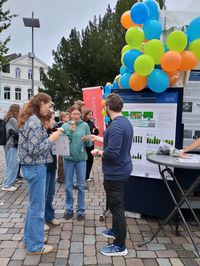
Conventional potting soils and other garden substrates usually contain peat, which is extracted from bogs. However, peat extraction releases large amounts of CO₂ and thus contributes to climate change. In order to protect peatlands, their biodiversity and the climate, researchers led by Prof Dr Michael Wark, Professor of Technical Chemistry at the Institute of Chemistry at the University of Oldenburg, are currently developing biochar and hydrochar from green waste and other waste biomass to replace peat in the future.
The overarching goal of the TOPKO project is to produce growing media for horticulture from mixtures of compost and charcoal.
Two types of charcoal are used in the project: Hydrochar from the hydrothermal carbonisation (HTC) process and biochar from the pyrolysis process. Both types of charcoal are mixed individually or together with compost in different ratios. These growing media are used in growth trials with different plant varieties to test their suitability as a substrate in tree nurseries and beyond. The focus of the products is on regionality and climate friendliness. Regionally produced green composts are used; the charcoal is made from agricultural residues or from growth from landscape conservation.
The project uses life cycle assessments to evaluate sustainability in relation to the carbon cycle. Socio-economic analyses are carried out with the aim of reflecting the reaction of potential customers to the alternatives developed and determining the market opportunities.
"TOPKO - Peat-free climate-friendly plant substrates from hydro and pyrolysis coals", presentation of the research project by Ben Henke (doctoral candidate) and Dr Michael Röhrdanz (project coordinator), both members of Prof Dr Michael Wark's working group.
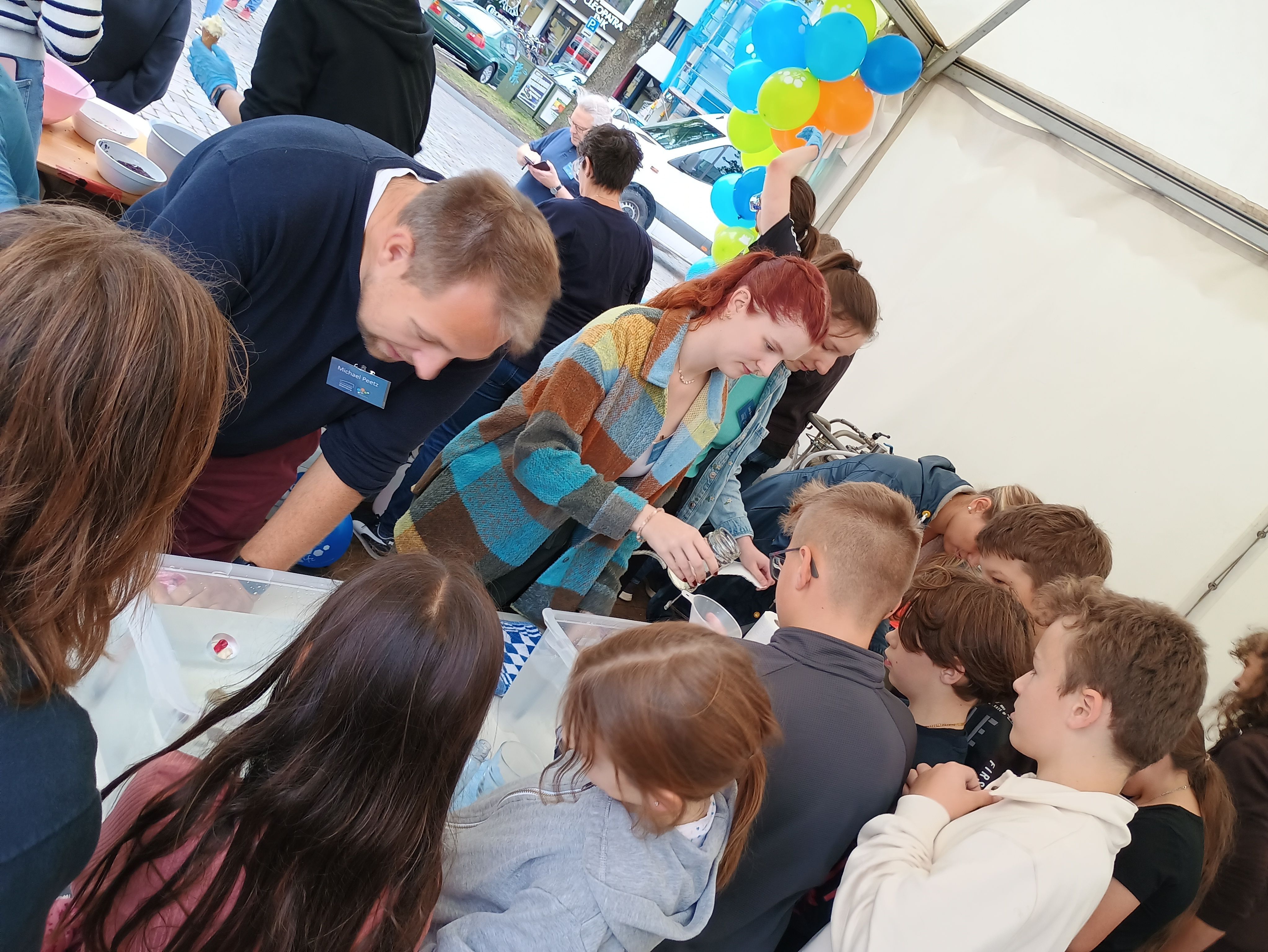
Substances, spaces and forces in experiments
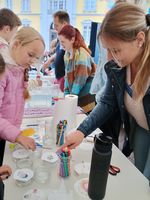
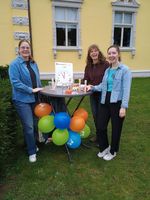
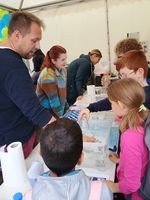
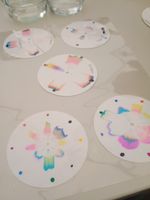
Whether in the laboratory, in a bog or anywhere else in the world: substances have properties and substances react with and to each other in certain ways. At the chemistry stand for young and old, the basic properties of gases and liquids and their interactions are discussed. Several hands-on experiments open up access to scientific questions that make invisible connections visible at first glance.
At the centre is an examination of the behaviour of air in different situations. Whether gummy bears are to go diving or air is to be transferred under water, the observations show that air is not nothing, but a substance that has properties like other substances - even if these are not easily visible. The "funnel bottle" and the "magic trick with the filled water glass" open up further perspectives on the relationship between gases, liquids and the forces that act on them.
At the station on paper chromatography , participants learn that substances are not always what they appear to be: Are all green pencils really green? Simple means can be used to get to the bottom of this question and gain insights into the material composition of supposedly homogeneous colour mixtures.
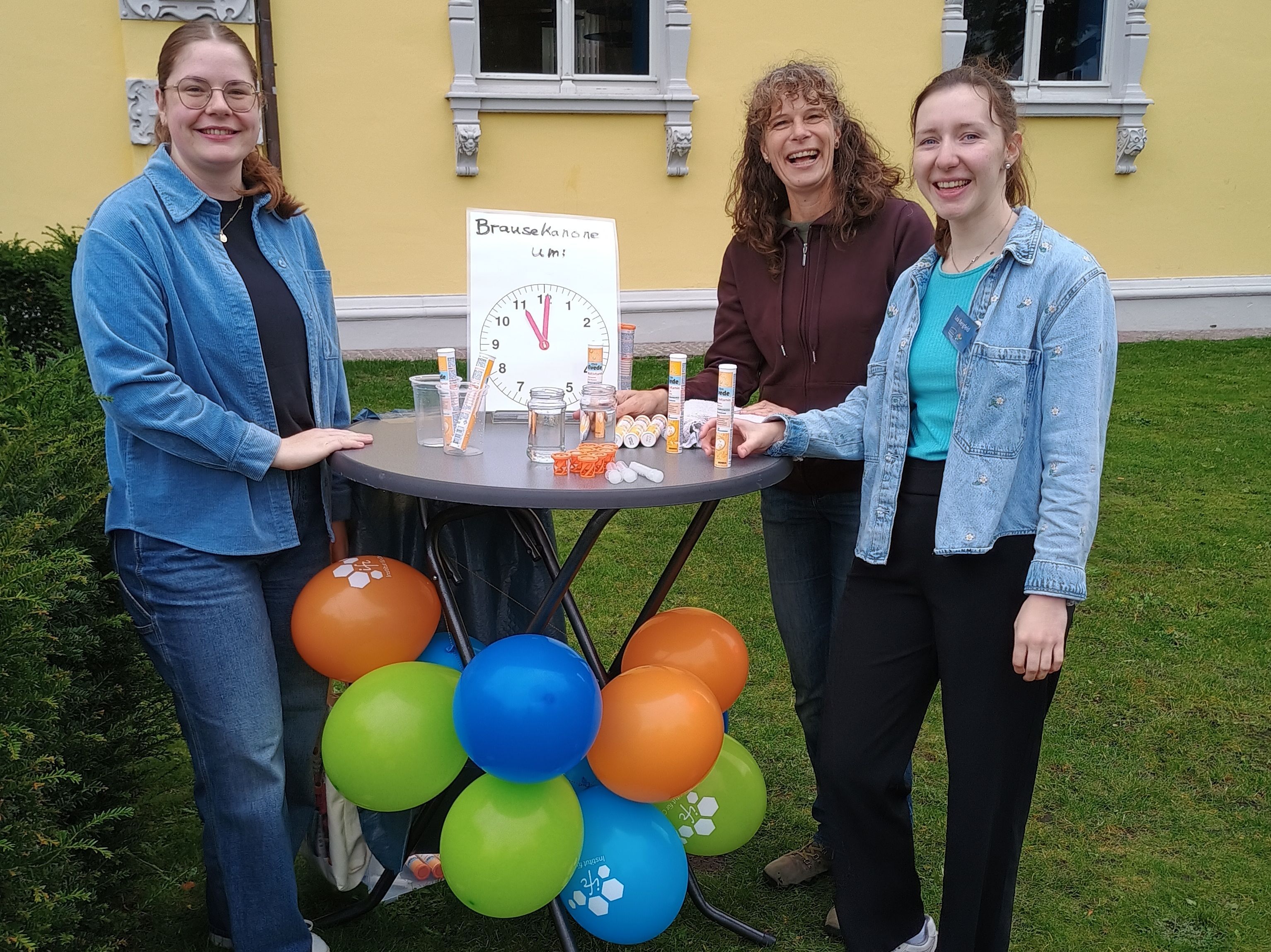
Finally, the effervescent rocket offers the opportunity to experience the topic of kinetic energy through chemical reactions using very simple means and the interplay of substances, spaces and forces.
The experiments encourage an enquiring, questioning and experimental approach and through independent observation and hypothesising, scientific ways of thinking can be experienced and grasped.
Substances, spaces and forces in experiments: Hands-on activities prepared and led by members of the Prof. Dr Timm Wilke working group.
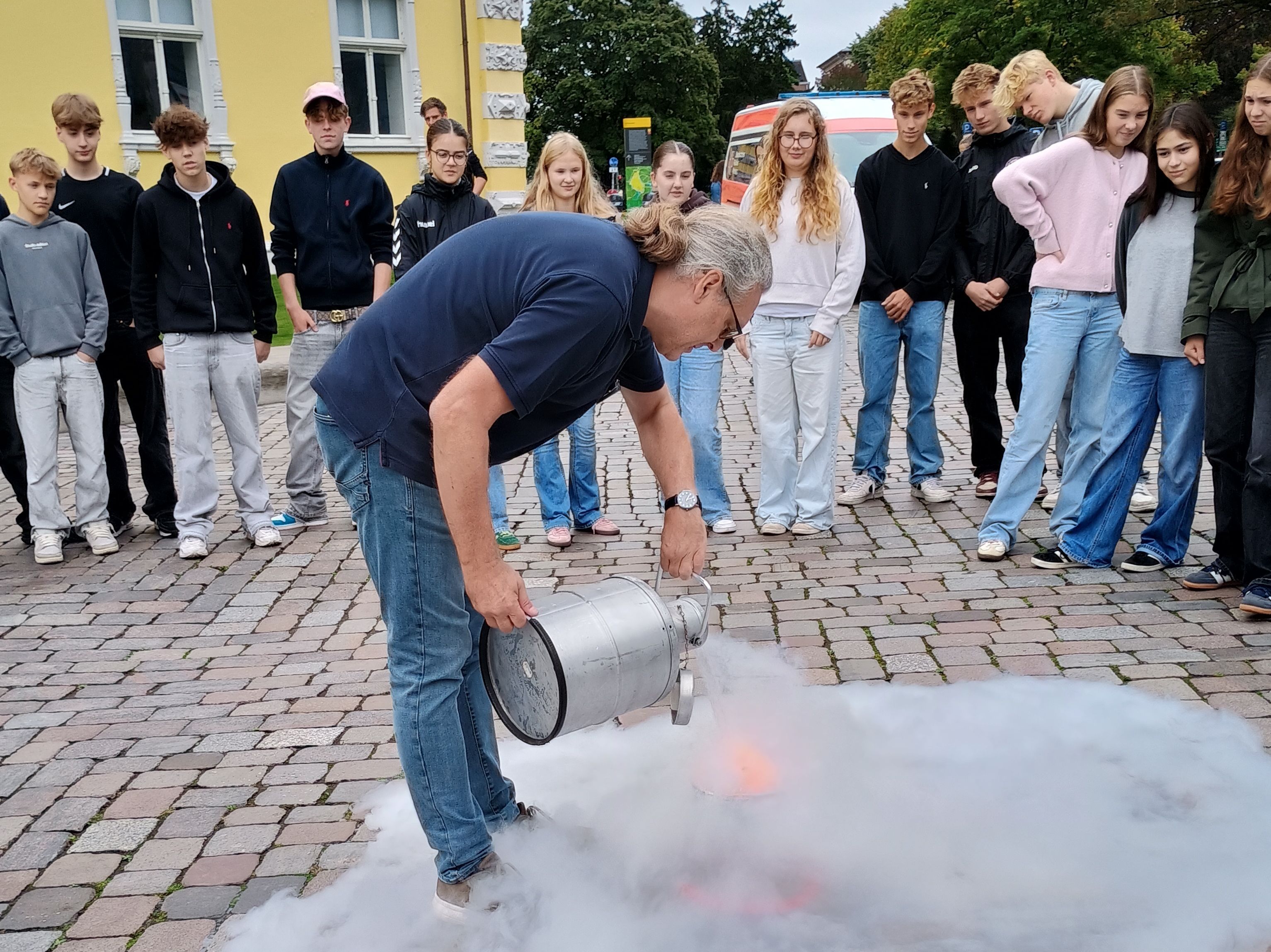
Nitrogen ice cream
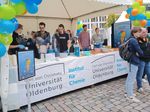
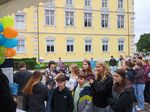
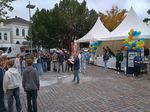
You will need:
Milk, sugar, flavour powder, ice cream wafers and liquid nitrogen
The ingredients and materials - all well known, right? Even nitrogen is all around us in the air (more than 70 per cent of our air consists of it).
The catch is that nitrogen in the air is gaseous and not liquid. So we need members of Prof Dr Jens Christoffers' working group to explain and carry out the experiment.
Procedure:
1. Mix the milk, sugar and flavouring powder.
2. Add the liquid nitrogen to the mixture, stirring constantly with a hand mixer.
3. As soon as the mixture has a creamy consistency, the experiment is complete.
Explanation:
The -196°C cold nitrogen cools the ice cream mass rapidly. This rapid cooling combined with the constant stirring causes small ice crystals to form, giving the mixture a creamy appearance. The mist that rises is condensed humidity.
The extra:
The end product of the experiment can be eaten without hesitation; the (now already vaporised) nitrogen is completely harmless.
Nitrogen ice cream: An experiment by the working group of Prof Dr Jens Christoffers.
Bits and bytes instead of Bunsen burners: nanocosmos - but tangible!
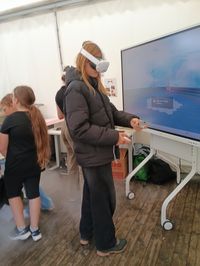
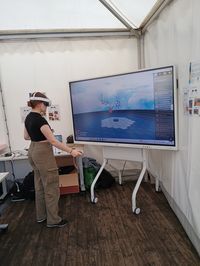
This offer is intended to make the world of atoms and molecules, which is often perceived as abstract, tangible in the truest sense of the word.
Molecule collection cards: Each card presents a specific molecule with its structure, molecular formula, molar mass, brief description and a fun fact. The interesting part is on the back: a QR code, which can be scanned with a smartphone or tablet, brings the respective molecule to life on the screen. The web application enables a three-dimensional view directly in the browser and uses augmented reality (AR) to make the molecule appear directly in the room.
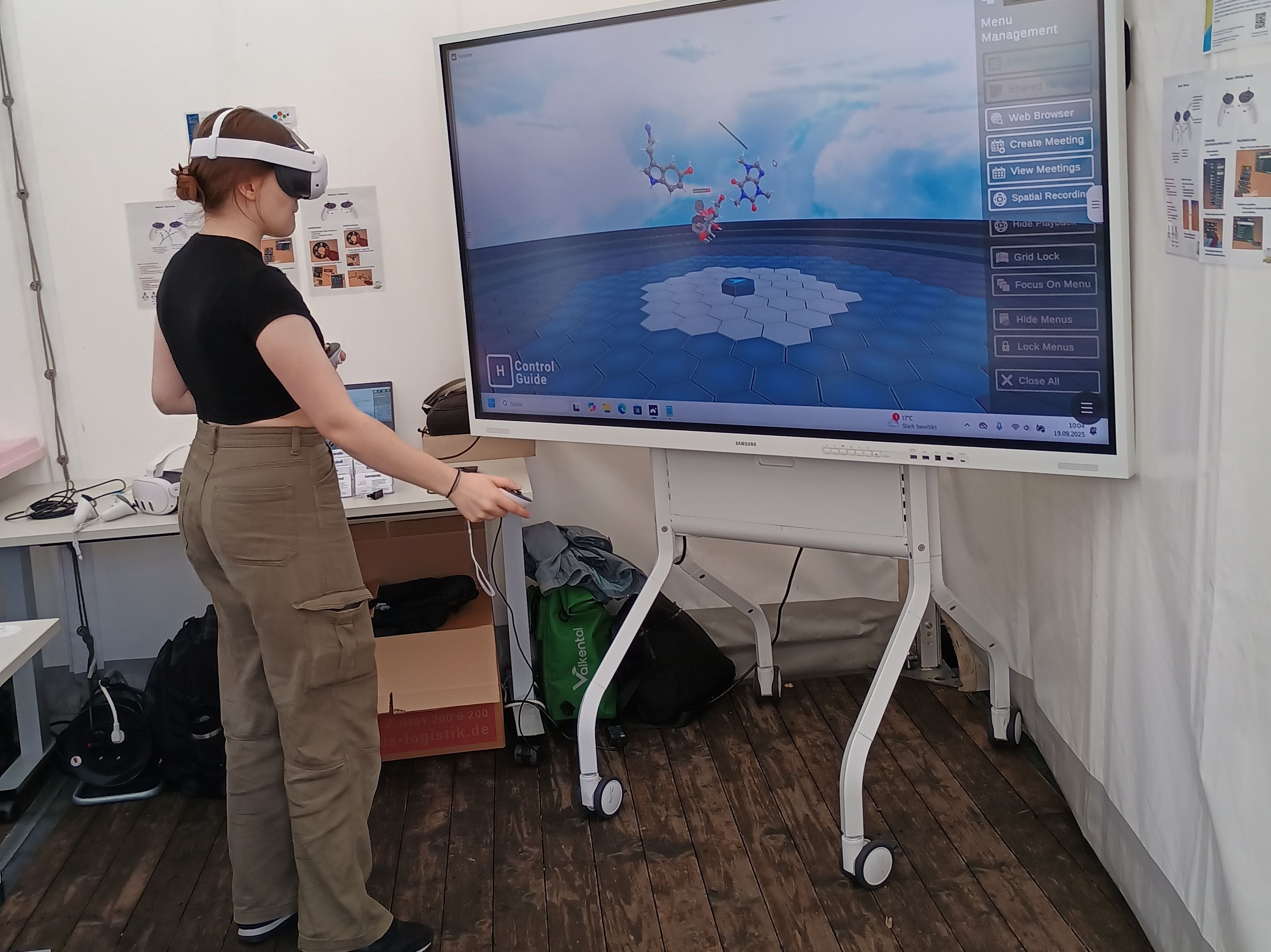
An even deeper immersion into the subject matter is possible with two VR glasses. The goggles are equipped with the "Nanome" software, which makes it possible to interact with different molecules in a shared virtual space. Small molecules or complex structures such as proteins can not only be viewed; they can also be rotated, scaled and modified using an integrated molecular construction kit. Digital tools can be used to precisely measure bond lengths and angles or visualise charge densities. The integrated molecular construction kit also offers the opportunity to construct your own molecules. So that the audience can also participate in this experience, the action from the virtual world is transmitted live onto a projection screen.
Bits and bytes instead of Bunsen burners is an offer from the working group of Prof. Dr Thorsten Klüner, which uses AR to make the nanocosmos tangible.
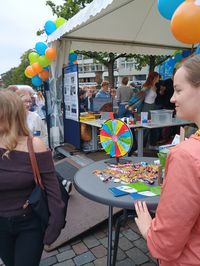

Norddeutscher Rundfunk (NDR) reports on the festival like this: AHOI-MINT.
A post on the Instagram channel of the C.v.O. University of Oldenburg: Ahoi-MINT.
More about the Ahoi-Mint-Festival: here.
More news from the Institute of Chemistry: News archive.