
Entrance examination 2021
Entrance examination 2021
The application deadline for the 2021 entrance examination has expired.
You will be informed of the result of the entrance examination by letter to your specified postal address around mid-July 2021. Please refrain from making any further enquiries in this regard.
Dear applicant!
We are delighted that you are interested in the Bachelor's degree programme 'Art and Media' at the Institute of Art and Visual Culture. Admission to the Bachelor's degree programme in Art and Media involves an entrance examination. In order to give you an idea of the special orientation of the Oldenburg degree programme, we would like to briefly introduce it to you here and also give you some information about your application and the entrance examination.
We are interested in art in context. How is art communicated when it is spoken or written about, exhibited or depicted? Where do we encounter art? How is it integrated into social, political, historical or economic contexts?
Which media do we use and how do we use them? What significance do media have for our perception of reality?
By 'visual culture' we mean forms of visualisation that encompass far more than art - such as architecture, illustration, advertising and web design, i.e. practices that are an integral part of everyday life and science. Here, for example, we are interested in how images and audiovisual media shape our perception and idea of bodies, gender and social order.
Accordingly, the practical part of the entrance examination is not only about conceiving and realising your own forms of artistic expression, for example in the form of photographs or drawings, but also about collecting, selecting and organising images that you encounter in everyday life - whether on the Internet, in your living room, on the tram or on a flyer - from a certain point of view and presenting them together with your own work.
The theory and practice of art and visual culture are not mutually exclusive, but rather condition and permeate each other. That is why it is important for us to find out in the theoretical part of the examination how you think about artistic positions, how you put aesthetic experiences into words and how you arrive at well-founded arguments.
In both the practical and theoretical parts of the examination, we assess according to three criteria in accordance with the admissions regulations: Articulation ability, independence and reflective ability.
(More information on the Institute's teaching and research areas)
The entrance examination therefore consists of a practical and a theoretical task, which you as an applicant must work on independently and the results of which must be submitted to us, preferably digitally. More detailed information on the modalities of the submission follows below.
PRACTICAL TASK
1st picture: Romuald Hazoumè: Cocotamba

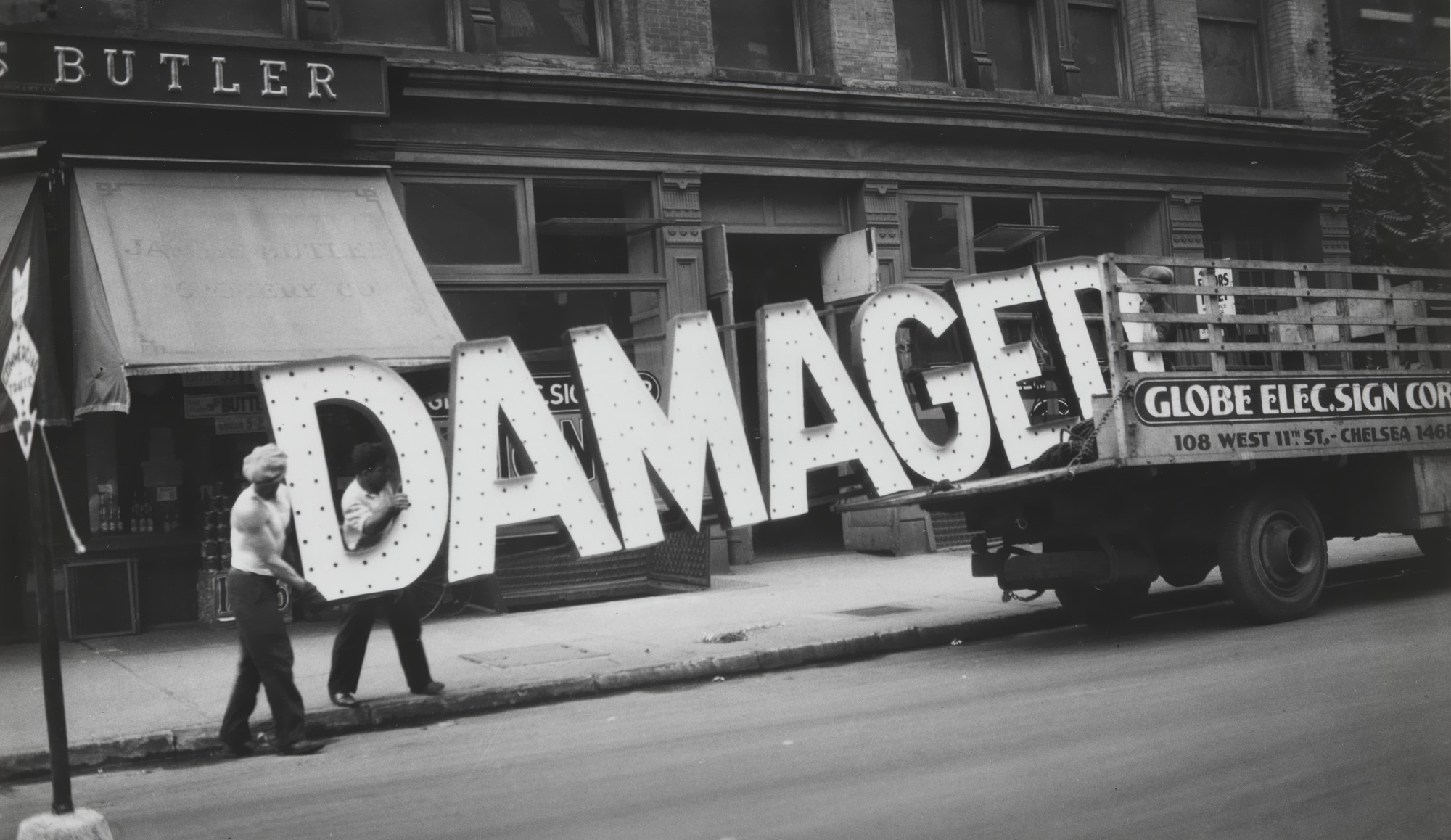
2nd image: Walker Evans: Truck and Sign
3rd picture: Joseph Benoît Suvée: The Discovery of the Art of Drawing
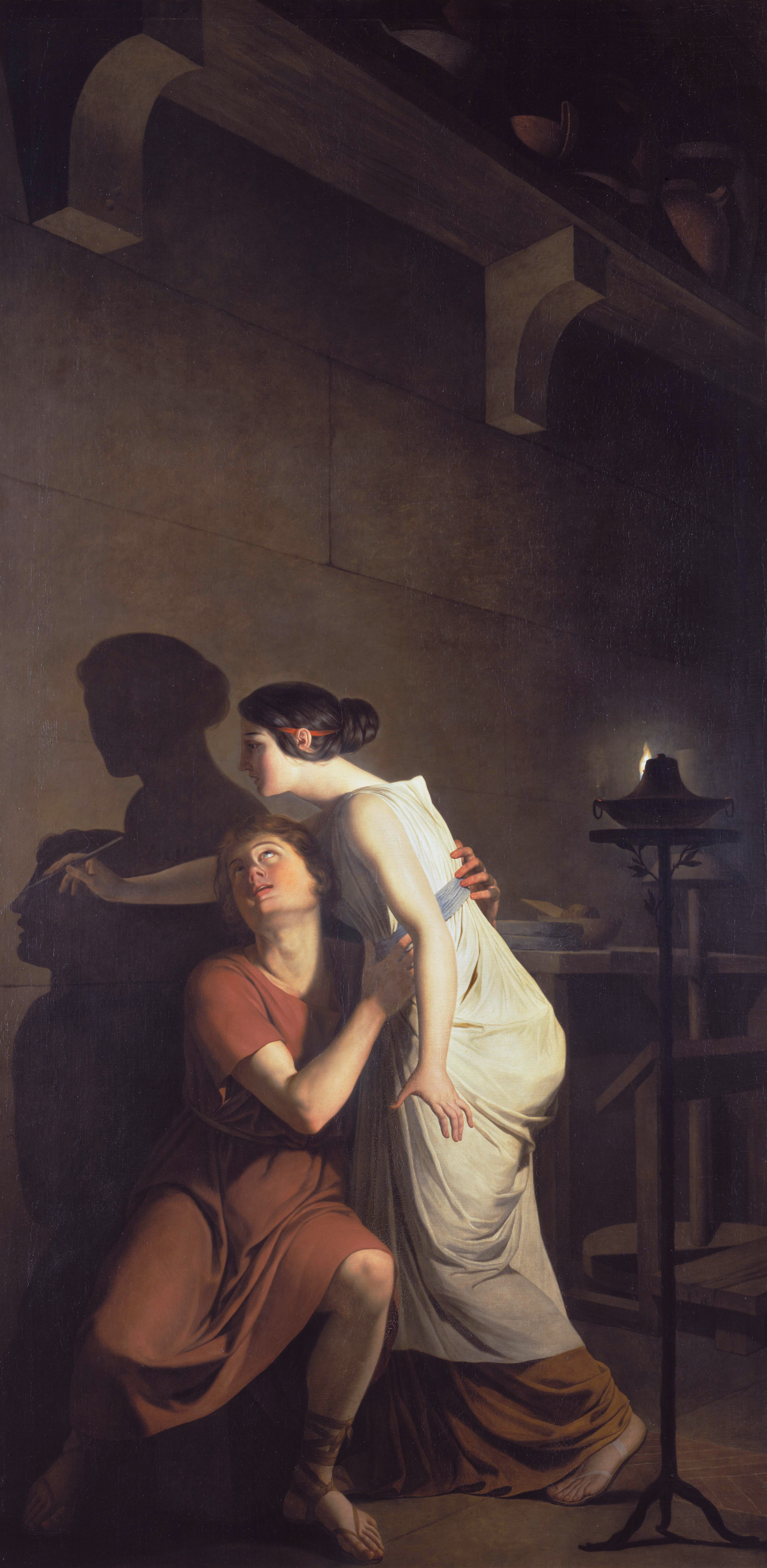
Select one of the three linked images.
Create a collection of at least ten images for one of these pictures. At least seven of these pictures must be your own work. You can use the following artistic methods: Drawing, painting, print, collage, sculpture, object, installation, photography, film, performance. Three-dimensional works and performances must be documented either photographically or on film (max. 3 min.). The other parts of the image collection can, for example, be taken from films, print and online media, your everyday life or art.
Self-created works must be labelled with the following information: Name, title (or: 'Untitled'), year created, size of original, technique (e.g. acrylic on canvas, pencil or pen on paper, video, analogue photography, etc.).
Pictures not created by the artist must be labelled with the following information: Name, title, size of original if different from reproduction, source/place found (e.g. URL, flea market or 'private').
THEORY TASK
Select one of the following three tasks and create a text for it. The theoretical task must be submitted with a maximum of 8,000 characters including spaces (corresponds to approx. 3 pages).
1. watch a film and write a review. This must contain both your critical reflection on the film and an examination of the framework conditions of your film viewing.
2. write an essay on a work of art that you think deals with the subject of politics.
3 This is a statement by the artist Sherrie Levine. In your opinion, what understanding of art is expressed in this statement? What artistic approach might result from this understanding of art?
DIGITAL SUBMISSION:
We prefer that you submit your application documents digitally.
Please pay careful attention to all of the following formal requirements:
All application documents must be summarised in a single PDF (max. 50 MB). This does not apply to videos, which can be submitted separately in MP4 format (max. 950 MB in total, max. 3 minutes per video).
Give your PDF and any additional videos you submit a file name according to the following scheme:
- Last_name_first_name_application_art_ 21
- Last_name_first_name_application_art_ 21_video
The PDF must contain - in the order given - four components:
- The completed and signed "Proposal for the assessment of special artistic aptitude for the subject of Art (entrance examination)"
- A curriculum vitae in tabular form
- Your completion of the THEORY assignment (approx. 3 A4 pages)
- Your work on the PRAXIS assignment (at least 10 pages, one page per image; all images must be labelled with the above-mentioned image details; please ensure good image quality)
We do not require your university entrance qualification. You must present this to the Admissions office upon enrolment.
We must receive your proposal by 1 June 2021 at the latest. Please submit your application documents between 1 April and 1 June 2021 on the platform linked here: