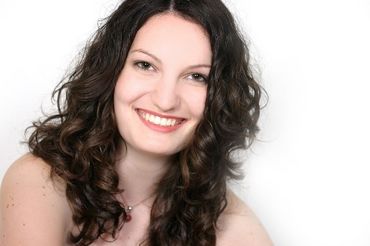
Klose
Klose
Credo
Why should we still compose operas today? And above all: how should operas still be composed today? How can one write new vocal music?
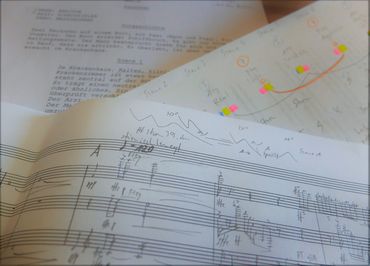
Composing for voice today is associated with a number of challenges. The main difficulty for me is to find a convincing way of dealing with language. In my music, I am currently exploring different vocal techniques in the spectrum between "traditional" vocal techniques in tonal and atonal contexts and extended vocal techniques that include a range of "other" and new forms of expression. The significantly expanded range of playing techniques in recent decades has created new conditions and questions for composers to explore. My aim is to provide answers to these questions through my music. I am particularly interested in the medium of opera, but also in other instrumentations that place the human voice in different contexts.
However, dealing with the voice here is really just a placeholder for dealing with traditions, tonality, in fact everything we have heard so far. The task facing composers in a world of constantly available material from 1000 years of music history is to find their own position within it.
Curriculum vitae
Since October 2018 | PhD studies at the Royal Conservatoire of Scotland in Glasgow under Dr Stuart McRae and Prof Gordon McPherson |
2018 | Annual scholarship from the Province of Salzburg in the field of music |
2017/18 | Full scholarship from the Mozarteum University |
2017 | Merit-based scholarship from the Mozarteum University |
2016–2018 | Research assistant in the field of contemporary music outreach as part of the Contempohr research group within the science and art research focus at the University of Salzburg |
2015–2018 | Master’s degree in Composition at the Mozarteum University in Salzburg in the class of Prof. Reinhard Febel |
2015 | Culture Promotion Award from the City of Amberg; Composition Prize for String Quartet organised by the Hugo Wolf Quartet, the Alban Berg Foundation and Jeunesse Österreich |
2013/14 | Recipient of the Germany Scholarship |
2013 | 1st prize at the City of Homburg International Composition Competition for Orchestras |
2012–2015 | Tutor in composition and historical vocal improvisation at the Würzburg University of Music |
2010–2015 | Bachelor’s degree in composition under Prof. Heinz Winbeck, Tobias PM Schneid and Prof. Robert HP Platz at the Würzburg University of Music |
2009–2014 | Studied to become a secondary school music teacher at the Würzburg University of Music |
2009 | Abitur, with selection for a scholarship from the online community e-fellows |
2007–2009 | Junior student studying as the main subject of violin with Valerie Rubin at the Nuremberg University of Music |
1990 | Born in Sulzbach-Rosenberg, Bavaria |
WORKS (SELECTION)
Wonnetraum - Cage for mezzo-soprano and symphony orchestra (2019)
Graufacetten for soprano and guitar (2019)
Von den flatternden Gedanken for soprano, flute, guitar and violoncello (2019)
Nachtsonne short opera for mezzo-soprano, baritone, narrator and ensemble (2018)
Hindewhu for oboe solo with singing bowl (2017)
Interlüd for (bass) flute solo (2017)
Heilge Nacht, du sinkest nieder for harpsichord solo (2017)
Aurora for ensemble (2017)
Accord for chamber orchestra (2016/17)
Sappho fragments for baritone and piano (2016)
Mikrotonale Studie 1 for ensemble (2016)
Thou hast ravished my heart for six-part female choir (2016)
Fire dancer. Sparks for accordion and violoncello (2016)
kham for solo cello with daff (2015)
1st string quartet (2012-14)
Into the expanse of the sun. Farewell for symphony orchestra (2012)