
Keusen-Nickel
Keusen-Nickel
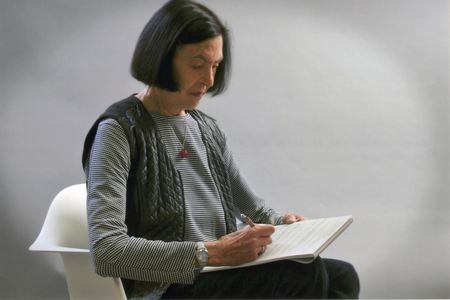
Credo
I grew up in a home characterised by art: my mother was a sculptor, my father a pianist and conductor. I learnt early on that there are performers and creators in art.
I wrote my first composition at the age of 8, a piano piece entitled "Das Gewitter" (The Thunderstorm), with clenched chords and arpeggiated suggestions (thunder and lightning).
Later, in the composition seminar, I was given the task of exposing old folk songs, which I did with great pleasure.
I also discovered my preference for polyphonic voice leading. After a few years of giving concerts and travelling abroad, I began composing for orchestra in order to present Spanish and above all Catalan dances (sardanas) to the audience there on a tour to Catalonia with the youth symphony orchestra entrusted to me. I had extensively studied the rhythm, structure and melody of this genre, and from the very first moment I was fascinated by the joie de vivre, the joy of rhythm and also a little melancholy expressed in it (my works include 12 sardanas in different instrumentations).
Inspired by my husband Jost Nickel, I most often compose chamber music. The sound of flute(s) and violoncello was and is extremely appealing. It's about effectively emphasising the characteristics and possibilities of such contrasting instruments. In the works with vocals, I try to interpret the texts - including those in other languages - as intensively as possible.
Not to deny tradition, but to incorporate new impulses as a bridge to our time - that is my goal when composing.
Curriculum vitae in tabular form
| 1932 | Born in Düsseldorf; began taking piano lessons Cello lessons from the age of 12 |
| 1952 | Abitur in Bonn, followed by studies at the State University of Music of Music in Cologne, majoring in cello under Prof. Adolf Steiner, and minoring in chamber music under Prof. Maurits Frank and composition under Prof. Ernst Otto Wölper |
| 1958 | Passed the final artistic examination and supplementary teaching qualification In the subject of cello, she worked with the Bonn City Orchestra, taught at the Bonn University of Education and freelance concert and teaching work |
| 1968 | Teacher and later Deputy Head at the Bonn Music School; extensive concert activities in the Cologne-Bonn area |
| 1975 | Director of the Sankt Augustin Municipal Music School Numerous concerts in Germany, England, France and Spain, as well as Poland, together with her husband Jost Nickel (flute) and several colleagues in the ensemble; conductor of the Youth Symphony Orchestra of the town of Sankt Augustin |
| Since 1997 | Freelance work as a cellist, conductor, teacher and composer. |
Selection of works
List of works printed by Tonger-Verlag
Chamber music works:
Das Lied der Vögel (Violoncello solo)
Iberische Impressionen (Flöte solo)
Drei katalanische Marienlieder (Soprano, Flöte, Violoncello)
Abendsegen (Violoncello-Quartett)
Mosaik (Flöte, Violoncello)
Fantasie und Sardana (Piccolo, Flöte, Violine, Violoncello)
Al Punto (Picc, Flöte, Altfl., bass fl.)
Sinn des Lebens (soprano and string quartet)
Vier Miniaturen (string quartet)
Vier katalanische Tänze ( 1 to 4 flutes and violoncello)
Sonatine für Altflöte und Klavier Schwesterlein, Schwesterlein (violoncello and piano)
Spiel der Wellen (flute solo)
Der Ginster - La ginesta (soprano, 2 flutes, violoncello, tambourine)
Pastorale (flute, violoncello, harpsichord)
Zwei Lieder nach Gedichten von Joseph von Eichendorff (soprano, violin or flute, piano, violoncello ad lib.)
Catalan Serenade (flute, violoncello)
Aria and Bolero (2 flutes)
Etudes for young cellists (violoncello)
Sardana for string quartet Flötenzauber (picc, 2 flutes, 2 alto flutes, bass flute)
Es ist ein Ros entsprungen (2 flutes, violoncello)
Suite im alten Stil (3 violoncellos)
Christmas Fantasy (3 violins or flutes, 2 bass instruments)
Canzona (flute solo)
Visions (piano)
Shepherd's Song (flute, violoncello)
Sardana for 3 violoncellos Prologue and Presto (2 alto flutes, piano)
Ich lebe mein Leben (Rilke-Gesänge) for soprano and violoncello
Drei Winterlieder (voice and 2 to 3 instruments)
Fantasia for violoncello solo
Dialog und Tango für Klavier Andante für Streichquartett von E. Humperdinck/ K-N
Choral works:
Mass in C for soprano and tenor solo, 4-part mixed choir, chamber ensemble
Kommet, Ihr Hirten (4-part mixed choir a-cappella)
In dulci jubilo (4-part mixed choir a-cappella)
Abendlied (3 equal parts)
Weiß mir ein Blümlein blaue (4-part mixed choir a-cappella) gem. choir a-cappella)
Es geht eine dunkle Wolk' herein (4-piece mixed choir a-cappella)
Hopsa, Schwabenliesel (4-piece mixed choir a-cappella)
Drei Winterlieder (voice and 2 to 3 instruments)
Maria durch ein Dornwald ging Die Gedanken sind frei
Previously unpublished works:
Das Lied der Vögel (3 violoncellos)
Fantasie und Kanon (recorder and violoncello ensemble)
Mikado (violoncello solo)
Rag for Thomas (flute, piano)
Salo-Rag (flute, guitar)
Missa brevis (4-part mixed choir a cappella)
Veni, Sancte Spiritus (4-part mixed choir a cappella)
Orchestral works (published by Josef Weinberger)
Bolero
on a theme by Engelbert Humperdinck
Manana
Paso doble for orchestra
Sardanas de Rosas Two Catalan Dances for orchestra
Status 15.11.2020