Primary school of the future project
Primary school of the future project
Project approach
The ‘Primary School of the Future’ project is based on the quality standards of ‘Learning through Engagement’ (LdE; service-learning) (Seifert et al., 2019):
- Firstly, the school’s actual needs are identified in preliminary discussions with the school.
- The projects are linked to the curriculum, particularly the subjects of General Studies and German (curricular integration).
- Pupils were actively involved in the planning and design (pupil participation).
- The practical engagement takes place in collaboration with engagement partners – e.g. the LdE Foundation or local cooperation partners.
- Regular and carefully planned reflections on the pupils’ experiences were incorporated into the process.
- The pupils’ commitment and participation are recognised through ongoing positive feedback, as well as a celebratory closing event and a certificate.
Project process
The project will be implemented between 2023 and 2025 through individual sub-projects, which will take place as part of a project week and over several weeks between April and July 2024 at various primary schools. In addition, an accompanying study will be carried out, which will also extend over several months.
The focus of these non-profit projects at primary schools is on promoting pupils' social skills and personal development. The projects are planned and implemented independently and with the aim of inclusion by the children, supported by student assistants and student teachers. The pupils' writing skills are also to be promoted through the playful and practical application of reading the tasks or instructions and written plans.
Examples of sub-projects include the creation of raised beds and snack bars, the design of a garden shed, a documentation team and the organisation of a final party.
Insights into the projects
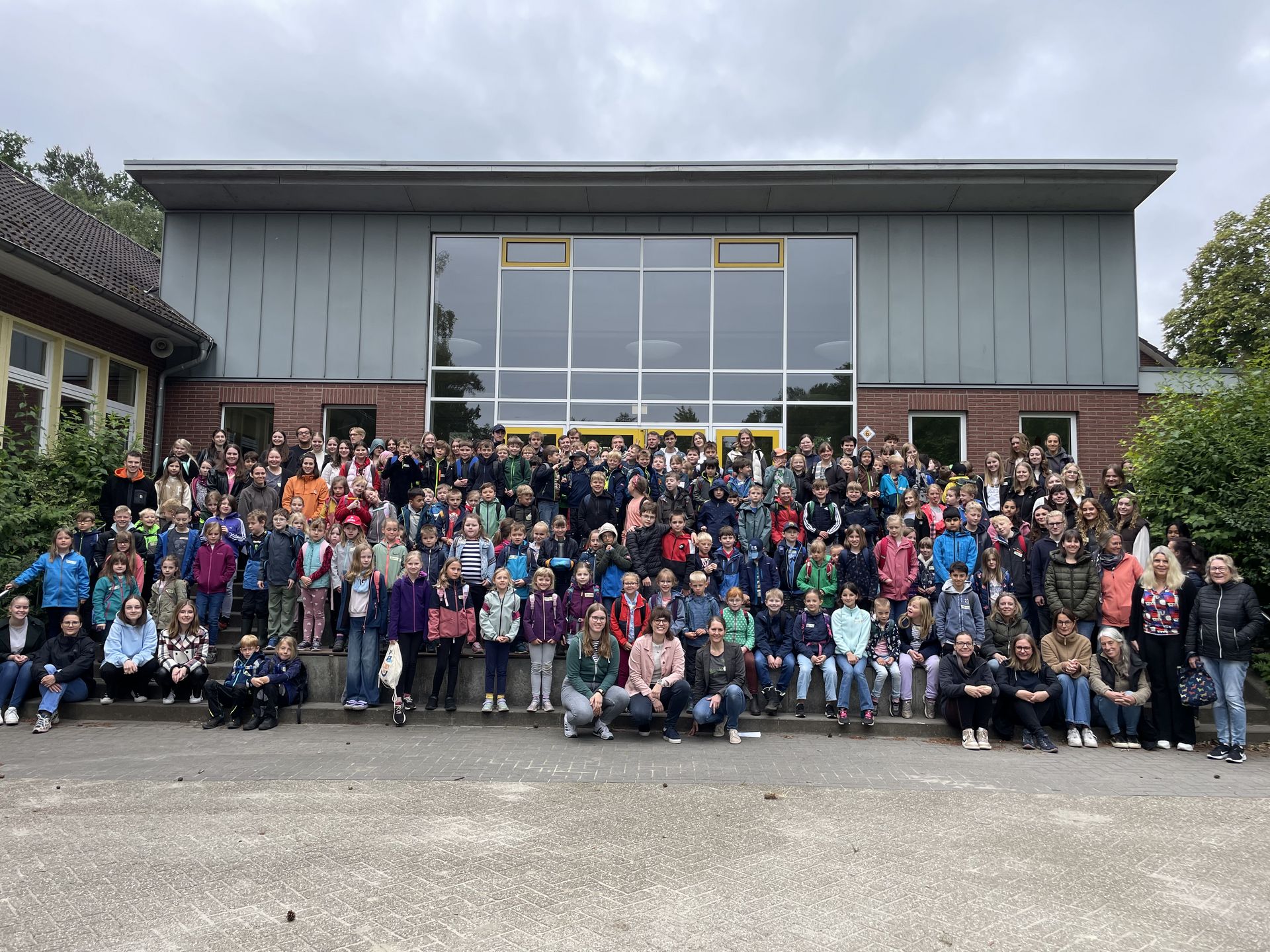
The start of the project week at Achternmeer primary school.
Non-profit, sustainable and creative projects are carried out in small teams of 1-2 student teachers and 5-6 pupils.

Raised beds are built and then planted for Christophorus Primary School.
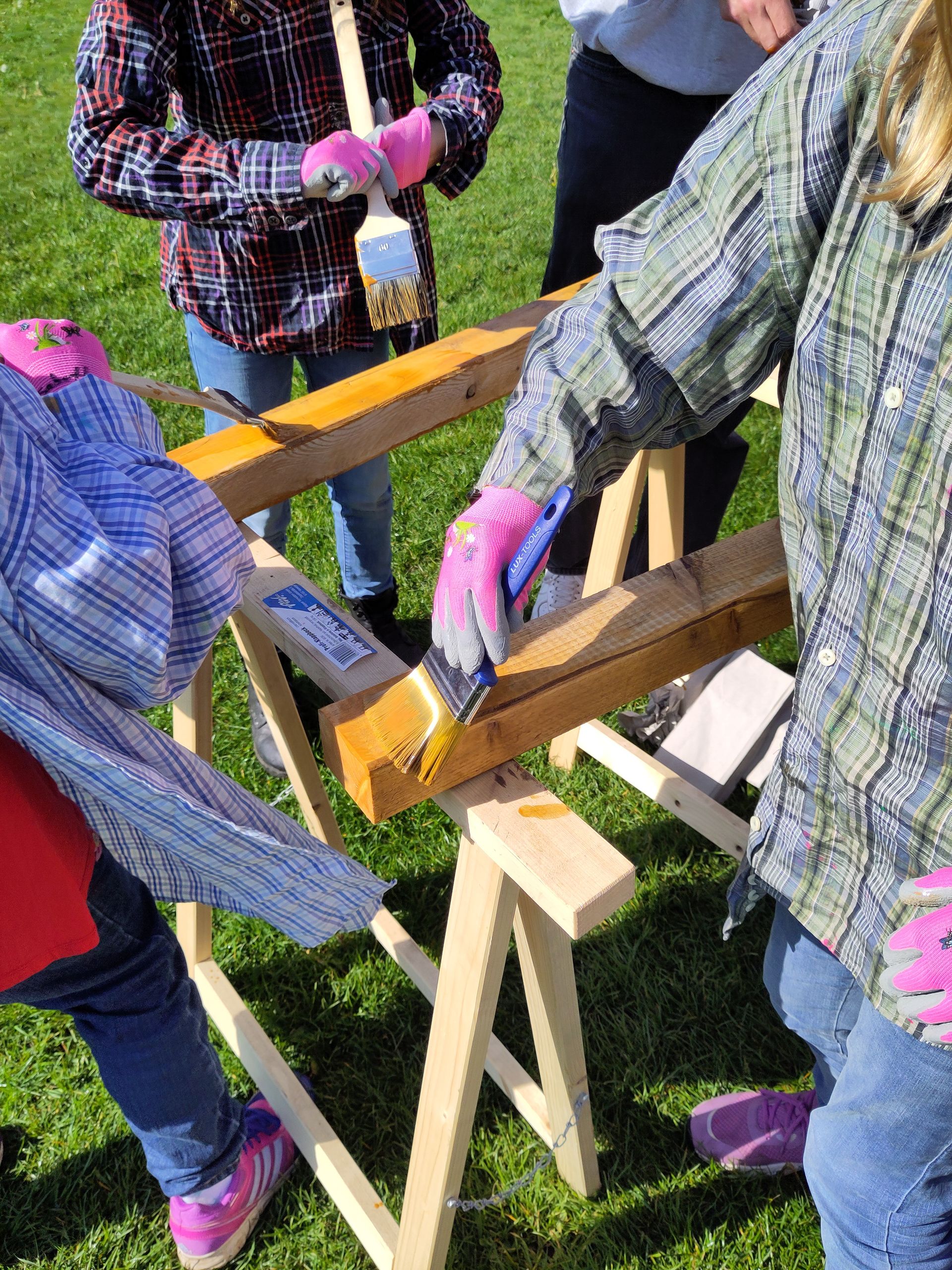
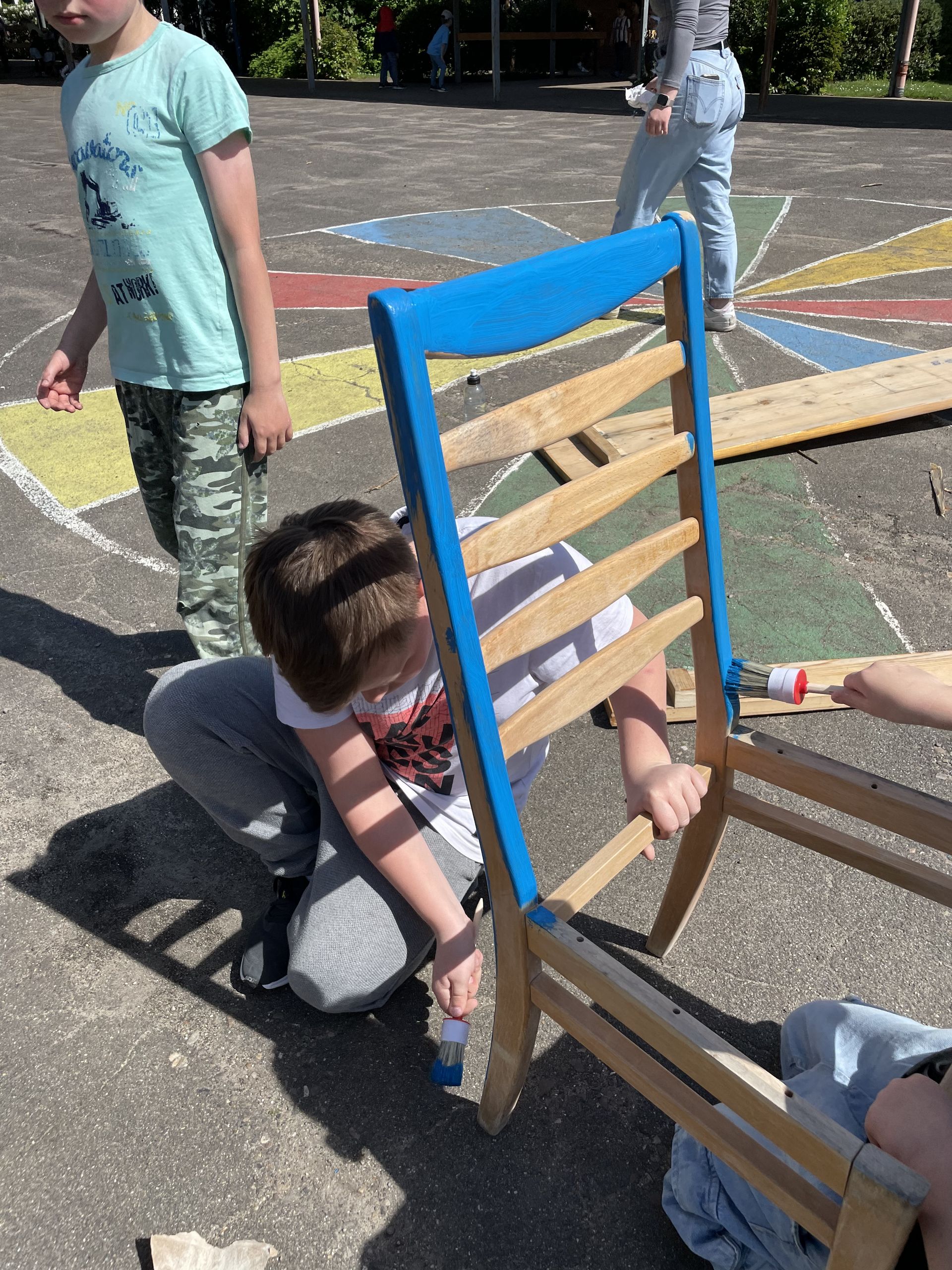
In the spirit of sustainability, old chairs are sanded, painted and built into a bench.

At Junker-Harke primary school, work is underway on a mud kitchen for the playhouse.
 In progress here: Noah's Ark
Together we are designing murals that will decorate the entrance area of Christophorus Primary School from now on.

A traffic course for scooters and Kettcars is being built at Osterscheps primary school.
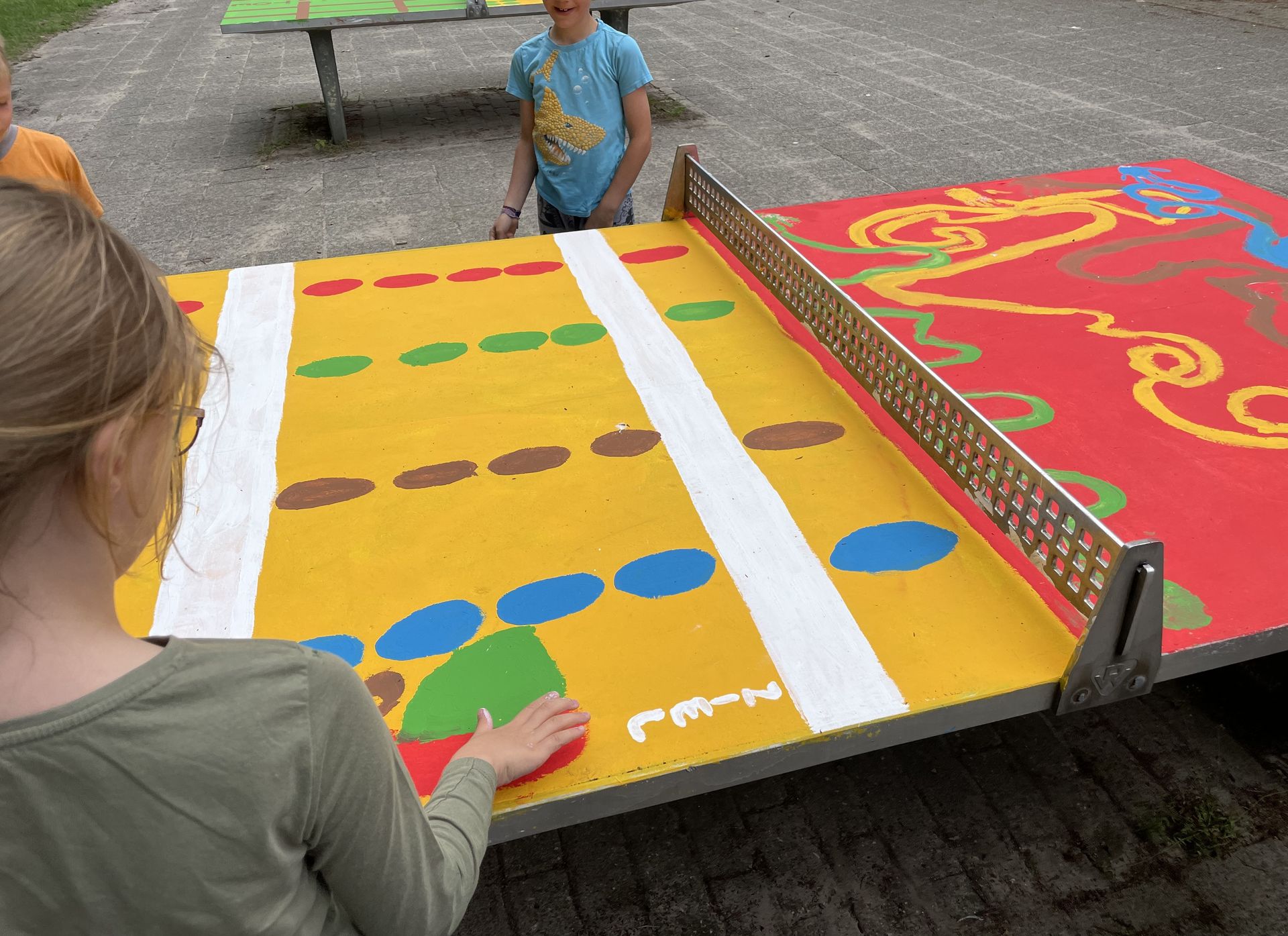
The table tennis tables can now also be used for other games and add some colour to the school grounds.
Accompanying study
Accompanying the project, research will be conducted using a questionnaire on socio-emotional school experiences, such as emotions when learning to write, self-concept and social integration, as well as pupils' writing skills in the form of an intervention-control group study design.
Participating schools
Almost 250 pupils from four primary schools in the north-west of Lower Saxony are taking part in the project. These include the Christhopherus primary school in Bad Zwischenahn, the Junker-Harke primary school in Barßel, the Osterscheps primary school in Edewecht and the Achternmeer primary school in Wardenburg.
https://www.christophorus-gs.de/
https://www.junker-harke-grundschule.de/
Project leader
The project leader is Dr Juliane Schlesier from the Department of Empirical Teaching and Learning Research at the CvO University of Oldenburg.
Project implementers and contact
The project is supported by the student assistants Lilith Rothmundwho is currently studying at the University of Oldenburg, and Daniela Eckhoff, who is currently studying at the University of Vechta. Furthermore, 80 student teachers who are taking a seminar in the "Teaching and Learning" module with Dr Juliane Schlesier will be able to gain practical school experience as part of this project.
You can reach us at
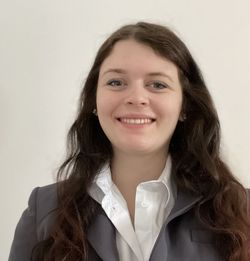
“My name is Lilith. After completing my Abitur in Hamburg, I did a voluntary social year and realised that I really enjoy working with children and young people. In my spare time, I loved spending time with animals and exploring the topics of sustainability and home-grown produce. In Oldenburg, I had the opportunity to make my dreams a reality by studying to become a teacher at the University of Oldenburg and living with lots of different animals on a self-sufficient farm.”
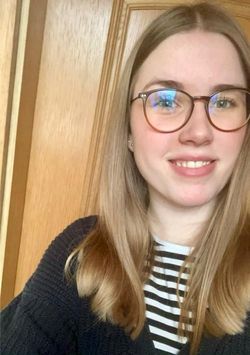
“My name is Daniela. I’m studying German Language and Literature and General Studies, with Political Science as my supporting subject, at the University of Vechta. In my spare time, I supervise a children’s fire brigade, which helps me gain some experience in working with children. I’m also able to do this through my work on the ‘Primary School of the Future’ project, which is why I’m delighted to be part of it.”
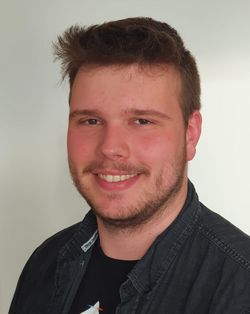
"My name is Janik and I'm studying to be a teacher in Oldenburg with the aim of teaching at a primary school later on. I started looking after children and youth groups many years ago, which solidified my desire to pursue this path as an academic appointment.
Working with children gives me great joy and has shown me how important it is to provide them with an inspiring learning environment.
I look forward to putting my passion for education into practice and accompanying young people on their journey through life."
About co-operation partners
Support is provided by (local) partners, depending on the focus of the respective non-profit project. The LdE Centre of Excellence M-V provides support in terms of content.
In addition, experts from other universities such as Dr Frances Hoferichter from the University of Greifswald, Prof Dr Stephanie Lichtenfeld from the University of Hamburg and Dr Simon Meyer from FAU Erlangen-Nuremberg are involved in the development of the measuring instruments used as well as in the evaluation and possible publication of the results.
Sponsor
The main sponsor of the project is the Barthel Foundation, which is based in Varel. The Barthel Foundation’s funding focuses on education, culture and environmental issues – education is a prerequisite for a society based on equal opportunities, and protecting the environment is a practical demonstration of responsibility towards future generations.
The project is also funded by the EWE Foundation, based in Oldenburg. The Foundation aims to promote education and upbringing, science and research, as well as art and culture.
Funding period: 1 July 2023 – 30 June 2025.

Press and awards for the "Primary School of the Future" project
Awards and honours
- Teaching Award 2024 (UGO), category Best course evaluation (40 participants or more). Further information here.
- University Pearl of the Month November 2024 (Stifterverband) for the project "Grundschule der Zukunft - gemeinnützig, nachhaltig und kreativ lernen mit Engagement". Further information here ..
Press release
GEW Weser/Ems: Paving the way for the primary school of the future, PaedOL, 112, October 2024, pp. 18-20. link: https://oldenburg.gewweserems.de/2024/10/paedol-112/
Press release from the University of Oldenburg on the project
Nordwest-Zeitung (NWZ): This is what the primary school of the future could look like, 28/06/2024: Link to the article.
UNI INFO Magazine: Learning without realising it, July 2024, p. 9. link: https://www.presse.uni-oldenburg.de/uni-info/2024/3/uni-info-2024-03-es.pdf