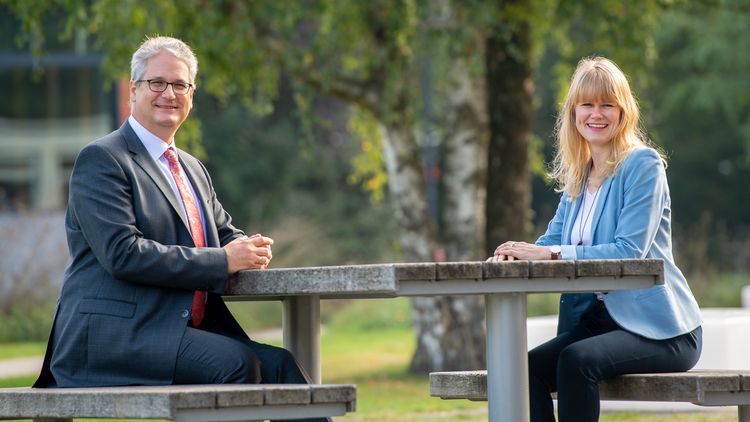

Inga Rüdebusch has been the University's Inclusion Officer since mid-August. She represents the university in all matters relating to severely disabled people and people with equal opportunities. A task with many overlaps with the 31-year-old's other two main areas of work: occupational health management and occupational integration management.
The equal participation of all people, however different they may be, in social life - that is inclusion. Inclusion is a human right. Since the UN Convention on the Rights of Persons with Disabilities came into force in 2008 at the latest, the question of how we can realise this right to participation has pervaded virtually all socio-political debates. Inga Rüdebusch is one person who wants to help ensure that inclusion is not just talked about. She has been responsible for health management at the university since mid-August - and is the new Inclusion Officer.
"Disabilities come from outside," says the rehabilitation education graduate. "I want to help break down the barriers that often exist towards disabled people, especially in their minds - so that everyone can participate in the labour market regardless of their circumstances," she says. To this end, Rüdebusch works closely with the university management as well as the Staff Council and the Representative for Employees with Disabilities. Her topics are diverse and range from the recruitment of severely disabled employees to the accessibility of IT services and structural changes.
Putting inclusion centre stage
Unlike the long-established Representative for Employees with Disabilities, who is elected by employees and represents them, Rüdebusch was appointed by the university management as the Inclusion Officer; she will develop inclusion measures and goals on their behalf. Her first milestone will be a disability inclusion agreement developed with the Representative for Employees with Disabilities and the Staff Council, which will set out these goals.
By appointing Inga Rüdebusch as Inclusion Officer, the university is initially fulfilling legal requirements. However, for Jörg Stahlmann, Vice President for Administration and Finance and as such responsible for implementing the inclusion guidelines, this step is much more than a formal act. "As a university that prepares students for inclusion in the school context in a variety of ways with its courses and conducts intensive research on the subject, we also want to put the topic centre stage as an employer - and lead the way with good concepts," says Stahlmann.
Diversity is a benefit for everyone
Rüdebusch is certain that everyone will benefit from this. "When we integrate people with different skills and needs into working life, this creates diversity, which is also a benefit for the employer." Promoting this diversity and equal opportunities is an important strategic concern of the Presidential Board. It was only in July of this year that the university was selected to take part in the "Shaping Diversity" diversity audit organised by the Stifterverband für die Deutsche Wissenschaft.
She uses an example to illustrate the extent to which Rüdebusch's areas of responsibility overlap and cross-fertilise each other: as a representative for company integration management, the educationalist advises employees who are returning to work after a long period of illness - including people with disabilities. "This gives me first-hand experience of the challenges they face and allows me to work on solutions as an inclusion officer."
Pooling expertise
Rüdebusch doesn't just want to utilise synergies in her own immediate area of responsibility - she also wants to network with others who deal with inclusion issues as part of their job. "There is already a lot of expertise on the topic at the university that should be pooled," she says. She has in mind, for example, the AStA department for disabled and chronically ill students, the representative for students with disabilities or chronic illnesses or the disability counselling service at the student union. "These services for students could also serve as a model for expanding counselling options for employees with disabilities," she explains.
Inclusion is also an important topic for staff development, Rüdebusch continues. For example, when it comes to designing accessible programmes or offering appropriate training on the topic for managers. For her, one thing is clear: "Inclusion doesn't just affect individual people or areas of work, but should be considered in every decision."